


Arrow Metal Woven Wire Mesh: Engineering Specifications and Industrial Applications
In the landscape of industrial filtration and structural screening, the selection of a specific mesh pattern is rarely an aesthetic choice. For engineers and procurement specialists, the geometry of a filter medium dictates its mechanical strength, flow characteristics, and particulate retention capabilities. Among the diverse configurations available, arrow metal woven wire mesh represents a specialized category of woven wire mesh designed to meet specific structural and functional requirements in demanding environments.
As a professional manufacturer, Kaifil specializes in high-precision stainless steel filtration solutions. Understanding the technical nuances of arrow metal woven wire mesh—ranging from material grade selection to the physics of fluid dynamics across the mesh surface—is essential for optimizing system performance and ensuring long-term reliability in chemical, pharmaceutical, and food processing applications.
The Technical Foundation of Woven Wire Mesh
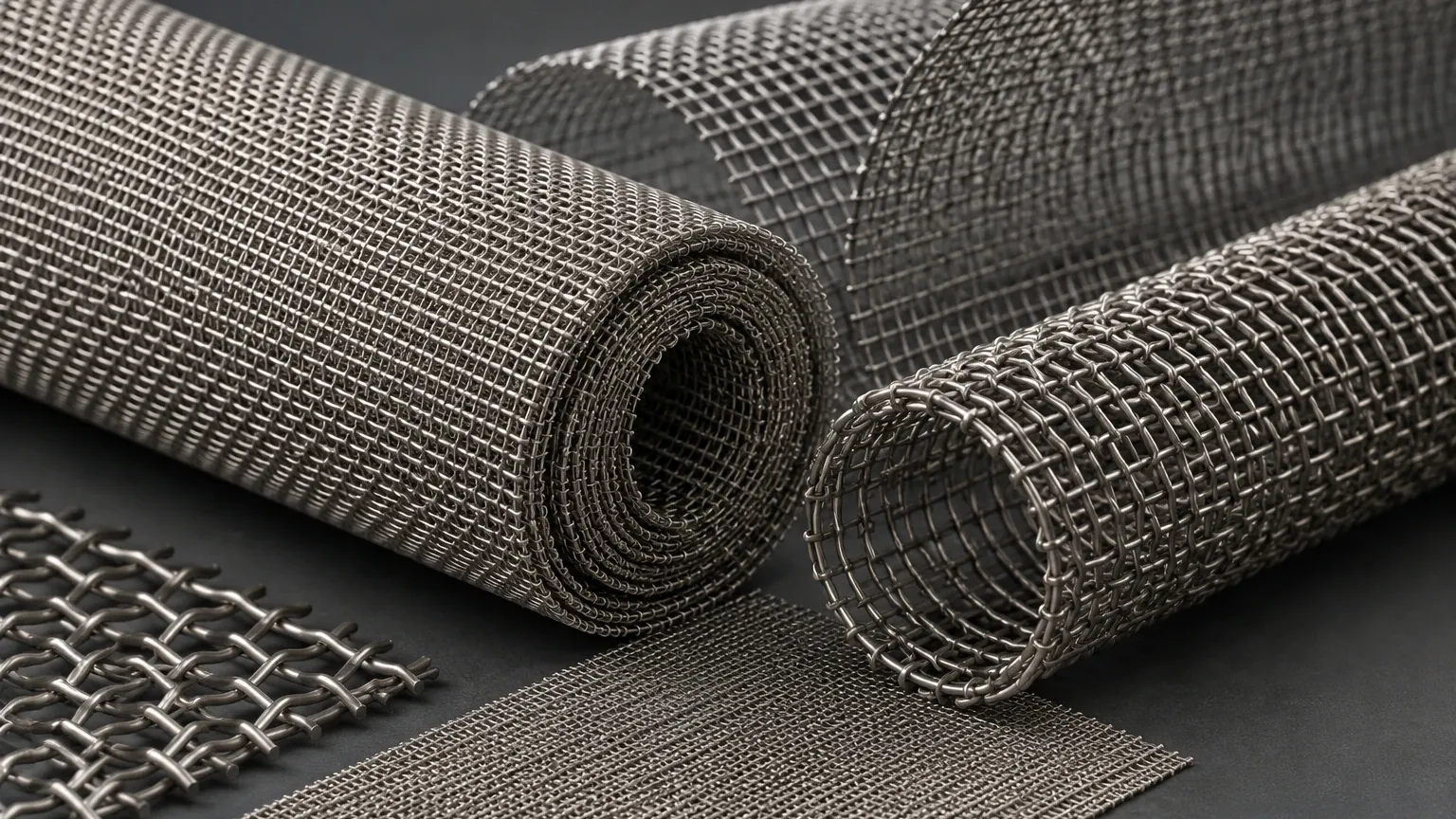
At its core, industrial woven wire mesh is produced by interlacing longitudinal (warp) wires and transverse (shute) wires on high-precision looms. The resulting fabric provides a stable, predictable aperture size that serves as the primary mechanism for mechanical separation. When discussing arrow metal woven wire mesh, we are typically referring to specific architectural or industrial patterns where the weave creates a chevron or directional visual effect, often used for both its structural rigidity and its unique fluid-deflection properties.
For most industrial applications, the performance of the mesh is governed by three primary factors:
1. Wire Diameter: The thickness of the individual wires, which determines the mesh's weight, strength, and percentage of open area.
2. Mesh Count: The number of wires per linear inch (or millimeter), which defines the filtration fineness.
3. Aperture (Opening) Size: The clear distance between two adjacent warp or shute wires.
In the context of arrow metal designs, these variables are carefully calibrated to ensure that the directional pattern does not compromise the uniformity of the openings, which is critical for consistent filtration results.
Material Selection: SS304 vs. SS316L
The longevity of any Woven Wire Mesh installation is heavily dependent on the alloy selected. In industrial filtration, stainless steel is the standard due to its balance of mechanical strength and corrosion resistance.
* Grade 304: This is the most common stainless steel used in wire mesh. It offers excellent resistance to atmospheric corrosion and is suitable for most food processing and general industrial applications. However, it is susceptible to pitting in high-chloride environments.
* Grade 316L: Containing molybdenum, 316L provides superior resistance to chlorides and acids. The "L" denotes low carbon content, which minimizes carbide precipitation during welding, making it the preferred choice for pharmaceutical and chemical processing where the mesh must withstand aggressive cleaning agents or harsh process fluids.
When specifying arrow metal woven wire mesh, engineers must evaluate the chemical composition of the filtrate and the temperature of the operating environment to prevent premature failure due to stress corrosion cracking or intergranular corrosion.
Engineering Considerations for Arrow Metal Patterns
Arrow metal woven wire mesh is often selected for applications where standard plain or twill weaves may not provide the necessary lateral stability or where specific flow redirection is required. From an engineering perspective, several factors must be confirmed before integration into a system:
Mechanical Stability and Tensile Strength
Directional weaves, like the arrow pattern, can offer enhanced resistance to deformation under pressure. In high-pressure hydraulic systems or heavy-duty vibratory screens, the way the wires interlock in a chevron formation can distribute mechanical stress more evenly across the panel. This reduces the risk of "mesh migration" or sagging, which can lead to bypass and system failure.
Open Area and Flow Rates
The "open area" percentage is a critical metric for calculating pressure drop (ΔP). While arrow metal patterns provide a distinct visual and structural profile, they must be engineered to maintain a sufficient open area to prevent excessive resistance to flow. A lower open area increases the velocity of the fluid passing through the apertures, which can accelerate wire erosion in abrasive applications.
Surface Smoothness and Cleaning
In the food and pharmaceutical industries, the cleanability of the mesh is paramount. Arrow metal woven wire mesh must be manufactured with precision to ensure there are no "dead zones" or burrs where bacteria or particulate matter can accumulate. Kaifil’s manufacturing process focuses on achieving a high degree of surface uniformity, facilitating effective Clean-in-Place (CIP) protocols.
Applications of Specialized Woven Wire Mesh
While standard square mesh is ubiquitous, the unique properties of arrow metal woven wire mesh find utility in several specialized sectors:
* Architectural and Protective Screening: Beyond filtration, these patterns are used in industrial facades and safety guards where airflow is required but visual obscuration or directional shielding is necessary.
* Centrifuge Liners: The structural integrity of the arrow pattern makes it suitable for use as a support layer or primary liner in centrifugal separation equipment, where high G-forces are applied to the mesh.
* De-watering and Drying: The directional nature of the weave can assist in the shedding of water or the movement of solids across a vibrating deck, improving the efficiency of drying processes in the chemical industry.
* Acoustic Damping: In certain aerospace and automotive applications, specialized woven patterns are used to diffuse sound waves and manage airflow turbulence.
Selection Criteria: What Engineers Need to Confirm
To ensure the successful procurement of arrow metal woven wire mesh, technical teams should provide manufacturers with a comprehensive set of specifications. Relying on generic descriptions can lead to performance gaps. Before placing an order, confirm the following:
1. Micron Rating or Mesh Count: Define exactly what size particles need to be retained. For precision applications, Plain, twill and dutch woven wire mesh in SS304/316L — rolls, cut mesh and framed panels. Send mesh count or micron target for a technical quote. is the standard approach to ensure the product matches the application's filtration requirements.
2. Dimensional Tolerances: Specify the required accuracy for roll widths or cut-to-size panels. In automated assembly lines, even a few millimeters of variance can cause installation delays.
3. Edge Treatment: Determine if the mesh requires raw edges, hemmed edges, or if it needs to be integrated into a custom frame or cartridge.
4. Environmental Factors: Disclose the presence of corrosive chemicals, extreme temperatures, or abrasive particles that might necessitate specialized coatings or high-alloy materials.
Managing Total Cost of Ownership (TCO)
In a B2B procurement context, the initial purchase price of Woven Wire Mesh is only one component of the total cost. Engineers must look at the lifecycle of the filter component. A lower-quality mesh may save costs upfront but lead to frequent downtime due to clogging, wire breakage, or corrosion.
Investing in high-quality stainless steel mesh from an experienced manufacturer like Kaifil ensures that the wire diameter is consistent and the weave is tight. This consistency translates to predictable replacement cycles and reduced maintenance labor. Furthermore, customized OEM solutions allow for the development of mesh components that are perfectly suited to the specific geometry of the existing machinery, reducing the risk of bypass and ensuring the purity of the final product.
Quality Assurance in Mesh Manufacturing
Reliable filtration depends on the integrity of the weave. At Kaifil, quality control involves rigorous inspection of the wire incoming material, monitoring of the loom tension during the weaving of the arrow metal patterns, and post-production testing. Common tests include:
* Bubble Point Testing: To verify the maximum pore size and ensure there are no defects in the mesh.
* Material Grade Verification: Using PMI (Positive Material Identification) to confirm the alloy composition.
* Dimensional Inspection: Using digital microscopy to verify aperture size and wire diameter uniformity.
By adhering to these strict manufacturing standards, we provide engineers with the confidence that their filtration systems will operate within designed parameters, protecting downstream equipment and maintaining process integrity.
Conclusion
Arrow metal woven wire mesh is more than a decorative variant; it is a functional engineering material that offers specific advantages in terms of structural stability and flow management. Whether you are designing a new filtration system for a chemical plant or replacing screens in a food processing facility, understanding the technical specifications of your Woven Wire Mesh is the first step toward operational efficiency. By focusing on material science, precise weaving techniques, and application-specific customization, Kaifil supports global industries in achieving reliable, high-performance filtration outcomes.
