


Hayward Filter Cartridges 5025
In large-scale water management and industrial fluid processing, the Hayward 5025 series—specifically the SwimClear C5025 multi-cartridge filter—represents a standard for high-capacity, cluster-based filtration. For engineers and facility managers, maintaining these systems requires a precise understanding of the replacement components, hydraulic performance, and material compatibility. While originally designed for high-end commercial and residential pools, the architecture of the 5025 system is frequently adapted for light industrial pre-filtration, cooling loops, and water feature management.
Selecting the correct replacement components for a 5025 system involves more than matching a part number. It requires an evaluation of the media’s structural integrity, the efficiency of the pleat geometry, and the total surface area available for contaminant loading. This guide examines the technical specifications of the Hayward 5025 cartridges and explores the engineering considerations necessary for optimizing high-flow Filter Cartridges in demanding environments.
Technical Specifications of the Hayward 5025 System
The Hayward C5025 filter is a "cluster" system, meaning it does not rely on a single large element but rather a set of four individual cartridges working in parallel. This design maximizes the surface area within a relatively compact footprint, reducing the frequency of maintenance cycles and lowering the velocity of the fluid as it passes through the media.
Dimensional and Flow Requirements
The standard configuration for a 5025 system utilizes four cartridges, typically identified by the part number CX580XRE. Each individual cartridge generally adheres to the following specifications:
* Outer Diameter: 7 inches (approx. 178 mm)
* Length: 32-13/16 inches (approx. 833 mm)
* Total Effective Filtration Area: 525 square feet (distributed across four 131.25 sq. ft. cartridges)
* Design Flow Rate: Typically rated between 130 and 150 gallons per minute (GPM) for commercial water applications.
From an engineering perspective, the 525-square-foot area is critical because it dictates the "flux rate" (the volume of fluid passing through a specific area of media over time). A lower flux rate generally leads to better particulate retention and less mechanical stress on the filter fibers. When sourcing replacement Filter Cartridges, ensuring that the pleat count and surface area match the original equipment manufacturer (OEM) specifications is vital to prevent premature pressure spikes.
Material Composition and Media Efficiency
The performance of the Hayward 5025 cartridges is largely determined by the media used in the pleating process. Most standard replacements utilize a point-bonded polyester fabric. This material is chosen for its balance of permeability and structural rigidity.
Particulate Retention
Standard polyester media for these systems is usually rated for 10 to 20 microns. In industrial contexts, this is considered a fine-to-medium grade of filtration. The efficiency of the media depends on the density of the fibers and the uniformity of the pore spaces. For applications involving finer silt or specific chemical precipitates, engineers may need to look toward specialized media or custom-engineered solutions that offer higher capture efficiency without sacrificing flow capacity.
Structural Reinforcement
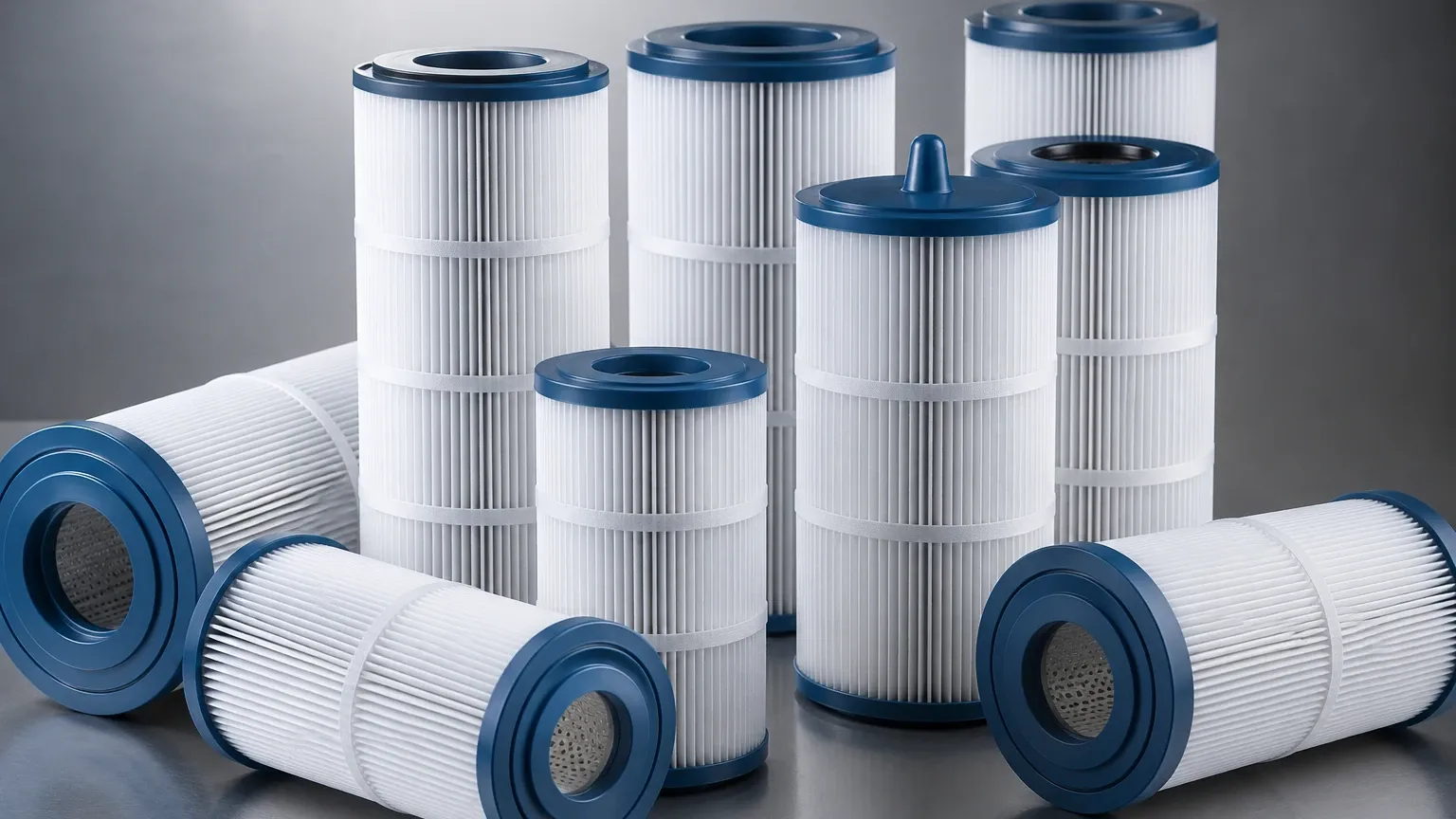
Because the 5025 cartridges are over 32 inches long, they are subject to significant hydraulic forces. High-quality cartridges feature reinforced end caps—usually made of high-impact polyurethane—and internal support cores. The core must be rigid enough to resist collapsing under the differential pressure (Delta P) that occurs as the filter becomes loaded with debris. Furthermore, external bands or "pleat stabilizers" are often used to prevent the pleats from bunching together, which would otherwise reduce the effective filtration area and cause localized high-velocity zones that can lead to "channeling" (where debris is forced through the media).
Operational Challenges and Maintenance Protocols
For B2B operators, the total cost of ownership (TCO) of a filtration system is heavily influenced by the maintenance protocol. In the Hayward 5025 system, the cluster design offers advantages in terms of debris capacity, but it also requires a disciplined approach to cleaning and monitoring.
Monitoring Differential Pressure
The primary indicator for cartridge service is the pressure gauge on the filter tank. A typical rule of thumb is to clean or replace the cartridges when the pressure rises 8 to 10 PSI above the "clean" starting pressure. In industrial cooling or process water applications, waiting too long to service the cartridges can lead to "debris bypass" or permanent deformation of the polyester fibers.
Cleaning Procedures
Unlike sand filters, which are backwashed, cartridge filters must be manually cleaned. This involves removing the four elements and washing them with a high-pressure (but not damaging) water stream. In environments with high mineral content or organic loading, chemical soaking may be required to remove scale or oils. However, repeated chemical cleaning can degrade the bonded fibers of standard polyester cartridges, eventually necessitating a full replacement.
Engineering Considerations for Custom and Industrial Filtration
While the Hayward 5025 is a robust system for many water treatment scenarios, certain industrial environments exceed the capabilities of standard polyester media. In sectors such as chemical processing, pharmaceutical manufacturing, or high-temperature fluid handling, the limitations of synthetic fabrics become apparent.
Temperature and Chemical Limits
Polyester media typically has a maximum operating temperature of approximately 140°F (60°C). If the process fluid exceeds this, the fibers may soften or fuse, leading to a total failure of the filtration system. Similarly, highly acidic or alkaline fluids can dissolve the binders used in synthetic cartridges.
In these instances, engineers often pivot toward stainless steel Filter Cartridges. Stainless steel wire mesh or sintered metal fiber media provides several advantages:
* Temperature Resistance: Capable of operating in environments exceeding 500°F.
* Chemical Compatibility: Excellent resistance to a wide range of solvents, acids, and bases.
* Cleanability: Metal cartridges can be ultrasonically cleaned or backpulsed, allowing for a much longer service life in heavy-load industrial applications.
Custom OEM Solutions
For manufacturers who integrate Hayward-style housings into their own equipment, OEM customization is a frequent requirement. This might involve modifying the end-cap geometry to ensure a proprietary fit or adjusting the micron rating to meet specific downstream protection requirements for RO membranes or precision nozzles. Custom manufacturers like Kaifil specialize in bridging the gap between standard water filtration and high-performance industrial requirements, providing metal-based or reinforced synthetic elements that fit standard 5025-sized housings.
Total Cost of Ownership and Selection Strategy
When evaluating replacement options for Hayward 5025 cartridges, purchasing teams must weigh the initial acquisition cost against the operational lifespan.
Initial Cost vs. Longevity
Generic aftermarket cartridges are often available at a lower price point, but they may utilize thinner media or less robust internal cores. In a B2B setting, the labor cost of frequent cartridge changes and the potential for system downtime often outweigh the savings of a cheaper component. A high-quality cartridge with a higher pleat count will provide a lower initial pressure drop and a longer time-to-clog, directly translating to lower energy costs for the circulation pumps.
Verification of Specifications
Before procurement, it is essential to confirm the following data points with the supplier:
1. Media Weight: Often measured in ounces per square yard; heavier media typically offers better durability.
2. Core Strength: Ensure the center core is constructed from a material that can withstand the maximum pump pressure of the system.
3. End Cap Integrity: Check for chemical resistance if the water is treated with high concentrations of chlorine, ozone, or other oxidizers.
For specialized industrial applications, consulting with a manufacturer that understands the nuances of material science and fluid dynamics is critical. Whether the application requires standard polyester elements or advanced stainless steel Filter Cartridges, the goal remains the same: achieving consistent effluent quality with minimal hydraulic resistance.
Conclusion
The Hayward 5025 series remains a versatile platform for high-flow water filtration. By understanding the technical requirements of the CX580XRE cartridges—ranging from the 525-square-foot surface area to the mechanical limits of the polyester media—operators can make informed decisions that enhance system reliability. For standard commercial water, high-quality synthetic replacements are often sufficient. However, as the complexity of the fluid or the severity of the environment increases, the transition to custom-engineered or metal-based filtration solutions becomes a necessary step in optimizing industrial performance.
