


Aqua Flow 50 Filter Cartridges
In the landscape of industrial liquid processing, the selection of filtration media is a critical decision that impacts system efficiency, product purity, and long-term operational costs. Among the various configurations available to engineers, the Aqua Flow 50 filter cartridges represent a specific class of high-capacity filtration components designed for high-flow applications. These cartridges are typically utilized in environments where large volumes of water or process fluids must be treated with minimal pressure drop and maximum particulate retention.
Understanding the technical nuances of these cartridges is essential for procurement teams and maintenance engineers. Whether managing a municipal water treatment plant, a chemical processing facility, or a large-scale food and beverage production line, the performance of Filter Cartridges dictates the overall reliability of the fluid handling system. This guide explores the engineering specifications, material considerations, and selection criteria associated with Aqua Flow 50 systems and their industrial counterparts.
Understanding the Aqua Flow 50 Specification
The "50" designation in Aqua Flow 50 filter cartridges often refers to the physical dimensions or the specific flow-handling capability of the unit—most commonly a 50-inch length or a high-flow design capable of managing significant gallons per minute (GPM). In large-scale industrial housings, using longer cartridges or high-flow variants reduces the number of individual elements required, which simplifies change-out procedures and reduces the footprint of the filtration vessel.
From an engineering perspective, these cartridges are designed to provide a high surface area. This is achieved through pleating or specialized depth-loading structures. By increasing the effective filtration area, the system can maintain a lower flux (flow per unit area), which generally leads to higher filtration efficiency and a longer service life before the terminal differential pressure is reached.
Material Engineering and Chemical Compatibility
When evaluating aqua flow 50 filter cartridges, material selection is the primary factor in determining suitability for a specific application. Most standard high-flow cartridges are constructed from polypropylene, polyester, or glass fiber. However, for demanding industrial environments, stainless steel alternatives provide distinct advantages.
Polypropylene and Synthetic Media
Polypropylene is the most common material for water-based applications due to its broad chemical resistance and cost-effectiveness. It is hydrophobic and generally inert, making it suitable for food-grade applications and general pre-filtration. However, synthetic media have temperature limitations, typically losing structural integrity above 180°F (82°C).
Stainless Steel Filtration Elements
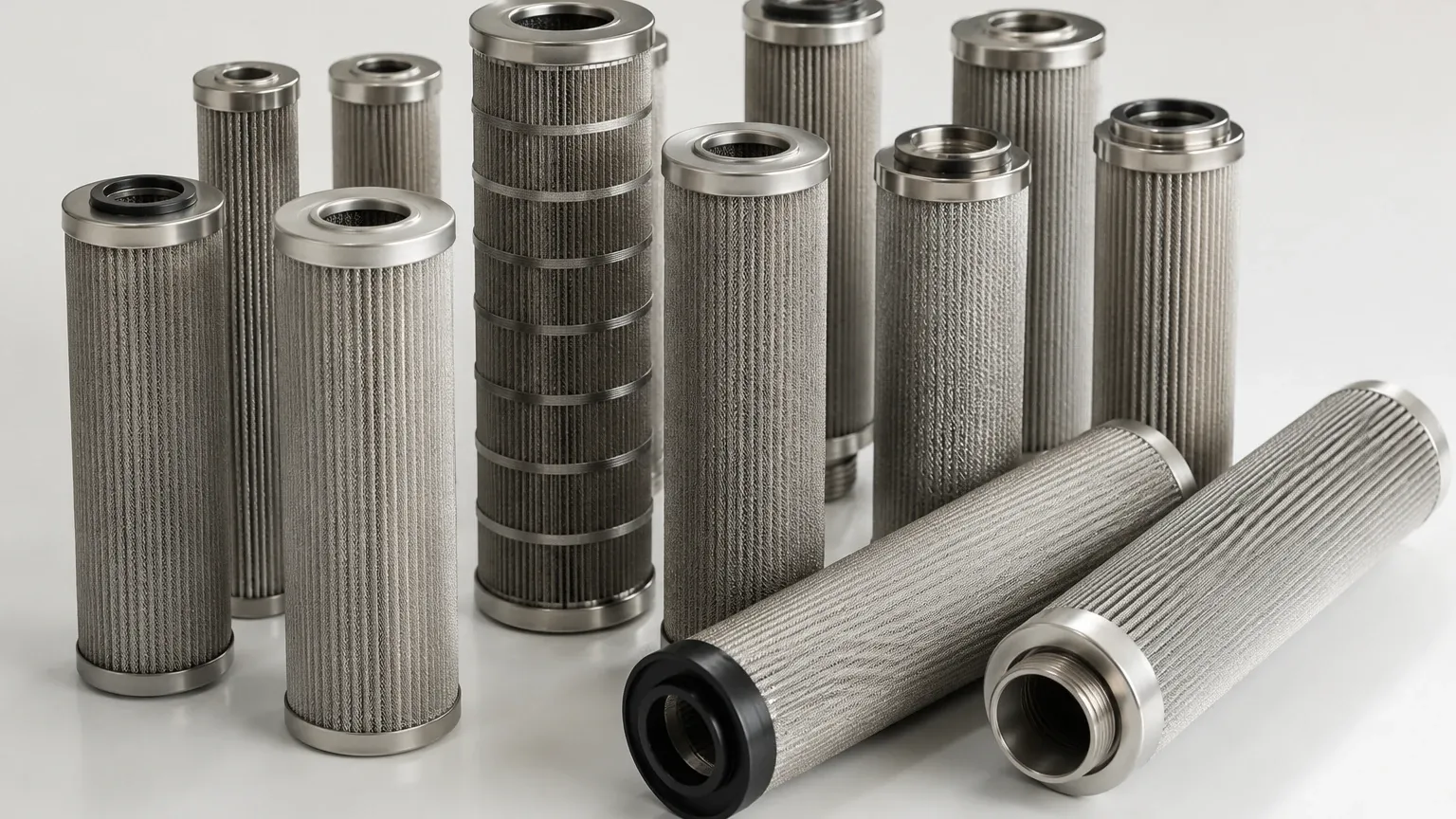
In applications involving high temperatures, aggressive solvents, or high-pressure differentials, stainless steel wire mesh or sintered metal cartridges are preferred. Kaifil specializes in manufacturing custom stainless steel Filter Cartridges that can serve as durable replacements for synthetic Aqua Flow 50 style elements. Stainless steel offers:
- Thermal Stability: Capable of operating in environments exceeding 500°F.
- Cleanability: Unlike disposable synthetic filters, metal mesh can be backwashed or ultrasonically cleaned, significantly reducing the total cost of ownership.
- Structural Integrity: Metal cartridges resist collapsing under high differential pressure (dP) scenarios that would bypass or destroy a polymer filter.
Performance Metrics: Flow Rates and Filtration Efficiency
Engineers must distinguish between nominal and absolute filtration ratings when selecting aqua flow 50 filter cartridges. A nominal rating indicates the filter can trap a large percentage of particles of a certain size, but it does not guarantee 100% retention. An absolute rating, often defined by a Beta Ratio (e.g., Beta 5000), ensures that 99.9% of particles at the specified micron level are captured.
Flow Capacity and Pressure Drop
The Aqua Flow 50 series is engineered for high flow. A single 50-inch high-flow cartridge can often replace up to 20 standard 2.5-inch diameter cartridges. This consolidation is beneficial for:
1. Reducing Seal Points: Fewer cartridges mean fewer O-rings and gaskets, reducing the risk of bypass.
2. Lower Initial dP: High-flow designs feature optimized internal cores and outer cages that minimize turbulence and resistance, ensuring that the pump energy is used for fluid transport rather than overcoming filter resistance.
Operational Considerations for Industrial Systems
Implementing aqua flow 50 filter cartridges requires careful consideration of the housing and the fluid dynamics of the system. Industrial filters are not "set and forget" components; they require monitoring to prevent system failure.
Differential Pressure Monitoring
The most critical metric for any filtration system is the differential pressure (the difference in pressure between the inlet and the outlet). For most Aqua Flow style cartridges, the recommended change-out pressure is between 20 and 35 PSI. Operating beyond this limit risks "unloading," where captured contaminants are forced through the media, or structural failure of the cartridge core.
Seal Selection
The integrity of the filtration process is only as good as the seal between the cartridge and the housing. Common seal materials include:
- Buna-N: Standard for water and general oils.
- EPDM: Excellent for hot water, steam, and certain acids.
- Viton (FKM): Required for high temperatures and aggressive chemicals.
- PTFE/Teflon: Used for maximum chemical inertness, though often requiring specialized mechanical seals due to its lack of elasticity.
Stainless Steel vs. Polymer: Choosing the Right Filter Cartridges
While polymer-based aqua flow 50 filter cartridges are the industry standard for single-use applications, many industrial facilities are transitioning to stainless steel Filter Cartridges to meet sustainability goals and improve process reliability.
When to Stick with Polymer
If the process involves highly corrosive fluids that attack 304 or 316L stainless steel (such as certain concentrated chlorides or strong acids), or if the particulate load is so varied that cleaning is impossible, high-quality disposable polymer cartridges remain the best choice for pre-filtration.
When to Upgrade to Stainless Steel
If the application involves steam filtration, high-viscosity fluids (like resins or heavy oils), or high-purity requirements where fiber migration from synthetic media is a risk, stainless steel is the superior engineering choice. Kaifil’s precision-engineered wire mesh filters provide a fixed pore structure that does not shift under pressure, ensuring consistent effluent quality throughout the entire filtration cycle.
Maintenance, Cleaning, and Replacement Protocols
To maximize the lifespan of aqua flow 50 filter cartridges, a structured maintenance schedule is required. For disposable units, this involves tracking the volume of fluid processed and the dP trends. For cleanable stainless steel units, the process is more involved but offers greater long-term savings.
Cleaning Procedures for Metal Cartridges
1. Backwashing: Reversing the flow of clean fluid through the cartridge to dislodge surface-loaded particulates.
2. Chemical Soaking: Using surfactants or solvents to dissolve organic or chemical buildup.
3. Ultrasonic Cleaning: Using high-frequency sound waves in a liquid bath to remove fine particles trapped deep within the wire mesh or sintered layers.
Verification of Integrity
After cleaning or upon installing new cartridges, engineers should perform an integrity test (such as a bubble point test or pressure hold test) to ensure there are no leaks in the media or seals. This is particularly vital in the pharmaceutical and food and beverage industries where microbial or particulate contamination can lead to product recalls.
Customization and OEM Solutions
Many industrial systems utilize proprietary housing designs that may not perfectly accommodate standard aqua flow 50 filter cartridges. In these instances, custom manufacturing becomes necessary. Kaifil provides OEM services to develop filtration components that match specific length, diameter, and end-cap requirements.
Customization options include:
- Reinforced Cores: For high-viscosity applications where standard cores might buckle.
- Specialized End-Caps: Including DOE (Double Open End), Code 7 (226 O-rings with locking tabs), or threaded connections for secure mounting.
- Multi-Layered Mesh: Combining different mesh counts to create a graduated density, allowing for both depth filtration and precise surface straining in a single element.
Total Cost of Ownership (TCO) Analysis
When specifying Filter Cartridges, the purchase price is only one component of the total cost. Engineers must also account for:
- Labor Costs: The time required for staff to open housings and replace elements.
- Disposal Costs: Synthetic filters used in hazardous chemical processes can be expensive to dispose of as regulated waste.
- Downtime: The lost production time during filter change-outs.
- Energy Consumption: The cost of running pumps against high differential pressure as filters clog.
By selecting a high-capacity Aqua Flow 50 configuration or a reusable stainless steel alternative, facilities can significantly reduce these hidden costs. A robust filtration strategy focuses on extending the interval between interventions while maintaining the required fluid cleanliness levels.
Conclusion
Aqua Flow 50 filter cartridges are a cornerstone of high-flow industrial filtration, providing the surface area and flow capacity needed for demanding large-scale operations. However, the effectiveness of these components depends on a deep understanding of material compatibility, micron efficiency, and structural limits. By evaluating whether a standard polymer cartridge or a custom stainless steel solution is appropriate, engineering teams can optimize their processes for both performance and cost-efficiency. For those requiring specialized metal filtration components or custom-designed cartridges, partnering with a manufacturer like Kaifil ensures that the filtration solution is tailored to the specific rigors of the industrial environment.
