


Porous Tube
In the landscape of industrial filtration and fluid handling, the porous tube stands as a foundational component for precision separation, gas sparging, and fluid distribution. Unlike standard piping or perforated tubing, a high-performance porous tube is engineered with a controlled internal structure that allows for the passage of fluids while retaining specific particulate matter. For engineers and procurement specialists, selecting the right filtration media requires a deep understanding of material science, pore geometry, and the mechanical stresses of industrial environments.
As a specialized manufacturer, Kaifil provides custom stainless steel filtration solutions designed to meet the rigorous demands of modern processing industries. This guide explores the technical nuances of the porous tube, offering insights into material selection, performance evaluation, and the engineering considerations necessary for optimizing filtration systems. For more information on our full range of capabilities, visit our Main Page.
Understanding the Engineering of Porous Tubes
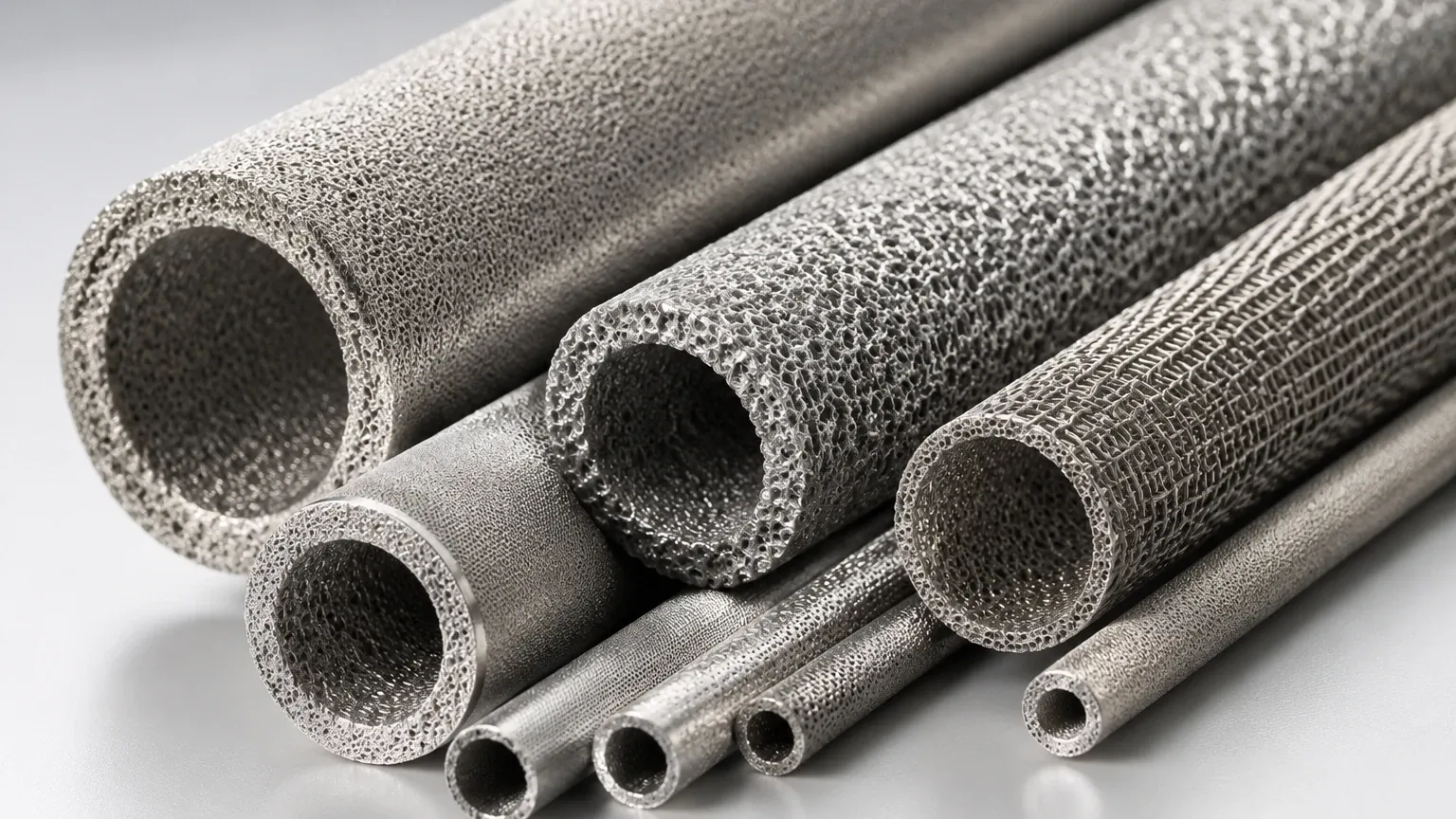
A porous tube is defined by its permeability and its ability to act as a functional barrier. In industrial applications, these tubes are typically manufactured through sintering processes or by layering precision-woven wire mesh. The primary objective is to create a "tortuous path" for the fluid, ensuring that particles larger than the specified micron rating are trapped either on the surface or within the depth of the media.
Pore Size and Distribution
One of the most critical factors in porous tube engineering is pore size distribution. A narrow distribution ensures consistent filtration performance and predictable flow rates. If the pores are too varied, the tube may suffer from premature clogging in localized areas or allow "bypass" where larger contaminants pass through wider openings. Engineers must specify the absolute micron rating—the size of the largest particle that can pass through the media—rather than just the nominal rating to ensure process integrity.
Porosity vs. Structural Strength
There is a constant engineering trade-off between porosity (the volume of open space within the material) and mechanical strength. Higher porosity typically results in lower pressure drops and higher flow rates, but it can compromise the tube's ability to withstand high differential pressures. High-quality porous tubes are engineered to maintain structural integrity under both internal and external pressure, preventing collapse or bursting during heavy-duty cycles or backpulsing cleaning operations.
Material Selection and Manufacturing Processes
The environment in which a porous tube operates dictates the materials and manufacturing methods used. Stainless steel is the industry standard due to its corrosion resistance, thermal stability, and mechanical durability.
Sintered Metal Powder Tubes
Sintered metal porous tubes are created by compacting stainless steel powder into a cylindrical shape and heating it in a controlled-atmosphere furnace. This process bonds the metal particles without melting them, preserving the intricate network of pores. These tubes are favored for depth filtration and gas sparging because of their rigid structure and high resistance to heat and chemicals. Common alloys include 316L stainless steel, which offers superior resistance to pitting and crevice corrosion in chloride-rich environments.
Sintered Wire Mesh Tubes
For applications requiring high flow rates and easy cleanability, sintered wire mesh porous tubes are often the preferred choice. These are constructed by diffusing multiple layers of stainless steel wire mesh together. The result is a media that combines the precision of fine mesh with the structural support of coarser mesh. This multi-layer construction provides excellent surface filtration characteristics, making it ideal for applications where cake buildup is expected and must be removed through backwashing.
Custom Alloys for Extreme Conditions
While 304 and 316L stainless steel cover the majority of industrial needs, certain chemical processes involve highly aggressive media. In these cases, porous tubes can be manufactured from specialized alloys like Hastelloy, Monel, or Inconel. These materials provide the necessary longevity in high-temperature or highly acidic environments where standard stainless steel would fail.
Key Performance Metrics for Industrial Filtration
When evaluating a porous tube for a specific application, engineers must look beyond basic dimensions. Several performance metrics determine the total cost of ownership and the efficiency of the filtration system.
Permeability and Pressure Drop (ΔP)
Permeability refers to the ease with which a fluid passes through the porous media. A high-quality porous tube should provide the required filtration efficiency with the lowest possible pressure drop. A high initial ΔP indicates that the system will require more energy to maintain flow and will reach its terminal pressure drop faster, necessitating more frequent cleaning or replacement.
Bubble Point Pressure
The bubble point test is a non-destructive method used to verify the integrity and pore size of a porous tube. By submerging the tube in a liquid and increasing internal air pressure until the first bubble appears, engineers can calculate the maximum pore size. This is a vital quality control metric for ensuring that the manufacturing process has met the design specifications.
Dirt Holding Capacity
This metric defines how much contaminant the porous tube can retain before the pressure drop reaches a critical level. Sintered powder tubes generally offer higher dirt-holding capacity due to their depth-loading characteristics, whereas wire mesh tubes are often selected for surface-loading applications where the filter cake itself provides an additional layer of filtration.
Critical Applications Across Industries
The versatility of the porous tube makes it indispensable across a wide range of sectors. Its ability to be customized in terms of length, diameter, and micron rating allows it to be integrated into diverse systems.
Chemical and Petrochemical Processing
In chemical plants, porous tubes are used for catalyst recovery, solvent filtration, and gas-liquid separation. The high thermal resistance of stainless steel allows these tubes to operate in high-temperature reactors where polymer or fabric filters would melt or degrade. Their chemical compatibility ensures that the filtered product remains pure and free from media migration.
Food and Beverage Industry
Hygiene is paramount in food and beverage production. Stainless steel porous tubes are used for steam filtration (to ensure culinary-grade steam), carbonation (sparging CO2 into beverages), and the removal of yeast or bacteria in brewing and bottling. The smooth surface finish and ability to withstand Clean-In-Place (CIP) chemicals make them a staple in sanitary environments.
Pharmaceutical and Biotechnology
In the pharmaceutical sector, porous tubes are utilized for sterile air venting, nitrogen sparging in fermenters, and the filtration of active pharmaceutical ingredients (APIs). The precision of sintered metal allows for the consistent removal of sub-micron particles, ensuring compliance with strict regulatory standards.
Hydraulic and Industrial Equipment
Protecting sensitive hydraulic components from particulate wear is essential for machinery longevity. Porous tubes serve as robust filter elements in hydraulic reservoirs and high-pressure lines, capable of handling the rapid pressure fluctuations and heavy oil viscosities typical of industrial power systems.
Selection Criteria for Engineering and Procurement
Choosing a porous tube involves more than matching a part number. To ensure optimal performance, the following factors must be confirmed before purchase:
1. Fluid Characteristics: What is the viscosity, density, and temperature of the fluid? High-viscosity fluids require larger surface areas or coarser pores to prevent excessive pressure drop.
2. Contaminant Profile: What is the nature of the solids being removed? Are they hard, abrasive particles or soft, deformable gels? This determines whether surface or depth filtration is more effective.
3. Operating Conditions: Will the tube be subject to continuous flow or pulse cycles? Does the application involve thermal cycling that could lead to metal fatigue?
4. Cleaning Requirements: Can the tube be cleaned in-situ via backpulsing, or does it need to be removed for ultrasonic cleaning or chemical baths? The mechanical design must support the chosen cleaning method.
5. Customization Needs: Does the application require specific end-fittings (such as NPT threads, flanges, or O-ring seals) to integrate into existing housing? Kaifil specializes in custom OEM designs to ensure a perfect fit.
Maintenance and Operational Longevity
The primary advantage of a stainless steel porous tube over disposable filters is its cleanability. However, the longevity of the tube depends on a proper maintenance regimen. Over time, fine particles can become deeply embedded in the pore structure, a phenomenon known as "blinding."
Cleaning Methodologies
* Backwashing/Backpulsing: Reversing the flow of fluid to dislodge surface contaminants. This is highly effective for wire mesh and surface-loading tubes.
* Ultrasonic Cleaning: Using high-frequency sound waves in a cleaning solution to vibrate particles out of the pores. This is the most effective method for sintered powder tubes used in depth filtration.
* Chemical Cleaning: Using acids, alkalis, or solvents to dissolve organic or inorganic deposits. It is vital to ensure that the cleaning agent is compatible with the tube material (e.g., avoiding high concentrations of hydrochloric acid on standard stainless steel).
Replacement Indicators
While durable, porous tubes are not infinite. They should be replaced if they show signs of mechanical deformation, if the bubble point test indicates a breach in the media, or if the "clean" pressure drop after maintenance remains significantly higher than the original factory specification. Monitoring these trends helps avoid unexpected downtime and protects downstream equipment.
Conclusion
The porous tube is a sophisticated engineering tool that provides reliable, repeatable filtration in the most demanding industrial environments. By selecting the appropriate material, pore structure, and mechanical design, facilities can achieve higher product purity, protect expensive machinery, and reduce long-term operational costs.
At Kaifil, we combine manufacturing expertise with deep engineering knowledge to deliver customized filtration solutions. Whether you require standard sintered tubes or complex OEM components, our team is dedicated to supporting your specific application requirements. To explore our full capabilities and technical resources, please visit our Main Page.
