


Industrial Filtration: Evaluating Woven Wire Mesh for Professional Applications
In the landscape of industrial procurement, selecting the correct material for filtration, screening, or structural support is a critical engineering decision. Woven wire mesh serves as a cornerstone in sectors ranging from chemical processing and pharmaceuticals to food production and hydraulic systems. While many maintenance teams or small-scale operators might initially consider consumer-grade options, such as bunnings woven wire mesh, for quick repairs or non-critical applications, industrial-scale operations require a deeper technical analysis of material performance, weave precision, and long-term durability.
For engineers and procurement professionals, the distinction between general-purpose hardware and precision-engineered filtration components is significant. This guide explores the technical parameters of industrial Woven Wire Mesh, the limitations of retail-grade products, and the engineering considerations necessary for optimizing filtration performance.
Understanding the Scope: Retail vs. Industrial Woven Wire Mesh
When searching for "bunnings woven wire mesh," users are typically looking for immediate, off-the-shelf solutions for domestic or light commercial tasks. These products are excellent for pest control, garden fencing, or basic ventilation screens. However, in a B2B or industrial context, the requirements for filtration accuracy and chemical resistance far exceed what is available at a standard hardware outlet.
Industrial applications demand specific alloy certifications (such as SS304 or SS316L), precise aperture sizes measured in microns, and mechanical strength capable of withstanding high-pressure differentials. While retail options provide convenience, industrial manufacturers like Kaifil provide the technical documentation and customization required to ensure process integrity and regulatory compliance.
Engineering Specifications of Woven Wire Mesh
To select the right mesh, engineers must evaluate several key technical specifications. These parameters determine how the mesh will behave under thermal stress, chemical exposure, and mechanical load.
1. Material Selection: SS304 vs. SS316L
Stainless steel is the industry standard for woven wire mesh due to its corrosion resistance and mechanical properties.
* Grade 304: The most common grade, offering good resistance to atmospheric corrosion and many organic and inorganic chemicals. It is suitable for food processing and general industrial screening.
* Grade 316L: Contains molybdenum, which provides superior resistance to chlorides and pitting. This is essential for marine environments, pharmaceutical manufacturing, and aggressive chemical processing.
2. Weave Types and Their Applications
The method by which wires are interlaced significantly impacts the mesh's filtration characteristics and structural integrity.
* Plain Weave: The most straightforward pattern where each warp wire crosses over and under each shute wire. It offers the highest open area and is ideal for high-flow applications.
* Twill Weave: Each shute wire passes over and under two warp wires. This allows for a heavier wire diameter in a given mesh count, providing increased strength for finer meshes.
* Dutch Weave (Plain and Twill): Utilizes a higher density of wires in one direction than the other. This creates a "tortuous path" for particles, offering precise filtration ratings and high pressure resistance. This is the standard for high-performance filter cartridges.
3. Mesh Count and Micron Rating
Mesh count refers to the number of openings per linear inch. However, for filtration, the micron rating (the size of the largest particle that can pass through) is the more critical metric. Industrial suppliers provide both nominal and absolute filtration ratings, allowing engineers to match the mesh to the specific particle size distribution of their process fluid.
Performance Considerations in Industrial Filtration
When transitioning from a general-purpose product like bunnings woven wire mesh to an industrial-grade solution, several performance factors must be analyzed to ensure the longevity of the filtration system.
Pressure Drop and Flow Rate
The open area percentage of a woven wire mesh determines the pressure drop across the filter. A higher open area reduces energy consumption by requiring less pump pressure to move fluid through the system. Industrial manufacturers calculate these values based on fluid viscosity and flow velocity to prevent premature filter failure or system cavitation.
Mechanical Strength and Durability
In hydraulic systems or high-pressure chemical reactors, the mesh is subjected to significant mechanical stress. Industrial mesh is often sintered—a process where multiple layers of mesh are bonded together using heat and pressure without melting the wires. This creates a robust, multi-layered structure that maintains its pore geometry even under extreme conditions.
Chemical and Thermal Compatibility
Unlike retail-grade mesh, which may have inconsistent alloy purity, industrial mesh is supplied with material test reports (MTRs). This ensures that the mesh will not degrade when exposed to specific solvents, acids, or high-temperature steam sterilization (SIP) processes common in the pharmaceutical and food industries.
Customization and OEM Capabilities
One of the primary advantages of working with a dedicated manufacturer like Kaifil is the ability to customize the mesh to fit specific equipment. While a standard roll of mesh might suffice for a simple screen, complex industrial processes often require:
* Custom Dimensions: Precision-cut circles, rectangles, or complex geometric shapes.
* Framed Panels: Mesh edge-treated or welded into stainless steel frames for easy installation and structural support.
* Multi-Layer Composites: Combining different mesh counts to create a graduated filtration effect, extending the service life of the filter.
* Cylindrical and Pleated Cartridges: Converting flat mesh into high-surface-area filter elements for compact housings.
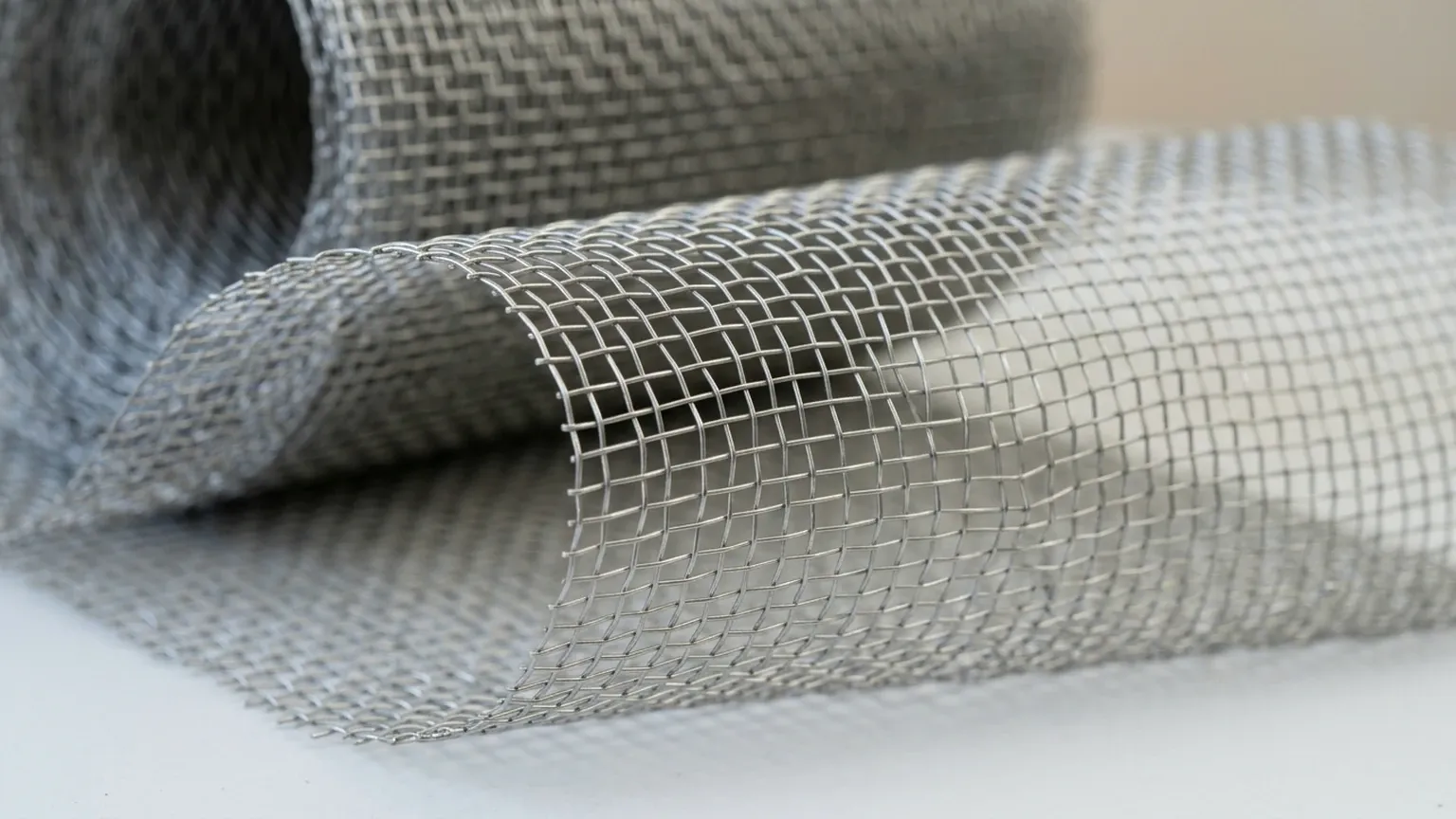
For those requiring specific technical configurations, Plain, twill and dutch woven wire mesh in SS304/316L — rolls, cut mesh and framed panels. Send mesh count or micron target for a technical quote. provides a pathway to professional-grade solutions that far exceed the capabilities of off-the-shelf hardware.
Total Cost of Ownership (TCO) in Filtration
Procurement teams often focus on the initial purchase price, but the Total Cost of Ownership (TCO) is a more accurate measure of value. A lower-quality mesh may have a lower upfront cost but can lead to higher expenses through:
1. Frequent Replacement Cycles: Poor-quality wire or inconsistent weaving leads to faster wear and tear.
2. Production Downtime: Every time a filter fails or requires cleaning, the production line stops. High-quality industrial mesh is designed for backwashing and ultrasonic cleaning, significantly extending its usable life.
3. Product Contamination: Inaccurate mesh apertures can allow oversized particles to pass through, potentially ruining a batch of product or damaging downstream equipment like pumps and valves.
By investing in precision-engineered Woven Wire Mesh, facilities reduce the risk of catastrophic failure and optimize their maintenance schedules.
How to Specify Woven Wire Mesh for Your Project
To receive an accurate quote and ensure the mesh performs as expected, engineers should provide the following information to their supplier:
* Primary Purpose: Is it for filtration, separation, or structural support?
* Material Grade: Is SS304 sufficient, or is SS316L required for corrosion resistance?
* Mesh Count or Micron Rating: Specify the required particle retention level.
* Wire Diameter: This affects both the strength of the mesh and the open area.
* Dimensions and Quantity: Specify if rolls, cut pieces, or fabricated components are needed.
* Operating Environment: Include temperature, pressure, and the chemical composition of the fluid or gas being filtered.
Conclusion
While products like bunnings woven wire mesh serve an important role in the consumer market, they are rarely suitable for the rigorous demands of industrial filtration. For engineers and technical buyers, the priority must be on precision, material integrity, and application-specific design. By understanding the nuances of weave types, alloy properties, and mechanical performance, industrial facilities can achieve more efficient, durable, and cost-effective filtration outcomes.
Kaifil remains committed to supporting global industries with high-performance filtration solutions. Whether you are designing a new system or looking to optimize an existing process, selecting the right woven wire mesh is the first step toward operational excellence.
