


Nitrogen Sparger
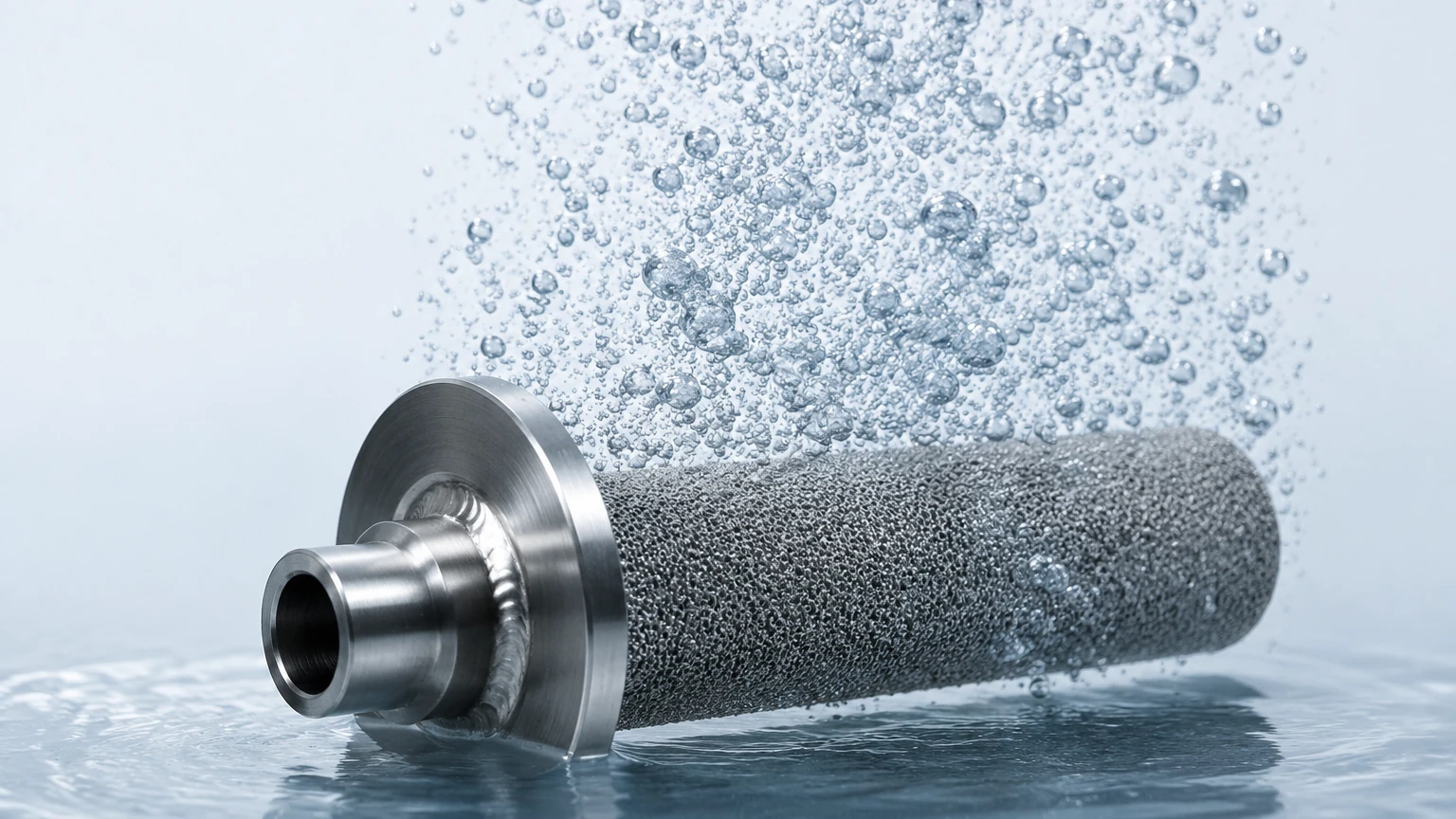
In industrial process engineering, the efficient introduction of gases into liquids is a fundamental requirement for chemical reactions, product preservation, and purification. A nitrogen sparger is a precision-engineered component designed to inject nitrogen gas into a liquid medium in the form of thousands of tiny bubbles. By maximizing the surface area of the gas-liquid interface, these devices facilitate rapid mass transfer, which is critical for processes such as oxygen stripping, carbonation, and pH control.
At Kaifil, we specialize in the manufacturing of high-performance stainless steel filtration and sparging solutions. Understanding the technical nuances of sparger design is essential for engineers and procurement teams who must balance performance, durability, and cost-effectiveness in demanding industrial environments.
The Science of Gas-Liquid Mass Transfer
The primary function of a nitrogen sparger is to enhance the efficiency of gas absorption or displacement. This is governed by the principles of mass transfer, where the rate of transfer is proportional to the available surface area between the gas and the liquid.
Traditional sparging methods, such as using a drilled pipe or an open-ended tube, produce large, buoyant bubbles. These bubbles rise quickly to the surface, providing minimal contact time and a low surface-area-to-volume ratio. In contrast, a porous nitrogen sparger—typically constructed from sintered stainless steel—creates a "cloud" of micro-bubbles.
Because the volume of a sphere decreases faster than its surface area as the radius shrinks, smaller bubbles provide significantly more contact area for the same volume of gas. This efficiency allows for faster oxygen removal (deoxygenation) and reduced nitrogen consumption, leading to lower operational costs. For technical teams evaluating these systems, the choice between a coarse drilled pipe and a precision sintered sparger often comes down to the required speed of the process and the sensitivity of the medium to dissolved oxygen.
Material Selection and Engineering Durability
Industrial environments often involve corrosive chemicals, high temperatures, and high-pressure differentials. Consequently, the material of construction for a nitrogen sparger is a critical factor in its long-term reliability.
Stainless Steel 316L
Most industrial spargers are manufactured from 316L stainless steel. This low-carbon variant of 316 stainless steel offers superior corrosion resistance, particularly against chlorides and acidic environments common in chemical processing and food production. Its ability to withstand high temperatures makes it suitable for Steam-In-Place (SIP) sterilization in pharmaceutical applications.
Sintered Porous Structures
Kaifil utilizes advanced sintering technology to create porous metal components. This process involves bonding metal powders or wire meshes without melting them, resulting in a robust, rigid structure with interconnected pores. Unlike ceramic or plastic alternatives, sintered stainless steel spargers are resistant to thermal shock and mechanical stress, ensuring they do not crack or bypass gas under pressure spikes.
Critical Design Parameters for Engineers
When specifying a nitrogen sparger for a new or existing system, several engineering parameters must be confirmed to ensure optimal performance. Selecting the wrong configuration can lead to gas channeling, insufficient stripping, or excessive pressure drop.
1. Pore Size and Micron Rating
The micron rating of the porous media determines the initial size of the bubbles. Common ratings range from 0.5 microns to 100 microns. For high-efficiency oxygen stripping, a lower micron rating (e.g., 0.5 to 5 microns) is generally preferred to maximize surface area. However, finer pores require higher gas pressure to overcome the "bubble point" of the media.
2. Gas Flow Rate and Velocity
The volume of nitrogen required per minute (SCFM or SLPM) must be matched to the surface area of the sparger. If the gas velocity is too high, small bubbles will coalesce into larger ones, defeating the purpose of the porous media. Engineers must calculate the "exit velocity" to ensure it remains within the laminar flow regime.
3. Differential Pressure (∆P)
This is the difference between the gas supply pressure and the liquid head pressure. The sparger must be designed to handle the required flow rate at a manageable differential pressure. An excessively high ∆P can indicate that the sparger is undersized for the application or that the pore size is too restrictive.
4. Connection and Mounting Types
Integration into existing piping is facilitated through various connection types, including NPT threads, flange mounts, or Tri-Clamp fittings for sanitary applications. The physical orientation—whether the sparger is inserted via a side-wall nozzle or a dip tube—affects the bubble distribution pattern throughout the vessel.
Industrial Applications of Nitrogen Sparging
Nitrogen spargers are utilized across a broad spectrum of industries, each with specific performance requirements.
Food and Beverage
In the production of edible oils, juices, and wine, dissolved oxygen can cause oxidation, leading to off-flavors and reduced shelf life. Nitrogen sparging is used to "strip" the oxygen out of the liquid. In the wine industry, for example, nitrogen is bubbled through the wine before bottling to ensure the oxygen level is below a specific threshold (often less than 0.5 mg/L).
Chemical and Petrochemical Processing
Nitrogen is frequently used for inerting or blanketing. By sparging nitrogen into a chemical reactor, engineers can displace volatile organic compounds (VOCs) or oxygen, reducing the risk of combustion and preventing unwanted side reactions. The durability of stainless steel is paramount here, as the sparger may be submerged in aggressive solvents.
Pharmaceuticals and Biotechnology
In bioreactors, precise gas control is essential for cell growth. While oxygen is often the primary gas for aerobic fermentation, nitrogen spargers are used for pH control and to maintain an anaerobic environment when necessary. These components must meet strict sanitary standards, often requiring a high-polish finish to prevent bacterial entrapment.
Maintenance and Cleaning Protocols
To maintain the efficiency of a nitrogen sparger, regular maintenance is required, especially in liquids that contain solids or high concentrations of minerals. Over time, the porous surface can become blinded or fouled.
* Cleaning-In-Place (CIP): Many systems allow for chemical cleaning without removing the sparger. Caustic or acidic solutions are circulated to dissolve organic or mineral deposits.
* Ultrasonic Cleaning: For stubborn fouling, removing the sparger and placing it in an ultrasonic bath with a compatible cleaning agent is highly effective at dislodging particles from deep within the porous matrix.
* Backpulsing: In some continuous processes, a brief reverse flow of gas or liquid (backpulsing) can be used to clear the surface of the media during operation.
Engineers should monitor the differential pressure over time. A steady increase in ∆P at a constant flow rate is a primary indicator that the sparger requires cleaning.
Selecting a Custom Sparging Solution
Standard off-the-shelf spargers may not meet the specific geometry or flow requirements of a complex industrial vessel. Customization is often necessary to optimize the gas distribution pattern. This includes varying the length of the sparger element, the diameter of the porous section, and the configuration of the internal support structures.
As a manufacturer focused on precision metal filtration, Kaifil provides tailored OEM solutions that address these specific technical challenges. Whether you require a single high-efficiency sparger for a pilot plant or large-scale components for a refinery, our engineering team works to ensure the product meets your exact micron and flow specifications. To explore our full range of capabilities and technical data, we encourage you to visit our Main Page for detailed product specifications and application support.
Conclusion
The nitrogen sparger is more than just a gas inlet; it is a critical tool for process optimization. By selecting the correct material, pore size, and mechanical design, industrial facilities can achieve higher product quality, lower gas consumption, and reduced maintenance downtime. When evaluating your next filtration or sparging project, consider the long-term benefits of sintered stainless steel components and the value of a manufacturing partner who understands the complexities of fluid dynamics and material science. For further assistance with selection or custom designs, please review our resources on the Main Page.
