


Merv 17
In the landscape of industrial air and gas filtration, the Minimum Efficiency Reporting Value (MERV) scale serves as the primary benchmark for evaluating filter performance. Among these ratings, MERV 17 represents a critical threshold where standard mechanical filtration transitions into the realm of High-Efficiency Particulate Air (HEPA) performance. For engineers and facility managers operating in sensitive environments—such as pharmaceutical laboratories, semiconductor fabrication, and advanced chemical processing—understanding the technical nuances of MERV 17 is essential for maintaining system integrity and air quality standards.
While many industrial applications rely on the durability of stainless steel components for liquid and high-pressure gas filtration, the integration of MERV 17 rated systems often marks the final stage of a sophisticated multi-stage filtration strategy. This guide examines the technical specifications, engineering considerations, and application-specific requirements of MERV 17 filtration within the broader context of industrial process optimization.
Technical Specifications and Efficiency Ratings
The MERV rating system, defined by ASHRAE Standard 52.2, categorizes filters based on their ability to capture particles of varying sizes. A MERV 17 rating is significant because it indicates a filtration efficiency of at least 99.97% for particles in the 0.3-micron range. This particle size is widely considered the Most Penetrating Particle Size (MPPS), making it the most difficult to capture through traditional mechanical means.
To achieve this level of performance, MERV 17 filters utilize a combination of three primary physical mechanisms:
1. Interception: Occurs when a particle follows a gas streamline but comes within one particle radius of a filter fiber and adheres to it.
2. Impaction: Large particles with high inertia cannot follow the abrupt changes in airflow around fibers and instead collide directly with the filter media.
3. Diffusion: Extremely small particles (typically below 0.1 microns) exhibit Brownian motion, causing them to wander across streamlines and eventually contact the fibers.
For technical professionals, it is important to note that while MERV 17 is often equated with HEPA, the terms are not always interchangeable in a regulatory sense. HEPA is a specific performance standard (99.97% at 0.3 microns), whereas MERV is a scale. However, in most industrial HVAC and process air contexts, a MERV 17 filter provides the requisite efficiency to meet HEPA-level requirements.
Engineering Considerations: Pressure Drop and Airflow
One of the most critical factors in implementing MERV 17 filtration is the associated pressure drop, also known as static pressure resistance. Because the media required to capture 0.3-micron particles is extremely dense, it naturally creates a higher resistance to airflow compared to lower-rated filters.
Engineers must account for both the Initial Pressure Drop (the resistance of a clean filter) and the Final Pressure Drop (the point at which the filter is considered loaded and must be replaced). If a system is not designed with sufficient fan capacity to overcome this resistance, airflow will decrease, potentially leading to equipment overheating, poor ventilation, or the failure of cleanroom pressure differentials.
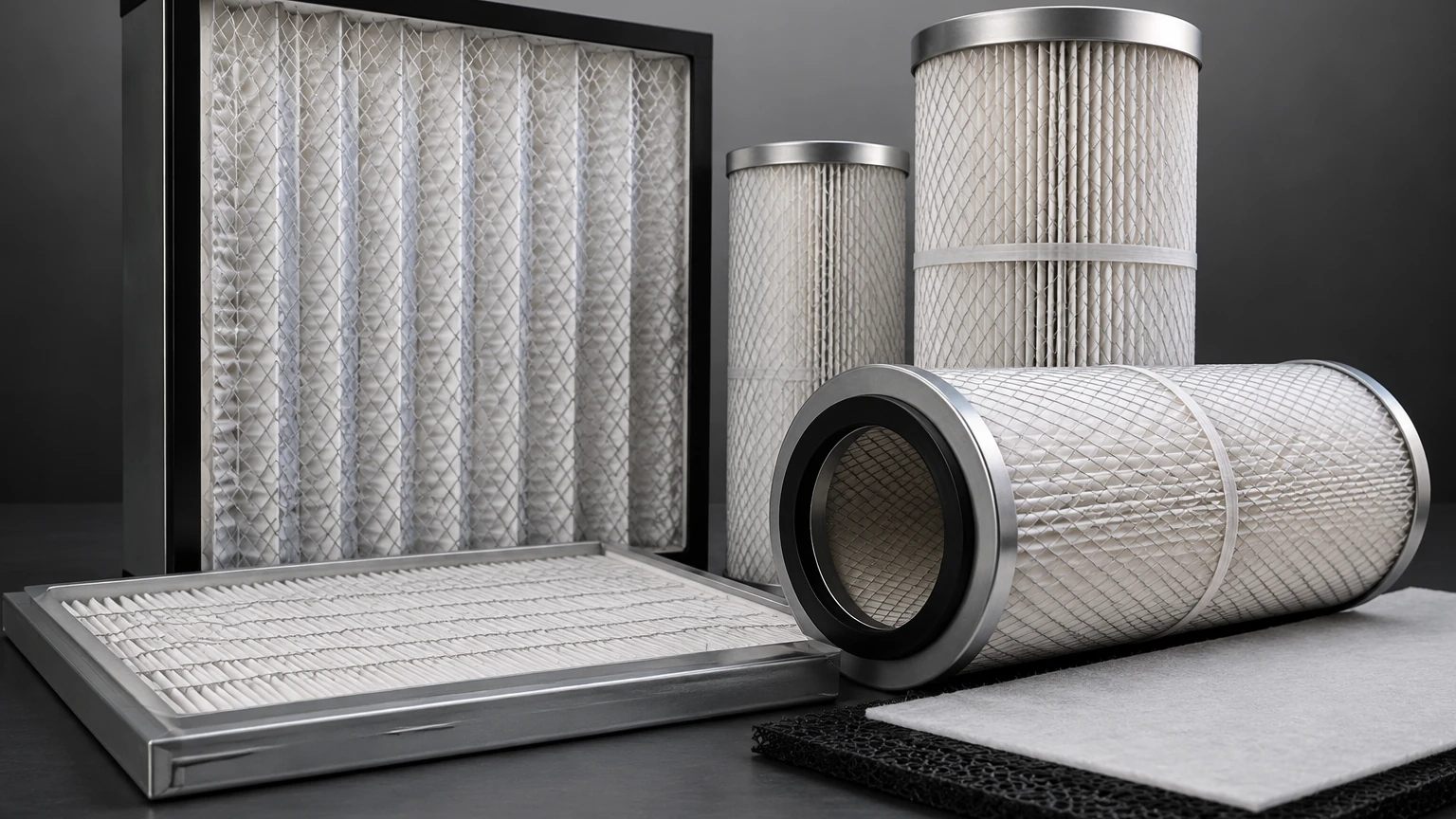
When upgrading a system to MERV 17, it is often necessary to evaluate the entire filtration string. Utilizing high-quality pre-filtration is a standard engineering practice to protect the expensive MERV 17 media. For example, using stainless steel wire mesh filters or pleated cartridges as primary stages can remove larger particulates that would otherwise prematurely clog the fine fibers of the HEPA-grade stage. This multi-stage approach optimizes the total cost of ownership by extending the service life of the highest-cost components. For more information on primary and secondary filtration components, you can visit the Main Page of our technical resource center.
Material Integrity and Industrial Durability
In industrial environments, the physical environment is often as challenging as the filtration requirements themselves. Standard MERV 17 filters often use glass microfibers or synthetic membranes. While these materials provide excellent efficiency, they are fragile and susceptible to damage from moisture, chemical vapors, and high temperatures.
This is where the choice of filter housing and support structures becomes paramount. In chemical processing or pharmaceutical manufacturing, the filter frames and the upstream/downstream supports are frequently constructed from 304 or 316L stainless steel. Stainless steel provides the necessary corrosion resistance and structural rigidity to ensure that the MERV 17 media remains perfectly sealed. Any bypass—even a microscopic gap around the filter frame—renders the MERV 17 rating moot, as contaminated air will follow the path of least resistance.
Engineers should verify the following material properties before installation:
* Chemical Compatibility: Ensure the filter media and gaskets can withstand exposure to process gases or cleaning agents.
* Temperature Limits: Standard HEPA filters may have binders or gaskets that degrade above 70°C (158°F). High-temperature applications require specialized metal-bonded or ceramic-based filtration solutions.
* Outgassing: In semiconductor or aerospace applications, the materials used in the filter must not release volatile organic compounds (VOCs) that could contaminate sensitive surfaces.
Applications in High-Precision Industries
The deployment of MERV 17 filtration is typically reserved for environments where particulate contamination poses a direct risk to product yield, patient safety, or experimental integrity.
Pharmaceutical and Biotech
In the production of sterile injectables or biological agents, MERV 17/HEPA filtration is mandatory for maintaining ISO Class 5 or Class 7 cleanroom standards. These filters remove bacteria, fungi, and many viral vectors from the air supply, ensuring that the manufacturing environment remains aseptic.
Food and Beverage Processing
While not all food production requires MERV 17, it is increasingly common in "high-care" areas where products are exposed to the air before packaging (e.g., aseptic filling of dairy or juices). Here, the filtration system prevents airborne spoilage organisms from entering the product stream, significantly extending shelf life without the need for chemical preservatives.
Chemical and Petrochemical Gas Streams
In certain chemical synthesis processes, ultra-pure gas is required to prevent catalyst poisoning. MERV 17 level filtration ensures that even sub-micron metallic or carbonaceous particles are stripped from the gas stream before they reach the reaction chamber.
Selection Criteria and Purchasing Checklist
When sourcing MERV 17 filtration solutions for an industrial project, purchasing teams and engineers should move beyond the simple efficiency rating and confirm several key performance indicators (KPIs). Relying on a manufacturer with expertise in custom filtration, such as those found on our Main Page, ensures that the components are engineered for the specific rigors of your application.
1. Face Velocity and Rated Airflow:
Confirm that the filter is rated for the specific CFM (Cubic Feet per Minute) required by your system. Operating a MERV 17 filter above its rated face velocity will significantly increase pressure drop and may cause "blow-through," where particles are forced through the media.
2. Certification and Testing:
Demand individual test reports for each filter. High-end industrial filters are typically leak-tested using PAO (Polyalphaolefin) or similar aerosol challenges to ensure the integrity of the media and the seal.
3. Gasket and Seal Configuration:
Decide between fluid seals (gel seals) and mechanical gaskets. Gel seals provide a more reliable, leak-proof connection in high-vibration environments or where frequent filter changes occur, whereas mechanical gaskets are often more cost-effective for standard HVAC applications.
4. Pre-filtration Compatibility:
Determine what level of pre-filtration is required. A common mistake is installing a MERV 17 filter without adequate MERV 8 or MERV 13 pre-filters, leading to rapid clogging and high replacement costs. Custom stainless steel mesh pre-filters are an excellent choice for systems where the pre-filter must be cleaned and reused rather than disposed of.
Maintenance and Replacement Cycles
The lifecycle of a MERV 17 filter is determined by the dust loading capacity and the environment's cleanliness. Unlike lower-rated filters that might be changed on a fixed calendar schedule, MERV 17 filters should be monitored via differential pressure gauges (manometers).
A typical replacement protocol involves:
* Monitoring: Recording the pressure drop weekly or integrating it into a Building Management System (BMS).
* Thresholds: Replacing the filter when the pressure drop reaches the manufacturer's recommended limit (often double the initial pressure drop, or roughly 1.0 to 1.5 inches of water gauge).
* Visual Inspection: Checking for signs of media dampness, mold growth, or frame deformation during scheduled shutdowns.
Failure to replace these filters in a timely manner not only compromises air quality but also puts undue stress on the ventilation motors, leading to increased energy consumption and potential mechanical failure.
Conclusion
MERV 17 filtration is a cornerstone of modern industrial contamination control. By providing 99.97% efficiency at the 0.3-micron level, these filters enable the production of life-saving medicines, high-performance electronics, and pure chemical products. However, the high efficiency of MERV 17 comes with engineering challenges, specifically regarding pressure drop and the need for robust system design.
For engineers, the key to success lies in a holistic approach: selecting the right media, ensuring the structural integrity of the housing with high-quality materials like stainless steel, and implementing a rigorous pre-filtration and maintenance strategy. By understanding these technical boundaries, organizations can achieve the precise filtration performance required for their most demanding industrial environments.
