


Industrial Guide to Stainless Steel Woven Wire Mesh: Sourcing, Specifications, and Performance
In the realm of industrial filtration and separation, the selection of materials is a critical engineering decision that impacts the efficiency, longevity, and safety of a process. Stainless steel woven wire mesh serves as a cornerstone for countless applications, from chemical processing and pharmaceutical manufacturing to food production and hydraulic systems.
When professionals search for terms like "stainless steel woven wire mesh bunnings," they are often at a crossroads between immediate retail availability and the specialized requirements of industrial-grade filtration. While retail hardware outlets provide accessible solutions for residential screening or basic DIY projects, industrial applications demand a level of precision, material traceability, and customization that only a specialized manufacturer can provide. This guide explores the technical nuances of Woven Wire Mesh and why understanding the distinction between general-purpose and industrial-grade mesh is vital for engineering success.
Understanding the Technical Architecture of Woven Wire Mesh
At its core, woven wire mesh is a structured fabric created by weaving longitudinal (warp) and transverse (weft) wires. The performance of this mesh is dictated by three primary variables: the weave type, the wire diameter, and the mesh count. For industrial engineers, these variables are not merely dimensions but are the determinants of filtration accuracy and structural integrity.
1. Plain Weave
The most common and straightforward weave, where each weft wire passes alternately over and under each warp wire. This results in a stable structure with square openings, ideal for general screening and low-pressure filtration.
2. Twill Weave
In a twill weave, each warp and weft wire passes alternately over two and under two successive wires. This technique allows for the use of heavier wires in a given mesh count, providing greater strength and the ability to produce finer meshes that would be impossible in a plain weave configuration.
3. Dutch Weave (Plain and Twill)
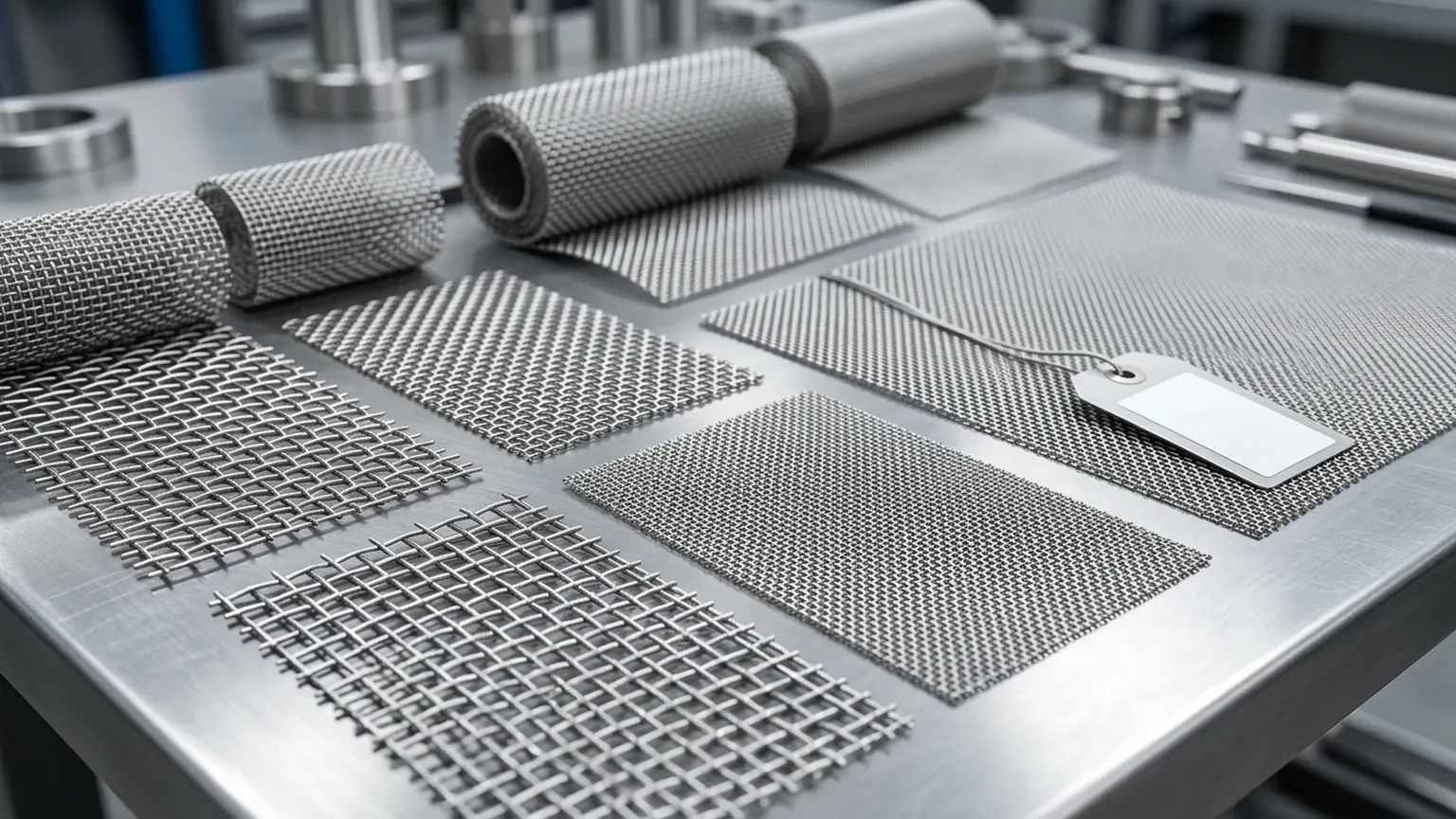
Dutch weaves utilize different diameters for warp and weft wires. The warp wires remain relatively heavy, while the weft wires are smaller and driven closer together. This creates a dense, wedge-shaped opening that offers superior filtration performance, particularly in high-pressure environments like hydraulic systems and fuel filtration. Plain, twill and dutch woven wire mesh in SS304/316L — rolls, cut mesh and framed panels. Send mesh count or micron target for a technical quote.
Sourcing Considerations: Retail vs. Industrial Manufacturing
For many procurement officers or maintenance engineers, the convenience of local retail sourcing—often associated with searches for stainless steel woven wire mesh bunnings—is an attractive short-term solution. However, it is essential to evaluate whether retail-grade products meet the rigorous standards of industrial environments.
Material Grade and Traceability
Retail-grade mesh is frequently limited to standard Grade 304 stainless steel. While 304 is suitable for many environments, it lacks the molybdenum content of Grade 316L, which is necessary for resisting chloride-induced pitting and crevice corrosion. In chemical processing or marine applications, using a lower-grade mesh sourced from a general retailer can lead to premature failure and system contamination. Industrial manufacturers provide material test reports (MTRs) that guarantee chemical composition and mechanical properties.
Precision of Mesh Count and Micron Rating
In industrial filtration, a difference of a few microns can be the difference between a successful batch and a rejected product. Retail mesh is often marketed with broad tolerances suitable for insect screens or garden barriers. In contrast, industrial woven wire mesh is manufactured to strict international standards (such as ISO 9044), ensuring consistent aperture sizes across the entire roll or panel. This precision is critical for calculating flow rates and pressure drops accurately.
Customization and Form Factor
Hardware stores typically stock fixed dimensions and standard rolls. Industrial applications often require custom-cut shapes, framed panels, or mesh integrated into complex filter cartridges. Sourcing directly from a manufacturer like Kaifil allows for OEM customization, including ultrasonic cleaning to remove manufacturing oils and precision welding for structural components.
Engineering Metrics: Selecting the Right Mesh for Your Application
When selecting a mesh for a specific industrial application, engineers must look beyond the physical appearance and focus on performance metrics.
Filtration Accuracy (Micron Rating)
The micron rating defines the size of particles that the mesh can effectively retain. It is categorized into "Nominal" (the size of the largest pore) and "Absolute" (the size of the largest particle that can pass through). For precision applications, such as pharmaceutical processing, absolute ratings are mandatory to ensure sterile outcomes.
Open Area Percentage
The open area determines the flow capacity of the mesh. A higher open area reduces the pressure drop across the filter but may compromise the structural strength of the mesh. Engineers must balance the need for high throughput with the physical demands of the system's operating pressure.
Chemical and Thermal Compatibility
Stainless steel 316L is the industry standard for its excellent resistance to a wide range of chemicals and its ability to withstand temperatures up to 800°C in non-oxidizing environments. For specialized applications involving high concentrations of acids or alkalis, manufacturers can offer exotic alloys like Monel, Inconel, or Hastelloy, which are rarely available through retail channels like stainless steel woven wire mesh bunnings.
The Role of Mesh in Industrial Filtration Systems
Woven wire mesh is rarely used in isolation within an industrial setting. It is usually a component of a larger filtration assembly. Understanding how the mesh interacts with the rest of the system is key to optimizing performance.
Support Layers and Pleating
In high-pressure applications, a fine filtration mesh is often supported by a coarser "drainage" or support mesh. This multi-layer construction prevents the fine mesh from deforming under pressure. Additionally, pleating the mesh significantly increases the effective filtration surface area, allowing for higher flow rates and longer service intervals within the same footprint.
Cleaning and Reusability
One of the primary advantages of stainless steel woven wire mesh over disposable synthetic filters is its cleanability. Methods such as backwashing, ultrasonic cleaning, or chemical soaking can restore the mesh to near-original performance levels. This reusability drastically reduces the total cost of ownership (TCO) over the life of the equipment.
Quality Assurance and Compliance Standards
In regulated industries such as food and beverage or pharmaceuticals, compliance is not optional. Industrial mesh manufacturers adhere to strict quality management systems to ensure that the product does not introduce contaminants into the process.
* FDA Compliance: Materials must be safe for food contact, ensuring no harmful substances leach into the product.
* ISO Standards: Adherence to ISO 9044 ensures that the industrial wire cloth meets global requirements for aperture size and wire diameter tolerances.
* Testing Protocols: Professional manufacturers employ bubble point testing to verify the integrity of the filter and ensure there are no defects in the weave that could bypass contaminants.
Common Risks of Substandard Mesh Selection
Opting for a non-industrial grade mesh, perhaps driven by the immediate availability suggested by a search for stainless steel woven wire mesh bunnings, can lead to several operational risks:
1. Media Migration: If the wire diameter or weave stability is insufficient, wires can break or shift, allowing contaminants to pass downstream or, worse, introducing metal fragments into the process fluid.
2. Premature Blinding: Irregular aperture sizes can lead to uneven loading of the filter surface, causing the mesh to clog (blind) much faster than a precision-manufactured equivalent.
3. Corrosion Failure: Lack of material certification may result in the accidental use of 304 stainless steel in a 316L environment, leading to rapid corrosion and system downtime.
Making the Right Procurement Decision
When evaluating your next project involving woven wire mesh, consider the following checklist to ensure you are selecting the appropriate grade and supplier:
* Define the Particle Cut-off: What is the specific micron rating required for your process?
* Identify the Environment: Will the mesh be exposed to high temperatures, corrosive chemicals, or high-pressure surges?
* Confirm Regulatory Needs: Does the application require FDA, USP Class VI, or other specific certifications?
* Evaluate Form Factor: Do you need bulk rolls, or would a custom-fabricated, framed, or pleated component improve your assembly efficiency?
While retail options like stainless steel woven wire mesh bunnings serve a purpose for general consumer needs, the complexities of industrial filtration require a partnership with a manufacturer that understands engineering constraints. Specialists like Kaifil provide the technical expertise, material variety, and customization capabilities necessary to ensure that your filtration system operates at peak efficiency with minimal maintenance.
By focusing on technical specifications—such as the difference between a plain weave and a Dutch twill weave—and insisting on material traceability, engineers can avoid the pitfalls of substandard sourcing and achieve reliable, long-term performance in their industrial applications.
