


Coconut Shell Carbon Water Filter
In the landscape of industrial water treatment, the selection of filtration media is a critical engineering decision that directly impacts process efficiency, product purity, and equipment longevity. Among the various types of activated carbon available, the coconut shell carbon water filter has emerged as a preferred solution for high-precision applications. This preference is not merely due to environmental sustainability but is rooted in the unique physical and chemical properties of the coconut shell itself, which, when activated, creates a pore structure uniquely suited for the adsorption of small molecular contaminants.
For engineers and procurement professionals managing chemical processing, food and beverage production, or pharmaceutical manufacturing, understanding the technical nuances of coconut shell activated carbon (CSAC) is essential. While Kaifil specializes in the precision engineering of stainless steel filter housings and wire mesh components, these metal systems often serve as the critical containment and support structures for carbon media. Integrating high-performance carbon with durable stainless steel hardware ensures a robust filtration stage capable of meeting stringent industrial standards.
The Technical Basis of Coconut Shell Activation
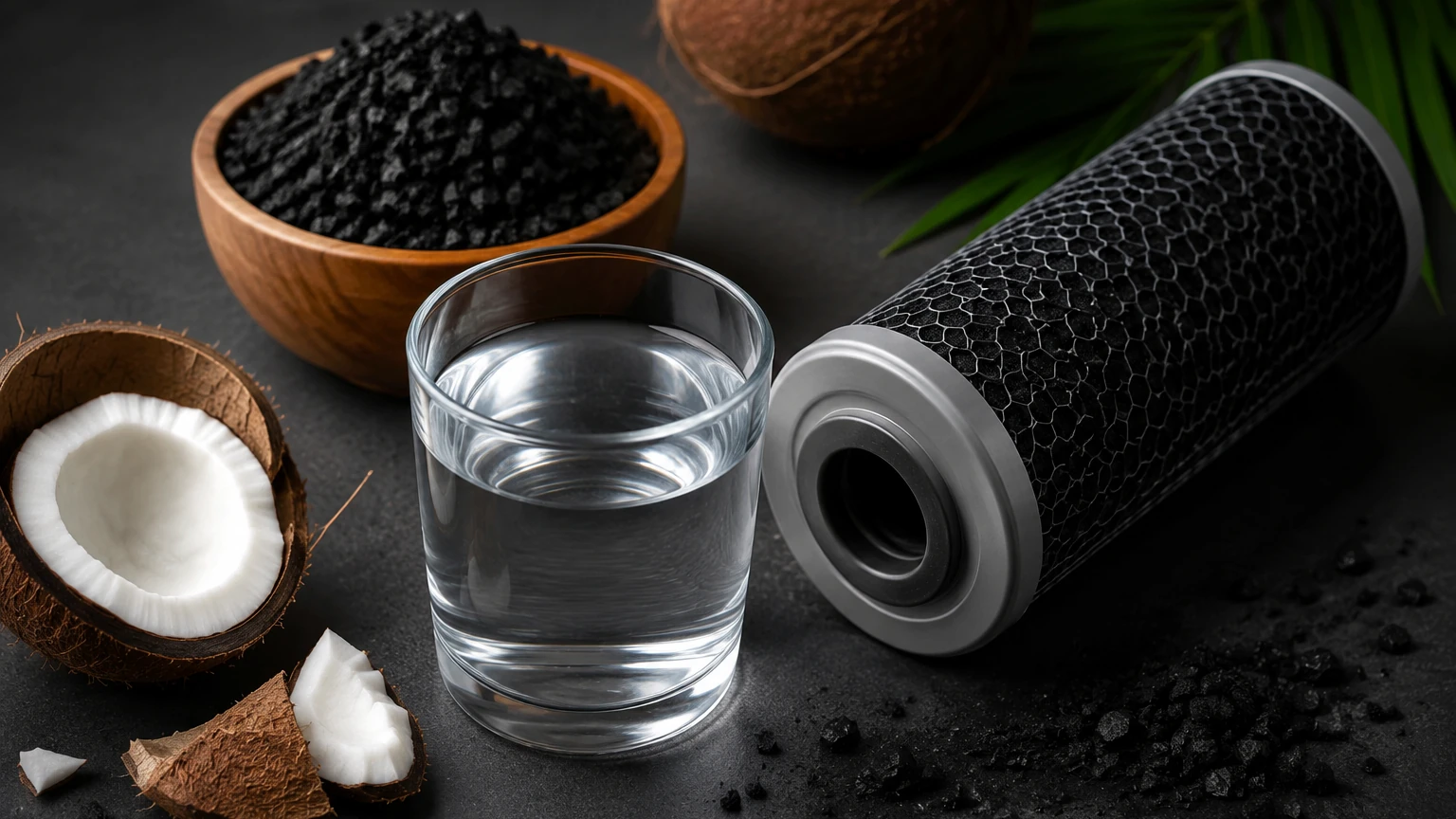
The efficacy of a coconut shell carbon water filter begins with the raw material. Coconut shells are naturally dense and high in carbon content. The activation process typically involves steam activation at high temperatures (800°C to 1000°C) in a controlled atmosphere. This process creates millions of microscopic pores across the surface of the carbon.
From an engineering perspective, the defining characteristic of coconut shell carbon is its high concentration of micropores. Pores are generally classified into three categories:
1. Micropores: Less than 2 nanometers in diameter.
2. Mesopores: Between 2 and 50 nanometers.
3. Macropores: Greater than 50 nanometers.
Coconut shell carbon is predominantly microporous, with approximately 85-90% of its surface area consisting of these tiny openings. This makes it exceptionally effective at adsorbing low-molecular-weight organic compounds, chlorine, and volatile organic compounds (VOCs). In contrast, coal-based carbons have a more significant distribution of meso- and macropores, which are better suited for larger color molecules but less efficient for the trace-level chemical removal required in high-purity water systems.
Key Performance Metrics for Industrial Selection
When evaluating a coconut shell carbon water filter for industrial use, several quantitative metrics must be analyzed to ensure the media meets the specific requirements of the application.
Iodine Value
The iodine value is a fundamental parameter used to measure the adsorption capacity of activated carbon. It represents the milligrams of iodine adsorbed by one gram of carbon. For high-quality coconut shell carbon, iodine values typically range from 1,000 to 1,150 mg/g. A higher iodine value generally indicates a higher degree of microporosity and a greater total surface area available for adsorption.
Hardness and Abrasion Resistance
In industrial filtration, carbon media is subjected to mechanical stress during backwashing and high-velocity flow. Coconut shell carbon is significantly harder than wood or peat-based carbons. This high hardness translates to lower dust generation and less attrition during service. For facilities utilizing stainless steel housings and precision wire mesh screens, using a high-hardness carbon is vital to prevent fine carbon particles from migrating downstream and fouling sensitive equipment or contaminating the final product.
Ash Content
Ash content refers to the inorganic, non-carbonaceous mineral matter remaining after the carbon is processed. Coconut shell carbon typically features a low ash content (often below 3-5%). Low ash is critical in high-purity water applications, such as boiler feed water or pharmaceutical processing, where the leaching of minerals like silica or iron could compromise water chemistry.
Industrial Applications and Process Integration
The versatility of the coconut shell carbon water filter allows it to be integrated into diverse industrial workflows. Its primary role is often as a pretreatment or polishing stage within a larger filtration train.
Pre-treatment for Reverse Osmosis (RO)
One of the most common applications is the protection of RO membranes. Chlorine and chloramines, frequently used in municipal water treatment, can rapidly degrade polyamide RO membranes through oxidation. A coconut shell carbon stage effectively removes these oxidants, extending the life of the expensive membrane elements. Engineers must calculate the Empty Bed Contact Time (EBCT) to ensure complete chlorine removal, typically requiring 2 to 5 minutes of contact time depending on flow rates.
Food and Beverage Processing
In the food and beverage industry, the removal of "off-flavors" and odors is paramount. The microporous structure of coconut shell carbon is ideal for capturing the geosmin and 2-methylisoborneol (MIB) compounds responsible for earthy or musty tastes. Furthermore, because it is a renewable, plant-based material, it aligns with the safety and sustainability standards often required in food-grade environments.
Pharmaceutical and High-Purity Water
For USP-grade water systems, coconut shell carbon is used to reduce Total Organic Carbon (TOC). The high surface area allows for the adsorption of trace organics that could otherwise interfere with downstream deionization or distillation processes. In these settings, the carbon is often housed in 316L stainless steel vessels to maintain a sterile, corrosion-resistant environment.
Engineering Considerations: Housing and Hardware
While the carbon media performs the chemical adsorption, the mechanical integrity of the filtration system depends on the hardware. A coconut shell carbon water filter requires a robust containment system to manage flow distribution and prevent media migration.
Stainless Steel Filter Housings
Industrial carbon filters are typically housed in pressure vessels. Stainless steel (Grade 304 or 316) is the material of choice due to its pressure rating and resistance to the corrosive nature of some water chemistries. The internal design must ensure uniform flow to prevent "channeling," where water bypasses the majority of the carbon bed, leading to premature breakthrough of contaminants.
Internal Screens and Support Grids
At the base of the carbon bed, precision metal components are required to support the weight of the media while allowing water to pass through. Kaifil’s expertise in custom wire mesh and stainless steel filter components is particularly relevant here. Wedge wire screens or fine stainless steel mesh laminates are used as under-drains. These components must be sized correctly to retain the carbon granules—typically 12×40 or 20×50 mesh sizes—while minimizing pressure drop.
Sizing and Operational Life Cycles
Designing a filtration system involving a coconut shell carbon water filter requires careful calculation of hydraulic loading and contaminant loading.
1. Flow Velocity: Industrial carbon filters usually operate at a linear velocity of 5 to 10 gallons per minute per square foot (gpm/ft²). Exceeding these velocities can lead to insufficient contact time and poor adsorption efficiency.
2. Pressure Drop: As the carbon bed captures suspended solids (acting as a mechanical filter in addition to an adsorbent), the pressure drop (ΔP) across the vessel will increase. Monitoring this ΔP is essential for determining when a backwash cycle is necessary.
3. Replacement Cycles: Unlike mechanical filters that can be cleaned, the adsorption sites on activated carbon eventually become saturated. In chlorine removal applications, the carbon may last 12 to 24 months. However, for TOC removal or specific chemical adsorption, the life cycle may be significantly shorter. Analytical testing of the effluent is the only reliable way to determine when the carbon has reached its "breakthrough point."
Addressing Common Risks in Carbon Filtration
Engineers must be aware of potential pitfalls when implementing a coconut shell carbon water filter. One primary concern is microbial growth. The porous surface of the carbon and the removal of chlorine create an environment where bacteria can proliferate. To mitigate this, industrial systems often include a downstream UV sterilization stage or utilize periodic hot water sanitization if the housing and internal components are designed to withstand high temperatures.
Another risk is the release of "fines" during initial startup. New carbon beds must be thoroughly rinsed to remove the dust generated during shipping and loading. Utilizing high-quality stainless steel mesh strainers downstream of the carbon vessel provides an additional layer of protection, ensuring that no carbon particles reach the final process or sensitive downstream equipment.
Conclusion: Selecting the Right Filtration Partner
The implementation of a coconut shell carbon water filter is a multi-faceted process that combines chemical science with mechanical engineering. By selecting high-quality coconut shell media and pairing it with precision-engineered stainless steel components, industrial facilities can achieve reliable, high-purity water output.
When designing your filtration system, it is essential to consider the compatibility between the media and the hardware. Factors such as filtration accuracy, material durability, and customized design play a pivotal role in the total cost of ownership and system performance. For those seeking technical guidance on the hardware required to support these advanced filtration media, visiting the Main Page provides access to a wealth of information on custom stainless steel filtration solutions.
At Kaifil, we understand that industrial filtration is not a one-size-fits-all endeavor. Whether you are dealing with complex chemical processing or strict food safety standards, our focus on quality manufacturing and engineering expertise ensures that your filtration components—from wire mesh supports to custom cartridges—perform reliably in demanding environments. To explore our full range of capabilities and technical resources, please visit our Main Page and consult with our engineering team for your specific project requirements.
