

Pipeline Strainers Manufacturers
In industrial fluid handling systems, the integrity of downstream equipment such as pumps, valves, meters, and spray nozzles depends heavily on the effectiveness of primary filtration. Pipeline strainers serve as the first line of defense, removing coarse particles, debris, and scale that could otherwise cause mechanical failure or process contamination. For engineers and procurement professionals, selecting among various pipeline strainers manufacturers requires a deep understanding of material science, fluid dynamics, and manufacturing precision.
A pipeline strainer is not merely a commodity component; it is a critical engineering safeguard. This guide explores the technical considerations, evaluation criteria, and industry standards that define high-quality manufacturing in the filtration sector, helping technical teams make informed decisions for their specific application requirements.
The Engineering Role of Pipeline Strainers
Before evaluating pipeline strainers manufacturers, it is essential to define the functional role these components play within a system. Unlike fine filters that target microscopic contaminants, strainers are designed to handle larger particulate loads and protect expensive machinery from "tramp" solids.
Types of Strainer Configurations
Manufacturers typically offer several standard configurations, each suited to different flow conditions and maintenance schedules:
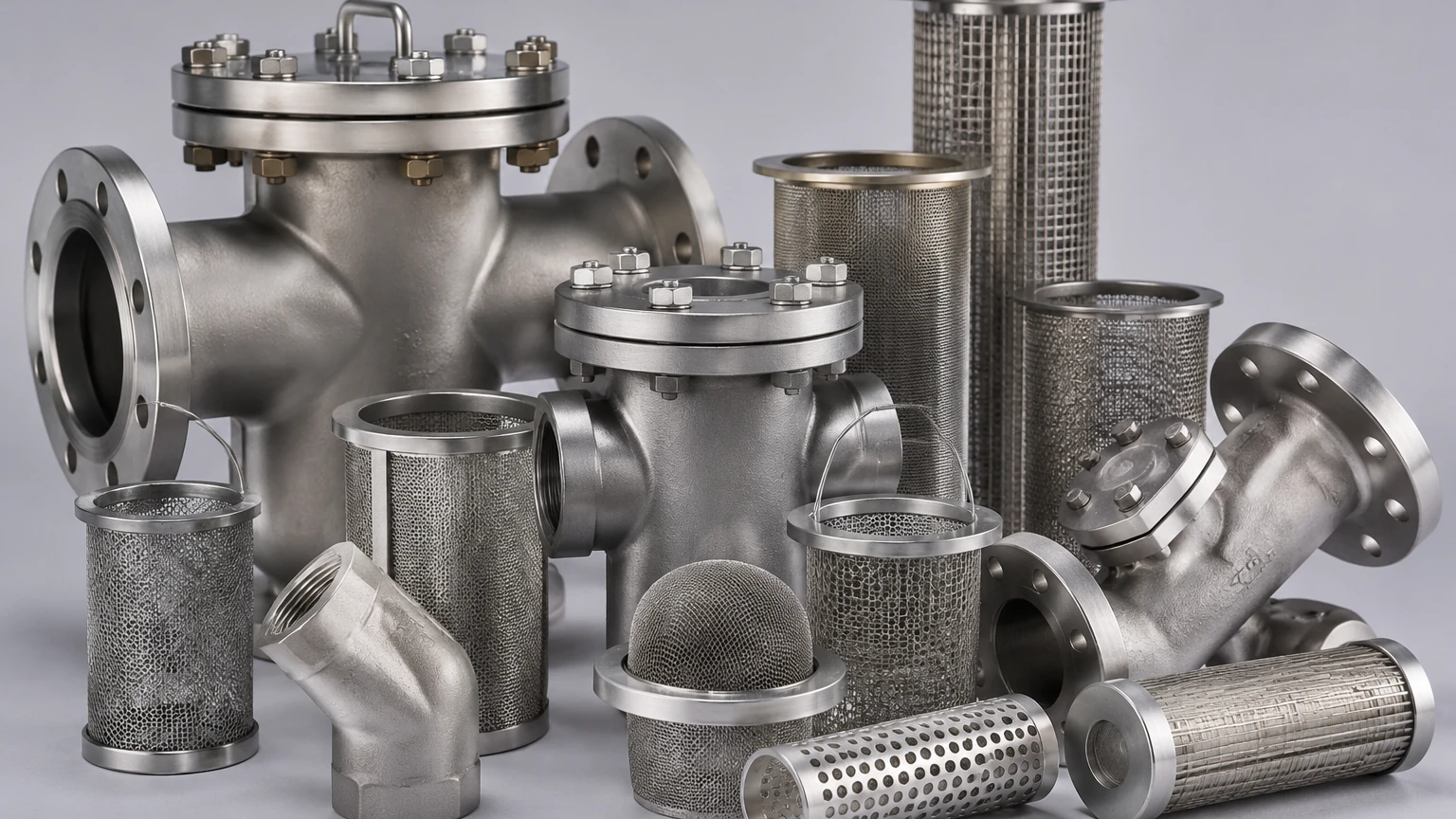
1. Y-Strainers: Named for their shape, these are ideal for high-pressure lines where the amount of material to be removed is relatively small. They are compact and can be installed horizontally or vertically (downward flow).
2. Basket Strainers (Simplex): These feature a larger surface area than Y-strainers, allowing for greater dirt-holding capacity and lower pressure drops. They are used in horizontal pipelines where the flow can be temporarily interrupted for cleaning.
3. Duplex Strainers: Consisting of two separate basket chambers with a diverting valve, these allow for continuous operation. One side can be cleaned while the other remains in service, making them vital for 24/7 chemical processing or power generation plants.
For specialized industrial needs, many organizations look to the Main Page of expert manufacturers to find custom-engineered solutions that go beyond these standard geometries, particularly when dealing with high-viscosity fluids or extreme temperatures.
Key Evaluation Criteria for Manufacturers
When vetting pipeline strainers manufacturers, the focus should extend beyond the price per unit. The technical capability of the manufacturer directly impacts the longevity of the system.
Material Integrity and Traceability
Industrial environments often involve corrosive chemicals or high-temperature steam. A reputable manufacturer must provide full material traceability. For stainless steel components, this means verifying the grade (e.g., SS304, SS316L, or Duplex steels). Low-quality alloys can lead to stress corrosion cracking or pitting, which compromises the entire pressure vessel.
Precision of the Internal Elements
The heart of any strainer is the internal mesh or perforated screen. Precision manufacturing ensures that the aperture size is consistent across the entire surface. If a manufacturer’s wire mesh weaving or perforation process is inconsistent, "bypass" can occur where particles larger than the specified micron rating pass through the system, defeating the purpose of the strainer.
Welding and Fabrication Standards
Since strainers are pressure-rated components, the quality of welding is paramount. Manufacturers utilizing advanced TIG (Tungsten Inert Gas) or plasma welding provide cleaner, stronger joints that resist vibration and thermal cycling. Rough welds or slag inside the strainer body can create turbulence and sites for localized corrosion.
Technical Considerations: Pressure Drop and Mesh Selection
Engineers must balance filtration efficiency with the allowable pressure drop ($ΔP$). An overly restrictive strainer will increase the load on pumps and reduce system efficiency. Leading pipeline strainers manufacturers provide detailed flow coefficient ($C_v$) data to help engineers calculate expected pressure drops at various flow rates.
Understanding Mesh vs. Perforation
* Perforated Screens: Usually the primary support or the main straining element for large debris (e.g., 1/16" to 1/4" holes).
* Wire Mesh: Used for finer straining. It is often layered over a perforated metal backup for structural strength.
When selecting a manufacturer, confirm their ability to customize the "open area ratio." A high open area ratio (the ratio of the total area of the holes to the total area of the screen) is critical for minimizing pressure drop and extending the time between cleaning cycles.
Customization and OEM Capabilities
Standard off-the-shelf strainers often fail to meet the specific spatial or chemical requirements of complex industrial skids. This is where specialized manufacturers like Kaifil provide significant value. Customization involves more than just changing the flange size; it includes:
* Custom Micron Ratings: Engineering the mesh weave to capture specific particle geometries.
* Specialized Coatings: Applying PTFE or other linings for highly aggressive chemical compatibility.
* Structural Reinforcement: Designing internal baskets that can withstand high differential pressures without collapsing.
* Unique Geometries: Fitting strainers into tight envelopes in modular process skids.
By working with manufacturers that offer OEM services, purchasing teams can ensure that the filtration components are integrated seamlessly into the original equipment design, rather than being an afterthought that requires field modifications.
Common Risks in Procurement
Sourcing from unverified pipeline strainers manufacturers introduces several operational risks that can lead to significant downtime.
1. Material Substitution: The use of "equivalent" alloys that do not meet the chemical resistance of specified 316L stainless steel.
2. Inadequate Pressure Testing: Failure to perform hydrostatic testing can lead to catastrophic leaks in the field.
3. Poor Finishing: Burrs or sharp edges on internal components can catch fibers or debris, making the strainer nearly impossible to clean thoroughly.
4. Inaccurate Micron Ratings: Nominal ratings that do not reflect the actual largest particle that can pass through the mesh.
To mitigate these risks, engineers should request Mill Test Reports (MTRs) and documentation of the manufacturer’s Quality Management System (QMS).
Maintenance and Total Cost of Ownership
While the initial purchase price is a factor, the Total Cost of Ownership (TCO) is driven by maintenance labor and the cost of replacement parts. A well-manufactured strainer from a reliable source will feature an ergonomic design for easy basket removal.
The Importance of the "Quick-Opening" Cover
In applications requiring frequent cleaning, manufacturers that offer bolted covers may slow down operations. High-quality manufacturers provide options for swing-bolt or clamp-style covers that allow for tool-free access. This reduces labor costs and ensures that maintenance is performed regularly, preventing the strainer from becoming a bottleneck in the system.
Replacement Cycles
The durability of the internal basket determines the replacement cycle. Flimsy baskets made from thin-gauge wire will deform under pressure. Investing in a manufacturer that uses heavy-duty frames and reinforced mesh will result in a lower TCO over the life of the plant.
Why Engineering Expertise Matters
Choosing between pipeline strainers manufacturers is ultimately a choice of technical partnership. A manufacturer should be able to answer complex questions regarding fluid velocity limits, the impact of viscosity on mesh selection, and the galvanic compatibility of different metals within the system.
For those seeking high-performance stainless steel filtration components, reviewing the technical specifications and manufacturing capabilities on the Main Page of a dedicated specialist is the best way to ensure the selected components meet the rigors of industrial service.
Conclusion
Pipeline strainers are essential for the protection of industrial infrastructure. The difference between a high-performing system and one plagued by frequent maintenance often comes down to the quality of the strainer and the expertise of its manufacturer. By focusing on material traceability, precision engineering, and customization capabilities, procurement and engineering teams can secure filtration solutions that provide reliable, long-term protection.
When evaluating pipeline strainers manufacturers, prioritize those who demonstrate a deep understanding of your specific industry challenges—whether in chemical processing, food and beverage production, or hydraulic systems. A commitment to quality at the manufacturing stage translates directly to operational stability in the field.
