


Woven Wire Mesh Christchurch: A Technical Guide for Industrial Applications
In the industrial landscape of New Zealand’s South Island, precision and durability are the cornerstones of successful manufacturing and processing operations. For engineers and procurement specialists seeking woven wire mesh christchurch solutions, understanding the technical nuances of material science, weave patterns, and filtration efficiency is essential. Woven wire mesh serves as a critical component in sectors ranging from food and beverage processing to chemical engineering and water treatment, where the integrity of the filtration media directly impacts product quality and equipment longevity.
As a versatile industrial material, Woven Wire Mesh is defined by its structured grid of longitudinal (warp) and transverse (weft) wires. This guide explores the engineering considerations necessary for selecting the right mesh specifications to meet the demanding industrial standards found in Christchurch and the broader Canterbury region.
Understanding the Fundamentals of Woven Wire Mesh
At its core, woven wire mesh is a highly engineered fabric made from metallic wires. Unlike welded mesh, which is joined at intersections, woven mesh is manufactured using weaving techniques similar to those used in the textile industry. This process ensures a high degree of flexibility and structural integrity, allowing the mesh to withstand significant mechanical stress and pressure differentials.
When specifying mesh for industrial use, engineers must consider three primary variables:
1. Mesh Count: The number of openings per linear inch. A higher mesh count indicates a finer mesh with smaller apertures.
2. Wire Diameter: The thickness of the wire before weaving. This affects the mesh's strength, weight, and the resulting "open area."
3. Aperture (Opening Size): The clear distance between two adjacent wires. This is the most critical factor in determining filtration precision.
For those sourcing Plain, twill and dutch woven wire mesh in SS304/316L — rolls, cut mesh and framed panels. Send mesh count or micron target for a technical quote., balancing these three variables is the first step in optimizing filtration performance.
Material Selection for the Christchurch Industrial Environment
Christchurch’s industrial sector, particularly its proximity to coastal environments and its heavy involvement in dairy and food processing, requires materials that offer superior corrosion resistance. The choice of alloy is the most significant factor in the lifecycle cost of a filtration system.
Stainless Steel 304 (SS304)
SS304 is the most common grade used in industrial weaving. It provides excellent strength and good corrosion resistance for general applications. It is widely used in architectural mesh, protective screening, and standard liquid filtration where high-acid or high-salinity environments are not present.
Stainless Steel 316L (SS316L)
For many applications involving woven wire mesh christchurch, SS316L is the preferred choice. The addition of molybdenum and a lower carbon content enhances its resistance to pitting and crevice corrosion, particularly in chloride-rich environments. This makes it the standard for the pharmaceutical, chemical, and marine-related industries common in the Canterbury region.
High-Temperature and Specialty Alloys
In specialized chemical processing or high-heat applications, materials such as Inconel, Monel, or Duplex stainless steels may be required. These alloys maintain their structural properties at extreme temperatures and offer specialized resistance to specific corrosive agents.
Weave Types and Their Performance Characteristics
The method by which wires are interlaced determines the mesh’s filtration characteristics, flow rates, and mechanical stability. Selecting the appropriate weave is vital for achieving the desired micron rating.
Plain Weave
The most straightforward pattern, where each weft wire passes over and under one warp wire. Plain weave offers the highest open area and lowest pressure drop, making it ideal for high-flow liquid filtration and particle separation.
Twill Weave
In a twill weave, each weft wire passes over and under two warp wires. This allows for the use of heavier wires in a given mesh count, resulting in a more robust mesh that can handle higher mechanical loads and finer filtration than plain weave.
Dutch Weave (Plain and Twill)
Dutch weaves utilize different wire diameters for the warp and weft. The result is a dense, tight mesh with high mechanical strength and very fine filtration capabilities (down to several microns). This weave is the industry standard for high-pressure hydraulic filters and fuel filtration systems.
Key Engineering Considerations for Filtration Precision
When integrating Woven Wire Mesh into a system, engineers must look beyond the basic dimensions. Performance is often dictated by the interaction between the mesh and the fluid dynamics of the application.
Open Area and Flow Rate
The percentage of open area determines the throughput of the filter. A higher open area reduces the pressure drop across the media, which lowers energy consumption for pumps and increases the time between cleaning cycles. However, increasing the open area often requires thinner wires, which may reduce the mesh’s structural durability.
Micron Rating: Absolute vs. Nominal
* Nominal Rating: Refers to the ability of the mesh to retain a majority of particles of a certain size. It is an indication of the average pore size.
* Absolute Rating: Refers to the diameter of the largest hard spherical particle that will pass through the mesh under specified test conditions. For critical pharmaceutical or aerospace applications, absolute ratings are mandatory.
Mechanical Stability and Pressure Resistance
In high-pressure systems, the mesh must resist deformation. Engineers often specify multi-layer sintered mesh or mesh supported by perforated metal cores to ensure the filtration surface remains flat and functional under load.
Industry-Specific Applications in the Canterbury Region
The demand for woven wire mesh christchurch is driven by several key sectors that form the backbone of the local economy. Each has unique requirements for material certification and performance.
Food and Beverage Processing
Christchurch is a hub for dairy and produce processing. In these environments, mesh must be "food-grade," typically SS316L, and manufactured to eliminate areas where bacteria can proliferate. Woven mesh is used in pasteurization equipment, sieving systems for milk powder, and juice filtration.
Water and Wastewater Treatment
Local municipal and industrial water treatment facilities utilize stainless steel mesh for intake screening and fine particle removal. The durability of stainless steel is preferred over synthetic media due to its resistance to UV degradation and its ability to be backwashed repeatedly.
Chemical and Petrochemical
For chemical manufacturers in the region, resistance to aggressive solvents and acids is paramount. Woven wire mesh is used in catalyst recovery, gas-liquid separation, and filtration of corrosive chemical intermediates.
Customization and OEM Solutions for Local Manufacturers
Standard off-the-shelf mesh rolls are often insufficient for complex industrial machinery. Customization is where technical expertise becomes a value-add for Christchurch-based OEMs (Original Equipment Manufacturers).
Customization options include:
* Precision Slitting: Cutting mesh rolls into specific widths for automated assembly lines.
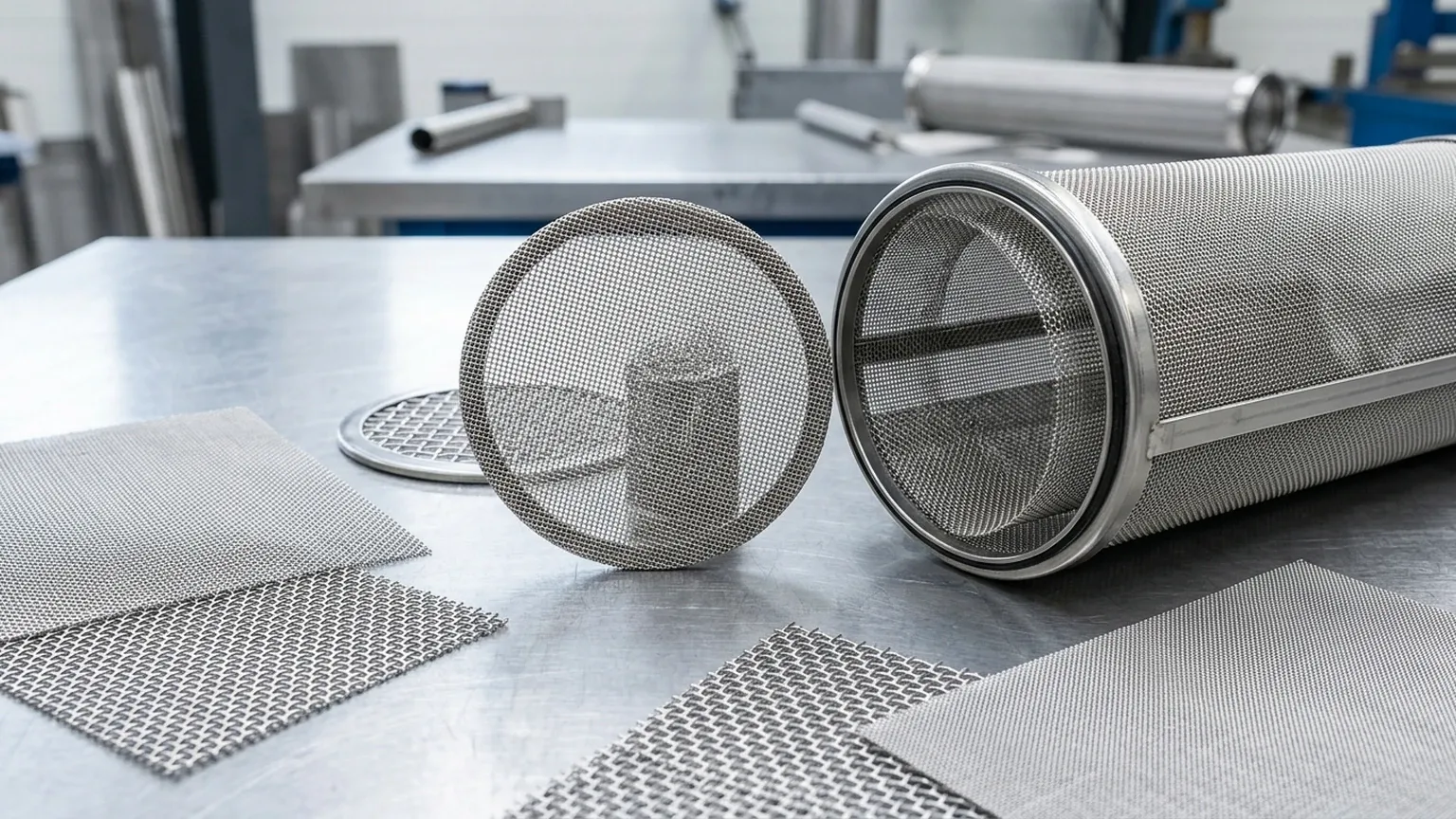
* Die-Cutting and Shaping: Producing circular, rectangular, or custom-shaped mesh discs for use in extruders or valve assemblies.
* Framing and Edging: Adding stainless steel or polymer borders to mesh panels to facilitate easy installation and prevent fraying.
* Cylindrical and Conical Fabrication: Transforming flat mesh into pleated cartridges or conical strainers for pipeline integration.
By working with a manufacturer that understands these requirements, engineering teams can ensure that their custom components integrate seamlessly into their proprietary designs.
Maintenance, Cleaning, and Lifecycle Management
The total cost of ownership (TCO) for filtration systems is heavily influenced by the ease of maintenance. Unlike disposable polymer filters, stainless steel Woven Wire Mesh is a sustainable, long-term investment.
Cleaning Protocols
Depending on the contaminant, mesh can be cleaned using:
* Ultrasonic Cleaning: Effective for removing fine particles trapped in complex Dutch weaves.
* Backwashing: Using reverse fluid flow to dislodge surface-level filter cakes.
* Chemical Cleaning: Utilizing mild acids or bases to dissolve organic or mineral buildup, provided the mesh alloy is compatible.
Identifying Replacement Cycles
While durable, mesh will eventually succumb to fatigue or abrasion. Engineers should monitor the pressure differential ($\\Delta P$) across the filter. A consistent increase in baseline pressure after cleaning cycles usually indicates that the mesh pores are becoming permanently blinded or that the wire structure is degrading, signaling the need for replacement.
Conclusion: Selecting the Right Partner for Woven Wire Mesh
For professionals sourcing woven wire mesh christchurch, the decision involves more than just finding a supplier; it requires finding a technical partner who understands the rigors of industrial filtration. Whether the application involves the precision of a pharmaceutical cleanroom or the heavy-duty requirements of a wastewater plant, the quality of the weave and the integrity of the alloy are non-negotiable.
By focusing on high-quality materials like SS304 and SS316L and utilizing advanced weave patterns tailored to specific micron targets, Christchurch industries can achieve higher efficiency, reduced downtime, and superior product purity. When evaluating your next filtration project, ensure that your specifications for mesh count, wire diameter, and weave type are aligned with the mechanical and chemical demands of your unique environment.
