


Filter Oil Separator
In industrial fluid management and compressed gas systems, the filter oil separator is a critical component designed to remove oil aerosols, mists, and droplets from a gas stream. Whether utilized in rotary screw air compressors, vacuum pumps, or refrigeration systems, the efficiency of this component directly impacts downstream air quality, equipment longevity, and overall system energy consumption. For engineers and procurement professionals, understanding the technical nuances of separation technology is essential for optimizing industrial processes and reducing maintenance overhead.
Industrial filtration requires more than just a barrier; it requires a sophisticated understanding of fluid dynamics and material science. A high-quality filter oil separator ensures that lubricants remain within the mechanical system while the output gas meets the required purity standards. This article explores the engineering principles, material considerations, and selection criteria necessary for implementing effective oil separation solutions.
Understanding the Function of a Filter Oil Separator
The primary role of a filter oil separator is the recovery of lubricating oil from a compressed medium. In many industrial machines, oil is injected into the compression chamber to provide cooling, sealing, and lubrication. However, as the gas is compressed, the oil becomes entrained in the form of fine particles. If these particles are not removed, they can contaminate pneumatic tools, foul heat exchangers, and compromise the quality of end products in industries such as food processing or pharmaceuticals.
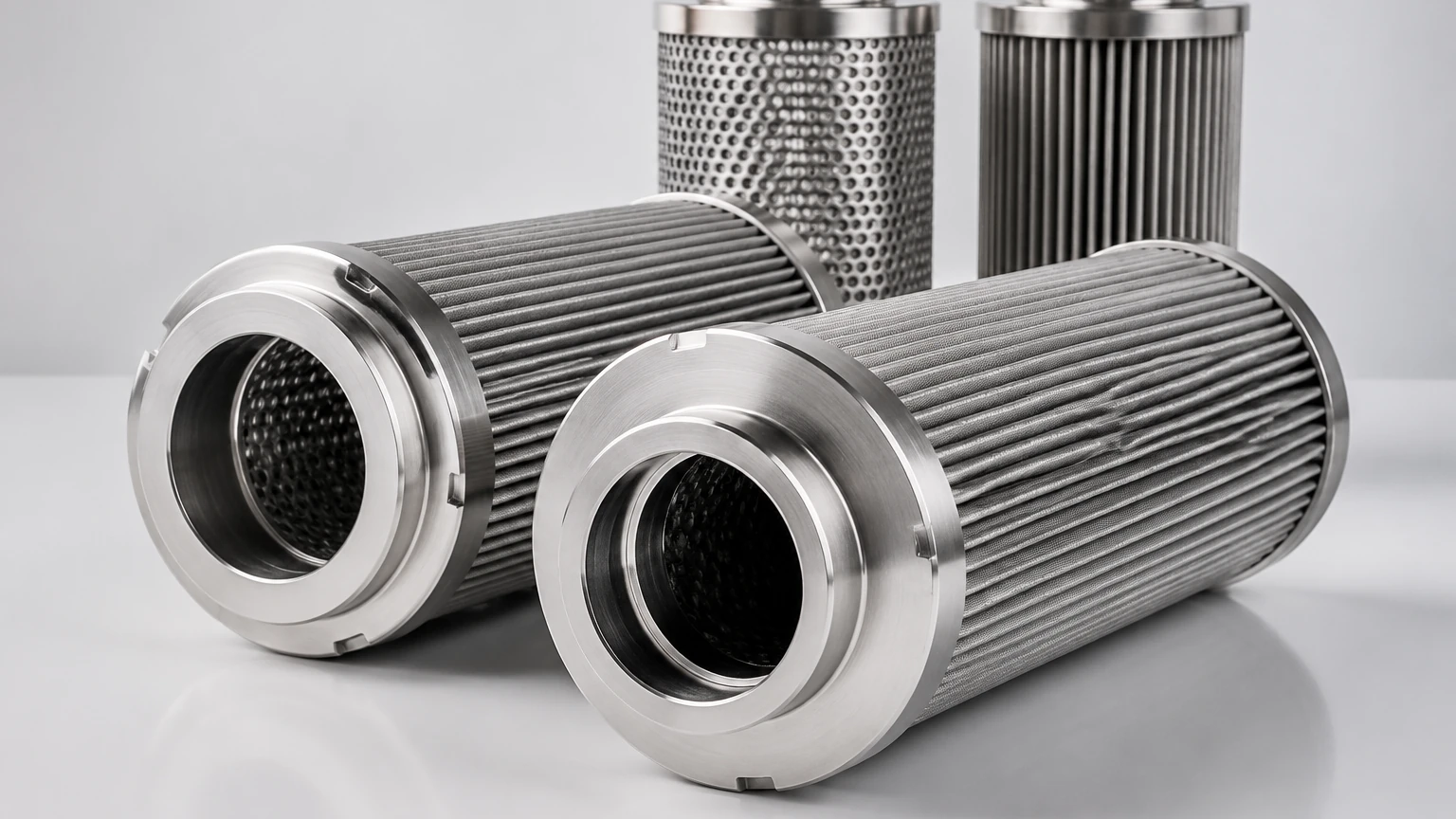
There are two main configurations for these separators: conventional (wrap) and pleated. Conventional separators utilize layers of borosilicate glass fibers wrapped around a metal core, while pleated designs offer a significantly higher surface area within the same footprint. The choice between these depends on the required flow rate, the allowable pressure drop, and the specific spatial constraints of the machinery. By visiting the Main Page, technical teams can explore how different structural designs cater to specific industrial requirements.
Key Mechanisms of Oil and Gas Separation
Effective oil separation is achieved through three primary physical mechanisms: inertial impaction, direct interception, and Brownian diffusion. A well-engineered filter oil separator leverages all three to capture oil droplets ranging from sub-micron sizes to larger liquid masses.
1. Inertial Impaction: This occurs with larger oil droplets (typically >1 micron). As the gas stream moves through the filter media, the heavier oil droplets cannot follow the rapid changes in airflow direction and collide with the fibers of the filter media, where they are trapped.
2. Direct Interception: This mechanism captures mid-sized particles. As the particles pass close to a fiber, they come into contact with it and are held by van der Waals forces.
3. Brownian Diffusion: For extremely small particles (sub-0.1 micron), the random movement caused by gas molecules (Brownian motion) increases the likelihood that the oil particles will collide with the filter fibers. This is critical for achieving high-purity air in sensitive applications.
Once the oil droplets are captured by the media, they undergo a process called coalescence. Small droplets merge into larger ones, which eventually travel to the dry side of the filter (usually the outer layer in an outside-in flow configuration) and gravitate to the bottom of the separator to be returned to the oil circuit via a scavenge line.
Engineering and Material Selection for Industrial Separators
The durability and performance of a filter oil separator are heavily dependent on the materials used in its construction. In demanding industrial environments, stainless steel is often the material of choice for the structural components, including the inner and outer support cages and the end caps.
Stainless Steel Support Structures
Stainless steel provides the necessary rigidity to withstand high differential pressures without collapsing. It also offers superior corrosion resistance, which is vital when dealing with synthetic lubricants or environments where moisture may be present. Precision-perforated stainless steel or expanded metal cores ensure that the filter media is supported uniformly, preventing "channeling" where the gas bypasses the media through weak points.
Filter Media Composition
While the structural skeleton is often metal, the separation media typically consists of high-grade borosilicate glass fibers or specialized synthetic polymers. These materials are chosen for their high void volume and chemical compatibility with various industrial oils. In specialized high-temperature or highly corrosive applications, multi-layer stainless steel wire mesh may be utilized as a pre-filter or as the primary separation medium to ensure structural integrity under extreme conditions.
Critical Performance Metrics for Engineers
When evaluating a filter oil separator, engineers must look beyond the initial purchase price and focus on performance metrics that influence the total cost of ownership (TCO).
* Residual Oil Content: Measured in parts per million (ppm) or mg/m³, this indicates the amount of oil remaining in the gas stream after passing through the separator. High-performance separators can achieve residual oil levels as low as 1–3 ppm.
* Initial Pressure Drop: The resistance to flow when the filter is new. A higher pressure drop requires the compressor to work harder, leading to increased energy consumption. For every 1 bar of pressure drop, energy costs can increase by approximately 7%.
* Service Life: This is determined by the dirt-holding capacity of the media. A separator that clogs prematurely due to poor media quality or insufficient surface area will lead to frequent downtime and higher labor costs.
* Separation Efficiency: The percentage of oil removed from the stream. This is usually rated for specific particle size ranges.
Selecting the Right Filter Oil Separator for Your Application
Selecting the correct separator involves more than matching a part number. It requires a thorough analysis of the operating environment. Key factors include:
Flow Rate and Velocity
The separator must be sized to handle the maximum flow rate of the system. If the gas velocity is too high, it can "re-entrain" the coalesced oil, carrying it back into the gas stream. Conversely, if the velocity is too low, the inertial impaction mechanism becomes less effective.
Operating Temperature
Temperature affects the viscosity of the oil and the expansion of the gas. High temperatures can cause oil to vaporize, making it much harder to capture with standard mechanical separation. In such cases, additional cooling or specialized media may be required.
Chemical Compatibility
Not all filter media are compatible with all lubricants. Synthetic oils, particularly those containing esters, can degrade certain types of binders used in glass fiber media. Ensuring that the separator materials are chemically inert relative to the lubricant is essential to prevent premature structural failure.
Maintenance, Troubleshooting, and Replacement Cycles
A filter oil separator is a consumable component that requires regular monitoring. The most effective way to track its health is by measuring the differential pressure (ΔP) across the element. Most industrial systems include a gauge or sensor for this purpose.
Signs of Separator Failure
1. Oil Carryover: If you notice excessive oil consumption in the compressor or oil appearing in downstream drains, the separator may be saturated, damaged, or the scavenge line may be blocked.
2. High Differential Pressure: A sudden or steady rise in ΔP suggests that the separator is clogged with solid contaminants or that the oil has oxidized and formed a varnish on the media.
3. Collapsed Element: This is a catastrophic failure usually caused by a massive pressure surge or by operating the separator far beyond its intended service life.
Routine maintenance should include checking the scavenge line and its check valve. If the scavenge line is clogged, the coalesced oil cannot return to the sump and will eventually be pushed downstream, regardless of how well the filter media is performing.
Custom OEM Filtration Solutions from Kaifil
For many specialized industrial applications, off-the-shelf separators do not provide the necessary performance or fitment. This is where custom manufacturing becomes invaluable. Kaifil specializes in the production of precision stainless steel filtration components and customized filter cartridges designed to meet rigorous industrial standards.
By focusing on high-quality materials and advanced manufacturing techniques, Kaifil supports OEMs and industrial users in developing filtration solutions that offer lower pressure drops and longer service intervals. Whether you require a specific micron rating for a hydraulic system or a robust stainless steel mesh support for a high-pressure gas application, the engineering team can provide tailored designs that ensure system reliability.
For more information on customized filtration components and to view our full range of manufacturing capabilities, please visit our Main Page.
In conclusion, the filter oil separator is a fundamental component for maintaining the efficiency and purity of industrial gas and fluid systems. By prioritizing high-quality materials like stainless steel and selecting the appropriate media for the specific application, engineers can significantly reduce energy costs and protect valuable downstream equipment from oil contamination. Investing in a well-engineered separation solution is a strategic decision that pays dividends in reduced maintenance and improved process stability.
