


Cellulose Filtration
In industrial process engineering, cellulose filtration represents one of the most established and versatile methods for liquid clarification and solids recovery. As a natural polymer derived primarily from wood pulp or cotton linters, cellulose provides a complex, fibrous matrix that excels in depth filtration applications. For engineers and procurement teams in the chemical, pharmaceutical, and food and beverage sectors, understanding the technical nuances of cellulose media is essential for optimizing throughput and ensuring product purity.
While modern synthetic membranes and metallic filters have gained significant ground, cellulose remains a cornerstone of industrial separation. This guide examines the mechanics of cellulose filtration, its performance characteristics, and the engineering considerations required to integrate it effectively into a production line.
The Principles of Cellulose-Based Depth Filtration
Cellulose filtration operates primarily through the mechanism of depth filtration. Unlike surface filters (such as thin membranes or fine wire meshes), which trap particles on a single plane, depth filters utilize the entire thickness of the filter medium to capture contaminants.
Tortuous Path and Mechanical Straining
The structure of cellulose media consists of a dense, overlapping network of fibers. As a fluid passes through this matrix, it follows a "tortuous path." Particles are trapped within the interstices of the fibers through mechanical straining. Because the path is long and complex, cellulose filters can hold a significantly higher volume of solids before reaching terminal pressure drop compared to many surface-style filters.
Electrokinetic Adsorption (Zeta Potential)
Beyond simple mechanical sieving, cellulose filtration often utilizes electrokinetic effects. Many cellulose filter sheets and modules are formulated with wet-strength resins that impart a positive charge (zeta potential) to the fibers. Since many industrial contaminants, such as bacteria, endotoxins, and colloidal silica, carry a negative charge, they are adsorbed onto the fiber surfaces even if they are smaller than the physical pore size of the medium. This dual action—mechanical and electrokinetic—allows cellulose to achieve high clarification efficiency in sub-micron ranges.
Industrial Applications of Cellulose Filtration
The adaptability of cellulose makes it suitable for a wide range of B2B applications where high dirt-holding capacity and cost-effective clarification are required.
Food and Beverage Clarification
In the production of beverages such as beer, wine, and fruit juices, cellulose is used to remove yeast, proteins, and polyphenols that cause haze. Because cellulose is a food-grade material, it meets stringent regulatory requirements. It is often used in plate-and-frame filter presses or as lenticular modules to achieve the final polish before bottling.
Pharmaceutical and Biotech Processing
Cellulose depth filters are frequently employed in the primary and secondary clarification of cell cultures. They are effective at removing cell debris and large aggregates, protecting downstream chromatography columns and sterile-grade membranes. In blood plasma fractionation, cellulose media help separate specific protein fractions with high precision.
Chemical and Industrial Fluids
In the chemical industry, cellulose filtration is used for the recovery of catalysts, the purification of resins, and the clarification of solvents. It is also used in the maintenance of hydraulic oils and lubricants, where it effectively removes fine particulate matter and moisture, extending the life of high-precision machinery.
Key Performance Metrics and Selection Criteria
When specifying cellulose filtration systems, engineers must evaluate several technical parameters to ensure the media is compatible with the process conditions.
1. Retention Rating: Cellulose filters are typically nominally rated. This means they are designed to remove a certain percentage (e.g., 90% or 95%) of particles at a specific micron size. Unlike absolute-rated stainless steel or membrane filters, the retention efficiency can vary based on flow rate and pressure.
2. Permeability and Flow Rate: The density of the cellulose matrix determines its permeability. A higher density offers finer filtration but results in a higher initial pressure drop. Engineers must balance the required clarity with the desired throughput.
3. Chemical Compatibility: Pure cellulose is compatible with a wide range of solvents and mild acids/bases (typically pH 3 to 9). However, the resins used for wet strength may have different compatibility profiles. It is critical to confirm that the media will not degrade or leach unwanted chemicals into the filtrate.
4. Thermal Stability: Cellulose is generally stable up to approximately 80°C to 100°C in aqueous solutions. Exceeding these temperatures can lead to fiber softening and premature structural failure.
Comparison: Cellulose vs. Stainless Steel Filtration
While cellulose is an excellent depth filtration medium, it is often compared with stainless steel filtration solutions to determine the most cost-effective long-term strategy. For many high-performance industrial applications, the choice between disposable cellulose and cleanable stainless steel depends on the specific operational environment.
| Feature | Cellulose Filtration | Stainless Steel Filtration |
| :— | :— | :— |
| Mechanism | Depth (Absorption/Straining) | Surface or Depth (Sintered) |
| Reusability | Disposable (Single-use) | Cleanable and Reusable |
| Temperature Limit | Moderate (<100°C) | Very High (>400°C) |
| Chemical Resistance | Limited pH range | Broad (High acid/base resistance) |
| Waste Generation | High (Spent filter cakes) | Low (Minimal waste) |
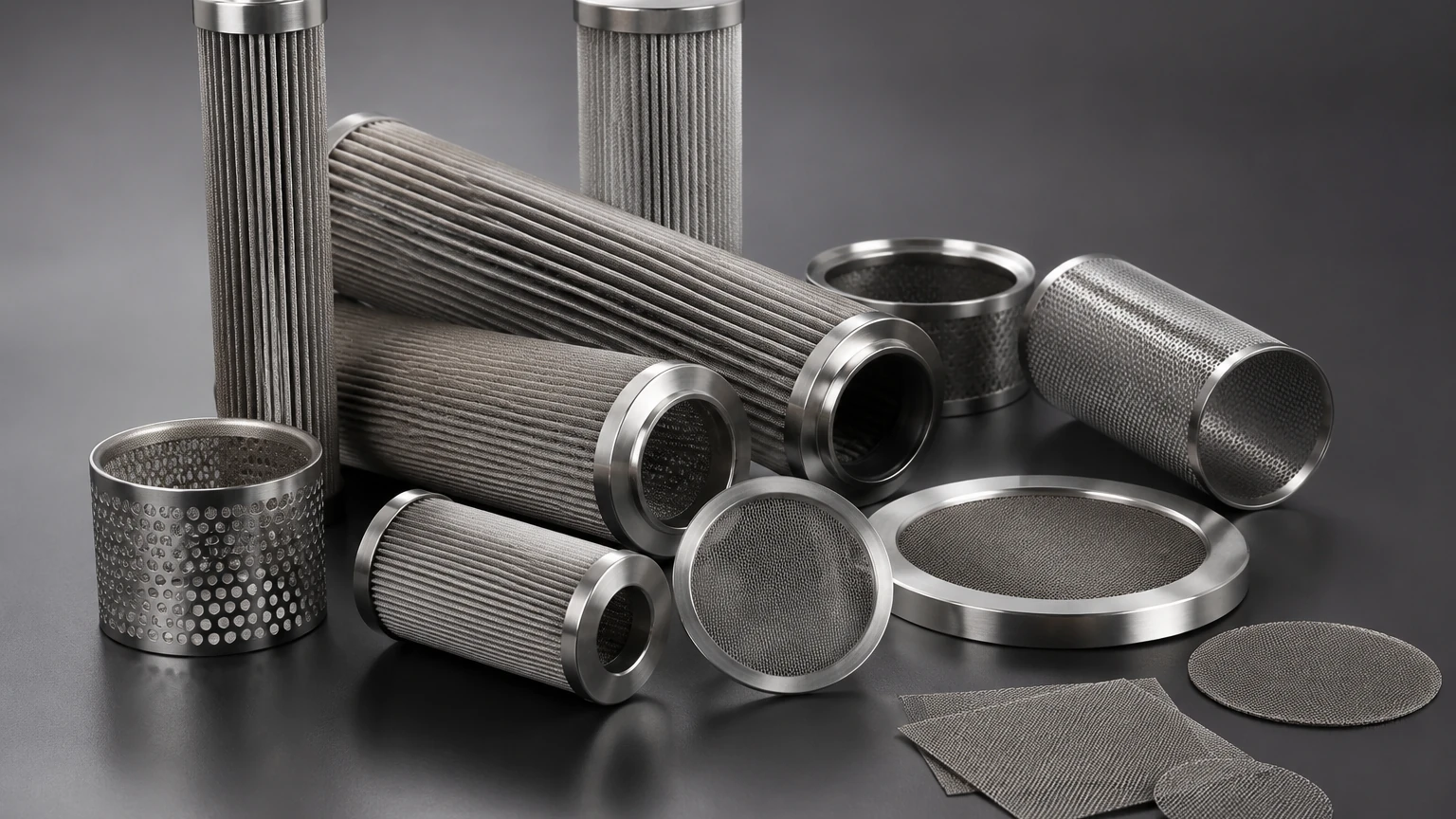
For processes requiring extreme durability, high-pressure tolerance, or the elimination of disposable waste, engineers often transition from cellulose to precision-engineered metal components. You can Review product options and application support on the Main Page to see how stainless steel filter cartridges and wire mesh solutions compare to traditional depth media in demanding industrial contexts.
Operational Risks and Challenges
Implementing cellulose filtration is not without technical challenges. Engineers must account for several potential failure modes during system design.
Media Migration
One of the primary concerns with cellulose is media migration—the release of small cellulose fibers into the downstream filtrate. This usually occurs if the filter is subjected to sudden pressure surges or if the wet-strength resins fail. To mitigate this, a "polishing" filter (often a membrane or a fine stainless steel mesh) is sometimes placed downstream of the cellulose stage.
Extractables and Leachables
Cellulose media can contain trace amounts of metals, beta-glucans, or organic compounds from the manufacturing process. In pharmaceutical applications, these extractables must be quantified and controlled through pre-flushing protocols. High-purity cellulose grades are available, but they come at a higher price point.
Disposal and Environmental Impact
Because cellulose filters are disposable, they generate a significant waste stream. If the filtered solids are hazardous (e.g., heavy metals or toxic chemicals), the entire spent filter cake must be treated as hazardous waste, significantly increasing the total cost of ownership. In such cases, switching to a cleanable stainless steel system may offer a faster return on investment through reduced disposal fees.
Engineering Considerations for System Design
To maximize the efficiency of cellulose filtration, the supporting hardware must be correctly specified.
* Housing Selection: Cellulose media is typically used in plate-and-frame presses, lenticular housings, or specialized cartridge housings. The housing must be designed to minimize dead space and allow for complete venting to prevent air binding.
* Seal Compatibility: The gaskets and O-rings (EPDM, Viton, Silicone) used in the filter housing must be compatible with both the process fluid and the cleaning chemicals used during sanitation cycles.
* Flow Velocity: To maximize the effect of zeta potential and prevent particle breakthrough, it is often better to operate cellulose filters at a constant, low flux (Liters per Square Meter per Hour, or LMH) rather than high speeds.
* Differential Pressure Monitoring: Precise monitoring of the pressure drop across the filter is vital. Cellulose media can compress under high pressure, which reduces the effective pore size but also drastically reduces the flow rate. Replacing the media before it reaches the "blinding" point prevents process downtime.
Conclusion
Cellulose filtration remains a vital technology for industrial clarification due to its unique combination of mechanical straining and electrokinetic adsorption. It provides a high-capacity solution for removing complex contaminants from liquids in the food, chemical, and pharmaceutical industries. However, the decision to use cellulose must be weighed against the benefits of more durable alternatives.
By carefully evaluating retention requirements, chemical compatibility, and the total cost of disposal, engineers can determine whether cellulose depth filtration or a more permanent stainless steel solution is appropriate for their specific application. Understanding these technical boundaries ensures that filtration systems remain efficient, reliable, and cost-effective throughout their operational lifecycle.
