


Pool Cartridge Filters By Size
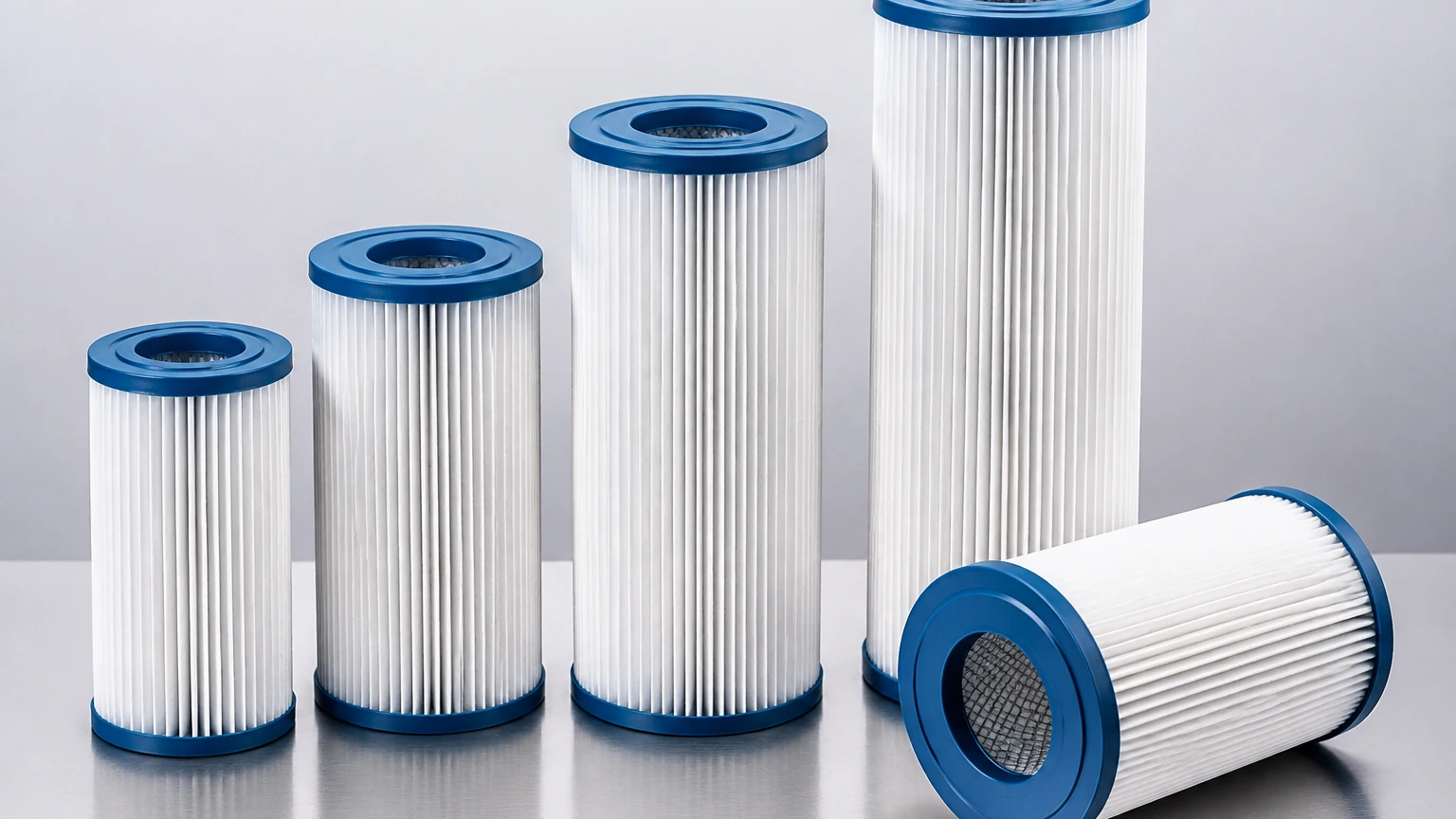
Selecting the correct pool cartridge filters by size is a critical engineering decision for commercial water treatment, large-scale aquatic facilities, and industrial process water systems. While the physical dimensions of a filter—length, outer diameter, and inner diameter—determine whether a cartridge will physically fit into a housing, the "effective size" or surface area determines the hydraulic performance and filtration efficiency of the system. For engineers and procurement professionals, understanding the technical nuances of sizing is essential to ensure system longevity and minimize operational costs.
In high-demand environments, the transition from standard synthetic media to precision-engineered stainless steel filtration components often becomes necessary. As a manufacturer specializing in custom stainless steel filtration solutions, Kaifil provides the technical expertise required to navigate these complex specifications. For those seeking detailed specifications on high-performance filtration components, visiting the Main Page offers a comprehensive overview of available technologies and customization capabilities.
The Technical Dimensions of Cartridge Sizing
When evaluating pool cartridge filters by size, three primary physical measurements must be verified with precision. Any deviation in these dimensions can lead to bypass—where unfiltered water escapes around the filter—or mechanical failure due to improper seating.
1. Outer Diameter (OD)
The outer diameter is measured across the widest part of the filter end cap. In industrial applications, maintaining a specific clearance between the cartridge OD and the housing wall is vital to ensure uniform flow distribution across the entire surface of the media. If the OD is too large, flow may be restricted at the entry point; if too small, the structural stability of the cartridge stack may be compromised.
2. Overall Length
The length of the cartridge must match the internal height of the filter vessel. In multi-cartridge housings, length consistency is paramount to ensure that the compression plates or spring assemblies apply even pressure across all units. Standard lengths often range from 10 inches to 40 inches, though custom industrial systems may require non-standard heights to optimize the footprint of the filtration skid.
3. Inner Diameter (ID) and Core Fit
The inner diameter must align perfectly with the standpipe or center post of the filter housing. A loose fit at the ID is a common failure point, allowing contaminants to bypass the media. Engineering teams must confirm whether the ID requires a smooth finish for O-ring seals or a threaded connection for high-pressure industrial applications.
Surface Area: The Metric of Filtration Capacity
Beyond physical dimensions, the most important aspect of pool cartridge filters by size is the square footage of the filtration media. This is often referred to as the "effective filtration area."
In a pleated cartridge design, the surface area is determined by the number of pleats, the depth of each pleat, and the total length of the cartridge. For example, two cartridges may have identical external dimensions (e.g., 7" OD x 24" Length), but one may offer 100 square feet of media while the other offers 150 square feet due to higher pleat density.
From an engineering perspective, increasing the surface area for a given flow rate reduces the "flux" or velocity of the fluid passing through the media. Lower flux leads to:
- Higher Dirt-Holding Capacity: More surface area allows the filter to capture more debris before reaching the terminal pressure drop.
- Extended Service Life: Lower velocity reduces the mechanical stress on the media fibers or wire mesh, preventing premature tearing or deformation.
- Improved Particle Retention: Slower flow through the pores of the filter increases the probability of particle capture, especially for fine particulates in the 5-20 micron range.
Material Selection and Structural Integrity
Standard pool filters typically utilize polyester or cellulose media. However, in industrial B2B contexts—such as chemical processing or high-temperature water loops—standard materials may fail. This is where stainless steel wire mesh and sintered metal components become the preferred choice.
Stainless Steel vs. Synthetic Media
Stainless steel filters, such as those manufactured by Kaifil, offer distinct advantages over synthetic pool cartridge filters by size:
- Thermal Resistance: Stainless steel can withstand temperatures far exceeding the limits of plastic-based cartridges.
- Chemical Compatibility: For pools or industrial tanks using aggressive chlorination or pH adjustment chemicals, 304 or 316L stainless steel provides superior corrosion resistance.
- Cleanability: Unlike synthetic cartridges that are often disposed of after a few cleaning cycles, stainless steel wire mesh filters can be backwashed or ultrasonically cleaned, providing a lower total cost of ownership (TCO) over the long term.
Structural Support Cores
As the size of the cartridge increases, the differential pressure across the media also increases. High-quality industrial cartridges utilize a rigid internal support core, often made of perforated stainless steel. This core prevents the cartridge from collapsing under the weight of accumulated debris and high-pressure flow. When selecting pool cartridge filters by size for high-pressure systems, the collapse rating of the internal core is as important as the micron rating of the media.
Calculating Flow Rates and Pressure Drop
Engineers must calculate the Clean Pressure Drop (ΔP) when sizing filtration systems. The total pressure drop is the sum of the pressure drop across the housing and the pressure drop across the clean filter cartridge.
If the pool cartridge filters by size are too small for the intended pump GPM (Gallons Per Minute), the initial pressure drop will be high, leaving very little room for contaminant loading. A common industry standard for commercial pools is to target a flow rate of 0.375 to 1.0 GPM per square foot of media, depending on the specific media type and water quality requirements.
| Filter Area (sq. ft.) | Recommended Flow (GPM) | Industrial Application Context |
| :— | :— | :— |
| 100 | 37 – 50 | Small commercial spas / Side-stream cooling loops |
| 200 | 75 – 100 | Commercial plunge pools / Process water pre-filtration |
| 400 | 150 – 200 | Large public aquatic centers / High-volume industrial wash water |
| 600+ | 225+ | Industrial scale water treatment / Multi-cartridge housings |
Customization and OEM Requirements
In many B2B scenarios, off-the-shelf pool cartridge filters by size do not meet the specific requirements of a proprietary system design. OEM (Original Equipment Manufacturer) partners often require custom-engineered dimensions to fit unique housing geometries or to achieve specific performance benchmarks.
Kaifil specializes in bridging the gap between standard sizing and custom engineering. By utilizing advanced manufacturing techniques, it is possible to produce stainless steel filter cartridges that match the footprint of traditional pool filters but offer the durability of industrial-grade metal. This customization includes:
- Variable Micron Ratings: Fine-tuning the wire mesh weave to capture specific particle sizes.
- Custom End Caps: Integrating specialized gaskets, flanges, or threaded fittings to ensure a leak-proof seal.
- Reinforced Construction: Adding external cages or internal pleat supports for high-viscosity or high-pressure applications.
For procurement teams, the ability to source custom sizes directly from a manufacturer ensures that the filtration system operates at peak efficiency without the need for costly housing modifications. To explore the full range of custom metal filtration components, users can review product options and application support on the Main Page.
Maintenance, Replacement, and Total Cost of Ownership
Selecting the right size is the first step; maintaining that performance is the second. In commercial and industrial settings, the replacement cycle is dictated by the terminal pressure drop—the point at which the pressure differential indicates the filter is fully loaded.
Signs of Incorrect Sizing
If a system requires cleaning or replacement too frequently (e.g., every few days instead of every few months), it is a clear indicator that the pool cartridge filters by size are undersized for the dirt load. Conversely, an oversized filter may have a higher initial capital cost but will significantly reduce labor costs associated with maintenance and downtime.
The Value of Stainless Steel
For B2B buyers, the total cost of ownership (TCO) is a more relevant metric than the initial purchase price. While a stainless steel cartridge has a higher upfront cost than a synthetic one, its ability to be cleaned and reused for several years—rather than replaced every season—makes it a more sustainable and cost-effective solution for demanding industrial environments.
Engineering Checklist for Filter Selection
Before finalizing a purchase of pool cartridge filters by size, engineers and purchasing agents should confirm the following technical data points:
1. Exact Physical Dimensions: Confirm OD, ID, and Length with a tolerance of +/- 1/16 inch.
2. Required Flow Rate: Ensure the system GPM does not exceed the maximum flux rating for the chosen surface area.
3. Media Compatibility: Verify that the media (synthetic or stainless steel) is compatible with the chemical composition and temperature of the fluid.
4. Micron Rating: Determine if the application requires nominal or absolute filtration.
5. Seal Type: Confirm the end cap configuration (Open End, Closed End, Fin, or Threaded) and the gasket material (EPDM, Viton, or Silicone).
6. Operating Pressure: Verify the maximum differential pressure the cartridge can withstand before structural failure.
By following these rigorous selection criteria, technical professionals can ensure that their filtration systems provide reliable, high-performance service. Whether the application involves standard commercial pool maintenance or complex industrial water treatment, the intersection of correct sizing and high-quality manufacturing is where operational efficiency is achieved. For further technical guidance and to view a wide array of precision filtration products, visit the Main Page.
