


Vacuum Dehydrator Oil Purification System
In industrial environments, the integrity of lubricating and hydraulic oils is paramount to the longevity of machinery. Contamination, specifically in the form of water and particulate matter, is a leading cause of component failure, oxidation, and reduced lubricant life. A vacuum dehydrator oil purification system serves as a critical solution for maintaining oil quality by removing dissolved, emulsified, and free water, as well as gaseous contaminants and solid particles.
For engineers and maintenance professionals, understanding the technical nuances of these systems—and specifically the filtration components that support them—is essential for optimizing system performance and ensuring the reliability of high-value assets like turbines, compressors, and hydraulic presses.
The Physics of Vacuum Dehydration in Oil Purification
The primary function of a vacuum dehydrator oil purification system is to remove water from oil without damaging the oil’s molecular structure or depleting its additive package. This is achieved through the principle of vacuum flash distillation.
Under normal atmospheric conditions, water boils at 100°C (212°F). However, exposing oil to such high temperatures can cause thermal degradation and oxidation. By creating a vacuum—typically between 25 and 28 inches of Mercury (Hg)—the boiling point of water is significantly reduced, often to as low as 45°C to 55°C (113°F to 131°F). This allows the system to boil off water at temperatures that are safe for the base oil and its additives.
The process generally involves heating the contaminated oil to a controlled temperature, then dispersing it over a large surface area within a vacuum chamber. As the oil films over internal media or specialized elements, the water evaporates into steam, which is then drawn out by the vacuum pump and condensed or exhausted. This method is particularly effective because it addresses dissolved water, which traditional centrifugal or coalescing filters often struggle to remove.
Critical Filtration Stages in the Purification Cycle
While the vacuum chamber handles the removal of water and gases, the vacuum dehydrator oil purification system relies heavily on mechanical filtration to address solid contaminants. A high-performance system typically incorporates multiple filtration stages to ensure the oil meets or exceeds ISO 4406 cleanliness standards.
1. Suction or Inlet Filtration
Before the oil enters the heater and vacuum chamber, it often passes through a coarse pre-filter. This stage protects the system’s internal pumps and heating elements from large debris. Stainless steel wire mesh filters are frequently utilized here due to their high flow capacity and ability to withstand the initial viscosity of cold or heavily contaminated oil.
2. Particulate Polishing Filtration
After the dehydration process, the oil is pumped out of the vacuum chamber. At this stage, a high-efficiency discharge filter is used to remove fine particulates. In many industrial applications, engineers specify a micron rating of 3μm to 10μm with a high Beta ratio (βx[c] ≥ 1000) to ensure the oil is returned to the reservoir in a "super-clean" state.
3. Air and Vent Filtration
As the vacuum system draws in air or exhausts vapors, high-quality breathers and exhaust filters are necessary to prevent environmental contaminants from entering the oil circuit. These components often utilize specialized stainless steel mesh or sintered metal media to handle the moist, oily air streams typical of vacuum discharge.
Material Engineering: The Role of Stainless Steel Filtration
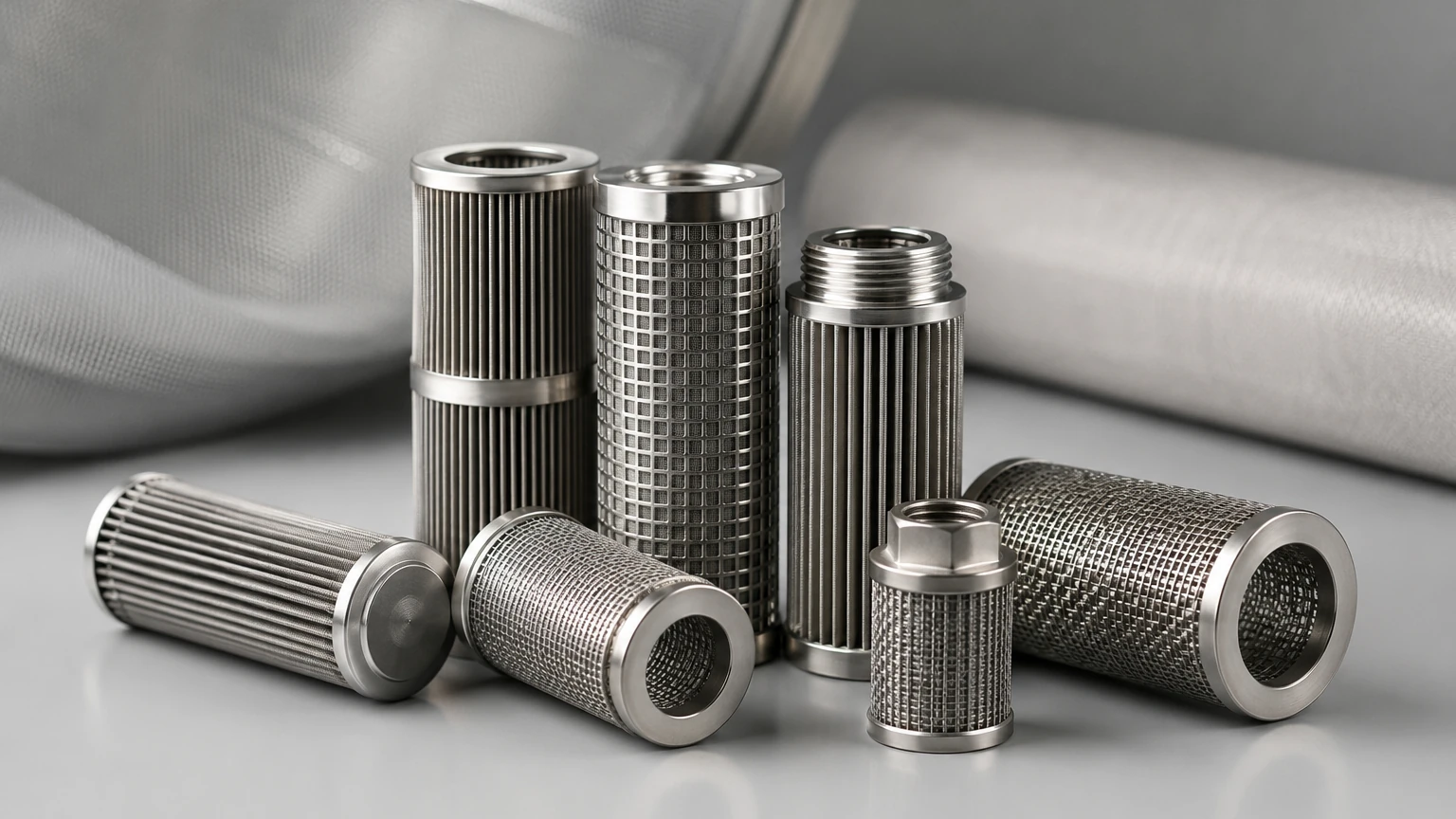
In the context of a vacuum dehydrator oil purification system, the choice of filter media is a decisive factor in total cost of ownership (TCO) and operational efficiency. While disposable glass fiber elements are common, custom stainless steel filtration solutions offer distinct advantages for demanding industrial applications.
Durability and Chemical Compatibility
Industrial oils, particularly those used in chemical processing or high-temperature hydraulic systems, can be chemically aggressive. Stainless steel (Grade 304 or 316L) provides superior resistance to corrosion and chemical breakdown compared to cellulose or synthetic polymers. This ensures that the filter media itself does not become a source of contamination through fiber shedding or structural failure.
Pressure and Temperature Resistance
Vacuum dehydration involves fluctuations in pressure and temperature. Stainless steel filter cartridges maintain their structural integrity under high differential pressures and thermal cycling. This is critical in preventing "media migration," where fragments of the filter material enter the clean oil stream.
Cleanability and Reusability
One of the primary engineering considerations for B2B procurement is the reduction of waste and recurring costs. Stainless steel wire mesh filters can be cleaned (via ultrasonic baths or backwashing) and reused multiple times. For systems operating in remote locations or facilities with strict environmental mandates, the transition from disposable to cleanable metal filtration can significantly lower long-term overhead.
Technical Specifications for Filter Selection
When specifying filtration components for a vacuum dehydrator oil purification system, engineers must evaluate several technical parameters to ensure compatibility and performance. For more detailed technical specifications and support, professionals often consult the Main Page of specialized manufacturers to align component capabilities with system requirements.
Micron Rating and Efficiency
It is vital to distinguish between nominal and absolute micron ratings. In oil purification, absolute ratings are preferred to guarantee that 99.9% of particles above a certain size are captured. For hydraulic systems, a 3-micron or 6-micron absolute filter is standard for the discharge side of a dehydrator.
Flow Rate and Viscosity
Oil viscosity changes dramatically with temperature. The filtration system must be sized to handle the maximum flow rate at the lowest expected operating temperature (highest viscosity) to avoid premature bypass or element collapse. Stainless steel mesh is particularly advantageous here as it offers a high open area, which minimizes pressure drop (ΔP) across the element.
Structural Integrity
Filters used in vacuum systems must be designed to resist collapse under vacuum-induced pressure differentials. Reinforced internal cores and heavy-duty end caps are standard features in industrial-grade stainless steel cartridges designed for these systems.
Addressing Particulate Contamination and Water Simultaneously
A common misconception is that water removal alone is sufficient to restore oil. In reality, water and particulates act synergistically to accelerate machine wear. Water promotes the formation of acids and sludge, which in turn trap metal fines and silica, creating an abrasive paste.
The vacuum dehydrator oil purification system addresses this by combining the phase-change separation of water with the mechanical separation of solids. By integrating high-precision stainless steel filter elements into the system design, operators can achieve a "one-pass" purification effect that restores the oil's dielectric strength (in transformer applications) or lubricating film thickness (in bearing applications).
Customization and OEM Integration
Every industrial facility has unique space constraints, flow requirements, and fluid types. Standard off-the-shelf filtration units may not always provide the optimal balance of footprint and performance. This is where custom manufacturing becomes essential.
Manufacturers like Kaifil specialize in developing bespoke stainless steel filter cartridges and wire mesh components tailored to the specific dimensions and performance curves of an OEM vacuum dehydrator. Customization options include:
- Variable Pleat Geometry: Optimizing surface area for high-viscosity fluids.
- Specialized End-Cap Configurations: Ensuring a leak-proof seal within existing housings (e.g., DOE, 222, or 226 O-ring styles).
- Hybrid Media: Combining different layers of mesh to achieve graduated filtration, which extends the service life of the element by capturing larger particles in the outer layers and finer particles in the core.
Operational Best Practices and Maintenance
To maximize the effectiveness of a vacuum dehydrator oil purification system, certain operational boundaries must be respected:
1. Temperature Control: While heat aids dehydration, exceeding the oil's safe temperature limit (usually 60°C to 70°C for most mineral oils) can cause additive drop-out. Precision heaters and thermocouples are necessary.
2. Vacuum Level Monitoring: If the vacuum is too deep, it may strip light-end hydrocarbons from certain specialized oils. The system should allow for adjustable vacuum levels.
3. Filter Differential Pressure (ΔP): Monitoring the pressure drop across the stainless steel filters is the most reliable way to determine when cleaning or replacement is required. High ΔP indicates that the filter has reached its dirt-holding capacity.
4. Oil Sampling: Regular oil analysis should be conducted to verify that the target ISO cleanliness codes and moisture levels (typically <100 ppm for hydraulic oil) are being met.
Conclusion
The implementation of a vacuum dehydrator oil purification system is a strategic investment in asset reliability. By understanding the interplay between vacuum physics and high-precision mechanical filtration, engineering teams can significantly extend the life of industrial lubricants and the machinery they protect.
Selecting the right filtration media—specifically durable, high-efficiency stainless steel components—ensures that the purification process is both effective and cost-efficient over the long term. For organizations seeking to optimize their oil maintenance programs, focusing on the quality of the filtration elements is as important as the vacuum system itself. To explore custom filtration options and technical engineering support for these applications, visit the Main Page for comprehensive product data and selection guidance.
