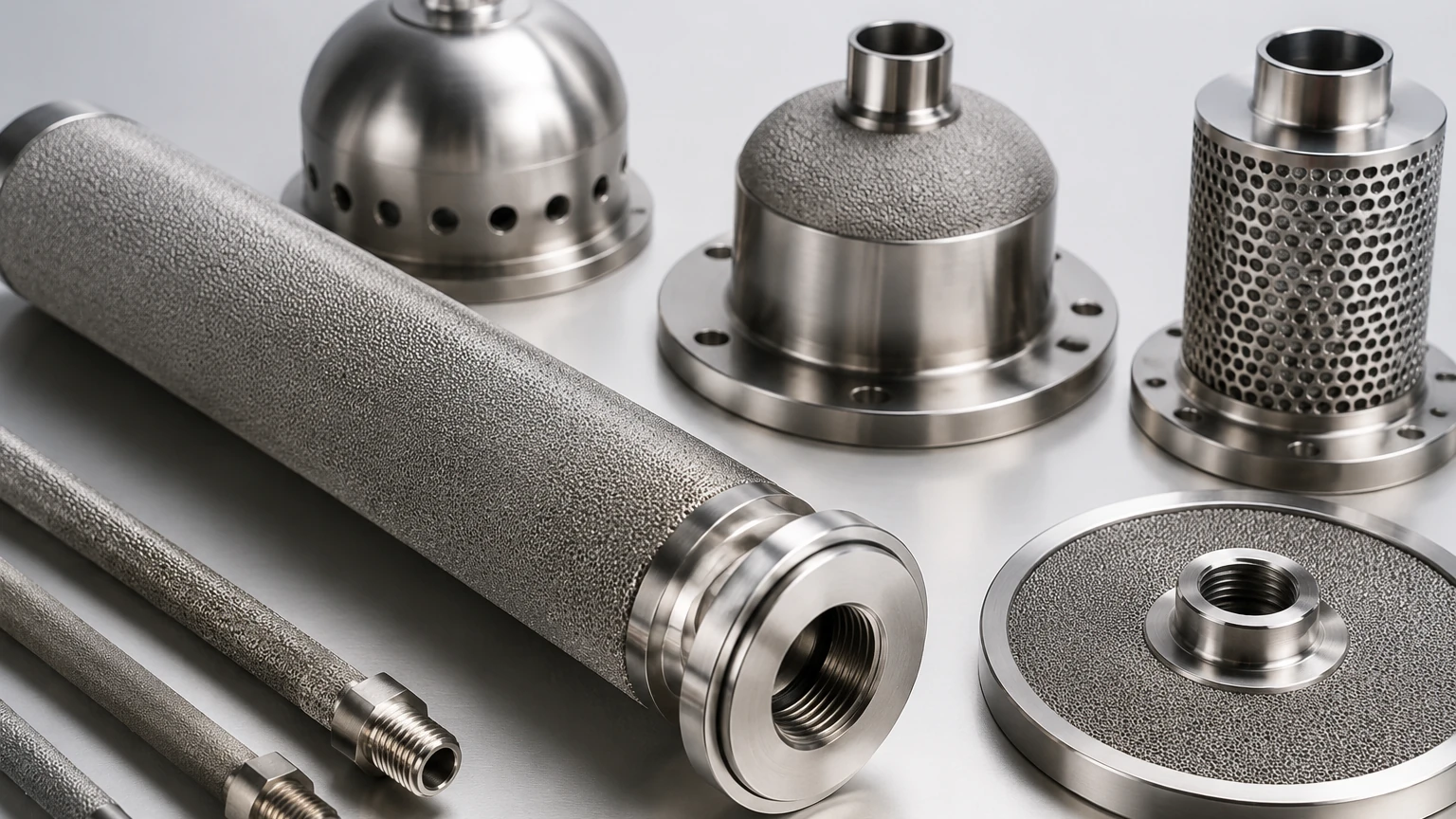
Gas Sparger
In industrial processing, the efficiency of gas-liquid reactions often hinges on the quality of the interface between the two phases. A gas sparger is a precision-engineered component designed to introduce gas into a liquid medium, facilitating mass transfer through the creation of bubbles. While the concept may appear straightforward, the engineering behind sparger design involves complex fluid dynamics, material science, and thermodynamics. For industries ranging from pharmaceutical fermentation to chemical synthesis, selecting the correct sparging technology is critical for optimizing yield, reducing gas consumption, and ensuring process consistency.
Principles of Mass Transfer and Bubble Dynamics
The primary function of a gas sparger is to maximize the mass transfer coefficient ($k_La$). This is achieved by increasing the total surface area of the gas bubbles relative to the volume of the liquid. According to the principles of mass transfer, smaller bubbles provide a significantly higher surface-area-to-volume ratio than larger bubbles. For instance, a specific volume of gas dispersed into bubbles with a diameter of 0.5 mm provides ten times the surface area of the same volume dispersed into 5 mm bubbles.
In an industrial reactor, the behavior of these bubbles is influenced by the liquid's viscosity, surface tension, and the turbulence within the vessel. Engineers must account for bubble coalescence—the process where small bubbles merge into larger ones—which can negate the benefits of a high-precision sparger. By utilizing porous materials, such as sintered stainless steel, a gas sparger can produce a "cloud" of micro-bubbles that remain suspended in the liquid longer, providing more time for the gas to dissolve or react. This efficiency is vital in applications like oxygenation in bioreactors or carbonation in beverage production, where gas utilization rates directly impact operational costs.
Sintered Metal Technology in Sparger Design
Modern industrial spargers often move away from traditional drilled pipes or simple nozzles in favor of sintered metal technology. Sintered metal spargers are manufactured by compacting and heating stainless steel powder (typically 316L) until the particles bond without melting. This process creates a robust, porous structure with a highly controlled pore size distribution.
Compared to drilled holes, which are limited by mechanical drilling capabilities (usually no smaller than 0.5 mm to 1 mm), sintered metal can achieve pore sizes ranging from 0.2 to 100 microns. This allows for the generation of fine micro-bubbles that are nearly impossible to achieve with mechanical drilling. Furthermore, the tortuous path within the sintered media ensures that the gas is evenly distributed across the entire surface of the sparger element, preventing the formation of "dead zones" or uneven gas distribution within the tank.
From a structural standpoint, stainless steel sintered media offers excellent mechanical strength and resistance to high temperatures and pressures. This makes them suitable for demanding environments where plastic or ceramic alternatives might fail due to thermal shock or physical impact during cleaning and maintenance cycles.
Key Performance Indicators for Industrial Spargers
When evaluating a gas sparger for a specific application, engineering teams must consider several technical parameters to ensure the component performs reliably over its service life:
1. Pore Size and Bubble Diameter: The nominal pore size of the sparger determines the initial size of the bubbles. However, the actual bubble size at the point of release is also affected by the gas flow rate and the liquid properties. Engineers must balance the need for small bubbles with the required gas throughput.
2. Differential Pressure ($ΔP$): This is the pressure drop across the sparger media. A higher $ΔP$ requires more energy to force the gas through the pores. Sintered media must be designed to provide the necessary gas flux without exceeding the system's compressor or blower limits.
3. Gas Flux (Velocity): The volume of gas passing through a unit area of the sparger surface. If the flux is too high, bubbles may coalesce at the surface of the media, leading to larger bubbles and reduced efficiency. Conversely, if the flux is too low, the gas may not be distributed evenly across the entire sparger element.
4. Chemical Compatibility: In chemical processing, the sparger is often submerged in corrosive environments. 316L stainless steel is the industry standard due to its resistance to a wide range of chemicals, but for highly aggressive media, specialized alloys like Hastelloy may be required.
For technical professionals seeking to optimize these parameters, it is essential to Review product options and application support to ensure the selected hardware aligns with the specific kinetic requirements of the process.
Comparative Analysis: Sintered vs. Orifice Spargers
Choosing between a sintered metal gas sparger and a traditional orifice (drilled pipe) sparger depends on the specific goals of the operation. Orifice spargers are generally easier to clean and have a lower initial pressure drop. They are often used in applications where large volumes of gas need to be moved quickly and where the efficiency of gas absorption is a secondary concern, such as simple agitation or gas stripping.
However, in any process where the gas is an expensive reagent (such as pure oxygen, hydrogen, or ozone) or where the reaction rate is limited by gas solubility, sintered metal spargers are superior. The increased surface area provided by micro-bubbles allows for higher mass transfer rates at lower gas flow volumes. This not only saves on gas costs but also reduces the amount of unreacted gas that must be vented or recycled, simplifying the overall system design and reducing the environmental footprint of the facility.
Application-Specific Configurations
Gas spargers are integrated into various industrial systems, each requiring specific design considerations:
* Bioprocessing and Fermentation: In the pharmaceutical industry, spargers provide oxygen to cell cultures or bacteria. Because these organisms are often shear-sensitive, the sparger must provide high oxygen transfer without creating excessive turbulence or large bubbles that could damage cell membranes. Sintered spargers are the gold standard here due to their ability to provide high $k_La$ at low agitation speeds.
* Chemical Hydrogenation: Introducing hydrogen gas into oils or chemical intermediates requires a sparger that can withstand high pressures and temperatures. The uniformity of the gas distribution is critical to prevent localized over-concentration, which could lead to unwanted side reactions or safety hazards.
* Wastewater Treatment: Ozonation and aeration processes rely on spargers to introduce ozone or air into large volumes of water. In these applications, the durability of the sparger is paramount, as they are often located at the bottom of large tanks where maintenance is difficult. Stainless steel construction ensures longevity against the oxidative effects of ozone.
* Food and Beverage: Carbonation of soft drinks and nitrogenation of beer require precise control over gas dissolution. Sintered spargers allow for "in-line" sparging, where gas is injected directly into the product stream as it flows through a pipe, ensuring consistent saturation levels.
Engineering Considerations for System Integration
Integrating a gas sparger into an existing or new system requires more than just selecting the right porous element. The mounting and housing configuration must be designed for the specific vessel geometry. Spargers can be mounted at the bottom of a tank, inserted through the side wall via a flange, or integrated into a recirculating loop.
One critical engineering aspect is the "exit velocity" of the gas. If the gas exits the sparger at too high a velocity, it can cause erosion of the vessel walls or damage internal components. Proper sizing of the sparger's surface area ensures that the gas velocity remains within safe and efficient limits. Additionally, the connection type—whether NPT threads, tri-clamp fittings, or welded flanges—must meet the hygienic or pressure-rating standards of the industry.
Maintenance and Longevity of Stainless Steel Spargers
The primary challenge with any porous media is fouling. Over time, particles in the gas stream or precipitates from the liquid can block the pores of a gas sparger. In biological applications, biofilm growth can also impede performance.
To maintain optimal performance, a regular cleaning regimen is necessary. Stainless steel sintered spargers are advantageous because they can withstand aggressive cleaning methods. Common techniques include:
* Backpulsing: Reversing the flow of gas or liquid through the sparger to dislodge particles from the pores.
* Chemical Cleaning: Using acids, bases, or specialized detergents to dissolve mineral scales or organic deposits. The corrosion resistance of 316L stainless steel allows for the use of strong cleaning agents that would destroy other materials.
* Ultrasonic Cleaning: Removing the sparger element and placing it in an ultrasonic bath to vibrate contaminants out of the deep pore structure.
* Sterilization-in-Place (SIP): In pharmaceutical and food applications, spargers must be sterilized using high-pressure steam. Sintered metal is ideally suited for this, as it does not degrade under repeated steam cycles.
Conclusion
The selection of a gas sparger is a technical decision that impacts the fundamental efficiency of an industrial process. By moving beyond simple gas delivery to precision-engineered mass transfer, facilities can achieve higher yields, lower reagent costs, and improved product quality. Sintered stainless steel components provide the necessary balance of fine bubble generation, mechanical durability, and chemical resistance required for modern B2B industrial applications. When designing a system, engineers should prioritize the specific mass transfer needs of their liquid medium and consult with specialists to ensure the sparger configuration is optimized for the long-term operational goals of the facility.