


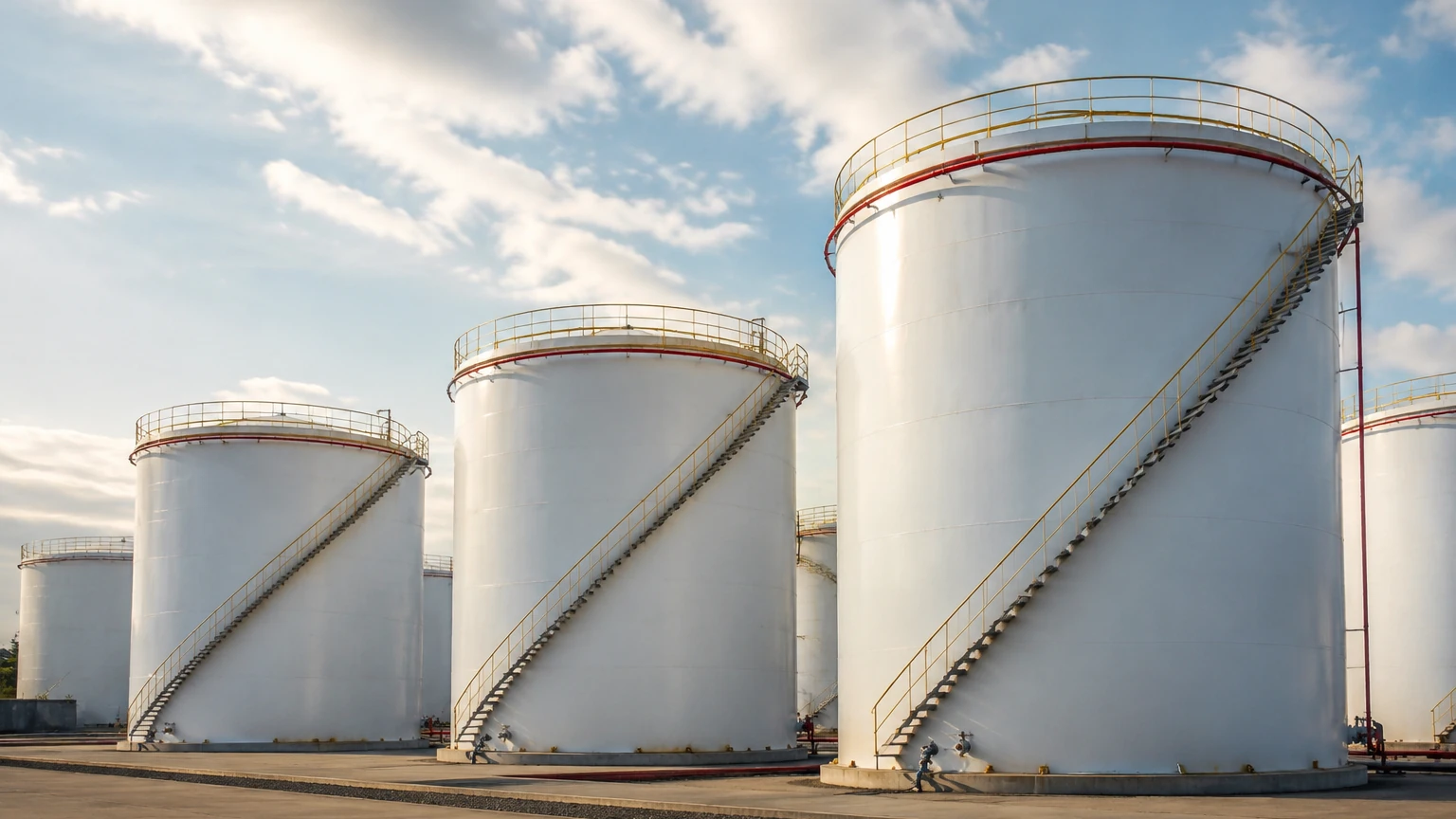
Petrochemical Product Storage Tank
In the global energy and chemical supply chain, the petrochemical product storage tank serves as a critical infrastructure component. These vessels are designed to hold vast quantities of refined products, intermediates, and raw feedstocks, ranging from crude oil and gasoline to specialized solvents and liquefied gases. For engineers and facility managers, the integrity of the storage environment is paramount, as even minor contamination can lead to significant financial losses, equipment failure, or safety hazards. Maintaining product purity within a petrochemical product storage tank requires a sophisticated understanding of tank design, material compatibility, and, crucially, the integration of high-performance filtration systems.
Industrial filtration plays a dual role in storage operations: protecting the stored medium from external environmental contaminants and ensuring that the product remains within specification during transfer and discharge. As a manufacturer specializing in stainless steel filtration solutions, Kaifil provides the technical components necessary to maintain these standards in demanding industrial environments.
Engineering Standards for Petrochemical Product Storage Tank Design
The construction and operation of a petrochemical product storage tank are governed by rigorous engineering standards, such as API 650 (for atmospheric tanks) and API 620 (for low-pressure tanks). These standards dictate the structural requirements, including shell thickness, welding protocols, and venting capacities. However, from a filtration perspective, the focus shifts to how the tank interacts with its contents and the outside atmosphere.
Storage tanks are generally categorized by their roof design:
1. Fixed Roof Tanks: These are used for liquids with high flash points. The vapor space between the liquid level and the roof is a primary area where contamination can occur, especially during "breathing" cycles caused by temperature changes.
2. Floating Roof Tanks (Internal and External): These designs minimize the vapor space to reduce evaporation losses. While efficient, the seals on floating roofs are potential entry points for particulates and moisture, necessitating robust filtration at the discharge points.
3. Pressure Vessels: Used for liquefied gases like LPG or LNG, these require filtration components that can withstand extreme pressures and cryogenic temperatures without losing structural integrity.
Regardless of the tank type, the materials used for internal components, including filter housings and mesh screens, must be selected based on the chemical properties of the stored product to prevent corrosion and leaching.
The Necessity of Filtration in Storage Systems
Filtration is not merely an auxiliary process; it is a fundamental requirement for the operational longevity of a petrochemical product storage tank. Contamination within these tanks typically originates from three sources: atmospheric ingress, corrosion byproducts, and cross-contamination during transport.
Atmospheric Ingress
As a tank is emptied, air is drawn into the vapor space through breather vents. This air carries dust, moisture, and microbial spores. If left unfiltered, these contaminants can settle into the product, leading to sediment buildup or the promotion of microbial growth in fuels (often referred to as "diesel bug"). High-efficiency breather filters, often utilizing stainless steel wire mesh or specialized media, are essential to block these particulates at the point of entry.
Corrosion and Scale
Even with protective coatings, the internal walls of a petrochemical product storage tank can experience localized corrosion over decades of service. Rust scales and metal fragments can detach and become suspended in the product. Without precision metal filter components at the suction or discharge lines, these solids can damage downstream pumps, meters, and sensitive processing equipment.
Product Integrity
In the B2B sector, petrochemical products are often sold based on strict purity specifications. The presence of suspended solids can lead to product rejection at the point of delivery. Utilizing stainless steel filter cartridges during the loading and unloading phases ensures that the product meets the required ISO cleanliness codes or specific customer standards.
Material Compatibility and Selection for Filtration Components
When specifying filtration for a petrochemical product storage tank, material selection is the most critical engineering decision. The harsh chemical nature of many petrochemicals renders standard polymers and low-grade metals unsuitable. Stainless steel is the industry standard for several reasons.
Stainless Steel 304 vs. 316L
For most general petrochemical applications, Grade 304 stainless steel provides adequate corrosion resistance. However, for tanks storing more aggressive chemicals, such as those with high chloride content or acidic profiles, Grade 316L is preferred. The addition of molybdenum in 316L enhances its resistance to pitting and crevice corrosion, which is vital for long-term immersion in industrial fluids.
Thermal and Mechanical Stability
Petrochemical processes often involve temperature fluctuations. Unlike plastic filter elements that may soften or become brittle, stainless steel wire mesh maintains its mechanical properties across a wide temperature range. This stability ensures that the filtration rating (micron size) remains constant, providing predictable performance under varying operational loads.
Cleanability and Reusability
In large-scale storage operations, the total cost of ownership is a key metric. Disposable filters create significant waste and recurring procurement costs. Stainless steel filter cartridges are cleanable—often via backwashing or ultrasonic cleaning—allowing them to be reused for multiple cycles. This durability is a significant advantage for facilities looking to optimize their maintenance budgets.
Technical Parameters for Industrial Filter Selection
Engineers must evaluate several technical parameters to ensure that the filtration system integrated with a petrochemical product storage tank is fit for purpose. These parameters go beyond simple micron ratings.
Micron Rating: Absolute vs. Nominal
A nominal rating indicates the filter's ability to retain a majority of particles of a certain size, whereas an absolute rating (often defined by a Beta ratio) indicates the size at which 99.9% of particles are captured. In critical petrochemical applications, absolute-rated stainless steel mesh is often required to ensure that no damaging particulates pass through to downstream systems.
Pressure Drop (Delta P)
Every filter introduces a degree of resistance to flow. For gravity-fed discharge systems or low-pressure transfer lines, a high pressure drop can significantly reduce flow rates and increase loading times. Engineering the filter surface area—often through pleating the stainless steel mesh—is necessary to maximize the filtration area while minimizing the pressure drop.
Flow Velocity and Turbulence
High flow velocities during tank filling can cause turbulence, which may dislodge previously captured contaminants or stress the filter media. Selecting a filter with a robust support structure, such as a perforated inner core or outer shroud, is essential to maintain structural integrity under high-flow conditions.
Operational Challenges and Maintenance Protocols
Managing a petrochemical product storage tank involves ongoing monitoring to prevent unexpected downtime. Filtration systems serve as an early warning system for the health of the storage environment.
Monitoring Differential Pressure
The most effective way to monitor filter performance is through differential pressure (DP) gauges. A gradual increase in DP indicates that the filter is successfully capturing contaminants. A sudden spike may suggest a major contamination event, such as a tank lining failure or a contaminated incoming shipment. Conversely, a sudden drop in DP could indicate a ruptured filter element, requiring immediate inspection.
Replacement and Cleaning Cycles
Establishing a proactive maintenance schedule is vital. For stainless steel filters, the cleaning cycle is determined by the nature of the contaminants. For example, inorganic sediments are easily removed via backpulsing, while organic gums or resins may require chemical cleaning. Understanding the specific contaminants within the petrochemical product storage tank allows engineers to tailor the maintenance protocol to maximize the lifespan of the filter components.
Customization in Industrial Filtration Solutions
No two petrochemical facilities are identical. Variations in tank geometry, product viscosity, and environmental conditions necessitate customized filtration designs. Customization can range from unique end-cap configurations to fit existing housings to the development of multi-stage filtration systems that combine coarse straining with fine polishing.
Kaifil works closely with engineering teams to develop these bespoke solutions. By leveraging advanced manufacturing capabilities, it is possible to produce filter cartridges that meet exact dimensional requirements while providing the specific filtration efficiency needed for a particular petrochemical product storage tank application.
Key customization options include:
* Variable Mesh Weaves: Plain weave, twilled weave, or Dutch weave patterns to balance strength and filtration precision.
* Reinforced Structures: For high-pressure applications or high-viscosity fluids like heavy crude or bitumen.
* Specialty Alloys: For highly corrosive environments where even 316L stainless steel may be insufficient.
Conclusion
The integrity of a petrochemical product storage tank is inseparable from the quality of its filtration system. By preventing the ingress of atmospheric pollutants and removing internal corrosion byproducts, high-performance stainless steel filters protect both the product and the infrastructure. For engineers, selecting the right filtration partner involves evaluating technical expertise, material quality, and the ability to provide customized solutions that align with the specific demands of the petrochemical industry.
To explore a wide range of industrial filtration components and technical support for your storage applications, visit the Main Page for detailed product specifications and engineering guidance. Ensuring the purity of your stored products through robust filtration is a critical step in maintaining operational excellence and achieving long-term cost efficiency in the petrochemical sector.
