


Separador De Liquidos
In industrial processing, the efficiency of a separador de liquidos (liquid separator) is often the determining factor in product purity, equipment longevity, and overall operational safety. Whether the objective is to remove solid contaminants from a liquid stream, separate two immiscible liquids, or recover valuable catalysts, the mechanical components within the separator must withstand rigorous chemical and thermal environments. For engineers and procurement teams, selecting the right filtration media and internal components is a critical technical decision that impacts the total cost of ownership and system reliability.
Industrial liquid separation relies on various physical principles, including gravity, centrifugal force, and mechanical filtration. While the housing of a separator provides the structural framework, the internal stainless steel mesh or filter cartridge performs the actual work of isolation and capture. Understanding the nuances of material science, fluid dynamics, and filtration precision is essential for optimizing these systems.
Fundamentals of Liquid Separation Technology
A separador de liquidos functions by exploiting the physical differences between the phases being separated. In many B2B industrial contexts, this involves removing solid particles from a liquid (solid-liquid separation) or separating water from hydrocarbons (liquid-liquid separation).
Mechanical Filtration Principles
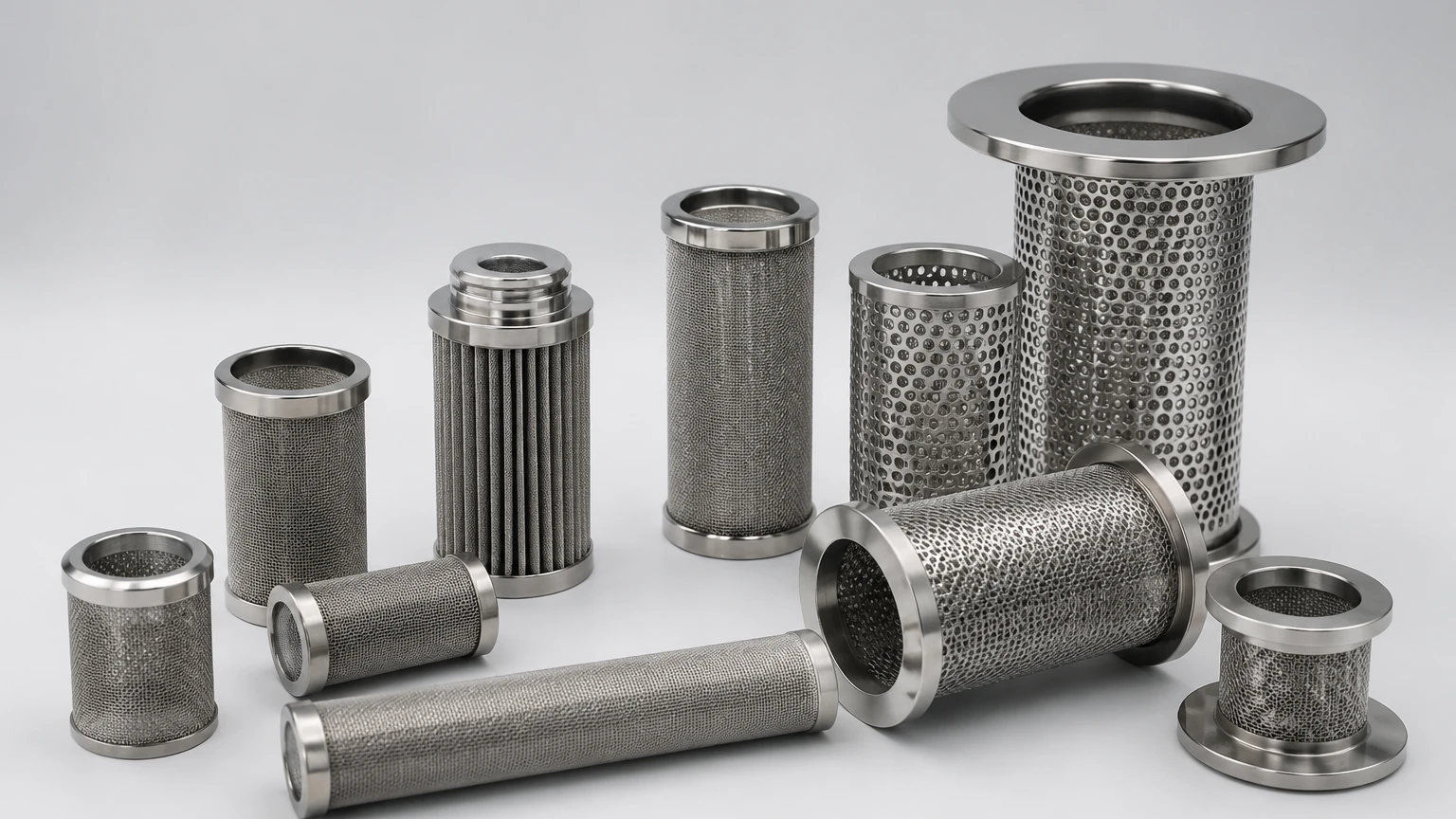
Mechanical separation via stainless steel wire mesh or sintered metal components is preferred in high-pressure or high-temperature applications where polymer-based filters would fail. The process typically involves:
1. Surface Filtration: Particles larger than the mesh openings are trapped on the upstream side of the filter media. This is common in coarse separation and strainers.
2. Depth Filtration: Utilizing multiple layers of media to trap particles throughout the thickness of the material. This is often achieved using pleated stainless steel cartridges or multi-layered sintered mesh.
3. Coalescence: In liquid-liquid separation, specialized mesh structures encourage small droplets of a dispersed phase to merge into larger droplets, making them easier to separate via gravity.
The Role of Stainless Steel in Liquid Separators
The choice of material for the internal components of a separador de liquidos is paramount. Stainless steel, particularly grades 304 and 316L, is the industry standard for demanding applications. Its selection is driven by several engineering requirements:
Corrosion and Chemical Resistance
In chemical processing and water treatment, the separator is often exposed to aggressive solvents, acids, or saline environments. 316L stainless steel, with its molybdenum content, provides superior resistance to pitting and crevice corrosion, ensuring that the filtration media does not degrade and contaminate the process stream.
Thermal Stability
Unlike synthetic fibers, stainless steel maintains its structural integrity at extreme temperatures. This is vital in petrochemical and steam filtration applications where liquid temperatures can exceed 250°C. The thermal expansion coefficients of the metal components must be factored into the design of the separator to prevent bypass or mechanical failure of the seals.
Mechanical Strength and Durability
High-pressure hydraulic systems and high-flow water treatment plants subject filtration components to significant differential pressures. Stainless steel wire mesh filters offer the rigidity required to resist deformation under load, ensuring consistent filtration accuracy over long service cycles.
Engineering Considerations for Component Selection
When specifying components for a separador de liquidos, engineers must evaluate several technical parameters to ensure the system meets performance expectations. For more detailed technical specifications and to Review product options and application support, consulting with a specialized manufacturer is recommended.
Micron Rating and Pore Geometry
The micron rating defines the size of particles the filter is intended to capture. However, engineers must distinguish between "nominal" and "absolute" ratings. An absolute rating indicates that 99.9% of particles above a certain size will be captured, which is critical for pharmaceutical and high-precision chemical applications. The geometry of the pore—whether achieved through plain weave, twill weave, or dutch weave mesh—affects both flow resistance and cleaning efficiency.
Flow Rate and Pressure Drop (ΔP)
Every filter media introduces a resistance to flow. A high initial pressure drop reduces the energy efficiency of the pump and shortens the time between cleaning cycles. Engineers must balance the need for fine filtration with the requirement for high flow rates. Pleated designs are often used to increase the effective surface area within the same footprint, thereby reducing the velocity of the fluid through the media and lowering the pressure drop.
Viscosity and Fluid Characteristics
The behavior of the liquid within the separator is heavily influenced by its viscosity. High-viscosity liquids, such as heavy oils or syrups, require larger surface areas and potentially coarser mesh to prevent rapid clogging. Furthermore, the presence of abrasive solids may necessitate the use of hardened stainless steel alloys or specialized surface treatments to extend the life of the mesh.
Industry-Specific Applications
The configuration of a separador de liquidos varies significantly depending on the industry it serves. Customization is often required to meet specific regulatory or process standards.
Food and Beverage Industry
In this sector, hygiene is the primary concern. Filtration components must be manufactured with smooth surfaces (often electropolished) to prevent bacterial growth and ensure they are compatible with Clean-in-Place (CIP) protocols. Stainless steel mesh is used to clarify juices, filter oils, and remove sediments from alcoholic beverages while maintaining compliance with FDA or equivalent food-safety standards.
Pharmaceutical and Biotechnology
Separators in pharmaceutical manufacturing require high levels of precision and traceability. Sintered metal fiber felt and multi-layer mesh are used to recover expensive catalysts or to ensure the purity of active pharmaceutical ingredients (APIs). These components must be free of leaching and capable of withstanding sterilization processes.
Chemical and Petrochemical Processing
These environments are characterized by extreme pH levels and high pressures. Liquid-liquid separators (coalescers) often use stainless steel mesh internals to separate oil from water or to remove moisture from fuel. The durability of the metal ensures that the separator can operate continuously in 24/7 production environments with minimal downtime.
Hydraulic and Industrial Lubrication
In hydraulic systems, a separador de liquidos is used to remove fine metal shavings and carbon deposits from oil. This protects sensitive valves and actuators from wear. High-strength stainless steel cartridges are essential here to handle the high-pressure pulses common in hydraulic circuits.
Maintenance, Cleaning, and Total Cost of Ownership
While the initial cost of a stainless steel filter for a separador de liquidos may be higher than disposable alternatives, the total cost of ownership (TCO) is often significantly lower. This is due to the cleanability and longevity of metal media.
Cleaning Methods
Stainless steel filters can be cleaned and reused multiple times. Common methods include:
* Backwashing: Reversing the flow of the liquid to dislodge particles trapped on the surface.
* Ultrasonic Cleaning: Using high-frequency sound waves in a cleaning solvent to remove fine particles from deep within the mesh pores.
* Chemical Cleaning: Using specialized acids or bases to dissolve organic or inorganic fouling without damaging the stainless steel.
Replacement Cycles
The decision to replace a filter component should be based on the "terminal pressure drop"—the point at which cleaning no longer restores the filter to an acceptable flow rate. By monitoring ΔP, maintenance teams can schedule interventions before a failure occurs, preventing costly emergency shutdowns.
Customization and OEM Capabilities
For many industrial applications, off-the-shelf filtration components are insufficient. A separador de liquidos often requires custom-engineered internals to fit specific housing dimensions or to handle unique fluid profiles.
Working with a manufacturer like Kaifil allows engineers to specify exact dimensions, mounting configurations (such as threaded ends, flanges, or O-ring seals), and multi-stage filtration layers. OEM partnerships ensure that the filtration components are optimized for the specific machinery they inhabit, leading to better performance and easier integration into existing production lines.
Key customization options include:
* Layering: Combining different mesh counts to create a graduated filtration effect.
* Reinforcement: Adding perforated metal cores or outer shrouds to provide extra structural support for high-pressure applications.
* End Fittings: Custom machining of connectors to ensure a leak-proof fit within the separator housing.
Conclusion for Technical Decision Makers
Selecting a separador de liquidos solution involves more than just choosing a micron rating. It requires a holistic understanding of the chemical environment, the physical properties of the fluid, and the long-term operational goals of the facility. Stainless steel filtration components offer the durability, precision, and reusability required for modern industrial processes.
By focusing on high-quality materials and engineered designs, purchasing teams can reduce waste, lower energy consumption, and protect critical downstream equipment. For those seeking to optimize their filtration systems, exploring professional manufacturing capabilities on the Main Page provides a starting point for developing tailored solutions that meet the rigorous demands of the chemical, food, pharmaceutical, and hydraulic sectors.
