


Aquatic Filter Foam
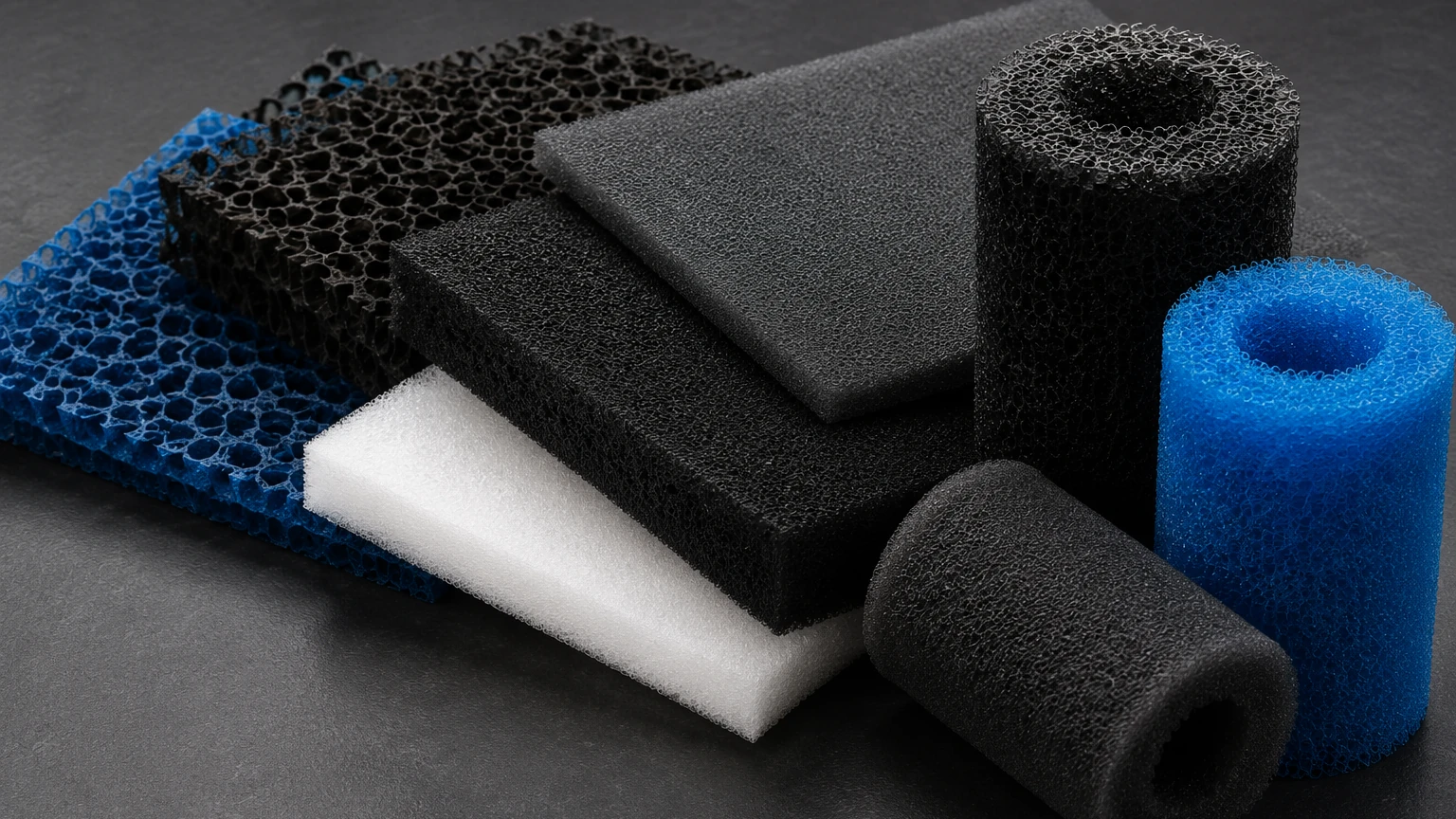
In the realm of industrial water treatment, aquaculture, and large-scale aquatic life support systems, the selection of filtration media is a critical engineering decision. Aquatic filter foam, often referred to as reticulated foam or filter sponge, serves as a versatile medium for both mechanical and biological filtration. Unlike standard upholstery foam, aquatic-grade reticulated foam is engineered with an open-cell structure that allows water to pass through with minimal resistance while trapping particulate matter and providing a massive surface area for beneficial bacterial colonies.
For engineers and procurement professionals, understanding the technical nuances of aquatic filter foam—ranging from pore density to material composition—is essential for optimizing system performance and minimizing operational downtime. This guide examines the engineering considerations, selection criteria, and performance expectations of aquatic filter foam within industrial and commercial contexts.
Technical Specifications: Understanding PPI and Pore Structure
The primary metric for evaluating aquatic filter foam is PPI, or Pores Per Inch. This measurement determines the filtration efficiency, flow rate, and the specific role the foam plays within a multi-stage filtration system.
* Coarse Foam (10–20 PPI): These foams feature large, open pores. In industrial applications, coarse foam is typically used as a primary mechanical pre-filter. Its function is to capture large debris such as plant matter, uneaten feed, or industrial bypass solids. Because of the large pore size, coarse foam maintains a high flow rate and is slow to clog, making it ideal for the first stage of a filtration array.
* Medium Foam (30–45 PPI): Medium-density foams provide a balance between mechanical straining and biological surface area. They capture smaller particulates that pass through coarse stages while offering a significantly higher surface area for nitrifying bacteria.
* Fine Foam (60–100 PPI): Fine foams are used for water polishing. They can trap very small suspended solids, resulting in high water clarity. However, from an engineering perspective, fine foams require more frequent monitoring as they are prone to rapid pressure drops (Delta P) due to clogging.
When designing a system, it is rarely advisable to use a single density of foam. Instead, a graduated approach—moving from coarse to fine—ensures that the particulate load is distributed across the media, extending the service life of each component.
Material Engineering: Polyether vs. Polyester Foams
Not all foams are suitable for aquatic environments. The chemical composition of the polymer determines the foam’s longevity and its resistance to environmental stressors. There are two main types of reticulated polyurethane foam used in filtration:
Polyether-Based Foam
For almost all aquatic applications, polyether-based foam is the industry standard. Polyether is hydrolytically stable, meaning it does not break down when submerged in water for extended periods. It is highly resistant to microbial attack and maintains its structural integrity in both freshwater and saltwater environments.
Polyester-Based Foam
While polyester-based foams often have higher tensile strength and better resistance to hydrocarbons, they are susceptible to hydrolysis. Over time, exposure to water causes the polymer chains to break down, leading to a phenomenon known as "crumbling." In a B2B or industrial setting, using polyester foam in an aquatic system is a common failure point that can lead to pump damage and system contamination.
The Dual Role of Mechanical and Biological Filtration
Aquatic filter foam is unique because it functions as a hybrid filtration medium. Understanding this dual role is vital for calculating the total bio-load capacity of a system.
1. Mechanical Capture: The physical structure of the foam acts as a depth filter. Unlike surface filters (such as some wire mesh screens), foam captures particles throughout its entire thickness. This depth-loading capability allows it to hold a significant volume of solids before the flow rate is significantly impacted.
2. Biological Substrate: The internal web-like structure of reticulated foam provides a vast internal surface area. In a stabilized system, this surface is colonized by aerobic bacteria (such as *Nitrosomonas* and *Nitrobacter*) that convert toxic ammonia into nitrite and eventually nitrate. For industrial aquaculture, the biological capacity of the foam is often more important than its mechanical straining ability.
Engineering Considerations: Flow Dynamics and Pressure Drop
When integrating aquatic filter foam into a pressurized or gravity-fed system, engineers must account for the initial and terminal pressure drop.
* Velocity and Residence Time: For biological filtration to be effective, the water must remain in contact with the bacterial colonies on the foam for a sufficient period. If the flow velocity is too high, the "contact time" is reduced, and the efficiency of the biological conversion drops. Conversely, if the flow is too slow, anaerobic zones may develop within the foam, leading to the production of hydrogen sulfide.
* Compression Risks: Unlike rigid stainless steel filter cartridges, foam is flexible. Under high pressure or as it becomes loaded with debris, the foam can compress. Compression reduces the PPI (making the pores smaller) and increases the pressure drop exponentially. System housings should be designed to support the foam and prevent bypass—where water flows around the edges of the foam rather than through it.
Transitioning from Foam to Stainless Steel Filtration
While aquatic filter foam is an excellent solution for many biological and light mechanical applications, certain industrial environments demand higher performance standards. In sectors such as chemical processing, high-temperature water treatment, or precision pharmaceutical filtration, synthetic foams may reach their physical limits.
In these scenarios, engineers often look toward custom stainless steel filtration solutions. Stainless steel wire mesh and sintered metal filters offer several advantages over foam in demanding environments:
* Precision and Consistency: Metal filters provide absolute filtration ratings, whereas foam ratings are nominal.
* Durability: Stainless steel can withstand high-pressure backwashing and chemical cleaning agents that would destroy polyurethane foam.
* Temperature Resistance: For processes involving hot fluids, metal components are the only viable option.
For organizations looking to upgrade their filtration infrastructure or source high-performance metal components that complement their existing foam stages, the Main Page of specialized manufacturers like Kaifil provides a comprehensive overview of industrial-grade alternatives.
Maintenance Cycles and Total Cost of Ownership
From a procurement perspective, the low initial cost of aquatic filter foam must be balanced against its maintenance requirements.
* Cleaning Protocols: Mechanical foam must be cleaned regularly to prevent clogging. In biological applications, this cleaning must be performed using de-chlorinated water to avoid killing the beneficial bacterial colonies. Over time, even with regular cleaning, the foam will lose its elasticity and ability to spring back after compression, necessitating replacement.
* Replacement Indicators: Foam should be replaced when it no longer returns to its original shape or when the cell walls begin to thin. In high-load industrial systems, this cycle may range from 6 to 18 months.
* Disposal: Polyurethane foam is a petroleum-based product. Large-scale operations should consider the environmental impact and disposal costs associated with frequent foam replacement compared to the long-term reuse of permanent stainless steel filter elements.
Customization and OEM Sourcing
B2B buyers often require aquatic filter foam in specific geometries to fit proprietary filter housings. Customization options typically include:
* Die-Cutting and CNC Shaping: Foam can be cut into disks, cubes, cylinders, or complex 3D shapes to ensure a snug fit within a reactor or canister, preventing bypass.
* Lamination: Different PPI layers can be thermally bonded to create a single "gradient density" filter block, simplifying the assembly process for OEM equipment.
* Reticulation Quality: Ensuring the foam is 100% reticulated (meaning all cell membranes have been removed) is critical. Partial reticulation leads to inconsistent flow and unpredictable performance.
Conclusion
Aquatic filter foam remains a cornerstone of water management due to its cost-effectiveness and dual-action filtration capabilities. However, its successful implementation depends on a rigorous understanding of pore density, material stability, and fluid dynamics. By selecting the appropriate PPI and ensuring a polyether-based composition, engineers can create robust systems that maintain water quality and support biological health.
As systems scale or encounter more aggressive operating conditions, the integration of precision metal filtration becomes a necessary evolution. Balancing the biological benefits of foam with the mechanical precision of stainless steel ensures a high-performance, reliable filtration strategy for any industrial aquatic application. For more information on professional-grade filtration components and customized engineering support, professionals are encouraged to review the technical resources available on the Kaifil Main Page.
