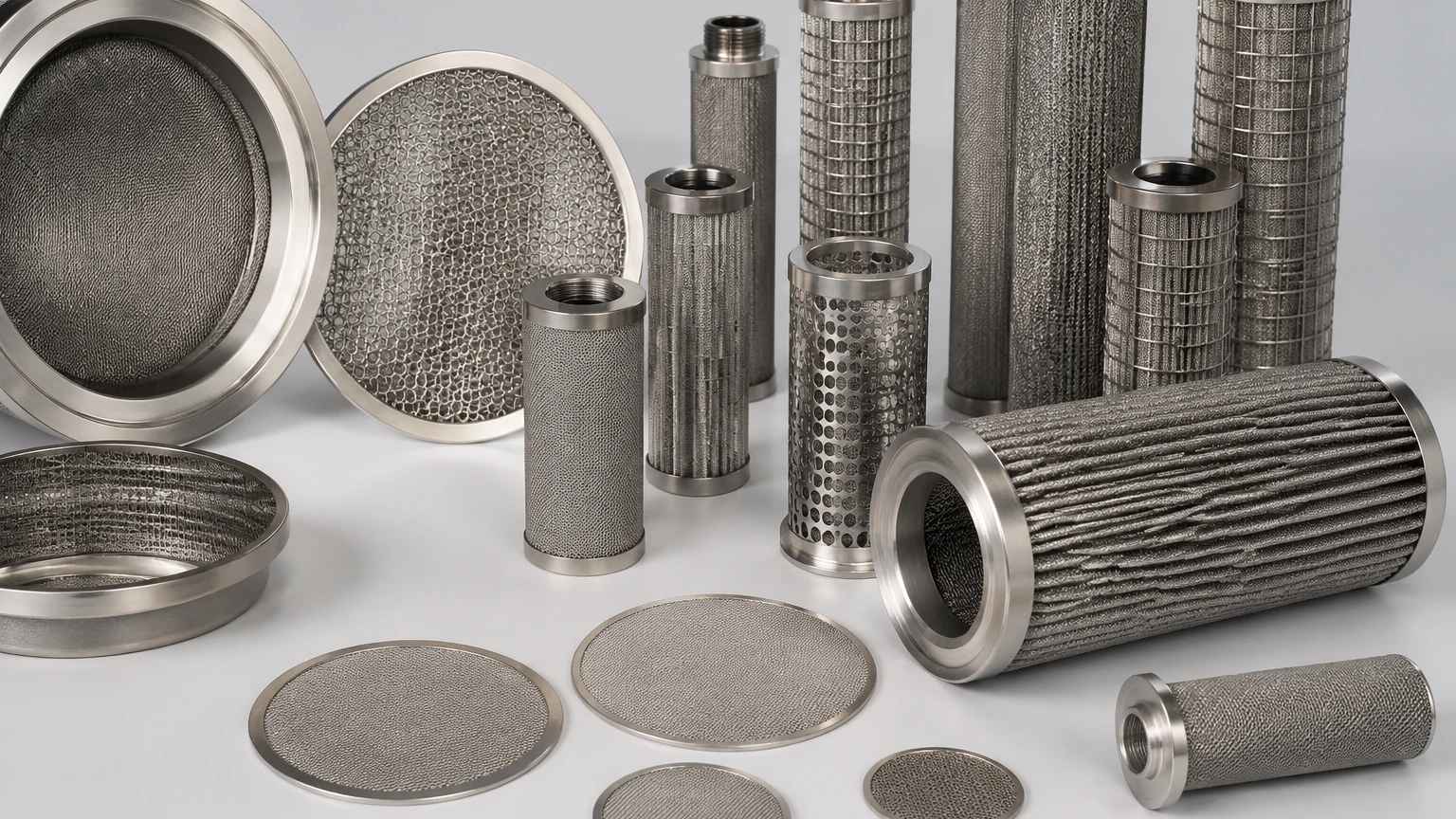
فلترها
Industrial filtration is a critical process in modern manufacturing, ensuring the purity of fluids, the protection of sensitive downstream equipment, and the consistency of end products. When engineers and procurement specialists evaluate options for فلترها, the focus shifts from simple separation to the technical nuances of material compatibility, structural integrity, and long-term operational efficiency. Stainless steel filtration solutions have emerged as the standard for demanding environments due to their ability to withstand extreme temperatures, corrosive chemicals, and high-pressure differentials that would compromise synthetic or paper-based media.
The Engineering Fundamentals of Industrial Filtration
At its core, industrial filtration involves the removal of solid contaminants from a liquid or gaseous stream. However, the selection of فلترها requires a deep understanding of the two primary mechanisms of filtration: surface filtration and depth filtration.
Surface filtration occurs when particles larger than the pore size of the filter media are trapped on the upstream side. This is typical of stainless steel wire mesh filters. These components are engineered with precise geometric openings, allowing for a high degree of accuracy in particle size exclusion. Depth filtration, conversely, utilizes a thicker medium where particles are trapped within the tortuous paths of the material. In many industrial applications, a combination of these methods is employed to maximize the dirt-holding capacity while maintaining a specific micron rating.
For engineers, the primary challenge is balancing filtration efficiency with flow resistance. A filter with extremely fine pores will provide high-purity output but may cause a significant pressure drop, necessitating larger pumps and increasing energy consumption. Therefore, the design of the filter element must be optimized for the specific viscosity and flow rate of the process fluid.
Material Science in Stainless Steel فلترها
The performance of فلترها is largely dictated by the metallurgy of the filter media. Stainless steel is the preferred material for industrial applications because of its mechanical strength and chemical resistance. The most common alloys used in the production of these filters include:
* AISI 304: A versatile stainless steel suitable for many industrial applications. It offers good corrosion resistance to most oxidizing acids and is frequently used in food processing and general water treatment.
* AISI 316L: Containing molybdenum, 316L provides superior resistance to chlorides and pitting. This makes it the standard choice for pharmaceutical manufacturing, chemical processing, and marine environments where corrosion is a constant threat.
* High-Temperature Alloys: For applications exceeding 500°C, such as hot gas filtration or molten polymer processing, specialized alloys like Inconel or Hastelloy may be integrated into the filter design.
Beyond the alloy type, the physical structure of the metal media is critical. Woven wire mesh is the most common form, available in various weave patterns such as plain weave, twill weave, and Dutch weave. Plain Dutch weave (PDW) and Twilled Dutch Weave (TDW) are particularly valued in high-pressure applications because they offer a dense, strong structure with high filtration accuracy.
Critical Performance Metrics: Micron Ratings and Permeability
When specifying فلترها, the micron rating is often the first parameter considered. However, it is essential to distinguish between nominal and absolute micron ratings. A nominal rating indicates the ability of the filter to retain a majority of particles of a certain size, whereas an absolute rating signifies that 99.9% or more of particles above that size will be captured. For precision industries like semiconductor or pharmaceutical manufacturing, absolute ratings are mandatory to ensure process safety.
Another vital metric is permeability, which refers to the ease with which a fluid passes through the filter media. High permeability results in a lower initial pressure drop. In industrial systems, the "clean pressure drop" must be calculated to ensure the system operates within the pump’s efficiency curve. As the filter accumulates contaminants, the pressure differential (ΔP) increases. Monitoring this ΔP is the standard method for determining when a filter element requires cleaning or replacement.
Structural Integrity and Custom Design Considerations
Standard filter elements often fail to meet the unique constraints of specialized industrial machinery. This is where custom-engineered فلترها become necessary. The structural design of a filter element must account for several factors:
1. Pleated vs. Cylindrical Designs: Pleating the stainless steel mesh significantly increases the effective filtration area within the same footprint. This results in a higher dirt-holding capacity and a longer service life between cleaning cycles. Cylindrical filters, while having less surface area, are easier to clean and are often used in high-viscosity applications.
2. Support Layers: In high-pressure environments, the fine filtration mesh is often sandwiched between coarser support layers. This "multi-layer" construction prevents the fine mesh from deforming or collapsing under the force of the fluid flow.
3. End Cap Configurations: Customization extends to the connection points. Whether the system requires Double Open End (DOE), Code 7 (226/Fin), or threaded connections, the seal must be bypass-free to ensure that no unfiltered fluid escapes into the downstream process.
Application-Specific Selection: Chemical, Food, and Hydraulic Systems
The requirements for فلترها vary significantly across different industrial sectors. In the chemical industry, the primary concern is often chemical compatibility. Filters must withstand aggressive solvents and pH extremes without leaching metallic ions into the process stream. Sintered metal fiber or multi-layer mesh laminates are often used here for their extreme durability.
In the food and beverage industry, hygiene is the priority. Filters must be designed without dead spaces where bacteria could proliferate. Stainless steel filters are ideal because they are compatible with Clean-in-Place (CIP) and Steam-in-Place (SIP) protocols, allowing for repeated sterilization without degrading the media.
Hydraulic systems require filters that can handle high-velocity flows and protect sensitive valves from wear particles. In these applications, the mechanical strength of the filter is paramount, as it must resist the fatigue caused by frequent pressure pulsations.
Maintenance, Cleaning, and Total Cost of Ownership (TCO)
One of the most significant advantages of stainless steel فلترها over disposable alternatives is their cleanability. While the initial investment in a metal filter is higher, the Total Cost of Ownership (TCO) is often lower due to the elimination of recurring replacement costs and waste disposal fees.
Cleaning methods for stainless steel filters include:
* Ultrasonic Cleaning: High-frequency sound waves create cavitation bubbles that dislodge fine particles from deep within the mesh.
* Chemical Cleaning: Using specific solvents or acids to dissolve accumulated organic or inorganic deposits.
* Backwashing: Reversing the flow of fluid through the filter to flush out contaminants. This is often automated in continuous process systems.
* Burn-off/Pyrolysis: For filters used in polymer or resin processing, high heat is used to carbonize and remove plastic buildup.
Engineers must establish a clear maintenance schedule based on the pressure drop threshold to prevent permanent deformation of the filter media. If a filter is allowed to reach its collapse pressure, the structural damage is usually irreversible.
Validating Quality: Testing and Certification Standards
To ensure that فلترها perform as expected in the field, manufacturers must adhere to rigorous testing standards. The Bubble Point Test (ISO 4003) is a non-destructive method used to verify the pore size and integrity of the filter element. By measuring the pressure required to force air through a liquid-saturated filter, manufacturers can confirm the absolute micron rating.
Other critical tests include the Multi-pass Test (ISO 16889) for determining filtration efficiency and dirt-holding capacity, and the Material Test Report (MTR), which provides traceability for the stainless steel alloy used. For B2B buyers, requesting these certifications is a vital step in the procurement process to ensure the components meet the necessary safety and performance benchmarks.
Optimizing Industrial Processes with Custom Solutions
Choosing the right filtration component is not merely about finding a part that fits; it is about optimizing the entire process for reliability and cost-effectiveness. Whether dealing with high-viscosity fluids in a chemical plant or ensuring the purity of water in a treatment facility, the technical specifications of the filter media must align with the operational demands of the system.
By focusing on material quality, precise engineering, and appropriate maintenance strategies, industrial operators can significantly reduce downtime and improve product quality. For those seeking specialized guidance on selecting or designing high-performance filtration components, visiting the Main Page provides access to technical resources and customized engineering support tailored to specific industrial requirements.
In conclusion, while the term فلترها covers a broad range of products, the value in an industrial context lies in the precision of the manufacturing and the suitability of the material to the environment. Stainless steel remains the gold standard for durability and performance, offering a sustainable and efficient solution for the most challenging filtration tasks in the global market. Understanding the relationship between pore structure, pressure dynamics, and metallurgical properties allows engineering teams to implement filtration systems that are both robust and economically viable over the long term.