


Melt Filter Manufacturer
In the demanding landscape of polymer extrusion, chemical processing, and synthetic fiber production, the integrity of the final product depends heavily on the efficiency of melt filtration. Melt filtration is the process of removing solid contaminants from molten polymers or high-viscosity fluids before they pass through a die or mold. Given the extreme temperatures and high pressures involved, selecting a specialized melt filter manufacturer is not merely a procurement task but a critical engineering decision that affects production uptime, product quality, and equipment longevity.
Industrial melt filters must withstand harsh environments while maintaining precise filtration accuracy. For engineers and purchasing teams, understanding the technical nuances of filter construction, material science, and manufacturing standards is essential for optimizing filtration performance. This guide examines the technical considerations, evaluation criteria, and performance expectations when partnering with a manufacturer for custom stainless steel filtration solutions.
The Engineering Role of a Melt Filter Manufacturer
A professional melt filter manufacturer does more than supply hardware; they provide engineering solutions tailored to specific rheological conditions. In industries such as plastics recycling or virgin resin production, the melt filter is the final barrier against degraded polymers, metal fragments, or un-melted particles.
Manufacturers like Kaifil specialize in the fabrication of precision metal filter components that can handle the high-viscosity flow of molten materials. The manufacturing process involves advanced welding techniques, precise mesh weaving, and rigorous quality control to ensure that the filter does not bypass or collapse under differential pressure. For B2B buyers, the primary value of a manufacturer lies in their ability to translate application data—such as flow rate, operating temperature, and viscosity—into a durable filter design that minimizes pressure drop while maximizing contaminant retention.
Technical Specifications and Material Selection
Material selection is the foundation of melt filter performance. Because melt filtration often occurs at temperatures exceeding 300°C (572°F) and pressures reaching several hundred bar, standard materials are insufficient.
Stainless Steel Alloys
Most high-quality melt filters are constructed from stainless steel alloys, primarily 304 and 316L.
- 316L Stainless Steel: Preferred for its superior corrosion resistance and high-temperature stability. The "L" denotes low carbon content, which is crucial for preventing carbide precipitation during welding, ensuring the structural integrity of the filter seams.
- Specialty Alloys: In highly corrosive environments, such as those involving fluoropolymers or specific chemical additives, manufacturers may utilize Hastelloy or other nickel-based alloys to prevent premature degradation.
Filtration Media Types
A melt filter manufacturer typically offers several types of media based on the required micron rating and the nature of the contaminants:
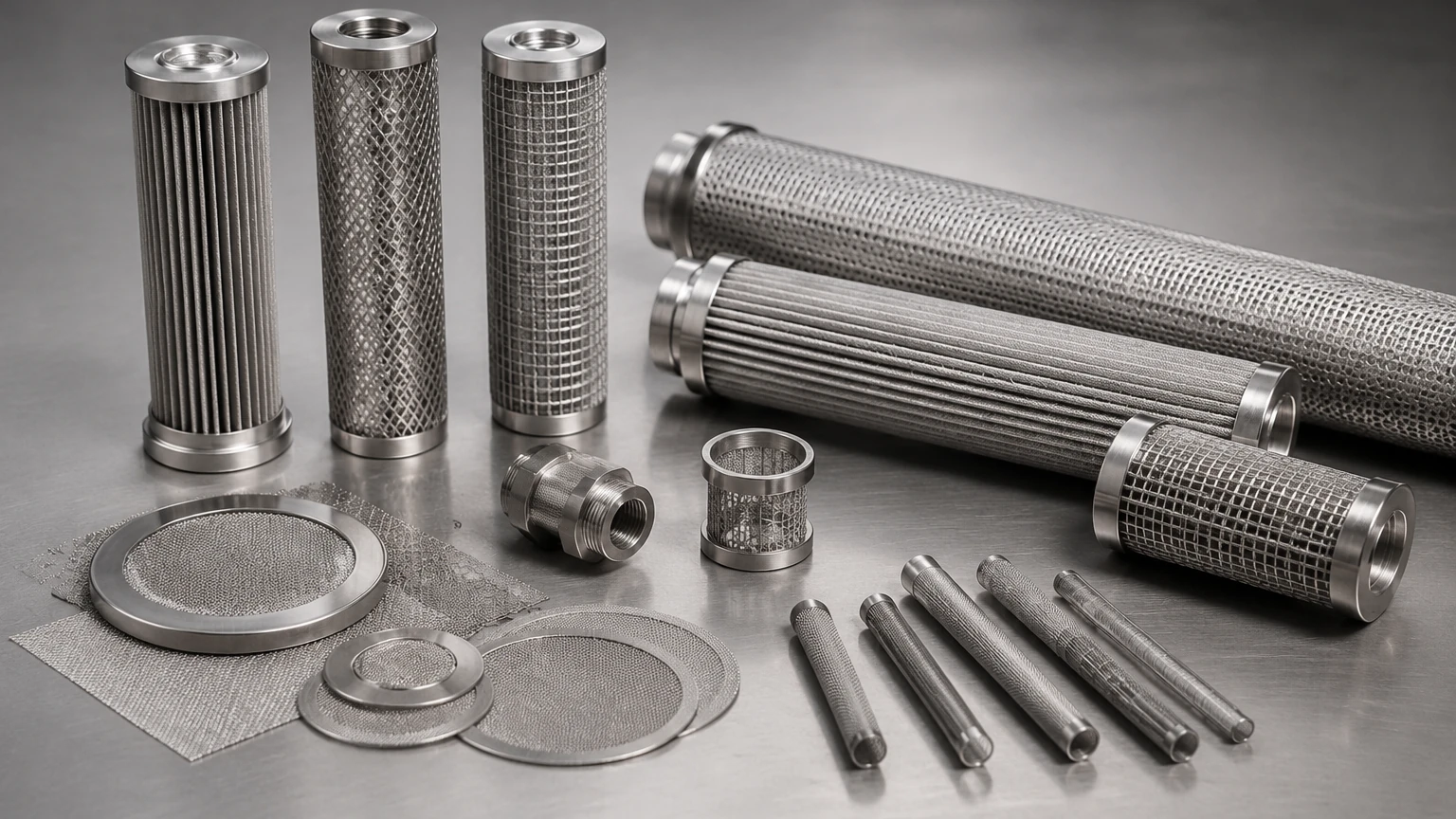
- Wire Mesh: Woven stainless steel wire cloth is the most common medium. It provides a precise pore size and is relatively easy to clean. Multi-layer sintered mesh combines several layers of wire cloth to provide both filtration accuracy and mechanical support.
- Sintered Metal Fiber: Produced by sintering non-woven stainless steel fibers, this medium offers high porosity (up to 80%), which results in a lower initial pressure drop and a higher dirt-holding capacity compared to traditional wire mesh.
- Pleated Cartridges: By pleating the filtration media, manufacturers significantly increase the effective surface area within a fixed housing volume. This design is ideal for high-flow applications where extending the time between filter changes is a priority.
Key Criteria for Evaluating a Melt Filter Manufacturer
When vetting a melt filter manufacturer, technical professionals must look beyond the price per unit. The total cost of ownership is determined by the filter’s durability and the manufacturer’s technical competence.
Customization and OEM Capabilities
Industrial filtration systems are rarely standardized. A manufacturer should demonstrate robust OEM capabilities, allowing for the customization of dimensions, end-cap configurations, and reinforcement structures. Whether the application requires a simple disc filter or a complex multi-layered candle filter, the ability to produce components that fit existing housings without modification is critical.
Precision Welding and Assembly
The weak points in any metal filter are the joints and seams. A reputable manufacturer utilizes advanced welding technologies, such as TIG (Tungsten Inert Gas) or plasma welding, to ensure clean, strong, and leak-proof connections. Burrs or weld spatter can contaminate the melt stream, so post-weld cleaning and inspection are non-negotiable steps in the production process.
Quality Assurance and Testing
Engineers should confirm that the manufacturer performs standardized testing to verify performance. This includes:
- Bubble Point Testing: To verify the maximum pore size and ensure there are no defects in the media or welds.
- Differential Pressure Testing: To determine the filter’s resistance to collapse and its flow characteristics.
- Dimensional Verification: Ensuring tight tolerances for a perfect seal within the filter changer or housing.
Structural Integrity and Pressure Management
In melt filtration, the pressure drop (ΔP) across the filter increases as contaminants accumulate. A well-designed filter must maintain its structural integrity even as the differential pressure rises toward the change-out point.
Manufacturers address this by incorporating support cores or outer cages made of perforated metal or heavy-duty mesh. These support structures prevent the filtration media from deforming or "nesting," which would otherwise restrict flow and potentially lead to media migration into the melt stream. When discussing requirements with a manufacturer, engineers should specify the maximum expected differential pressure to ensure the support structure is appropriately engineered.
Furthermore, the pleat geometry in pleated filters must be carefully calculated. If pleats are too dense, they can bridge with contaminants, effectively reducing the usable surface area. A knowledgeable manufacturer will optimize pleat spacing based on the viscosity of the polymer and the expected contaminant load.
Operational Longevity and Maintenance Considerations
One of the primary advantages of stainless steel melt filters is their cleanability. Unlike disposable polymer filters, metal filters can often be refurbished and reused, significantly reducing long-term costs.
Cleaning Methods
A manufacturer should provide guidance on the appropriate cleaning methods for their products. Common industrial techniques include:
- Pyrolysis (Burn-off): Heating the filter in a vacuum or controlled atmosphere to decompose the polymer residue into carbon, which is then removed.
- Ultrasonic Cleaning: Using high-frequency sound waves in a chemical bath to dislodge fine particles from deep within the mesh or fiber matrix.
- Hydrolysis: Using high-pressure steam to break down specific types of polymers (like PET or Nylon).
Replacement Cycles
While reusable, metal filters have a finite lifespan. Repeated cleaning cycles and high-pressure stress eventually lead to fatigue or permanent blinding of the pores. A reliable manufacturer helps customers establish replacement cycles based on the degradation of the bubble point or a permanent increase in the "clean" pressure drop after maintenance.
Total Cost of Ownership in Melt Filtration
For purchasing teams, the initial quote from a melt filter manufacturer is only one part of the financial equation. The true cost of filtration includes:
1. Downtime Costs: How often does the line need to be stopped for filter changes? Higher-quality filters with greater surface area extend these intervals.
2. Energy Consumption: A filter with a high initial pressure drop requires more pump energy to maintain the required flow rate.
3. Yield Loss: Filters that fail or bypass result in off-spec products that must be scrapped or reprocessed.
4. Longevity: A cheaper filter that survives only two cleaning cycles is more expensive than a premium filter that survives ten.
By focusing on these factors, engineers can justify the investment in high-performance filtration components that protect downstream equipment like gear pumps and extrusion dies.
Conclusion: Selecting the Right Partner
The success of an industrial melt filtration process depends on the synergy between the filtration hardware and the specific demands of the application. A specialized manufacturer provides the technical expertise necessary to navigate the complexities of material compatibility, pressure management, and filtration precision.
For those seeking reliable, high-performance stainless steel filtration solutions, it is essential to partner with a manufacturer that understands the rigors of industrial processing. To learn more about customized filtration options, material specifications, and engineering support, visit the Main Page for a comprehensive overview of available solutions.
By prioritizing technical accuracy and manufacturing quality, companies can ensure their filtration systems deliver consistent results, protecting both their equipment and their reputation for product quality in the global market. Whether you are dealing with recycled plastics, specialty chemicals, or pharmaceutical-grade fluids, the right melt filter manufacturer is a vital link in your production chain.
