


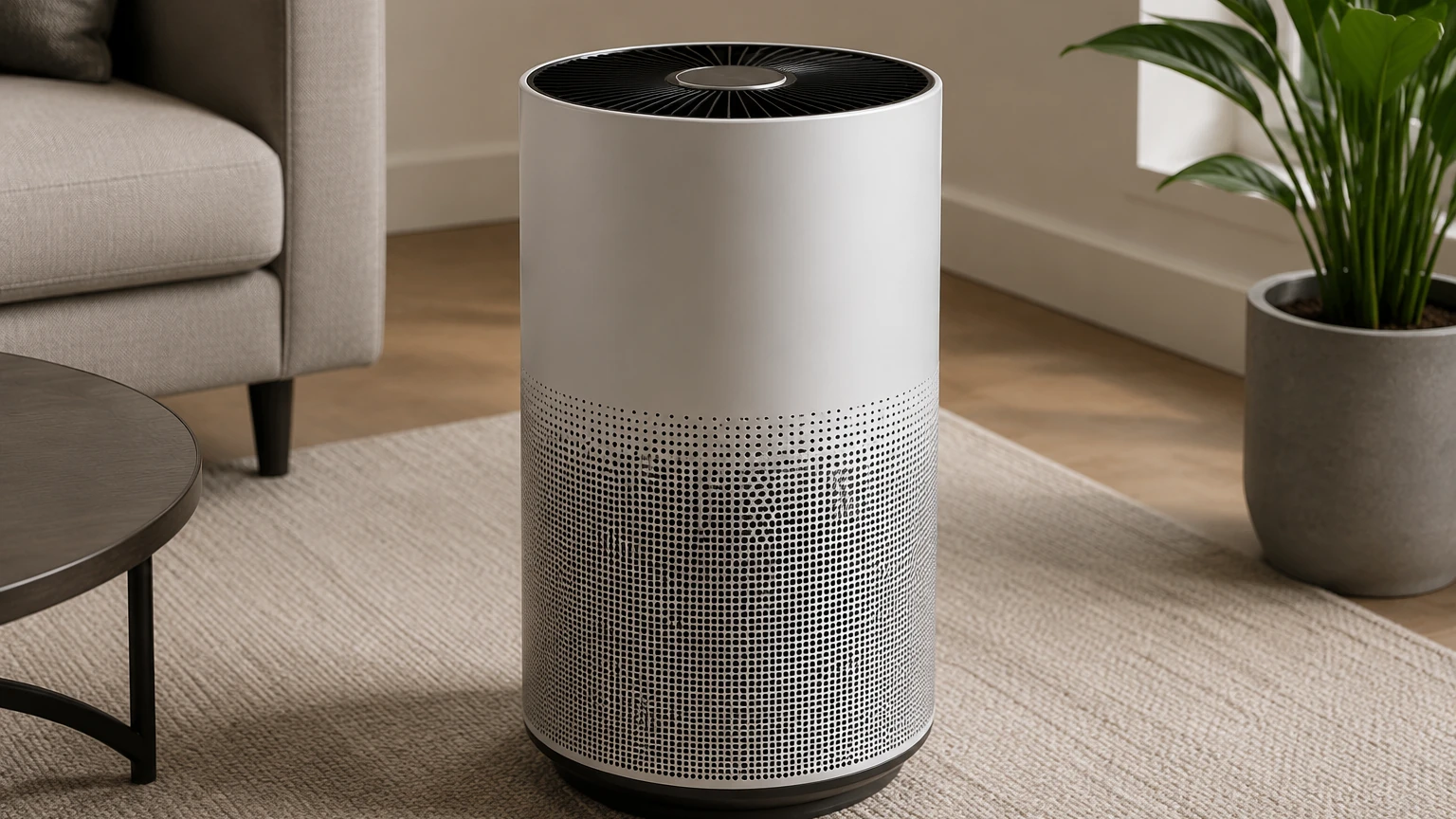
Cylindrical Air Purifier
In industrial environments, air quality is not merely a matter of comfort but a critical factor in equipment longevity, process integrity, and regulatory compliance. The cylindrical air purifier—specifically the industrial-grade filtration assembly—serves as a primary defense against airborne contaminants in pneumatic systems, gas turbines, and chemical processing lines. Unlike residential units, industrial cylindrical filters must withstand high pressure differentials, extreme temperatures, and corrosive atmospheres while maintaining precise filtration efficiency.
For engineers and procurement specialists, selecting the correct filtration component requires a deep understanding of fluid dynamics and material science. This guide explores the technical considerations of cylindrical air purification systems, focusing on stainless steel and metal mesh solutions that provide superior durability compared to synthetic alternatives.
The Engineering Logic Behind Cylindrical Designs
The cylindrical geometry is the preferred form factor for high-performance air filtration for several structural and aerodynamic reasons. In a B2B context, where systems often run 24/7, the mechanical advantages of a cylinder are indispensable.
360-Degree Intake and Uniform Airflow
A cylindrical air purifier allows for air intake from all directions. This omnidirectional capability ensures that the velocity of the air passing through the media is uniform across the entire surface area. Uniform airflow prevents "hot spots" where high-velocity air might prematurely degrade the filter media or cause a localized breakthrough of contaminants.
Structural Integrity Under Pressure
In industrial suction or discharge applications, filters are subjected to significant pressure loads. A cylindrical shape naturally resists deformation. When internal or external pressure is applied, the stress is distributed evenly across the circumference. For high-pressure applications, these filters are often reinforced with internal perforated metal cores or external cages, ensuring the media does not collapse or burst during operation.
Maximizing Surface Area
By utilizing a cylindrical design, manufacturers can incorporate pleating techniques. Pleated metal mesh or fiber felt significantly increases the effective filtration area within a compact footprint. A larger surface area directly correlates to a lower initial pressure drop and a higher dirt-holding capacity, which extends the service interval between cleanings or replacements.
Material Selection: Why Stainless Steel Dominates
While polymer-based filters are common in light-duty applications, heavy industrial processes demand the resilience of metal. As a specialist in custom filtration, Kaifil emphasizes the use of stainless steel (typically grades 304, 316, or 316L) for the construction of the cylindrical air purifier components.
Corrosion and Chemical Resistance
In chemical processing or offshore environments, the air often carries corrosive vapors or salt spray. Stainless steel 316L, containing molybdenum, provides excellent resistance to pitting and crevice corrosion. This ensures that the filter structure remains intact even when exposed to aggressive chemical agents that would degrade plastic or galvanized steel.
Temperature Tolerance
Many industrial air purification tasks involve high-temperature exhaust or hot gas filtration. Synthetic filters often fail at temperatures exceeding 100°C. In contrast, stainless steel cylindrical filters can operate effectively at temperatures up to 500°C (and higher with specialized alloys), making them essential for kiln ventilation, steam filtration, and engine intake systems.
Cleanability and Sustainability
One of the most significant advantages of metal-based cylindrical air purifiers is their ability to be cleaned and reused. Through ultrasonic cleaning, backflushing, or chemical baths, the accumulated particulate matter can be removed, restoring the filter’s original permeability. This reduces the total cost of ownership (TCO) and minimizes the environmental impact associated with disposable filter cartridges.
Technical Specifications and Performance Metrics
When evaluating a cylindrical air purifier for an OEM project or a facility upgrade, engineers must define specific performance parameters to ensure system compatibility.
Micron Rating: Absolute vs. Nominal
It is vital to distinguish between nominal and absolute micron ratings. A nominal rating refers to the filter's ability to retain the majority of particles of a certain size, whereas an absolute rating indicates the diameter of the largest spherical particle that can pass through the filter under laboratory conditions. For precision applications, such as protecting sensitive sensors or cleanroom intakes, absolute-rated stainless steel wire mesh is required.
Pressure Drop (ΔP)
The initial pressure drop is the resistance the air encounters as it passes through a clean filter. A high ΔP requires the system’s blowers or compressors to work harder, increasing energy consumption. Engineers must balance the need for fine filtration with the requirement for high flow rates. The Main Page of a technical manufacturer provides data on how different weave patterns—such as plain, twill, or Dutch weave—impact these flow characteristics.
Dirt-Holding Capacity
This metric defines how much contaminant a filter can retain before reaching its terminal pressure drop (the point at which it must be cleaned or replaced). In a cylindrical air purifier, this is optimized by selecting the right depth of pleating and the appropriate wire diameter in the mesh construction.
Customization and OEM Integration
Off-the-shelf filtration solutions rarely meet the exacting needs of specialized industrial machinery. Customization is often necessary to integrate a cylindrical air purifier into existing housing or to meet unique environmental challenges.
Dimensional Tailoring
Custom manufacturing allows for precise control over the inner diameter (ID), outer diameter (OD), and overall length. This ensures a leak-proof fit within the filter housing, which is critical for maintaining the integrity of the air stream.
End Cap Configurations
End caps are the interfaces between the filter and the machine. Depending on the application, these may be flat, flanged, or equipped with specialized threaded connections. They can be attached via epoxy bonding for lower-temperature applications or TIG/plasma welding for high-temperature and high-pressure environments.
Support Structures
For high-vacuum or high-pressure applications, the cylindrical air purifier may require a heavy-duty perforated metal core. The thickness of the core and the hole pattern are engineered to provide maximum support while minimizing interference with the airflow.
Applications Across Key Industries
The versatility of the cylindrical air purifier makes it a staple in various sectors:
* Pharmaceutical and Biotech: Used in tank venting and sterile air supply to prevent microbial contamination. Stainless steel construction allows for in-situ sterilization (SIP).
* Food and Beverage: Employed in pneumatic conveying systems to ensure that the air moving ingredients like flour or sugar is free of metallic or organic contaminants.
* Power Generation: Protecting gas turbines from dust and debris, which is essential for preventing blade erosion and maintaining efficiency.
* Hydraulic Systems: While primarily used for oil, air breathers on hydraulic reservoirs use cylindrical designs to prevent airborne moisture and dust from entering the fluid system.
Maintenance and Total Cost Considerations
For a purchasing department, the initial price of a cylindrical air purifier is only one part of the equation. A comprehensive evaluation includes the lifecycle costs.
1. Replacement Frequency: Metal filters typically outlast synthetic filters by a factor of ten or more in harsh environments.
2. Energy Efficiency: A well-engineered filter with a low pressure drop can save thousands of dollars in annual energy costs for large-scale ventilation systems.
3. Downtime Mitigation: High-quality filters with predictable service lives allow for scheduled maintenance, preventing emergency shutdowns caused by filter failure or bypass.
4. Disposal Costs: Reusable filters eliminate the costs associated with the disposal of hazardous or bulky used filter cartridges.
Critical Questions for Procurement and Engineering Teams
Before finalizing a specification for a cylindrical air purifier, the following questions should be addressed with the manufacturer:
* What is the specific gas composition? (To ensure material compatibility with trace chemicals or moisture levels).
* What is the maximum operating pressure and the expected surge pressure? (To determine the required thickness of support cores).
* Are there specific regulatory standards to meet? (Such as FDA compliance for food contact or ISO standards for cleanroom air).
* What is the cleaning protocol? (To ensure the filter design is compatible with the facility's existing maintenance equipment, such as ultrasonic baths).
Conclusion
The cylindrical air purifier is a foundational component in industrial air management. By moving beyond standard disposable options and opting for engineered stainless steel solutions, companies can achieve higher filtration precision, better durability, and a lower total cost of ownership. Whether the application involves protecting a high-speed turbine or ensuring the purity of a pharmaceutical batch, the technical integrity of the filter cartridge is paramount. Working with a dedicated manufacturer like Kaifil ensures that every aspect of the filter—from the micron rating to the structural reinforcement—is optimized for the specific demands of the industrial environment.
For more information on custom filtration engineering and to review product options and application support, visit the Main Page to explore the full range of metal filtration solutions.
