


Natural Gas Filter Separator
In the midstream and downstream sectors of the oil and gas industry, the purity of the gas stream is critical to the longevity of infrastructure and the efficiency of processing equipment. A natural gas filter separator serves as a foundational component in pipeline systems, designed to remove both solid particulates and liquid contaminants from the gas flow. Without effective separation, contaminants such as compressor oil, water, brine, and pipe scale can lead to catastrophic equipment failure, inaccurate metering, and increased operational downtime.
For engineers and procurement professionals, understanding the technical nuances of a natural gas filter separator is essential for optimizing system performance. These units are not merely static vessels; they are precision-engineered systems that rely on advanced filtration media—often constructed from high-grade stainless steel—to achieve specific purity standards under varying pressure and temperature conditions.
Understanding the Role of Natural Gas Filter Separators in Industrial Systems
Natural gas, as it travels from the wellhead through the transmission network, carries various impurities. These impurities are generally categorized into two groups: solids and liquids. Solids include rust from aging pipes, sand from the formation, and desiccant dust. Liquids often consist of water, liquid hydrocarbons (condensates), and lubricating oils introduced by upstream compression stations.
The primary function of a natural gas filter separator is to provide a clean, dry gas stream to downstream components. This protection is vital for:
* Compressor Stations: Preventing liquid slugging and abrasive wear on cylinders and valves.
* Gas Turbines: Protecting turbine blades from erosion and deposition that can cause imbalances.
* Metering Stations: Ensuring accurate flow measurement by eliminating the "noise" and physical interference caused by liquids and debris.
* Pressure Regulation Stations: Preventing the clogging of small orifices and the erosion of regulator seats.
By employing a combination of mechanical separation and high-efficiency filtration, these separators ensure that the gas meets the stringent quality specifications required for industrial use or commercial distribution.
The Mechanics of Two-Stage Filtration
Most industrial-grade natural gas filter separators utilize a two-stage design to maximize efficiency and extend the service life of the internal filter elements. Each stage targets a different physical state of the contaminants.
Stage One: Primary Separation
In the first stage, the gas enters the vessel and undergoes a reduction in velocity or a change in direction. Many designs incorporate a centrifugal or cyclonic inlet. As the gas spins, the heavier solid particles and large liquid droplets are flung against the vessel walls by centrifugal force, eventually falling into a collection sump. This stage is designed to handle the "bulk" removal of contaminants, preventing the secondary filter elements from becoming prematurely blinded or saturated.
Stage Two: Secondary Coalescing and Filtration
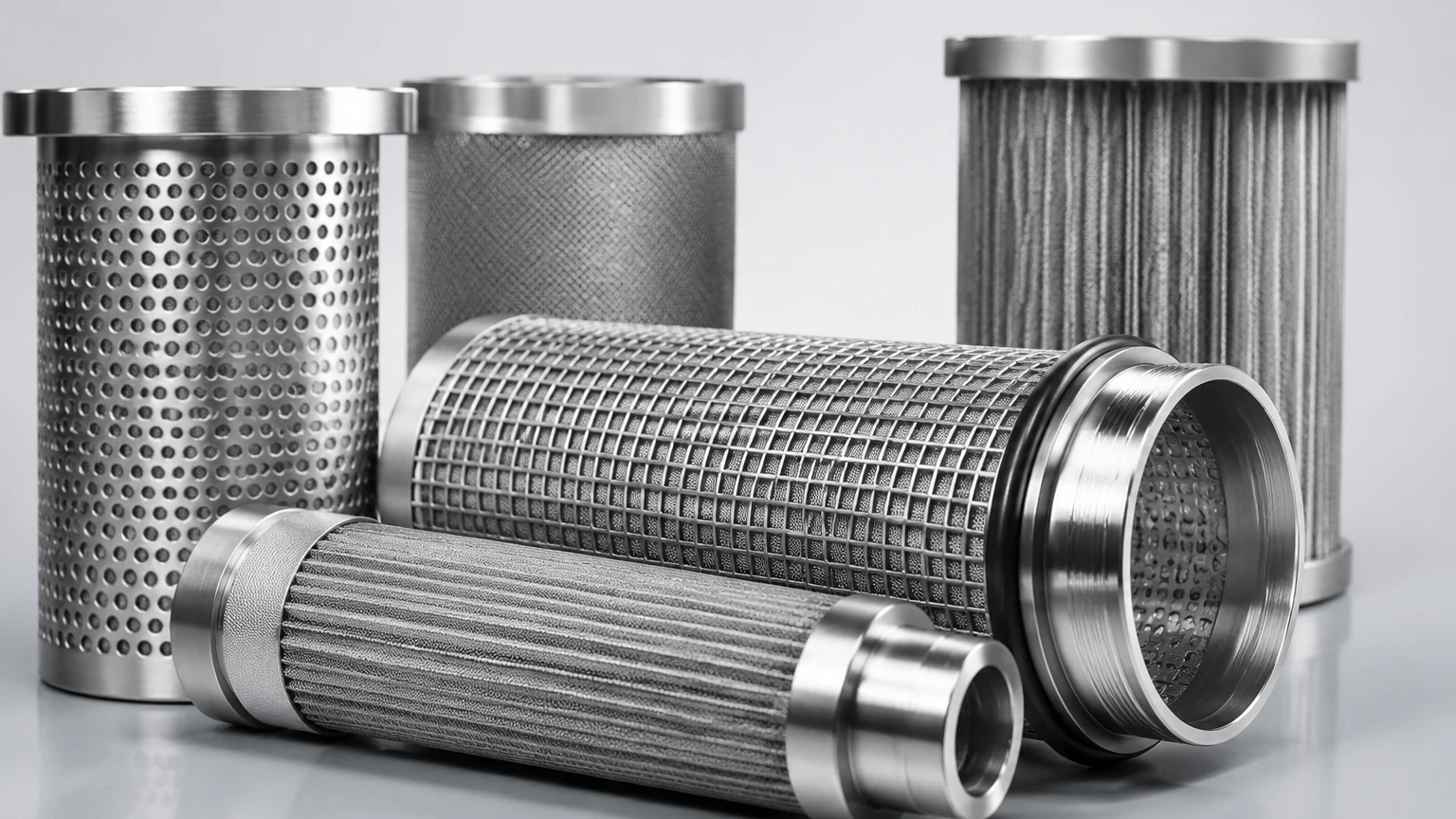
The second stage is where the precision filtration occurs. The gas passes through filter elements—often cylindrical cartridges or pleated stainless steel wire mesh structures. These elements perform two functions simultaneously: fine particulate filtration and coalescing.
In the coalescing process, fine liquid aerosols (too small to be removed by gravity or centrifugal force) pass through the depth-loading media. As they travel through the tortuous path of the filter fibers or mesh, the tiny droplets collide and merge into larger drops. These larger drops eventually become heavy enough to drain off the element and into a separate liquid collection area. For high-temperature or corrosive environments, stainless steel mesh is frequently preferred due to its structural rigidity and resistance to chemical degradation.
Material Selection and Engineering Specifications
When specifying a natural gas filter separator, material selection is the most critical factor in ensuring long-term reliability. The environment within a gas pipeline can be highly corrosive, particularly if the gas contains hydrogen sulfide (H2S) or carbon dioxide (CO2) in the presence of moisture.
Stainless Steel Construction
Stainless steel (SS304 or SS316L) is the industry standard for the internal filtration components. Unlike synthetic fibers, stainless steel wire mesh offers superior mechanical strength, allowing the filter to withstand high differential pressures without collapsing. Furthermore, stainless steel is non-reactive with most hydrocarbons and chemical additives used in gas processing.
Micron Ratings and Efficiency
The "micron rating" defines the size of the particles the filter can capture. In natural gas applications, filter separators are typically expected to remove 99.9% of all solids and liquids 1 to 3 microns and larger. Achieving this level of precision requires a carefully controlled manufacturing process for the filter media, ensuring uniform pore distribution and structural integrity.
Pressure and Temperature Ratings
Because natural gas is often transported at high pressures (exceeding 1,000 PSI in some transmission lines), the filter separator vessel and its internal components must be designed according to ASME Section VIII or equivalent international standards. The engineering team must also account for the minimum and maximum operating temperatures to prevent brittle fracture or the degradation of seals and gaskets.
Key Performance Indicators for Filter Separators
To evaluate the effectiveness of a natural gas filter separator, engineers monitor several key performance indicators (KPIs). These metrics help in determining whether a system is correctly sized and if the filter elements are performing as intended.
1. Differential Pressure (Delta P): This is the difference in pressure between the inlet and the outlet of the separator. A low initial Delta P indicates a well-sized unit with high-permeability filter media. As the filter collects contaminants, the Delta P will rise. Monitoring this trend is the primary method for determining when filter elements need replacement.
2. Liquid Removal Efficiency: This measures the percentage of liquid aerosols captured by the coalescing stage. High-efficiency separators are capable of reducing liquid content to less than 0.01 US gallons per million standard cubic feet (MMSCF) of gas.
3. Solid Removal Efficiency: Often expressed as a Beta Ratio, this indicates the ratio of particles of a given size upstream versus downstream. A high Beta Ratio signifies superior protection for downstream equipment.
4. Turn-down Ratio: This refers to the separator's ability to maintain efficiency across a range of flow rates. A robust design will perform effectively even when gas demand fluctuates significantly.
Maintenance, Replacement Cycles, and Operational Safety
Maintaining a natural gas filter separator involves regular monitoring and periodic intervention. Neglecting maintenance can lead to "carryover," where contaminants bypass the filtration system and enter the downstream process.
Monitoring Differential Pressure
Most systems are equipped with differential pressure gauges or transmitters. A common industry standard is to replace filter elements when the Delta P reaches 10-15 PSI. Operating beyond this limit increases the risk of element rupture or "channeling," where the gas forces its way through the media, bypassing the filtration process entirely.
Sump Drainage
The liquid sumps in both the first and second stages must be drained regularly. Many modern separators use automated level controllers and dump valves to manage this process. If the sump overfills, the collected liquids can be re-entrained into the gas stream, defeating the purpose of the separator.
Cleaning vs. Replacement
One of the advantages of using stainless steel wire mesh filter elements is their cleanability. In many applications, these elements can be backwashed or ultrasonically cleaned, significantly reducing the total cost of ownership compared to disposable fiberglass or paper cartridges. However, if the contaminants are highly adhesive or if the mesh has suffered mechanical damage, replacement is necessary to maintain system integrity.
Selecting a Custom Filtration Partner for Gas Processing
Every gas processing facility has unique requirements based on the composition of the gas, the flow volume, and the specific sensitivity of downstream equipment. Off-the-shelf solutions often fail to address the specific challenges of high-pressure or high-contaminant environments. This is where specialized manufacturing expertise becomes invaluable.
Customized stainless steel filtration solutions allow for the optimization of the filter's surface area, micron rating, and structural reinforcement. By working with a manufacturer that understands the complexities of industrial filtration, engineering teams can develop components that offer a longer service life and lower pressure drops.
For those seeking to optimize their gas processing infrastructure, it is essential to consult with experts who can provide detailed material certifications and performance data. You can Main Page to review product options and application support, ensuring that your filtration strategy aligns with the highest industrial standards.
Conclusion
The natural gas filter separator is a critical safeguard in the modern energy landscape. By effectively removing solids and liquids, these systems ensure the reliability of the global gas infrastructure. For the technical professional, the focus must remain on high-quality material selection, precise engineering specifications, and a proactive maintenance strategy. Utilizing durable stainless steel components and partnering with experienced manufacturers ensures that the filtration system provides consistent, high-efficiency performance throughout its operational life.
