


Micron Filter Cartridge
In industrial process engineering, the selection of a micron filter cartridge is a critical decision that directly impacts product purity, equipment longevity, and operational efficiency. These components are designed to remove particulate matter from liquids and gases at specific microscopic scales, ranging from sub-micron levels to several hundred microns. For engineers and procurement specialists, understanding the technical nuances of filtration media, structural integrity, and performance metrics is essential to optimizing filtration systems in demanding environments such as chemical processing, pharmaceuticals, and food production.
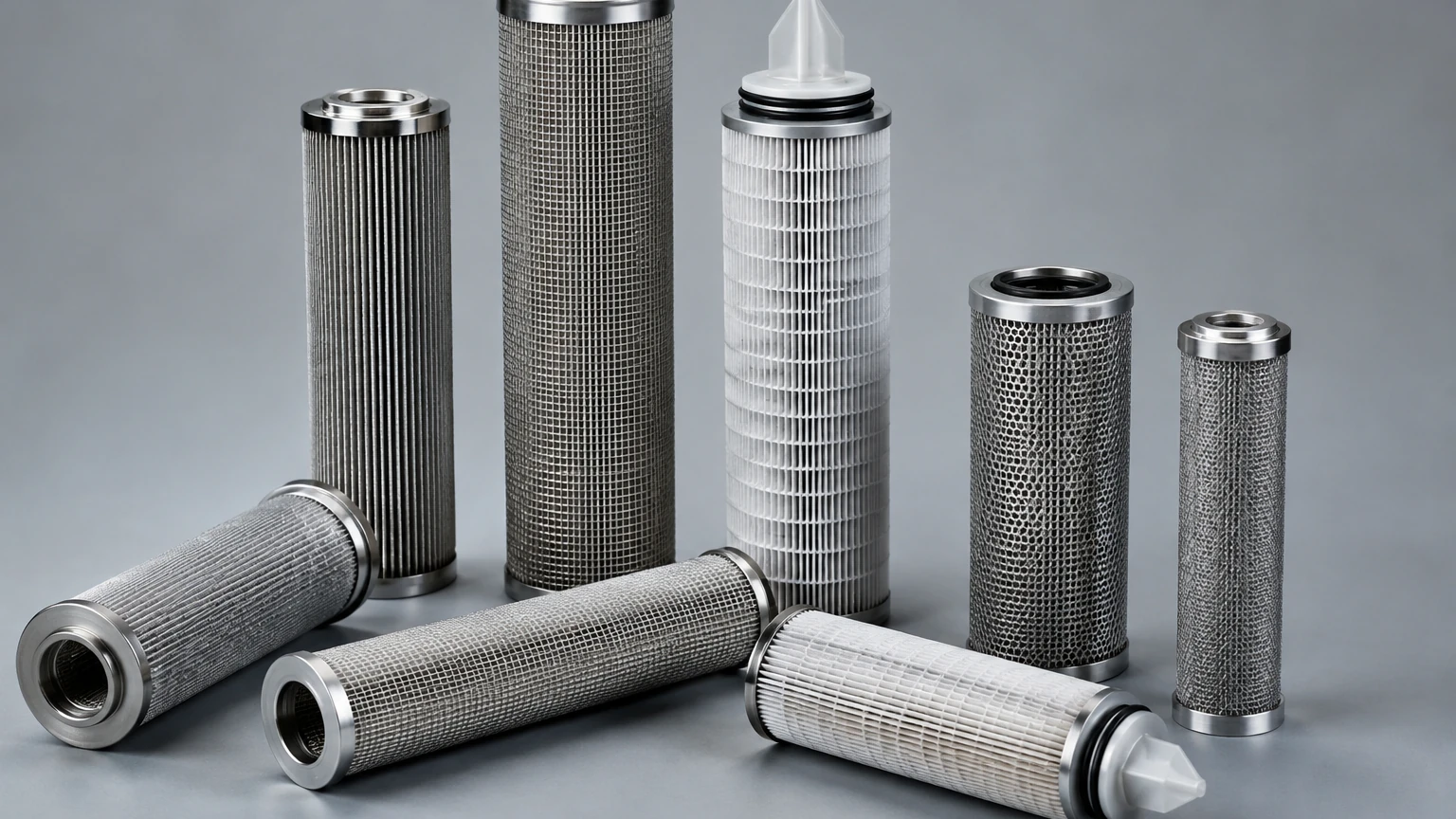
Industrial filtration requires more than just a barrier; it requires a precision-engineered solution capable of withstanding high pressures, extreme temperatures, and corrosive substances. Stainless steel micron filter cartridges have become the standard for these applications due to their durability and cleanability compared to disposable polymer alternatives.
Understanding Micron Ratings: Absolute vs. Nominal
The most fundamental specification of any micron filter cartridge is its micron rating. However, the term "micron rating" can be misleading if the distinction between nominal and absolute ratings is not clearly understood.
Nominal Micron Rating
A nominal rating is an indicative value provided by manufacturers, representing the filter's ability to retain a percentage of particles of a specific size. For instance, a 10-micron nominal filter might capture 60% to 90% of 10-micron particles. Because nominal ratings are not standardized across the industry, they are typically used for pre-filtration or applications where absolute precision is not the primary requirement.
Absolute Micron Rating
An absolute rating refers to the diameter of the largest hard spherical particle that will pass through the filter under specified test conditions. In high-precision industries, an absolute micron filter cartridge is required to ensure that no particles above the specified size enter the downstream process. This is often validated through the Beta Ratio test (ISO 16889), which measures the ratio of particles upstream versus downstream. A high Beta Ratio (e.g., βx = 1000) indicates 99.9% efficiency for a given particle size.
Materials and Construction of Stainless Steel Micron Filter Cartridges
While many industries utilize polypropylene or glass fiber cartridges, stainless steel remains the material of choice for heavy-duty industrial applications. Manufacturers like Kaifil specialize in utilizing various grades of stainless steel to meet specific chemical and thermal requirements.
304 vs. 316L Stainless Steel
* Type 304: Suitable for general industrial use, offering good corrosion resistance and structural strength at a lower cost point.
* Type 316L: The "L" stands for low carbon, which improves weldability and resistance to intergranular corrosion. 316L contains molybdenum, making it significantly more resistant to chlorides and acidic environments, which is vital in chemical and pharmaceutical processing.
Filter Media Structures
1. Woven Wire Mesh: This media consists of precisely woven stainless steel wires. It provides a consistent pore size and is exceptionally easy to clean via backwashing or ultrasonic methods. It is ideal for surface filtration where particles are trapped on the exterior of the mesh.
2. Sintered Metal Fiber: Produced by compressing and sintering random stainless steel fibers, this media creates a complex, three-dimensional depth filtration structure. It offers high porosity and low pressure drop while maintaining excellent dirt-holding capacity.
3. Sintered Wire Mesh: Multiple layers of wire mesh are sintered together to create a robust, integrated structure. This provides the precision of woven mesh with the mechanical strength of a thicker plate, preventing media migration under high-pressure pulses.
Engineering Considerations for Selecting a Micron Filter Cartridge
When specifying a micron filter cartridge for a new or existing system, engineers must evaluate several variables beyond just the micron size. Failure to account for these factors can lead to premature filter failure, bypass leakage, or process contamination.
1. Pressure Drop (Delta P)
The differential pressure across the filter—the difference between the inlet and outlet pressure—is a key indicator of filter health. A micron filter cartridge with a high initial pressure drop limits the available flow and reduces the service life before a cleaning cycle is required. Engineers must balance filtration fineness with the allowable pressure drop of the system pump.
2. Flow Rate and Flux
Flux refers to the flow rate per unit of filter surface area. High flux rates can force contaminants through the media or cause structural deformation. To maintain efficiency, it is often necessary to increase the surface area by using pleated designs. Pleating a stainless steel mesh can increase the effective filtration area by several times compared to a standard cylindrical cartridge, allowing for higher flow rates within the same housing footprint.
3. Chemical and Thermal Compatibility
In the chemical processing industry, cartridges may be exposed to aggressive solvents or high-temperature steam sterilization (SIP). Stainless steel micron filter cartridges are rated for temperatures exceeding 300°C (depending on seals and gaskets) and are compatible with a wide range of pH levels, making them more versatile than synthetic media.
Performance Evaluation and Testing Standards
To ensure reliability, industrial filters must undergo rigorous testing. For technical teams, reviewing these test results is a critical part of the procurement process. For comprehensive product data and technical specifications, engineers can visit the Main Page of professional manufacturers to review performance charts.
Bubble Point Test
The bubble point test is a non-destructive method used to determine the maximum pore size of a filter. By submerging the cartridge in a liquid and gradually increasing air pressure, the pressure at which the first stream of bubbles appears (the bubble point) can be used to calculate the pore diameter based on the surface tension of the liquid.
Dirt Holding Capacity (DHC)
DHC measures the total mass of a standard test dust that a filter can retain before the differential pressure reaches a terminal limit. A higher DHC means longer intervals between maintenance, which reduces the total cost of ownership.
Total Cost of Ownership and Maintenance Cycles
While the initial purchase price of a stainless steel micron filter cartridge is higher than that of a disposable polymer filter, the Total Cost of Ownership (TCO) is often lower in industrial settings. This is due to the cleanability and reuse potential of metal filters.
Cleaning Methods
* Backwashing: Reversing the flow of the fluid to dislodge particles from the surface of the mesh.
* Ultrasonic Cleaning: Using high-frequency sound waves in a cleaning solution to remove fine particulates trapped deep within sintered media.
* Chemical Cleaning: Using specialized solvents or acids to dissolve organic or inorganic scaling without damaging the stainless steel structure.
Replacement Cycles
Unlike disposable filters that must be discarded once clogged, a high-quality stainless steel cartridge can be cleaned and returned to service dozens or even hundreds of times. The replacement cycle is typically determined by the eventual mechanical wear of the mesh or the accumulation of non-cleanable foulants that permanently increase the base pressure drop.
Applications in Demanding Industrial Environments
The versatility of the micron filter cartridge allows it to serve as a critical component in various sectors:
* Food and Beverage: Used for the filtration of syrups, beverages, and edible oils where maintaining organoleptic properties and removing fine sediment is crucial. Stainless steel construction ensures compliance with food safety standards.
* Pharmaceuticals: Employed in the recovery of active pharmaceutical ingredients (APIs) and the filtration of process gases. The ability to withstand autoclaving and steam-in-place (SIP) cycles is mandatory.
* Hydraulic Systems: Protecting sensitive valves and pumps from wear-inducing particles. Sintered metal cartridges are preferred here for their ability to handle high-viscosity fluids and pressure spikes.
* Water Treatment: Used in high-temperature or high-pressure water systems where plastic housings and filters would fail, such as boiler feed water or condensate return lines.
Customization and OEM Solutions for Specialized Filtration
Standard off-the-shelf filters do not always meet the unique geometric or performance requirements of specialized industrial equipment. OEM customization is a significant aspect of the filtration industry. Manufacturers like Kaifil work with engineering teams to develop bespoke solutions, including:
* Custom End Caps: Designing specific fittings (e.g., 222, 226, NPT, or flange mounts) to ensure a leak-proof seal within existing housings.
* Reinforced Cores: For applications involving high differential pressure, internal support cores can be thickened to prevent collapse.
* Hybrid Media: Combining different layers of mesh or fiber to achieve a specific filtration gradient, effectively creating a multi-stage filter within a single cartridge.
By focusing on the technical requirements of the application—including micron accuracy, material integrity, and cleanability—purchasing teams can ensure they select a micron filter cartridge that provides reliable service and protects the integrity of the entire production line.
