


Stainless Steel Bag Filter
In industrial liquid processing, the stainless steel bag filter serves as a critical component for removing particulate matter from process streams. Unlike disposable plastic housings or lower-grade filtration units, stainless steel bag filters are engineered for durability, high-pressure tolerance, and chemical compatibility. These systems are widely utilized across industries such as chemical processing, food and beverage production, pharmaceutical manufacturing, and water treatment, where reliability and precise filtration performance are non-negotiable.
Selecting the appropriate filtration system requires a deep understanding of fluid dynamics, material science, and the specific mechanical requirements of the application. For engineers and procurement teams, the decision-edge often lies in the technical specifications of the filter housing, the compatibility of the internal components, and the long-term operational costs associated with maintenance and downtime.
Understanding Stainless Steel Bag Filter Systems
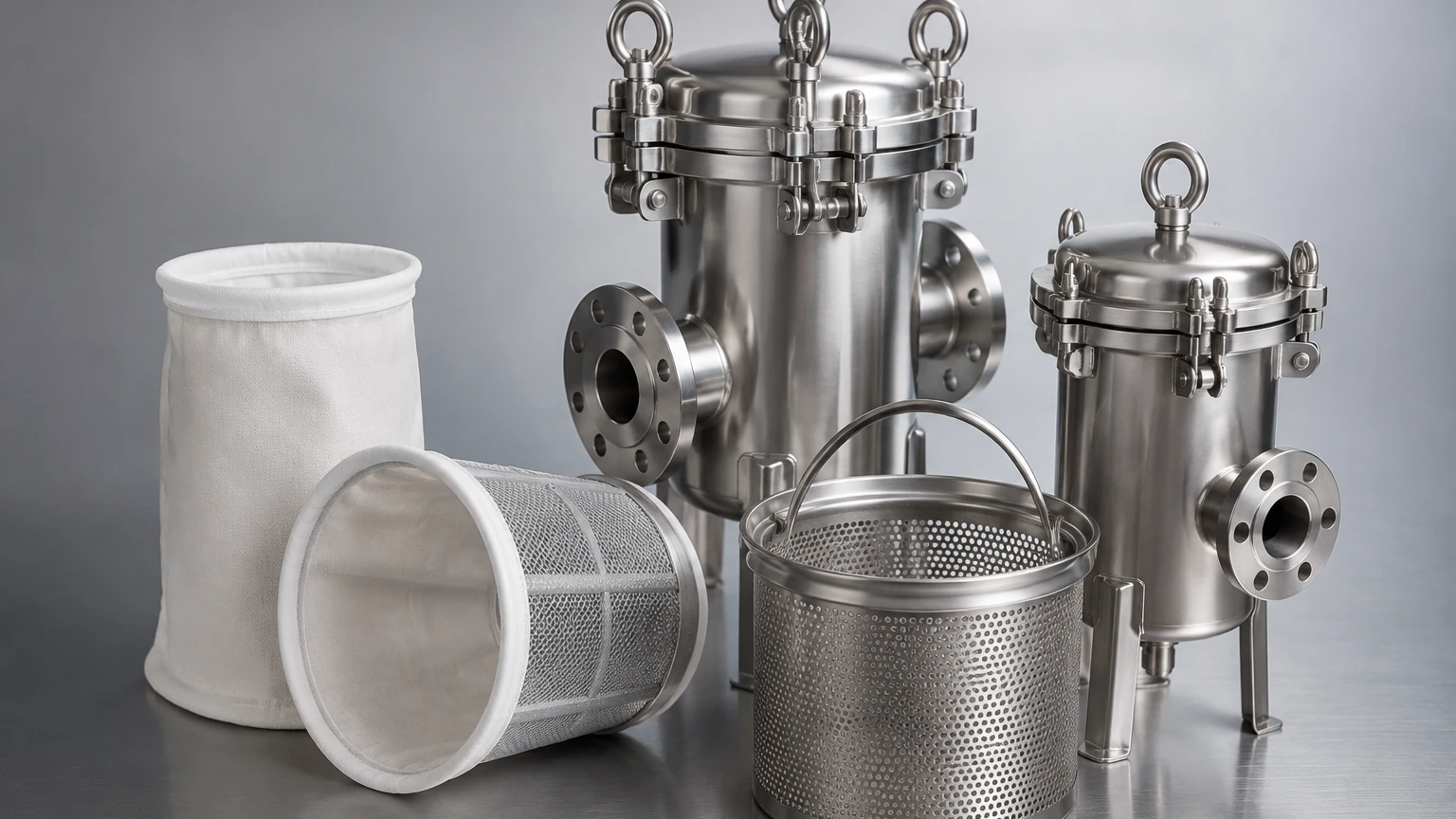
A stainless steel bag filter system typically consists of a pressurized housing, an internal perforated support basket, and a filter bag. The fluid enters the housing through an inlet (usually located at the top or side), passes through the filter bag supported by the basket, and exits through an outlet at the bottom or side. The solids are captured inside the bag, making disposal and replacement relatively straightforward compared to cartridge systems that may require more intensive cleaning of the housing internals.
The primary advantage of using a stainless steel bag filter is its structural integrity. In high-temperature or high-pressure environments, polymer-based housings often fail or deform. Stainless steel, particularly grades 304 and 316L, provides the necessary mechanical strength to withstand hydraulic shocks and thermal cycling. Furthermore, the smooth internal surfaces of stainless steel housings facilitate easier cleaning and sterilization, which is essential in hygienic applications.
Engineering Considerations: Material Selection and Construction
When specifying a stainless steel bag filter, the choice of material is the first technical hurdle.
Grade 304 vs. 316L Stainless Steel
Grade 304 stainless steel is the standard for many general industrial applications, offering excellent strength and basic corrosion resistance. However, in environments involving chlorides, acids, or high-salinity fluids, Grade 316L is the preferred choice. The addition of molybdenum in 316L enhances its resistance to pitting and crevice corrosion. For pharmaceutical and food-grade applications, 316L is often mandatory to meet stringent regulatory standards regarding surface leaching and contamination.
Pressure Ratings and Design Codes
Industrial filter housings must be designed to handle specific operating pressures. Standard units are often rated for 100 to 150 PSI, but high-pressure applications may require housings rated for 300 PSI or higher. Engineers should verify if the housing meets ASME (American Society of Mechanical Engineers) Section VIII standards or equivalent international certifications. The wall thickness of the vessel and the type of lid closure—such as swing bolts for high-pressure safety or V-band clamps for quick access—are critical design factors.
Sealing and Gaskets
The integrity of a stainless steel bag filter depends heavily on the seal between the lid and the housing, as well as the seal between the bag and the support basket. Common gasket materials include:
* Buna-N (Nitrile): Suitable for water and petroleum-based fluids at moderate temperatures.
* EPDM: Excellent for steam and polar solvents, though not compatible with petroleum oils.
* Viton (FKM): High-temperature and chemical resistance, ideal for aggressive fluids.
* PTFE (Teflon): Near-universal chemical resistance, though less resilient than elastomers.
Evaluating Filtration Efficiency and Flow Dynamics
The performance of a stainless steel bag filter is measured by its ability to remove particles at a specific micron rating while maintaining an acceptable pressure drop.
Micron Ratings and Capture Efficiency
Filter bags are available in various materials (polypropylene, polyester, nylon) and configurations (felt, monofilament mesh). The micron rating defines the size of the particles the bag can capture. It is important to distinguish between "nominal" and "absolute" ratings. A nominal rating indicates the bag will capture a majority of particles at that size, while an absolute rating implies a much higher capture efficiency (often 99% or higher). In a stainless steel housing, the fit of the bag’s collar—whether it is a plastic flange or a stainless steel ring—is vital to prevent "bypass," where unfiltered liquid escapes around the edge of the bag.
Flow Rate and Differential Pressure
Flow rate is determined by the viscosity of the fluid, the surface area of the filter bag, and the allowable differential pressure (ΔP). As the bag collects contaminants, ΔP increases. Engineers must calculate the initial clean pressure drop to ensure the pump system can handle the resistance. Generally, a stainless steel bag filter should be serviced when the differential pressure reaches 15-25 PSI to avoid bag rupture or housing damage.
For high-volume applications, multi-bag housings are used. These units contain multiple filter bags within a single large vessel, allowing for significantly higher flow rates without increasing the footprint of the filtration station. You can review product options and application support on our Main Page.
Key Selection Criteria for Industrial Applications
Choosing the right stainless steel bag filter involves more than just matching pipe sizes. Engineers must consider the totality of the process environment.
1. Fluid Viscosity: Highly viscous fluids (like resins or heavy oils) require larger filter surface areas and slower flow velocities to prevent excessive pressure buildup. In some cases, steam-jacketed housings are required to maintain fluid temperature and reduce viscosity during filtration.
2. Chemical Compatibility: Beyond the housing material, the internal support basket and any O-rings must be compatible with the process fluid. For example, certain solvents can degrade standard EPDM seals, leading to leaks.
3. Contaminant Loading: If the fluid has a high concentration of solids, a single bag filter may require frequent changes, leading to high labor costs. In such scenarios, a duplex system (two housings connected by a valve) allows for continuous operation; one side can be serviced while the other remains online.
4. Hygienic Requirements: In the food and pharmaceutical sectors, the internal finish of the stainless steel bag filter is paramount. Electropolishing can be applied to achieve a specific Ra (Roughness Average) value, reducing the risk of bacterial growth and ensuring the system can be effectively cleaned-in-place (CIP).
Operational Best Practices: Installation and Maintenance
Proper installation and a rigorous maintenance schedule are essential for the longevity of a stainless steel bag filter system.
Installation Steps
* Orientation: Ensure the housing is mounted vertically with sufficient overhead clearance to remove the internal basket and filter bag.
* Venting: A vent valve should be installed at the highest point of the housing. Trapped air can cause pressure surges and reduce the effective filtration area.
* Gauges: Install pressure gauges on both the inlet and outlet sides of the filter. This is the only reliable way to monitor the condition of the filter bag and determine when a change-out is required.
Maintenance and Bag Replacement
When the differential pressure reaches the recommended limit, the system must be shut down and depressurized. After opening the lid, the spent bag is removed, and the internal basket should be inspected for debris or damage. It is a best practice to inspect the O-ring seals during every bag change and replace them if they show signs of compression set or cracking. Using a bag positioner or a hold-down device can ensure the new bag is seated correctly before the housing is resealed.
The Role of Customization in Specialized Filtration
While standard stainless steel bag filters meet many industrial needs, unique process requirements often necessitate customized solutions. Customization may involve specialized inlet/outlet configurations (such as flange types like ANSI, DIN, or JIS), the addition of leg assemblies for specific heights, or the integration of magnetic separators within the housing to capture ferrous particles that might otherwise bypass or prematurely clog the filter bag.
As a manufacturer specializing in precision metal filtration, Kaifil provides OEM and customized filtration solutions designed to meet these specific challenges. Whether it is adjusting the filtration accuracy or engineering a housing for a highly corrosive chemical environment, technical collaboration ensures that the final product integrates seamlessly into the existing industrial infrastructure.
Total Cost of Ownership (TCO) Considerations
When evaluating a stainless steel bag filter, the initial purchase price is only one part of the equation. A comprehensive TCO analysis includes:
* Durability: A high-quality stainless steel housing can last decades, whereas cheaper alternatives may require replacement due to corrosion or mechanical failure.
* Labor Costs: Systems designed for easy access (like quick-opening lids) reduce the time required for bag changes, which is a significant factor in high-load applications.
* Waste Management: Bag filters generally produce less waste volume than cartridge filters, which can be an important factor in industries with high disposal costs.
* Energy Efficiency: By selecting a housing size that minimizes pressure drop, engineers can reduce the energy demand on the pumps driving the fluid through the system.
In conclusion, the stainless steel bag filter is a versatile and robust solution for industrial liquid filtration. By focusing on material quality, pressure safety, and application-specific design, engineers can ensure efficient and cost-effective performance. For more information on custom stainless steel filtration components and engineering support, visit our Main Page.
