


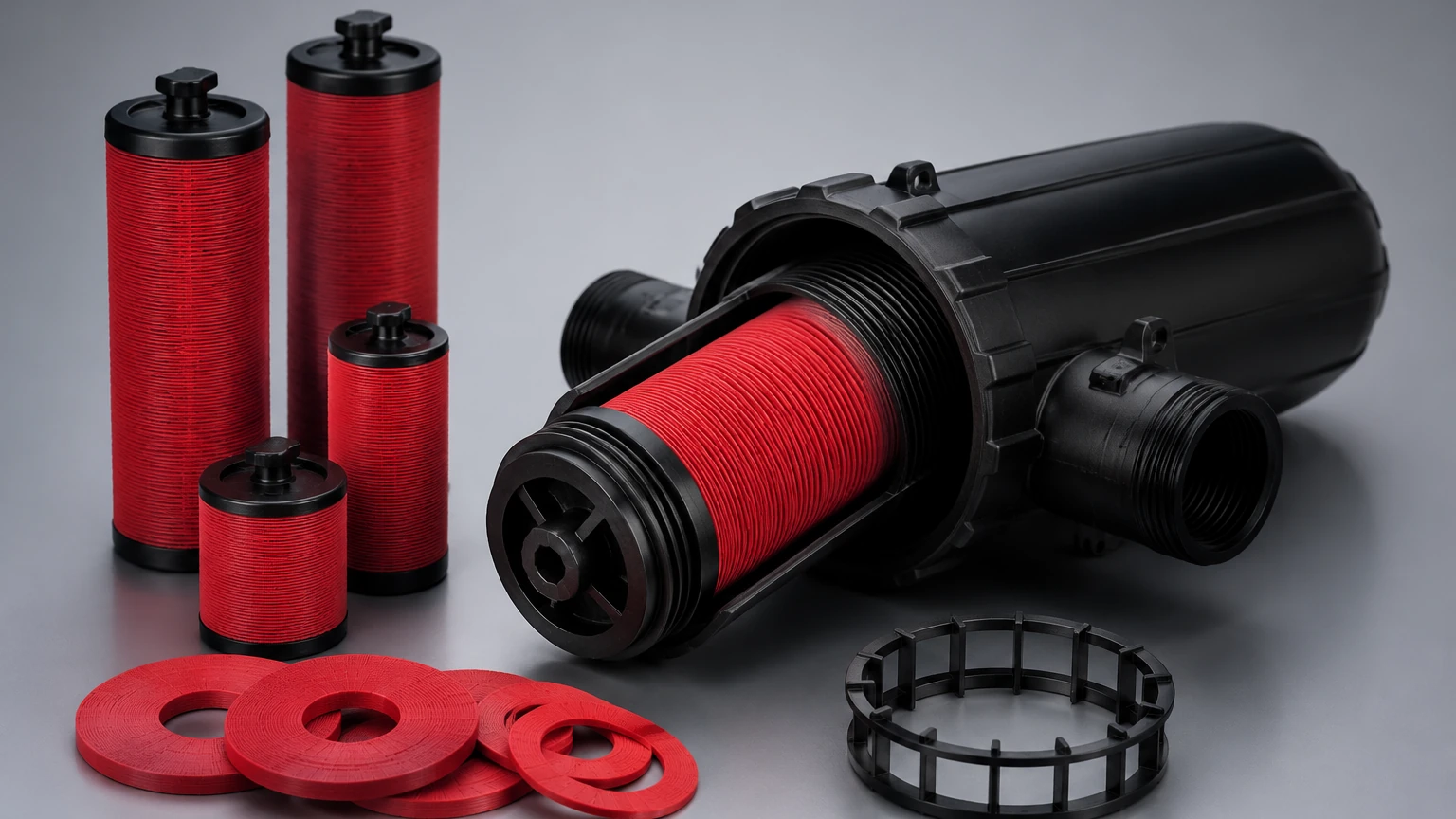
Disc Filter
In industrial liquid and gas processing, the disc filter represents a critical component for precision separation. Unlike cylindrical cartridges that require significant vertical or horizontal space, the disc geometry provides a high surface-area-to-volume ratio in a compact, low-profile form factor. For engineers and procurement specialists, selecting the right disc filter involves understanding the intersection of metallurgy, fluid dynamics, and mechanical design.
As a specialized manufacturer of stainless steel filtration solutions, Kaifil focuses on delivering high-performance metal mesh components that withstand the rigors of chemical processing, pharmaceutical manufacturing, and hydraulic systems. This guide examines the technical specifications, selection criteria, and engineering considerations essential for integrating disc filters into industrial workflows.
Understanding Industrial Disc Filter Construction
The performance of a disc filter is primarily determined by its construction material and the configuration of its filter media. While polymer-based discs are common in low-temperature, non-corrosive environments, industrial applications typically demand the durability of stainless steel wire mesh.
Material Selection: 304 vs. 316L Stainless Steel
Material science is the foundation of filter longevity. The two most common alloys used in metal disc filters are Grade 304 and Grade 316L stainless steel.
* Grade 304: Suitable for general industrial use, providing excellent strength and basic corrosion resistance. It is frequently used in food processing and standard water treatment where chemical exposure is minimal.
* Grade 316L: The "L" denotes low carbon, which improves weldability and resistance to intergranular corrosion. This grade includes molybdenum, making it the preferred choice for marine environments, pharmaceutical production, and chemical processing involving chlorides or acids.
In specialized cases, high-nickel alloys or Hastelloy may be utilized for extreme temperature or highly acidic environments, though 316L remains the industry standard for the majority of high-end filtration needs.
Multi-Layer Sintered vs. Single-Layer Mesh
Disc filters are available in several structural configurations:
1. Single-Layer Discs: These consist of a single sheet of woven wire mesh. They are cost-effective and easy to clean but may lack the structural rigidity required for high-pressure backwashing.
2. Multi-Layer Mesh Discs: Multiple layers of mesh are stacked to provide varying levels of filtration and support. Often, a fine filtration layer is sandwiched between coarser support layers to prevent deformation.
3. Sintered Metal Discs: Through a process of heat and pressure, multiple layers of mesh are fused together without the use of binders. This creates a monolithic structure with fixed pore sizes, exceptional mechanical strength, and the ability to withstand high differential pressures.
Key Performance Indicators for Engineering Specifications
When specifying a disc filter for a new or existing system, engineers must look beyond simple dimensions. The following technical parameters dictate the efficiency and reliability of the filtration process.
Micron Rating and Filtration Accuracy
The micron rating defines the size of particles the filter is intended to remove. It is vital to distinguish between nominal and absolute ratings:
* Nominal Rating: An approximate value indicating that the filter can trap a large percentage (typically 60% to 90%) of particles at the specified size.
* Absolute Rating: Refers to the diameter of the largest hard spherical particle that will pass through the filter under specific test conditions. For critical pharmaceutical or semiconductor applications, absolute ratings are mandatory to ensure process integrity.
Differential Pressure and Flow Rate
Every disc filter introduces a degree of resistance to the fluid stream, known as pressure drop (ΔP). An ideal filter maximizes flow rate while minimizing the initial pressure drop. As the filter accumulates contaminants, the differential pressure increases. Engineers must calculate the "terminal pressure drop"—the point at which the filter must be cleaned or replaced to prevent structural failure or pump cavitation.
Effective Filtration Area (EFA)
The EFA is the total surface area of the mesh available for fluid passage. In disc filters, the EFA can be maximized by using pleated designs or by stacking multiple discs in a parallel configuration. A larger EFA reduces the face velocity of the fluid, which can improve filtration efficiency and extend the time between cleaning cycles.
Customization Options for OEM Integration
Industrial filtration often requires bespoke solutions that fit into proprietary equipment. Customization of disc filters extends beyond diameter and micron rating to include edge treatments and structural reinforcements.
Edge Bonding and Framing
To ensure that fluid does not bypass the filter media, the edges of the disc filter must be securely sealed. Common methods include:
* Spot Welding: Ideal for multi-layer discs where the layers must be kept in alignment.
* Aluminum or Stainless Steel Edging: A metal U-shaped channel is crimped around the circumference of the disc. This provides a robust sealing surface and protects the mesh from fraying during installation.
* Sintered Edges: In sintered discs, the edges are naturally fused, providing a clean, leak-proof boundary without additional components.
Shape Variations
While circular discs are the most common, industrial processes often require rectangular, oval, or ring-shaped (annular) filters. Precision laser cutting and CNC stamping allow for the production of complex geometries that maintain exact tolerances, ensuring a perfect fit within filter housings or valve assemblies.
Applications Across Demanding Industrial Sectors
The versatility of the stainless steel disc filter makes it a staple in various high-stakes industries. Its ability to operate in extreme temperatures (from cryogenic to over 500°C) and high-pressure environments sets it apart from synthetic alternatives.
Chemical and Petrochemical Processing
In chemical manufacturing, filters must resist degradation from aggressive solvents and catalysts. Stainless steel discs are used to protect downstream equipment from particulate matter and to recover expensive catalysts from process streams. Their resistance to high temperatures allows for the filtration of hot polymers and resins that would melt standard plastic filters.
Food and Beverage Production
Hygiene is paramount in food and beverage applications. Stainless steel is inherently non-toxic and does not shed fibers into the product stream. Disc filters are used in the clarification of juices, oils, and syrups. Because they can be sterilized via steam-in-place (SIP) or autoclaving, they meet the stringent regulatory requirements of the industry.
Hydraulic and Lubrication Systems
Precision hydraulic systems rely on clean fluid to prevent wear on valves and actuators. Disc filters are often integrated into hydraulic reservoirs or high-pressure lines to capture metallic wear particles and environmental contaminants. Their high mechanical strength ensures they do not collapse under the sudden pressure spikes common in hydraulic circuits.
Maintenance and Longevity of Metal Disc Filters
One of the primary advantages of choosing a metal disc filter over a disposable media is the ability to clean and reuse the component. This significantly reduces the total cost of ownership and minimizes industrial waste.
Cleaning Methodologies
Depending on the nature of the contaminant, several cleaning methods can be employed:
* Ultrasonic Cleaning: High-frequency sound waves create cavitation bubbles that dislodge fine particles trapped deep within the mesh pores. This is the most effective method for restoring the original flow characteristics of a disc filter.
* Backwashing: Reversing the flow of fluid through the filter can flush out surface-level contaminants. This is often used in automated systems to extend the interval between manual cleanings.
* Chemical Cleaning: Soaking the discs in compatible solvents or acids can dissolve organic build-up or mineral scales. It is essential to ensure the cleaning agent does not compromise the stainless steel alloy.
Determining Replacement Cycles
While reusable, metal disc filters are not infinite. Over time, repeated cleaning and pressure cycles can lead to work hardening or microscopic fatigue cracks in the wire mesh. Regular inspection under magnification can reveal signs of "mesh blinding" (permanent clogging) or structural deformation. Establishing a proactive replacement schedule based on differential pressure trends helps prevent catastrophic filter failure.
Strategic Procurement and Selection Guidance
For purchasing teams and engineers, the goal is to balance performance with cost-effectiveness. When evaluating suppliers, it is important to confirm their quality control processes. Reliable manufacturers provide material certifications (MTRs) and perform bubble point tests to verify the integrity of the micron rating.
Before finalizing a specification, consider the following checklist:
1. Fluid Compatibility: Does the pH and chemical composition of the fluid require 316L or a specialty alloy?
2. Operating Environment: What are the maximum temperature and pressure the filter will encounter?
3. Contaminant Load: Is the particle concentration high enough to warrant a multi-layer depth-style disc or a pleated design?
4. Integration Requirements: What type of edge sealing is needed to prevent bypass in the specific housing design?
By addressing these questions early in the design phase, companies can avoid costly downtime and ensure their filtration systems operate at peak efficiency. For those seeking technical consultation or customized prototypes, visiting the Main Page provides access to comprehensive product specifications and engineering support tailored to industrial filtration challenges.
In conclusion, the disc filter is a sophisticated tool that, when engineered correctly, provides exceptional precision and durability. Whether used in the delicate production of pharmaceuticals or the heavy-duty environment of a chemical plant, the choice of material, weave, and construction determines the success of the filtration process. Investing in high-quality stainless steel components ensures long-term reliability and optimized process performance across all industrial sectors.
