


Shell and Coil Heat Exchanger
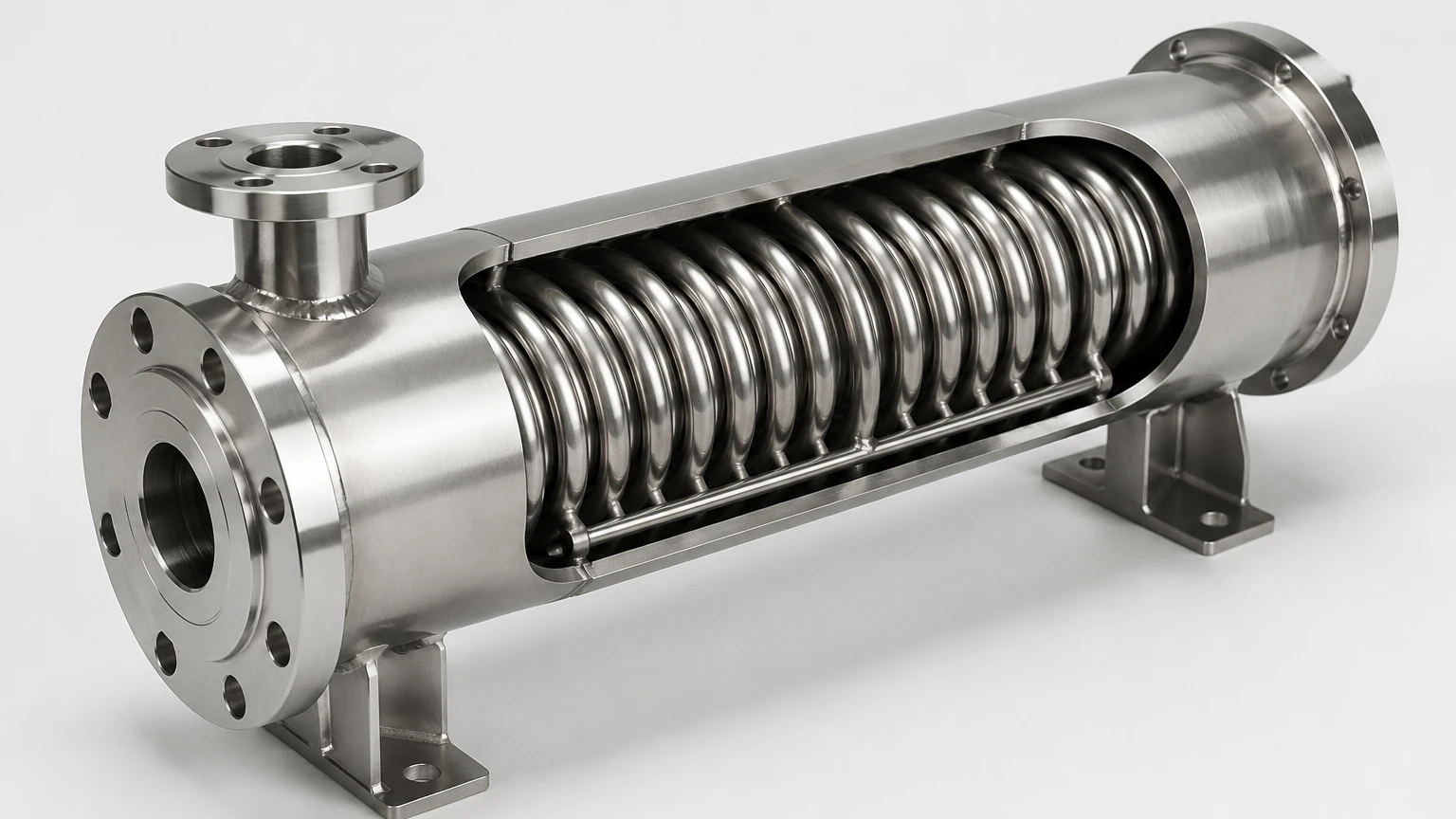
In the landscape of industrial thermal management, the shell and coil heat exchanger stands out as a highly efficient, compact, and robust solution for heat transfer between two fluids. Unlike traditional shell and tube designs that utilize straight bundles of pipes, the shell and coil configuration employs one or more helical coils housed within a cylindrical shell. This geometry is not merely a matter of space-saving; it fundamentally alters the fluid dynamics and heat transfer coefficients of the system.
For engineers and procurement teams in the chemical, pharmaceutical, and food processing industries, understanding the nuances of the shell and coil heat exchanger is essential for optimizing process efficiency and ensuring long-term equipment reliability. This guide examines the engineering principles, material requirements, and the critical role of auxiliary systems—such as high-precision filtration—in maintaining these thermal units.
Understanding the Design and Functionality of Shell and Coil Heat Exchangers
The fundamental design of a shell and coil heat exchanger involves a helical coil (the tube side) through which one fluid flows, while a second fluid circulates through the surrounding shell (the shell side). This arrangement creates a counter-current flow pattern, which is the most efficient configuration for heat exchange as it maintains a consistent temperature gradient across the length of the exchanger.
One of the most significant technical features of this design is the creation of "Dean vortices." As fluid travels through the curved path of the helical coil, centrifugal forces push the faster-moving fluid at the center toward the outer wall of the tube. This creates secondary circulation patterns that enhance mixing and significantly increase the heat transfer coefficient compared to straight-tube exchangers. Because of this high turbulence, these units can often achieve the same thermal performance as a shell and tube exchanger in a fraction of the physical footprint.
Furthermore, the helical coil acts as a built-in expansion joint. In processes involving extreme temperature fluctuations, the coil can expand or contract freely within the shell without putting mechanical stress on the headers or the shell itself. This makes the shell and coil heat exchanger particularly well-suited for high-temperature applications and systems subject to frequent thermal cycling.
Advantages of Helical Coil Geometry in Thermal Management
The adoption of shell and coil technology offers several distinct advantages in industrial settings:
1. High Thermal Efficiency: The curved flow path promotes turbulence even at lower Reynolds numbers. This results in higher heat transfer rates, allowing for smaller heat transfer surfaces and reduced material costs.
2. Compact Footprint: Because the heat transfer surface is coiled, the total volume of the unit is significantly lower than that of straight-tube alternatives. This is critical in facilities where floor space is at a premium or where the heat exchanger must be integrated into a skid-mounted system.
3. Resistance to Thermal Shock: The spring-like nature of the coil allows it to absorb the stresses of rapid heating and cooling. This durability reduces the risk of fatigue-related failures in the tube-to-tubesheet joints.
4. Low Maintenance on the Shell Side: The shell side is often designed to be fully drainable, and the high-velocity flow patterns can help reduce the accumulation of sediment in certain configurations.
Material Selection for Corrosive and High-Temperature Environments
Material integrity is the cornerstone of heat exchanger longevity. In most industrial applications, stainless steel is the preferred material due to its mechanical strength and resistance to oxidation.
* AISI 304/304L: Suitable for general-purpose applications where moderate corrosion resistance is required, such as in water-to-water heat exchange or light industrial cooling.
* AISI 316/316L: The standard for chemical and pharmaceutical processing. The addition of molybdenum provides superior resistance to chlorides and organic acids, preventing pitting and crevice corrosion.
* High-Nickel Alloys: For extremely aggressive media or high-pressure steam applications, specialized alloys may be used to ensure the coil does not succumb to stress corrosion cracking (SCC).
When selecting materials, engineers must also consider the surface finish. In the food and beverage industry, internal and external surfaces must often be polished to a specific Ra (Roughness Average) value to prevent bacterial growth and facilitate effective Clean-In-Place (CIP) procedures.
Critical Industry Applications: From Chemical Processing to Food Safety
The versatility of the shell and coil heat exchanger allows it to serve a wide array of sectors:
* Chemical Processing: Used for heating or cooling aggressive chemical reagents. The ability to handle high pressures makes them ideal for reactor jacket cooling and exothermic reaction control.
* Food and Beverage: These units are frequently employed in pasteurization and sterilization processes. The compact design allows for precise temperature control, which is vital for maintaining product quality and safety.
* Pharmaceutical Industry: In the production of WFI (Water for Injection) and other high-purity fluids, shell and coil exchangers provide the necessary thermal performance while meeting strict sanitary standards.
* Hydraulic and Oil Systems: They are often used as oil coolers in heavy machinery. The compact size allows them to be mounted directly onto hydraulic power units to maintain optimal oil viscosity.
Protecting Heat Exchangers: The Essential Role of Industrial Filtration
Despite their efficiency, shell and coil heat exchangers are susceptible to a common industrial enemy: fouling. Fouling occurs when suspended solids, minerals, or biological matter accumulate on the heat transfer surfaces. Because the clearances within a helical coil can be tight, even small amounts of particulate matter can lead to significant issues.
Particulate fouling increases the thermal resistance of the system, forcing the heat exchanger to work harder to achieve the same temperature change. This not only wastes energy but also increases the pressure drop across the unit, potentially straining pumps and reducing flow rates. In extreme cases, solid particles can cause erosion-corrosion, where the impact of particles at high velocity thins the coil walls, leading to premature failure.
To mitigate these risks, high-performance pre-filtration is mandatory. Utilizing stainless steel wire mesh filters or precision filter cartridges ensures that only clean fluid enters the heat exchanger. For comprehensive information on selecting the right filtration components to protect your thermal equipment, you can review the technical specifications and product options on the Main Page of the Kaifil website.
By implementing a robust filtration strategy, facilities can extend the interval between manual cleanings and protect the significant capital investment represented by the heat exchanger.
Technical Selection Criteria: What Engineers Must Evaluate
When specifying a shell and coil heat exchanger, several technical parameters must be confirmed to ensure the unit is fit for purpose:
* Fluid Properties: Viscosity, density, and thermal conductivity of both the shell-side and tube-side fluids must be known at operating temperatures.
* Flow Rates: The velocity of the fluid affects both the heat transfer coefficient and the pressure drop. High velocities improve heat transfer but increase energy consumption and the risk of tube vibration.
* Temperature Profile: The inlet and outlet temperatures for both fluids determine the Log Mean Temperature Difference (LMTD), which is a key factor in sizing the unit.
* Pressure Ratings: The unit must be designed to withstand the maximum operating pressure of the system, including potential pressure spikes.
* Fouling Factor: Engineers must account for the anticipated accumulation of deposits over time by including a "fouling allowance" in the heat transfer calculations.
Maintenance and Performance Optimization Strategies
To maintain the peak efficiency of a shell and coil heat exchanger, a proactive maintenance schedule is required. Unlike shell and tube exchangers, where individual tubes can sometimes be cleaned mechanically with brushes, the helical coil usually requires chemical cleaning methods.
Clean-In-Place (CIP): This involves circulating a cleaning solution (often a mild acid or caustic, depending on the scale type) through the exchanger to dissolve deposits. The high turbulence inherent in the coil design actually aids the CIP process by ensuring the cleaning agent reaches all parts of the coil surface.
Monitoring Pressure Drop: A gradual increase in pressure drop is the most common indicator of fouling. Installing pressure gauges at the inlet and outlet of both the shell and the coil allows operators to identify when a cleaning cycle is necessary before thermal performance drops significantly.
Filtration Maintenance: The performance of the heat exchanger is inextricably linked to the performance of the upstream filters. Regularly inspecting and cleaning stainless steel filter mesh or replacing cartridges is the most cost-effective way to ensure the heat exchanger remains free of debris.
Conclusion
The shell and coil heat exchanger is a masterclass in engineering efficiency, offering superior thermal performance, mechanical durability, and a compact design. Whether used in the high-purity environments of a pharmaceutical lab or the rugged conditions of a chemical plant, these units provide reliable service when correctly specified and maintained.
By focusing on high-quality materials, understanding the fluid dynamics of helical flow, and protecting the system with precision filtration solutions, engineers can optimize their thermal processes for maximum uptime and minimum total cost of ownership. For those seeking to integrate these systems into their operations, consulting with experts in both thermal management and industrial filtration is the first step toward a successful installation.
