


Pleated Dust Collection Cartridges
In industrial air filtration, the transition from traditional baghouse filters to pleated dust collection cartridges represents a significant advancement in engineering efficiency. These components are critical for maintaining air quality, protecting downstream equipment, and ensuring regulatory compliance in sectors ranging from chemical processing to metal fabrication. For engineers and procurement specialists, selecting the appropriate cartridge requires a deep understanding of media geometry, material science, and the specific dynamics of the air stream.
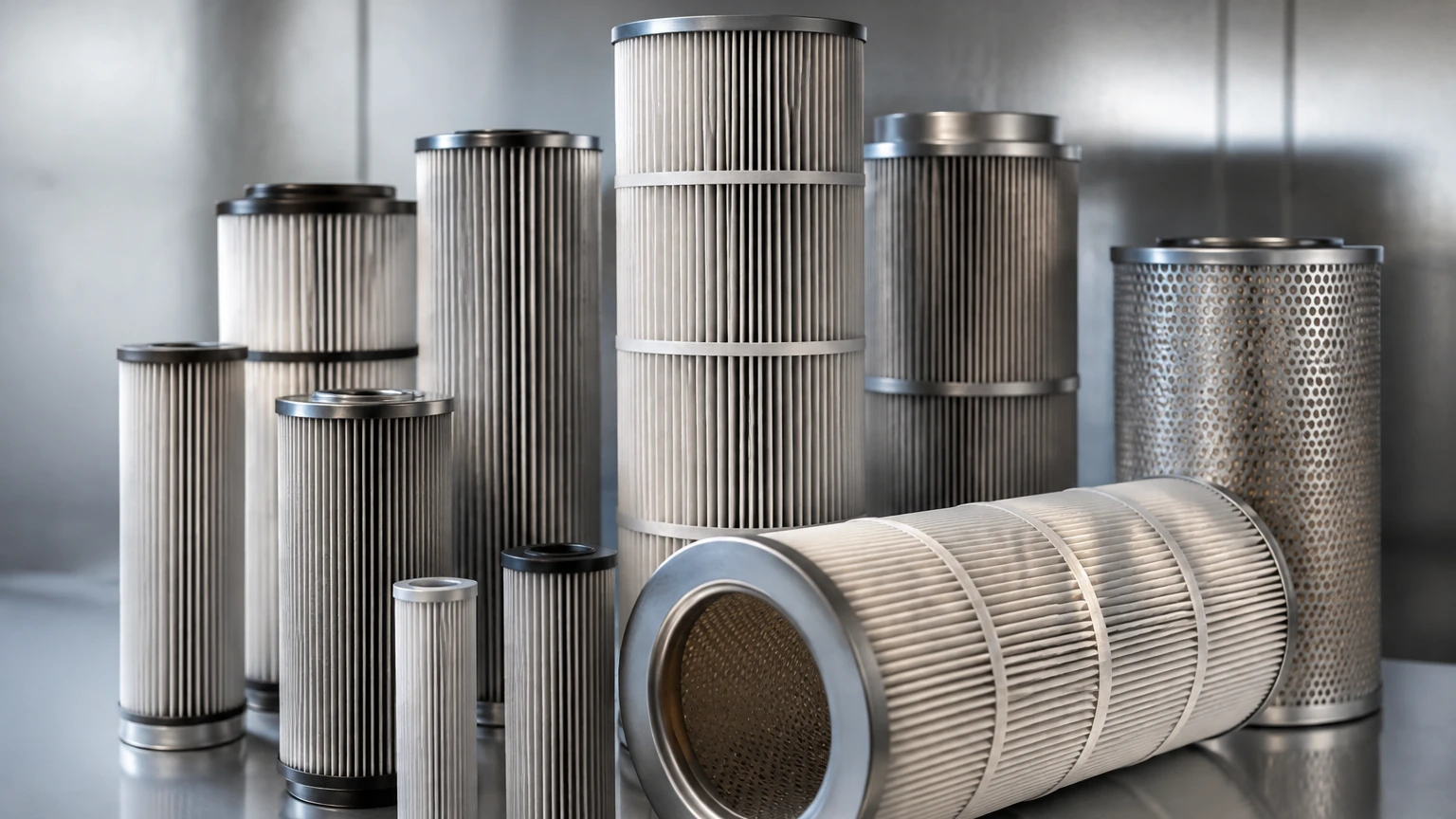
Pleated dust collection cartridges are designed to maximize filtration surface area within a compact footprint. By folding the filtration media into a series of pleats, manufacturers can provide significantly more surface area than a standard cylindrical bag of the same dimensions. This design philosophy directly impacts the air-to-cloth ratio, pressure drop, and the overall service life of the filtration system.
Engineering Principles of Pleated Media
The primary advantage of a pleated design is the dramatic increase in effective filtration area. In a typical industrial dust collector, a pleated cartridge can offer three to four times the surface area of a conventional filter bag. This increased area allows for a lower filtration velocity, often referred to as the face velocity or air-to-cloth ratio.
When the air-to-cloth ratio is reduced, several technical benefits occur:
1. Lower Pressure Drop: With more area for the air to pass through, the resistance (differential pressure) is minimized. This reduces the load on the system’s fan, leading to lower energy consumption.
2. Improved Particle Capture: Lower velocities allow for more efficient interception and diffusion of fine particulates, as the air spends more time in contact with the media fibers or mesh.
3. Reduced Media Abrasion: High-velocity dust particles can be abrasive. By slowing down the air stream as it enters the media, the mechanical wear on the filter is significantly decreased, extending the replacement cycle.
However, the engineering of the pleat itself is a delicate balance. If pleats are packed too tightly (over-pleating), the dust cannot easily be released during the cleaning cycle, leading to "bridging" where dust becomes permanently trapped between the folds. Professional manufacturers like Kaifil ensure that pleat spacing is optimized for the specific particulate load and cleaning mechanism of the host equipment.
Material Selection and Chemical Compatibility
The choice of media is the most critical factor in the performance of pleated dust collection cartridges. While many standard applications use spun-bond polyester or cellulose, demanding industrial environments often require the durability of metallic solutions.
Stainless Steel Wire Mesh
For high-temperature applications or environments involving corrosive chemicals, stainless steel wire mesh is the gold standard. Stainless steel (typically 304 or 316L) offers exceptional mechanical strength and chemical resistance. In pleated configurations, stainless steel mesh provides a rigid structure that can withstand high differential pressures without collapsing. It is also highly cleanable, allowing for multiple reuse cycles through ultrasonic cleaning or chemical washing, which is a significant advantage over disposable synthetic media.
Synthetic and Hybrid Media
In less extreme environments, spun-bond polyester is frequently used due to its high efficiency and moisture resistance. For specialized needs, these materials can be treated with coatings:
* PTFE Membrane: A laminated layer that provides surface-loading capabilities, allowing for easy dust release and high efficiency on sub-micron particles.
* Antistatic (Aluminized) Coating: Essential for applications involving explosive dusts, where static electricity must be dissipated to prevent ignition.
* Oleophobic/Hydrophobic Treatments: Used when the air stream contains oils or moisture that could otherwise blind the filter media.
Performance Metrics: Efficiency and Pressure Drop
When evaluating pleated dust collection cartridges, engineers must look beyond the physical dimensions and focus on technical performance data.
Filtration Efficiency (MERV Ratings)
In the United States, the Minimum Efficiency Reporting Value (MERV) is the standard for rating filter effectiveness. For industrial dust collection, cartridges typically fall between MERV 11 and MERV 16. A MERV 16 filter can capture over 95% of particles in the 0.3 to 1.0-micron range. When dealing with hazardous materials in pharmaceutical or chemical processing, achieving high efficiency is not just a performance goal but a safety requirement.
Differential Pressure (ΔP)
The pressure drop across the filter is a real-time indicator of the system's health. A new, clean cartridge will have a low initial ΔP. As the dust cake builds up on the surface, the ΔP increases. Most industrial systems utilize a pulse-jet cleaning mechanism that fires a burst of compressed air down the center of the cartridge to dislodge the dust. The structural integrity of the pleats is vital during these pulses; if the pleats are not properly supported by an inner core or outer mesh, they can deform, leading to premature failure.
Customization Options for Industrial Applications
No two industrial processes are identical, and off-the-shelf filtration solutions often fall short of specific operational requirements. Customization is a core competency for manufacturers specializing in precision filtration.
End Cap Configurations
The interface between the cartridge and the collector housing must be airtight. Customization options include:
* Molded Urethane End Caps: Common for standard industrial collectors, providing a built-in gasket seal.
* Metal End Caps (Stainless Steel or Galvanized): Required for high-temperature or heavy-duty applications where urethane would degrade.
* Flange and Bolt-Hole Designs: For specialized housings that require mechanical fastening.
Structural Reinforcement
For high-vacuum or high-pressure systems, cartridges may require internal support cores made of perforated metal or expanded metal. In some cases, an outer shroud or mesh wrap is added to protect the pleat tips from high-velocity abrasive dust or to ensure even air distribution across the entire length of the cartridge.
Dimensions and Geometry
While standard heights (e.g., 26", 36", 52") and diameters (e.g., 12.75", 13.8") exist, custom manufacturing allows for the creation of cartridges that fit legacy equipment or unique space-constrained installations. This includes conical (tapered) designs, which are often used to improve dust release in the lower sections of the collector.
Maintenance, Cleaning, and Replacement Cycles
The total cost of ownership (TCO) of a filtration system is heavily influenced by the longevity and maintainability of the cartridges. While pleated cartridges generally have a higher upfront cost than filter bags, their longer life and energy efficiency often result in a lower TCO.
Pulse-Jet Cleaning Optimization
For pleated dust collection cartridges to function effectively, the pulse-jet cleaning system must be properly calibrated. The air pressure, pulse duration, and interval must be set based on the dust characteristics. If the pulse is too weak, the dust remains in the pleats; if it is too strong, it can damage the media or drive fine particles deeper into the substrate (depth loading).
Signs of Necessary Replacement
Engineers should monitor for the following indicators that a cartridge has reached the end of its functional life:
* Stable High ΔP: If the differential pressure remains high even after cleaning cycles, the media is likely "blinded" by fine particulates.
* Dust Bypass: Visible dust in the clean air plenum or exhaust stack indicates a mechanical failure, such as a torn pleat or a failed gasket.
* Reduced Airflow at the Source: If the suction at the dust hoods decreases, it often points to restricted airflow through the cartridges.
For stainless steel pleated filters, the replacement cycle is significantly longer because the media can be deep-cleaned. For more information on durable metal filtration components, you can visit the Main Page to explore technical specifications and material options.
Selecting the Right Cartridge for Specific Environments
The selection process begins with a thorough analysis of the application environment. Engineers should confirm several key factors before finalizing a specification:
1. Gas Stream Temperature: Standard polyester media is typically limited to 200°F (93°C). For higher temperatures, specialized materials like Nomex, Ryton, or stainless steel mesh must be specified.
2. Particulate Characteristics: Is the dust abrasive, sticky, hygroscopic (moisture-absorbing), or explosive? This determines the need for surface treatments or antistatic properties.
3. Chemical Exposure: Will the filters be exposed to acidic or alkaline vapors? This is particularly relevant in chemical processing and metal finishing, where 316L stainless steel components may be required for their superior corrosion resistance.
4. Regulatory Compliance: In food and beverage or pharmaceutical applications, the materials must often be FDA-compliant or meet specific sanitary standards.
Conclusion
Pleated dust collection cartridges are sophisticated engineering components that play a vital role in modern industrial operations. By significantly increasing surface area and allowing for lower operating pressures, they provide an efficient and cost-effective solution for air quality management. Whether utilizing synthetic media for general dust collection or precision-engineered stainless steel mesh for extreme environments, the key to success lies in matching the cartridge specifications to the unique demands of the application.
Working with a manufacturer like Kaifil, which understands the nuances of custom metal filtration and industrial requirements, ensures that the filtration system operates at peak performance with minimal downtime. For technical support and to review product options and application support, visit the Main Page to consult with filtration experts who can assist in optimizing your dust collection infrastructure.
