


Strainer for Pipeline
In industrial fluid handling systems, the integrity of downstream equipment—such as pumps, valves, flow meters, and heat exchangers—depends heavily on the effective removal of particulate matter. A strainer for pipeline is a mechanical device installed in a piping system to remove solid contaminants from liquids, gases, or steam through a perforated or wire mesh straining element. Unlike standard filters that are often designed for fine particulate removal and frequent replacement, pipeline strainers are typically engineered for coarser filtration and are designed to be cleaned and reused.
Selecting the appropriate strainer for pipeline requires a deep understanding of fluid dynamics, material compatibility, and the specific mechanical requirements of the application. For engineers and procurement teams, the goal is to balance filtration efficiency with system pressure constraints and long-term maintenance costs.
The Fundamental Role of a Strainer for Pipeline in Industrial Systems
The primary function of a pipeline strainer is to protect expensive machinery from damage caused by scale, rust, jointing compound, and other weld dross. Even small amounts of debris can cause significant wear on moving parts or lead to catastrophic failure in precision components.
In sectors such as chemical processing, food and beverage, and water treatment, the presence of a strainer for pipeline ensures that the process fluid remains within specified purity limits. By intercepting solids at strategic points in the system, these devices prevent the clogging of spray nozzles and the fouling of heat transfer surfaces. From an engineering perspective, the strainer acts as a sacrificial barrier, concentrating wear and maintenance tasks into a single, accessible location rather than allowing debris to disperse throughout the entire network.
Comparative Analysis of Pipeline Strainer Configurations
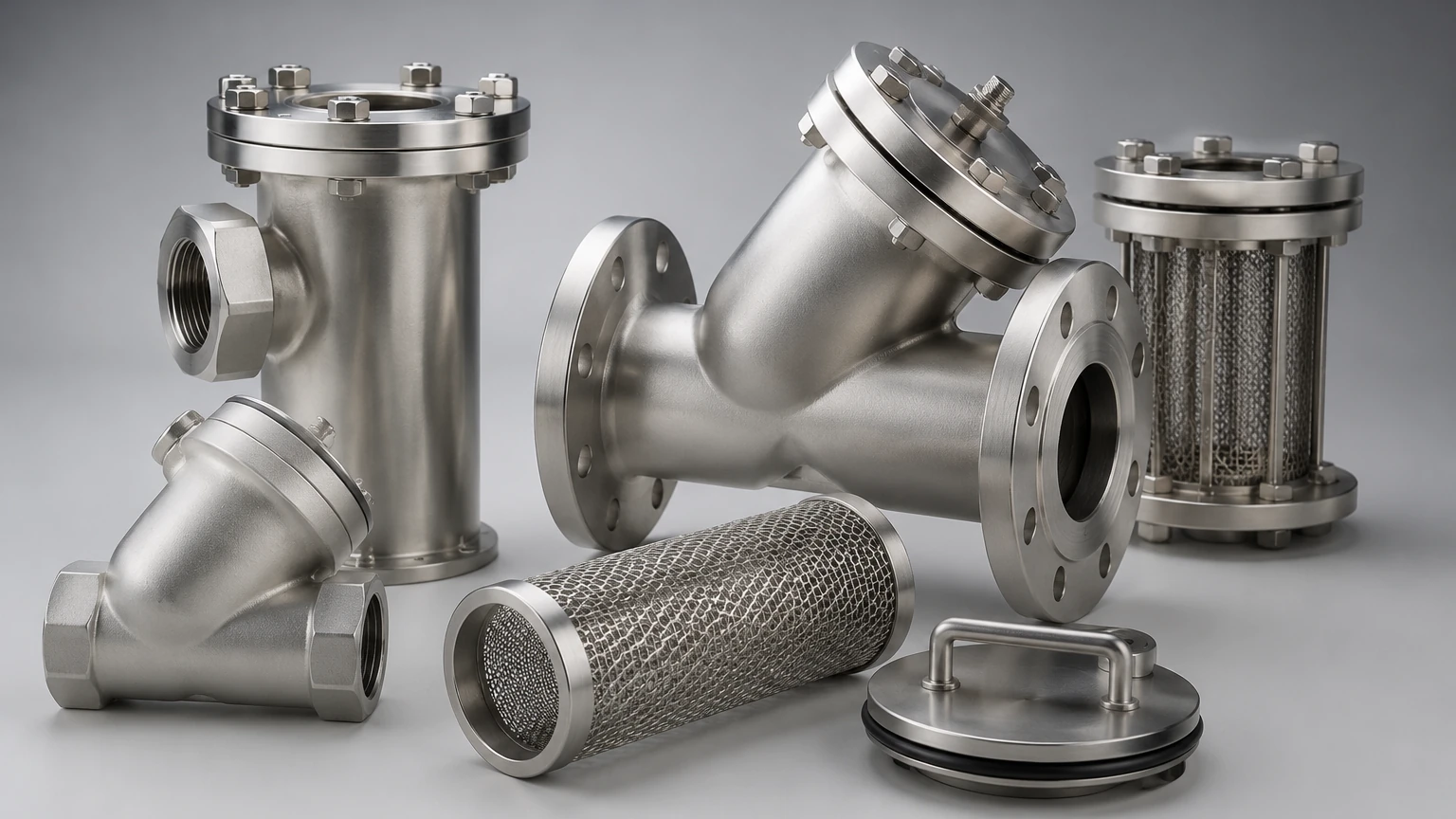
Not all pipeline strainers are designed for the same operational conditions. The geometry of the strainer body dictates its suitability for specific flow rates, pressure levels, and maintenance schedules.
Y-Strainers
Named for their shape, Y-strainers are the most common choice for high-pressure applications. They are compact and can be installed in either horizontal or vertical orientations (provided the flow is downward). Because of their relatively small holding capacity for debris, they are best suited for fluids with low concentrations of solids. In steam lines, Y-strainers are the industry standard due to their ability to handle high pressures and temperatures without significant structural deformation.
Basket (Simplex) Strainers
Basket strainers feature a vertical cylinder that houses a large, basket-shaped element. This design offers a much larger surface area than a Y-strainer, resulting in a lower initial pressure drop and a higher dirt-holding capacity. Basket strainers are generally restricted to horizontal piping and are preferred in liquid applications where the strainer must be cleaned frequently. The top-entry design allows for easy access to the basket without draining the entire pipeline.
Duplex (Twin) Strainers
For processes that cannot be shut down for maintenance, duplex strainers are essential. These units consist of two separate strainer baskets connected by a diversion valve. When one basket becomes clogged, the flow is diverted to the clean basket, allowing the operator to service the first unit without interrupting the process. This is critical in hydraulic systems, fuel lines, and continuous chemical production cycles.
Material Engineering: Selecting the Right Stainless Steel Grade
Material selection is perhaps the most critical factor in ensuring the longevity of a strainer for pipeline. While cast iron or carbon steel may be sufficient for non-corrosive water applications, most industrial environments require the superior properties of stainless steel. As a specialized manufacturer, Kaifil emphasizes the use of high-grade alloys to meet demanding chemical and thermal requirements.
* 304 Stainless Steel: This is the standard grade for general industrial use. It provides excellent corrosion resistance to most oxidizing acids and is widely used in the food and beverage industry due to its ease of cleaning and sanitization.
* 316/316L Stainless Steel: For environments involving chlorides, such as marine applications or chemical processing, 316 stainless steel is preferred. The addition of molybdenum enhances resistance to pitting and crevice corrosion. The low-carbon version (316L) is often specified for welded components to prevent intergranular corrosion.
* Specialty Alloys: In highly aggressive environments involving high concentrations of sulfuric acid or high-temperature steam, engineers may specify Duplex stainless steels or nickel-based alloys to ensure structural integrity over the component's lifecycle.
Technical Parameters for Effective Sizing and Selection
Properly sizing a strainer for pipeline involves more than matching the pipe diameter. An undersized strainer will cause excessive pressure drop and frequent clogging, while an oversized unit increases initial costs and may lead to stagnant flow areas.
Flow Rate and Velocity
Engineers must calculate the maximum and minimum flow rates expected in the system. High velocities can lead to turbulent flow and increased erosion of the straining element. Generally, liquid velocities should be kept below 10 feet per second (3 meters per second) to minimize the risk of water hammer and mechanical stress on the mesh.
Pressure Drop ($ΔP$)
The pressure drop is the difference in pressure between the inlet and outlet of the strainer. It is influenced by the fluid viscosity, the open area of the mesh, and the total flow rate. A common rule of thumb is that the clean pressure drop should not exceed 2 psi (0.14 bar). If the fluid is highly viscous, such as heavy oils or syrups, the pressure drop will be significantly higher, requiring a larger strainer body or a coarser mesh.
Open Area Ratio (OAR)
The Open Area Ratio is the relationship between the internal cross-sectional area of the pipe and the total net open area of the strainer element. For efficient operation, an OAR of at least 4:1 is recommended. This ensures that even as the strainer begins to collect debris, there is sufficient bypass area to maintain flow without a rapid increase in differential pressure.
The Importance of Micron Rating and Mesh Selection
The straining element is the heart of the device. It is typically constructed from perforated metal or woven wire mesh. The choice between these depends on the required filtration accuracy.
* Perforated Plate: These are used for coarse straining (removing particles larger than 0.5 mm). They provide high structural strength and are often used as a support backup for finer meshes.
* Woven Wire Mesh: This allows for much finer filtration, down to the micron level. In a high-quality strainer for pipeline, multiple layers of mesh may be sintered together to provide both fine filtration and mechanical rigidity.
When selecting a mesh size, it is important to choose a rating that is slightly smaller than the smallest orifice or clearance in the downstream equipment. However, specifying a mesh that is too fine will lead to rapid clogging and unnecessary maintenance. Engineers should refer to the Main Page for detailed technical specifications on mesh-to-micron conversions and material performance data.
Operational Maintenance and Differential Pressure Monitoring
A strainer for pipeline is not a "set and forget" component. Its effectiveness is directly tied to a proactive maintenance schedule. The most reliable way to monitor a strainer's condition is through differential pressure gauges installed across the inlet and outlet.
As debris accumulates, the differential pressure increases. Operators should establish a "dirty" pressure limit—typically 10 to 15 psi (0.7 to 1.0 bar) above the clean pressure—at which point the strainer must be cleaned. Ignoring these signals can lead to the collapse of the straining element or the bypass of contaminants if the pressure forces particles through the mesh.
For stainless steel elements, cleaning usually involves physical removal of debris followed by ultrasonic cleaning or chemical soaking, depending on the nature of the contaminant. It is essential to inspect the gaskets and seals during every cleaning cycle to prevent external leaks.
Customization and OEM Considerations for Specialized Applications
Standard off-the-shelf strainers often fail to meet the specific needs of complex industrial projects. Customization is frequently required for non-standard pipe sizes, unique flange ratings (such as ANSI, DIN, or JIS), or specific housing geometries to fit into tight spaces.
Kaifil specializes in providing tailored filtration solutions that go beyond standard configurations. This includes:
1. Custom Mesh Laminates: Combining different layers of wire mesh to achieve specific flow characteristics and strength requirements.
2. Reinforced Structures: For high-pressure differential applications where standard baskets might buckle.
3. Specialized Coatings and Finishes: Such as electropolishing for pharmaceutical or food-grade applications to ensure a smooth, crevice-free surface that resists bacterial growth.
4. Integrated Sensor Ports: Providing pre-drilled and tapped ports for differential pressure transmitters or temperature sensors.
By working closely with a manufacturer during the design phase, engineers can ensure that the strainer for pipeline is optimized for the specific fluid properties and environmental conditions of their facility.
Total Cost of Ownership (TCO) in Filtration
When evaluating a strainer for pipeline, the initial purchase price is only one component of the total cost. Procurement teams must also consider:
* Maintenance Labor: How quickly can the strainer be opened and cleaned?
* Consumables: Does the design require proprietary gaskets or frequent mesh replacements?
* Energy Costs: A strainer with a high permanent pressure drop increases the load on pumps, leading to higher electricity consumption over the life of the system.
* Downtime: In non-duplex systems, the cost of stopping production to clean a strainer can far outweigh the cost of the hardware itself.
Investing in a high-quality stainless steel strainer with a high Open Area Ratio typically results in a lower TCO by extending cleaning intervals and reducing the frequency of component replacement.
Conclusion
The selection of a strainer for pipeline is a critical engineering decision that impacts the reliability and efficiency of industrial processes. By understanding the trade-offs between different designs, materials, and technical parameters, engineers can protect their infrastructure and optimize fluid handling performance. Whether the application involves steam, chemicals, or food products, a well-engineered straining solution provides the first line of defense against system contamination and mechanical wear. For more information on custom stainless steel filtration components and technical support, visit the Kaifil Main Page.
