


F9 Filter
In the landscape of industrial filtration, the classification of filter efficiency is paramount for ensuring process integrity, equipment longevity, and product purity. The F9 filter grade represents a critical threshold in fine filtration, bridging the gap between medium-efficiency pre-filters and high-efficiency particulate air (HEPA) systems. For engineers and procurement specialists operating in demanding sectors such as chemical processing, pharmaceuticals, and food production, understanding the technical nuances of F9-rated components is essential for optimizing system performance.
While the F9 designation originated within the EN 779:2012 standard, its application in industrial liquid and gas filtration has evolved. Today, high-performance stainless steel filtration solutions often aim to meet or exceed these efficiency benchmarks while providing the structural durability that synthetic media cannot offer. This guide explores the technical specifications, material considerations, and engineering requirements associated with F9-grade filtration in industrial environments.
Understanding the F9 Filtration Standard
The F9 filter classification is defined by its ability to capture fine particulates. Under the traditional EN 779 standard, an F9 filter is characterized by an average efficiency of 95% or higher for 0.4 μm particles. In the transition to the ISO 16890 standard, these filters typically fall into the ISO ePM1 >80% category, meaning they are highly effective at capturing particles smaller than 1 micrometer.
In industrial B2B applications, the term "F9 filter" is often used to describe the performance level required for secondary filtration stages. At this level, the filter is responsible for removing sub-micron contaminants that could otherwise foul sensitive downstream equipment or contaminate high-purity chemical batches. Achieving this level of precision requires a deep understanding of pore size distribution and the mechanical strength of the filter media.
Material Selection: Stainless Steel vs. Synthetic Media
While many commercial HVAC F9 filters utilize glass fiber or synthetic polymer media, industrial process filtration frequently demands the use of stainless steel. For engineers, the choice of material is dictated by the operating environment—specifically temperature, chemical compatibility, and pressure requirements.
Durability and Temperature Resistance
Synthetic F9 filters are often limited by temperature thresholds and chemical sensitivity. In contrast, stainless steel wire mesh and sintered metal filters can operate in extreme temperatures exceeding 300°C (572°F) and resist a wide spectrum of corrosive agents. This makes stainless steel the preferred choice for steam filtration, hot gas recovery, and aggressive chemical processing.
Cleanability and Reusability
A primary advantage of metal-based F9 filtration solutions is their ability to be cleaned and reused. Synthetic filters are typically disposable, leading to higher long-term operational costs and environmental waste. Stainless steel cartridges can be cleaned via ultrasonic baths, backwashing, or chemical cleaning, restoring the original pressure drop and extending the service life of the component significantly.
Engineering Considerations for F9 Filter Integration
When specifying an F9 filter for an industrial system, engineers must look beyond the efficiency rating and consider the fluid dynamics of the entire installation. Several key parameters influence the selection and design of the filter housing and the internal element.
Pressure Drop (Delta P)
The finer the filtration grade, the higher the initial resistance to flow. An F9 filter inherently creates a higher pressure drop than a coarser G4 or M6 filter. Designers must ensure that the pump or fan system can handle the increased resistance as the filter loads with contaminants. Utilizing pleated stainless steel wire mesh can increase the effective filtration area, thereby reducing the face velocity and minimizing the pressure drop across the media.
Face Velocity and Flow Rate
The efficiency of an F9 filter is sensitive to the velocity of the fluid passing through it. If the face velocity is too high, particles may be forced through the mesh pores (a phenomenon known as "breakthrough"), or the media may suffer from premature structural fatigue. Precision engineering involves calculating the optimal surface area to maintain laminar flow and ensure that the capture mechanisms—interception, diffusion, and inertial impaction—function at peak efficiency.
Structural Integrity and Burst Pressure
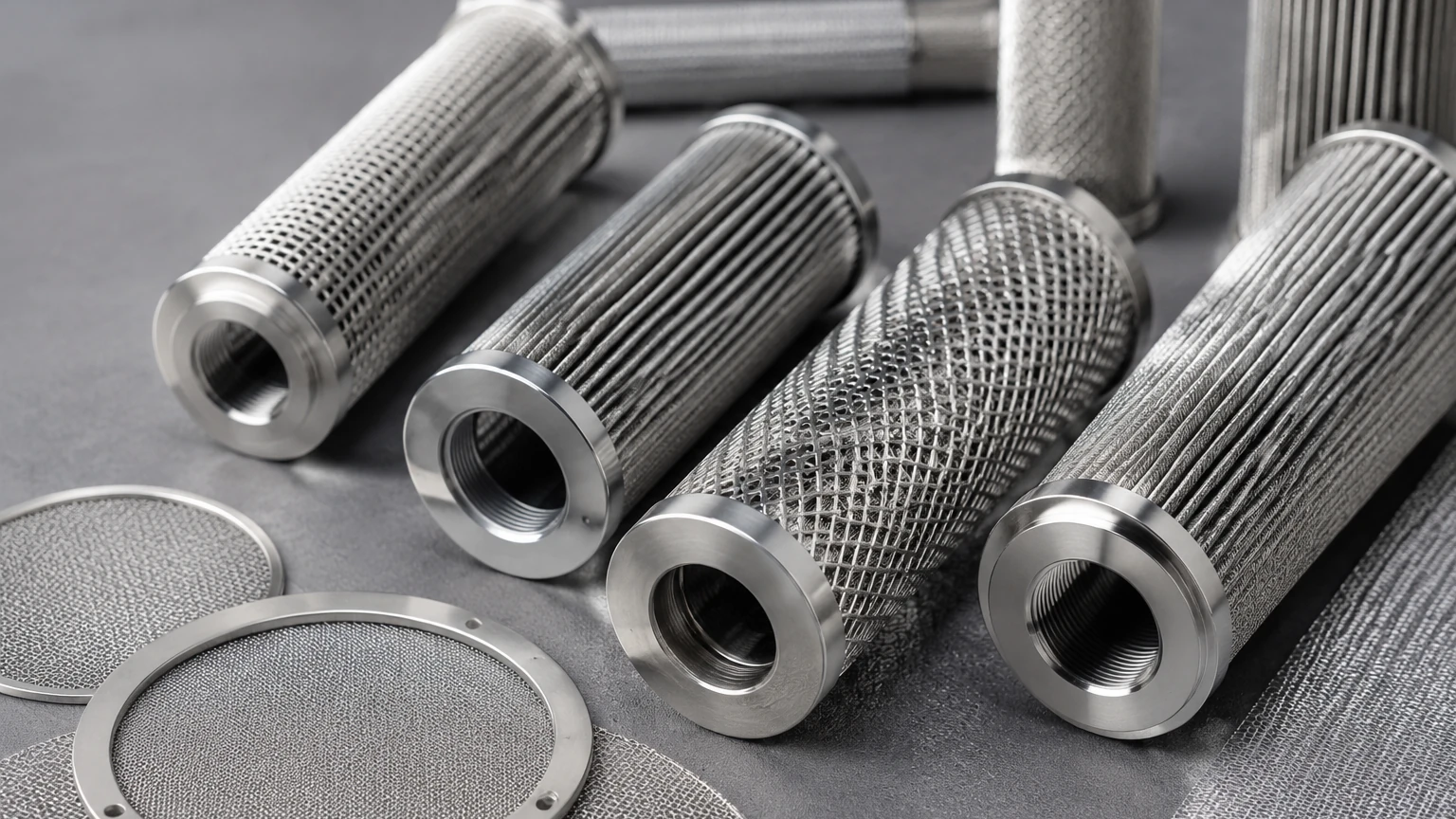
In high-pressure hydraulic or gas systems, the filter element must withstand significant differential pressures. Stainless steel F9 filters are often reinforced with internal support cores and outer protective shrouds. This prevents media migration and ensures that the filter does not collapse under heavy contaminant loading or sudden pressure spikes.
Key Industrial Applications for F9 Efficiency
The F9 filtration grade is a staple in industries where microscopic contaminants can lead to catastrophic system failure or product recalls. By implementing high-precision metal filters, facilities can achieve consistent results in the following areas:
* Pharmaceutical Manufacturing: F9 filters serve as critical barriers in sterile air systems and liquid solvent purification, ensuring that active pharmaceutical ingredients (APIs) remain free from microscopic impurities.
* Food and Beverage Processing: In dairy and beverage production, these filters are used to remove fine particulates from process water and culinary steam, maintaining strict hygiene standards.
* Chemical and Petrochemical: Protecting high-value catalysts and preventing the fouling of precision nozzles requires the sub-micron accuracy offered by F9-level filtration.
* Hydraulic Systems: Precision hydraulic components in aerospace and heavy machinery require fine filtration to prevent abrasive wear caused by microscopic metal shavings or environmental dust.
Customization and OEM Solutions
Industrial filtration is rarely a one-size-fits-all endeavor. Most high-performance systems require customized filter elements tailored to specific housing dimensions and flow characteristics. When sourcing an F9 filter, working with a manufacturer that offers OEM capabilities allows for the optimization of the filter's geometry.
Customization options often include:
1. Alloy Selection: Choosing between AISI 304, 316L, or specialized alloys like Hastelloy for extreme corrosion resistance.
2. End Cap Configurations: Ensuring a perfect seal with DOE (Double Open End), SOE (Single Open End) with various O-ring configurations (e.g., 222, 226), or threaded connections.
3. Pleat Geometry: Adjusting the number and depth of pleats to balance dirt-holding capacity with flow resistance.
For those looking to explore specific technical configurations and material options, the Main Page of a specialist manufacturer provides a comprehensive overview of available filtration technologies and engineering support services.
Total Cost of Ownership (TCO) Analysis
For purchasing teams, the initial price of an F9 filter is only one component of the total cost. A technical evaluation should include the expected lifespan, maintenance frequency, and the cost of system downtime.
While a stainless steel F9 filter may have a higher upfront cost than a disposable synthetic alternative, the TCO is often lower due to its reusability. Furthermore, the reliability of metal filters reduces the risk of bypass or media rupture, which can cause expensive downstream damage. Engineers should request data on the "dirt-holding capacity" and "clean pressure drop" to accurately forecast the operational expenses associated with any F9 filtration unit.
Conclusion: Selecting the Right Partner
Specifying an F9 filter involves a complex balance of filtration efficiency, mechanical strength, and economic viability. Whether you are designing a new chemical processing line or upgrading an existing hydraulic system, the choice of filter media and construction will dictate the success of your operation. By focusing on high-quality stainless steel solutions, industrial operators can achieve the precision of F9 filtration while benefiting from the ruggedness and longevity required in heavy-duty environments.
When evaluating potential suppliers, prioritize those who demonstrate technical expertise in wire mesh weaving, sintering processes, and custom fabrication. A partner who understands the engineering challenges of your specific industry can provide not just a component, but a comprehensive filtration solution that enhances the efficiency and reliability of your entire process. For detailed product specifications and application-specific advice, engineers are encouraged to consult professional manufacturing resources to ensure their filtration needs are met with the highest degree of accuracy.
