


Self Cleaning Irrigation Screen
In large-scale agricultural operations, industrial landscaping, and municipal water management, the efficiency of an irrigation system is fundamentally tied to the quality of its filtration. A self cleaning irrigation screen represents a critical component in these systems, designed to remove suspended solids from water sources such as rivers, lakes, wells, and recycled wastewater without requiring manual intervention. For engineers and procurement professionals, selecting the appropriate filtration technology is not merely a matter of stopping debris; it is about ensuring system uptime, protecting downstream emitters, and optimizing the total cost of ownership.
Industrial filtration demands high-performance materials and precise engineering. As a manufacturer specializing in custom stainless steel filtration solutions, Kaifil provides the technical expertise necessary to navigate the complexities of screen selection, material compatibility, and customized designs for demanding environments.
Understanding the Role of Self Cleaning Irrigation Screens in Industrial Water Management
The primary function of a self cleaning irrigation screen is to protect sensitive irrigation components—such as drip emitters, micro-sprinklers, and valves—from clogging and abrasive wear. Unlike static filters that require periodic manual cleaning, which leads to system downtime and increased labor costs, self-cleaning systems utilize automated mechanisms to clear the screen surface while the system remains pressurized and operational.
In a B2B context, the transition to automated filtration is driven by the need for operational reliability. When water contains high levels of organic matter, sand, or scale, a standard screen can blind within minutes. A self-cleaning system detects the pressure differential across the screen and initiates a cleaning cycle, ensuring that flow rates remain constant and the irrigation schedule is not disrupted. This is particularly vital in precision agriculture and industrial cooling applications where consistent water delivery is non-negotiable.
Engineering Principles: How Automated Screen Filtration Operates
The effectiveness of a self cleaning irrigation screen relies on its ability to remove the "filter cake"—the layer of debris that accumulates on the screen's internal surface. There are two primary engineering approaches to this process: suction scanning and brush cleaning.
Suction Scanning Technology
Suction scanning is often considered the gold standard for precision filtration. When the pressure differential reaches a pre-set threshold (typically 0.5 bar or 7 psi), a controller opens a flush valve to the atmosphere. This creates a high-velocity suction effect at the nozzles of an internal scanner. The scanner rotates and moves linearly across the screen, vacuuming the debris off the mesh and discharging it through the flush line. This method is highly efficient as it uses a minimal amount of water for cleaning and focuses the cleaning energy on a small area at a time.
Mechanical Brush Cleaning
Brush-style self-cleaning filters utilize internal brushes that rotate against the screen surface. This mechanical action dislodges particles, which are then flushed out through a drain valve. This method is often preferred for applications involving heavier or more fibrous debris that might adhere more stubbornly to the screen material. However, it requires careful consideration of brush wear and screen abrasion over long-term operation.
Material Science: The Importance of Stainless Steel in Irrigation Environments
The choice of material for the filtration element is the most significant factor determining the longevity of the system. While plastic or nylon screens may suffice for low-pressure, residential applications, industrial-grade systems almost exclusively utilize stainless steel.
Kaifil specializes in the production of high-grade stainless steel filter components, focusing on materials such as AISI 304, 316, and 316L. The selection between these grades depends on the chemical composition of the source water:
* Grade 304 Stainless Steel: Suitable for most freshwater applications with low chloride levels. It offers excellent structural integrity and resistance to oxidation.
* Grade 316/316L Stainless Steel: Essential for brackish water, recycled wastewater, or environments where chemical fertilizers are injected into the irrigation line. The addition of molybdenum in 316 stainless steel provides superior resistance to pitting and crevice corrosion.
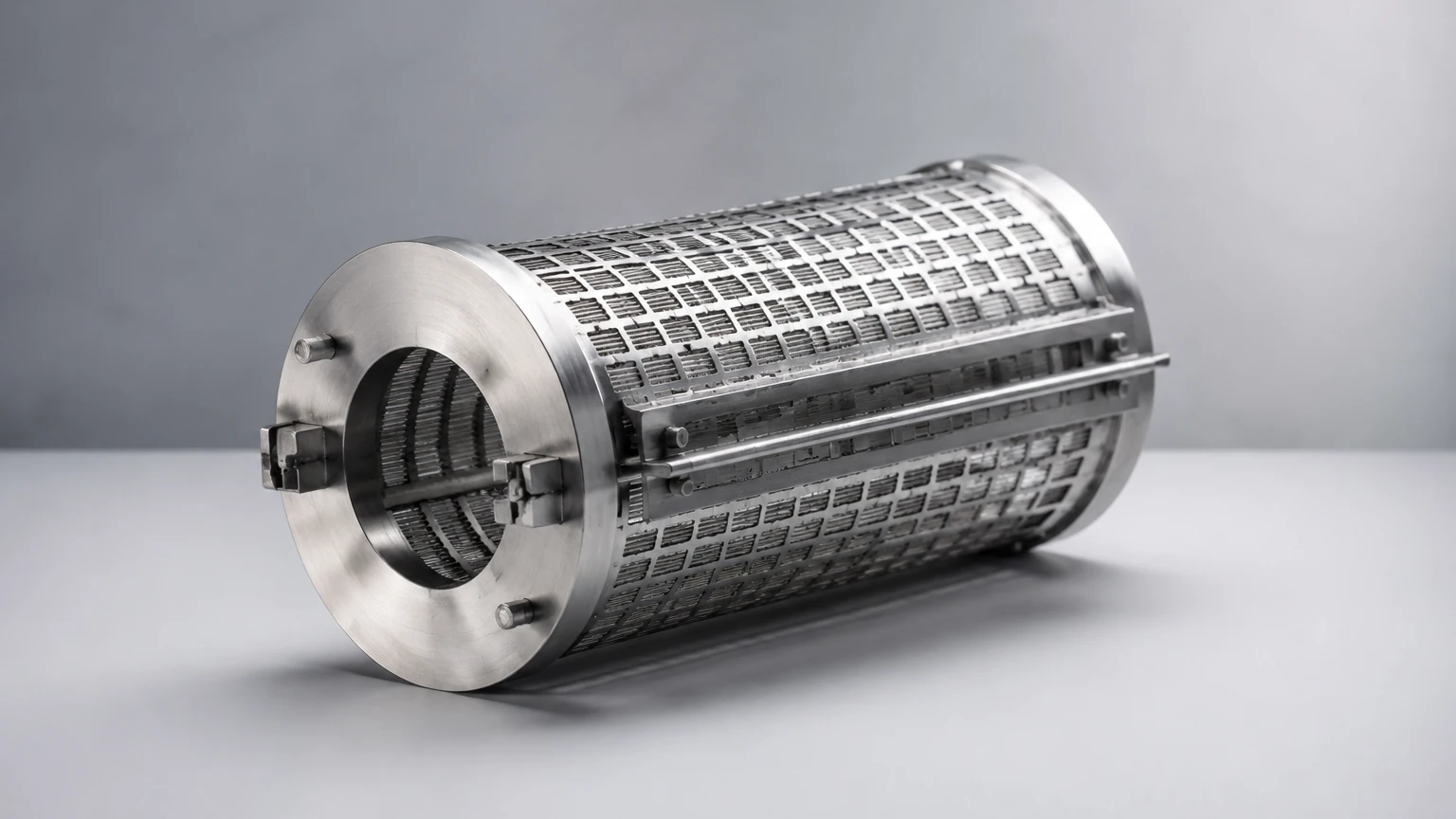
Furthermore, the construction of the screen itself—whether it is a perforated plate, a wedge wire screen, or a multi-layer sintered wire mesh—dictates the filtration efficiency and the ease with which it can be cleaned. Sintered mesh, for instance, provides a robust, multi-layered structure that can withstand high differential pressures without deforming, a common requirement in high-pressure hydraulic irrigation systems.
Technical Evaluation Criteria for Selecting a Self Cleaning Irrigation Screen
When specifying a self cleaning irrigation screen for an industrial project, engineers must evaluate several technical parameters to ensure the system meets the application's specific needs.
1. Micron Rating and Mesh Size
Filtration accuracy is defined by the micron rating. For drip irrigation, a filtration level of 100 to 130 microns (approx. 120 to 150 mesh) is standard to prevent emitter clogging. For coarser applications like pivot irrigation, 200 to 500 microns may be sufficient. It is critical to match the micron rating to the smallest orifice in the downstream system.
2. Flow Rate and Velocity
The filter must be sized to handle the maximum peak flow of the system. Excessive velocity through the screen can force soft organic particles through the mesh or cause debris to become deeply embedded, making the self-cleaning cycle less effective. Conversely, under-sizing the filter leads to frequent cleaning cycles and unnecessary water waste.
3. Pressure Differential ($ΔP$)
Engineers must confirm the maximum allowable pressure drop across the filter. A well-designed self-cleaning screen should operate with a clean pressure drop of less than 0.1 to 0.2 bar. The "trigger" point for the cleaning cycle should be set to balance cleaning frequency with energy consumption.
4. Backwash Water Volume
In water-scarce regions, the amount of water used during the flush cycle is a key performance indicator. Suction scanning technology typically uses less than 1% of the total flow for cleaning, making it highly efficient for large-scale irrigation.
Addressing Common Operational Risks and Failure Modes
Despite the automated nature of these systems, certain risks must be mitigated through proper engineering and maintenance planning.
* Screen Blinding: This occurs when the cleaning mechanism cannot keep up with the rate of debris accumulation. This is often caused by an unexpected spike in turbidity or algae blooms. Selecting a screen with a larger surface area or a more aggressive cleaning mechanism can mitigate this risk.
* Mechanical Wear: Moving parts, such as scanners, bearings, and seals, are subject to wear. Using high-quality, precision-machined metal components reduces the frequency of part replacement.
* Corrosion and Biofouling: In systems using surface water, biofouling (the growth of algae or bacteria on the screen) can be a significant issue. Stainless steel screens are more resistant to the aggressive cleaning chemicals (such as chlorine or acid washes) sometimes used to remediate biofouling compared to synthetic materials.
Customization and OEM Integration for Specialized Filtration Requirements
Every irrigation project has unique constraints, from footprint limitations to specific flow requirements. Standard off-the-shelf filters may not always provide the optimal solution. This is where custom manufacturing becomes essential.
Kaifil works closely with global customers to develop customized filtration components that integrate seamlessly into existing equipment or new system designs. Whether it is a specific flange configuration, a reinforced screen for high-pressure surges, or a specialized mesh weave for unique particle shapes, custom engineering ensures that the filtration system is a perfect fit for the application.
By focusing on the manufacturing of the core filtration elements—the wire mesh and the filter cartridges—Kaifil enables OEMs to build more reliable and durable self-cleaning systems. For detailed technical specifications and to explore the full range of custom capabilities, engineers are encouraged to visit the Main Page to review product options and application support.
Conclusion: Confirming Technical Requirements Before Purchase
Before finalizing the procurement of a self cleaning irrigation screen, the following data points should be confirmed with the manufacturer:
1. Water Quality Analysis: Provide a report on Total Suspended Solids (TSS), particle size distribution, and chemical composition (pH, chlorides).
2. Operational Pressure: Confirm the minimum and maximum operating pressures, as some self-cleaning mechanisms require a minimum pressure to function correctly.
3. Maintenance Access: Ensure the filter housing allows for easy inspection and removal of the internal screen for annual maintenance.
4. Control Integration: Determine if the filter controller needs to interface with a central irrigation management system via Modbus, 4-20mA, or other protocols.
By prioritizing high-quality materials and precise engineering specifications, industrial operators can ensure their irrigation systems remain efficient, durable, and cost-effective over their entire service life.
