


Sandblast Dust Collector
In industrial surface preparation, the sandblast dust collector is an indispensable component designed to maintain air quality, protect worker health, and ensure the longevity of the blasting equipment itself. Abrasive blasting—whether using sand, steel grit, glass beads, or aluminum oxide—generates a high concentration of fine particulate matter. Without an engineered filtration system, these particles pose significant respiratory risks, obscure the operator's vision, and can lead to premature mechanical failure of surrounding machinery.
For engineers and facility managers, selecting the right filtration components for a sandblast dust collector requires a deep understanding of airflow dynamics, particulate characteristics, and the structural integrity of filter media. As a specialized manufacturer of stainless steel filtration solutions, Kaifil provides the technical components necessary to optimize these systems for demanding industrial environments. This guide explores the engineering considerations, material selections, and performance metrics essential for effective dust collection in abrasive blasting applications.
The Role of Filtration in Abrasive Blasting Systems
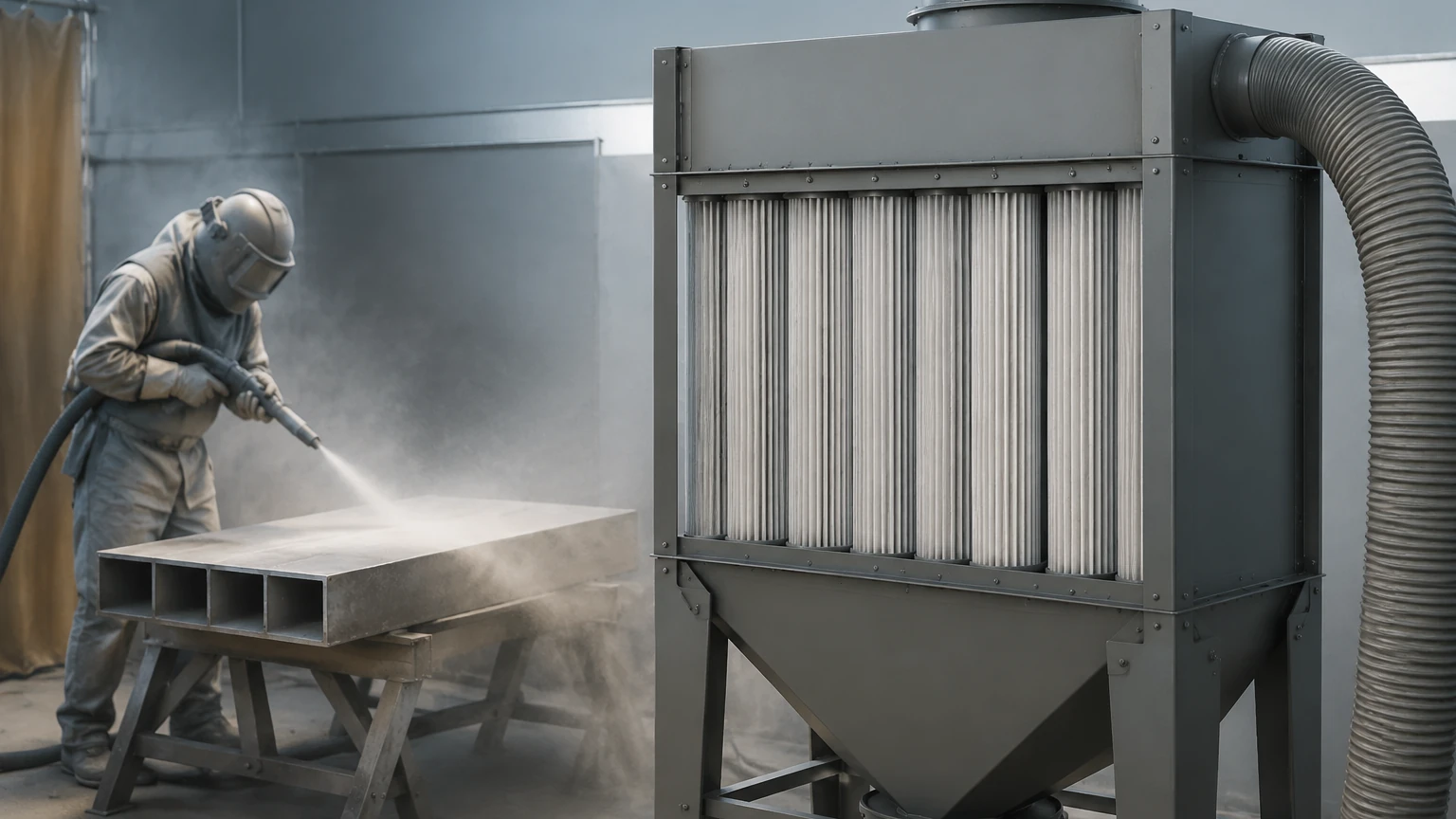
A sandblast dust collector operates by drawing contaminated air away from the blasting cabinet or room and passing it through a series of filters. The primary goal is to separate the dust (broken-down abrasive and removed surface coating) from the air stream before exhausting the cleaned air back into the facility or the atmosphere.
The efficiency of this process depends heavily on the primary filter element. In many high-intensity industrial applications, standard paper or polyester filters may lack the durability required to withstand the high-velocity impact of stray abrasive particles. This is where precision-engineered metal filters, such as those found on our Main Page, offer a distinct advantage. Stainless steel wire mesh and sintered metal components provide the mechanical strength and abrasion resistance necessary to maintain consistent filtration performance over long operational cycles.
Technical Components of an Effective Sandblast Dust Collector
To understand how to optimize a sandblast dust collector, one must look at the individual components that dictate its performance. A typical industrial system consists of several key stages:
1. The Pre-Separator or Baffle Plate
Before the air reaches the fine filters, many systems utilize a pre-separator. This is often a centrifugal cyclone or a heavy-duty baffle plate. The purpose is to drop out the heavier, larger particles through gravity or centrifugal force. By removing the bulk of the abrasive material early, the load on the secondary filter cartridges is significantly reduced, extending their service life.
2. Primary Filter Media
The heart of the sandblast dust collector is the filter media. In B2B industrial contexts, the choice of media is governed by the micron rating required and the nature of the dust. For example, if the blasting process involves hazardous coatings like lead-based paint or specialized chemical residues, the filtration accuracy must be extremely high. Stainless steel filter cartridges are often preferred in these scenarios due to their ability to be manufactured with precise pore sizes and their resistance to chemical degradation.
3. Pulse-Jet Cleaning Mechanism
Most modern industrial dust collectors utilize a pulse-jet cleaning system. This involves a high-pressure blast of compressed air sent down the center of the filter cartridge in the opposite direction of the normal airflow. This "pulse" flexes the filter media and dislodges the accumulated dust cake, which then falls into a collection hopper. The ability of the filter media to withstand repeated pulsing without fatigue is a critical engineering consideration.
Engineering Selection Criteria for Filter Media
When specifying filters for a sandblast dust collector, engineers must evaluate several technical parameters to ensure the system meets the required air quality standards while remaining cost-effective.
Air-to-Cloth Ratio
The air-to-cloth (ATC) ratio, also known as the filtration velocity, is the ratio of the volume of air entering the collector (measured in Cubic Feet per Minute, or CFM) to the total square footage of the filter media. For abrasive blasting applications, a lower ATC ratio is generally preferred. A high ratio forces air through the media too quickly, which can cause particles to become deeply embedded in the fibers (blinding) or even pass through the filter entirely.
Micron Rating and Efficiency
Filtration efficiency is typically categorized by the size of particles the media can capture. In a sandblast dust collector, the dust can range from sub-micron particles to larger grains. Engineers must select a micron rating that balances air permeability with capture efficiency. Using a stainless steel wire mesh allows for a highly controlled aperture size, ensuring that the filter captures the target particle size without unnecessarily restricting airflow.
Material Compatibility and Abrasion Resistance
Unlike standard HVAC filtration, the environment inside a sandblast dust collector is highly abrasive. Fine dust particles act like sandpaper against the filter surface. Stainless steel (304 or 316L) is the material of choice for these environments because of its high hardness and resistance to surface wear. Furthermore, if the blasting process involves moisture or corrosive chemicals, stainless steel provides the necessary protection against oxidation and pitting.
Managing Pressure Drop and Energy Consumption
One of the most critical metrics for any industrial filtration system is the differential pressure (or pressure drop). This is the difference in air pressure between the dirty side and the clean side of the filter. As the sandblast dust collector operates, dust accumulates on the filter surface, increasing the resistance to airflow.
A high pressure drop requires the exhaust fan to work harder, leading to increased energy consumption and reduced suction at the blasting nozzle. By utilizing high-permeability stainless steel mesh, engineers can achieve the required filtration efficiency with a lower initial pressure drop. Furthermore, the rigid structure of metal filters prevents the pleats from collapsing under high pressure, maintaining a consistent surface area for airflow.
Customization and OEM Integration
Every industrial facility has unique spatial and operational requirements. A standard off-the-shelf sandblast dust collector may not fit into a specific production line or meet the exact CFM requirements of a custom blasting booth. This is where OEM customization becomes vital.
Kaifil specializes in manufacturing custom stainless steel filter cartridges and wire mesh components tailored to specific equipment housings. Whether the application requires a cylindrical, conical, or flat panel design, customization ensures that the filter fits perfectly, eliminating the risk of bypass—where contaminated air leaks around the edges of the filter. For more information on our engineering capabilities, you can review product options and application support on our Main Page.
Maintenance and Total Cost of Ownership (TCO)
While the initial cost of high-quality stainless steel filters may be higher than disposable alternatives, the Total Cost of Ownership (TCO) is often significantly lower. In a high-volume sandblast dust collector, disposable filters may need to be replaced every few weeks or months, leading to high recurring costs and significant downtime.
Washability and Reusability
One of the primary advantages of stainless steel filtration components is that they are often cleanable and reusable. Depending on the type of dust, these filters can be cleaned using ultrasonic baths, backwashing, or chemical cleaning agents. This capability eliminates the need for frequent replacements and reduces the environmental impact of disposing of contaminated filter media.
Monitoring and Replacement Cycles
To optimize the performance of a sandblast dust collector, it is essential to install a differential pressure gauge. This allows maintenance teams to monitor the health of the filters in real-time. A sudden drop in pressure may indicate a leak or a torn filter, while a steady increase that does not return to baseline after a cleaning pulse suggests that the filters have reached the end of their functional life.
Addressing Environmental and Safety Regulations
Industrial facilities are subject to strict regulations regarding air emissions. Organizations such as OSHA (Occupational Safety and Health Administration) and the EPA (Environmental Protection Agency) set limits on the amount of particulate matter that can be released into the workspace and the environment.
A high-performance sandblast dust collector is the primary line of defense in achieving compliance. By selecting filters with verified efficiency ratings, companies can avoid heavy fines and, more importantly, protect their employees from long-term health issues such as silicosis, which is caused by the inhalation of fine crystalline silica dust common in sandblasting operations.
Conclusion: Selecting the Right Partner for Filtration Solutions
Optimizing a sandblast dust collector is a complex task that involves balancing airflow, filtration efficiency, and mechanical durability. For engineers and purchasing teams, the focus must remain on selecting components that can withstand the rigors of the abrasive environment while providing consistent, long-term performance.
At Kaifil, we understand the technical challenges associated with industrial filtration. Our expertise in manufacturing custom stainless steel wire mesh filters and cartridges allows us to support a wide range of applications, from heavy-duty industrial blasting to precision pharmaceutical processing. By focusing on quality materials and precise engineering, we help our clients achieve efficient and cost-effective dust collection solutions.
To explore how our customized filtration components can enhance your sandblast dust collector or other industrial systems, visit our Main Page to connect with our technical team and view our full range of capabilities.
