


Filtropressa
In the landscape of industrial solid-liquid separation, the filtropressa (filter press) remains a cornerstone technology for dewatering and clarifying processes. While the fundamental concept of using pressure to drive liquid through a porous medium dates back over a century, modern engineering has transformed these systems into highly efficient, automated, and specialized pieces of equipment. For engineers and procurement teams, selecting the right filtration media and understanding the mechanical nuances of the filtropressa is critical to optimizing throughput and minimizing the total cost of ownership (TCO).
As a manufacturer of custom stainless steel filtration solutions, Kaifil provides the technical components that define the efficiency of these systems. Whether integrated into a standard chamber press or a specialized high-pressure unit, the choice of filtration media—particularly stainless steel wire mesh and sintered components—directly impacts the performance of the industrial separation process. More details regarding specific component engineering can be found on our Main Page.
Engineering Principles of the Filtropressa
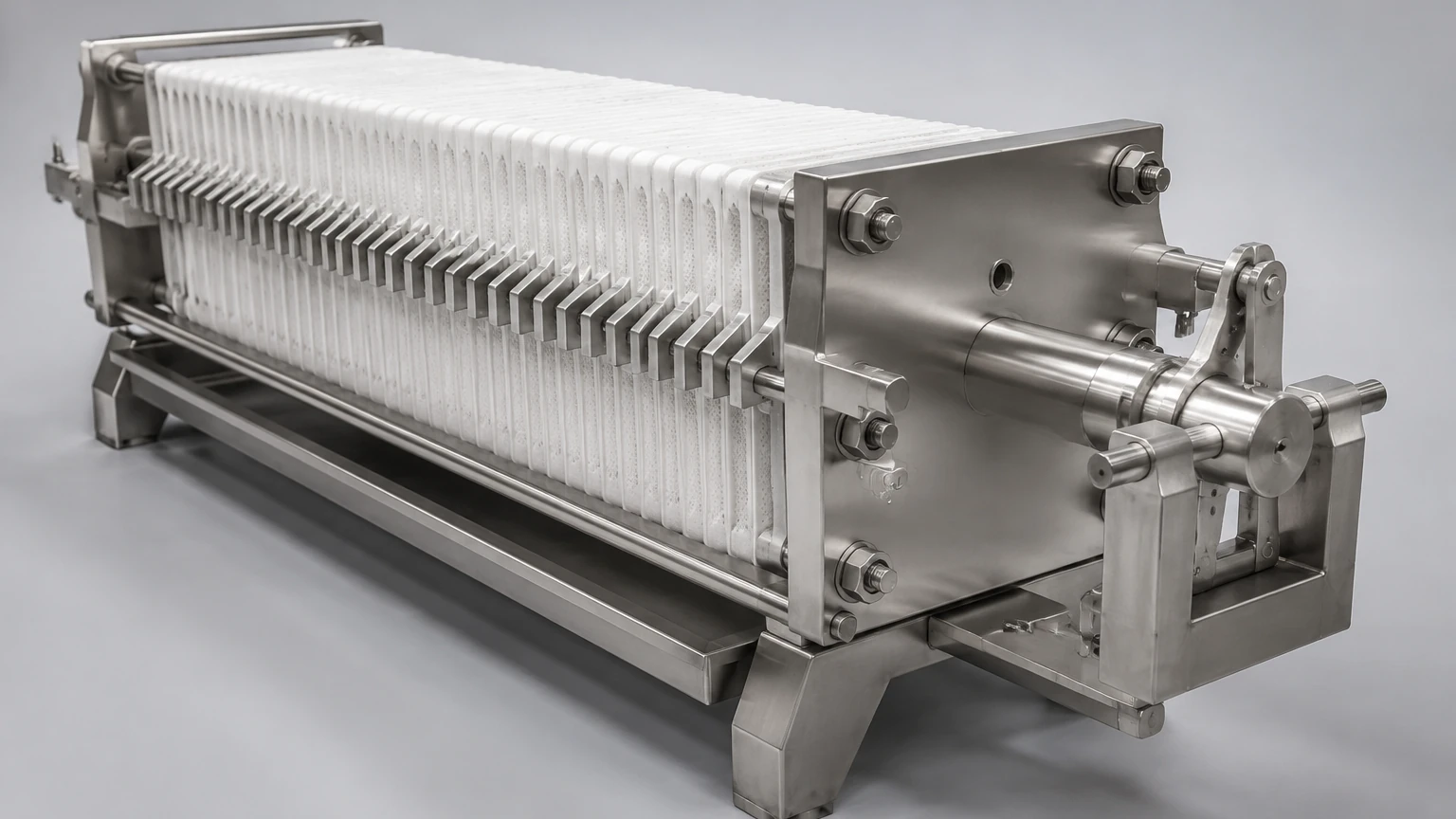
The operation of a filtropressa is a batch process characterized by four distinct phases: filling, filtration, cake washing (optional), and cake discharge. The core of the system consists of a series of filter plates draped with a filter medium, which are pressed together by a hydraulic ram to create sealed internal chambers.
The Filtration Cycle
During the filling phase, the slurry is pumped into the chambers at high pressure. As the liquid (filtrate) passes through the filter medium, the solids are trapped, gradually forming a "filter cake." It is a common misconception that the filter medium itself performs all the filtration. In reality, once a thin layer of solids accumulates, the cake becomes the primary filtration barrier, often achieving higher clarity than the initial medium could provide alone.
Pressure and Flow Dynamics
The efficiency of a filtropressa depends on the pressure differential created between the feed pump and the atmosphere or the discharge manifold. Industrial applications typically operate between 7 and 20 bar (100 to 300 PSI). Higher pressures result in drier cakes and faster cycle times but require more robust filter media, such as stainless steel mesh, to prevent deformation or "blinding"—a condition where particles become permanently lodged within the pores of the medium.
Material Selection: Stainless Steel vs. Synthetic Media
While many standard industrial applications utilize polypropylene or polyester filter cloths, demanding environments in the chemical, pharmaceutical, and food processing sectors often require the durability of metal. Choosing the correct material for a filtropressa medium involves balancing chemical compatibility, thermal stability, and mechanical strength.
Chemical and Thermal Resistance
In chemical processing, slurries may contain aggressive solvents or operate at extreme pH levels. Stainless steel 316L is frequently specified for its superior resistance to corrosion and its ability to withstand temperatures exceeding 250°C, where synthetic fibers would melt or degrade. This makes stainless steel components essential for high-temperature oil filtration or caustic chemical recovery.
Mechanical Durability
Synthetic cloths are prone to stretching and tearing under high hydraulic pressure or during the mechanical scraping required for cake discharge. Stainless steel wire mesh, particularly when sintered into multiple layers, provides a rigid structure that maintains its pore geometry even under intense pressure. This ensures consistent filtration accuracy throughout the life of the component.
Customization and Filtration Accuracy
No two industrial slurries are identical. Particle size distribution, viscosity, and solid concentration vary significantly between a mining tailing application and a pharmaceutical API (Active Pharmaceutical Ingredient) recovery process. Customization of the filtropressa medium is therefore not a luxury but a technical necessity.
Weave Patterns and Micron Ratings
Kaifil specializes in various weave patterns tailored to specific separation needs:
- Plain Weave: Suitable for high-flow applications with relatively large particles.
- Twill Weave: Offers greater strength for finer filtration tasks.
- Dutch Weave: Provides a dense, tortuous path for high-precision filtration, often used when high filtrate clarity is the primary goal.
Engineers must confirm the D90 particle size of their slurry (the size at which 90% of particles are smaller) to select the appropriate micron rating. Selecting a mesh that is too fine will lead to rapid blinding and short cycle times, while a mesh that is too coarse will result in "bleed-through" and poor filtrate quality.
OEM and Precision Components
For many equipment manufacturers, standard off-the-shelf filter plates do not meet the specific requirements of a proprietary process. Custom-designed stainless steel filter cartridges and precision metal components allow for the integration of filtration media directly into the plate architecture. This reduces the risk of bypass and simplifies the cleaning process.
Performance Evaluation and Efficiency Metrics
To evaluate the effectiveness of a filtropressa installation, engineers should monitor several key performance indicators (KPIs):
1. Cake Dryness: Measured as the percentage of solids by weight. Drier cakes reduce transport and disposal costs, especially in wastewater treatment.
2. Filtrate Clarity: Often measured in NTU (Nephelometric Turbidity Units) or ppm (parts per million) of suspended solids. High clarity is essential if the liquid is the final product or is being recycled into a closed-loop system.
3. Cycle Time: The total time from the start of filling to the end of discharge. Shorter cycles increase the daily capacity of the plant.
4. Specific Cake Resistance: A calculated value that describes how difficult it is for liquid to pass through the accumulating solids. This helps in determining the optimal feed pressure.
By utilizing high-performance stainless steel media, operators can often reduce cycle times by allowing for higher feed pressures and more efficient backwashing or cleaning cycles.
Maintenance, Replacement Cycles, and TCO
The total cost of ownership of a filtropressa is not defined by the initial purchase price of the machine, but by the ongoing operational expenses, including energy, labor, and media replacement.
Signs of Media Wear
Engineers should establish a regular inspection schedule to identify signs of failure before they cause a process shutdown. Common indicators include:
- Increased Cycle Times: Suggesting the medium is blinded and cannot be cleaned by standard backwashing.
- Cloudy Filtrate: Indicating a tear or mechanical bypass in the filter medium.
- Uneven Cake Formation: Often caused by localized clogging or damaged plate surfaces.
Cleaning and Longevity
One of the primary advantages of stainless steel filtration components in a filtropressa environment is their cleanability. Unlike synthetic cloths that may need to be discarded when fouled, metal mesh can be cleaned using Clean-in-Place (CIP) systems, ultrasonic baths, or high-pressure water jets. This significantly extends the replacement cycle, often from weeks to years, depending on the abrasiveness of the slurry.
Comparative Analysis: Filter Press vs. Alternative Technologies
While the filtropressa is highly effective, it is important to understand where it sits in relation to other technologies like centrifuges or continuous belt filters. The filtropressa is generally preferred when:
- Maximum cake dryness is required.
- The solids concentration in the feed is relatively high (above 3-5%).
- The process allows for batch operation rather than continuous flow.
- High filtration pressure is needed to overcome the resistance of fine particles.
In many modern facilities, a filtropressa is used in conjunction with pre-filtration stages. For example, stainless steel filter cartridges may be used to remove larger contaminants before the slurry reaches the press, protecting the more expensive press media and ensuring a more uniform cake formation.
Conclusion for Engineering Decision-Makers
Selecting and operating a filtropressa requires a deep understanding of both the mechanical equipment and the filtration media. By focusing on material compatibility, precise micron ratings, and the long-term benefits of durable stainless steel components, industrial facilities can achieve reliable separation performance with minimal downtime.
Before finalizing a filtration strategy, engineers should confirm the chemical nature of their slurry, the required filtrate purity, and the expected mechanical stresses on the filter media. For those seeking specialized guidance on custom metal filtration components or OEM solutions, visiting our Main Page provides access to technical specifications and engineering support designed to optimize industrial filtration systems.
