


Flat Top Woven Wire Mesh: Engineering Guide for Industrial Applications
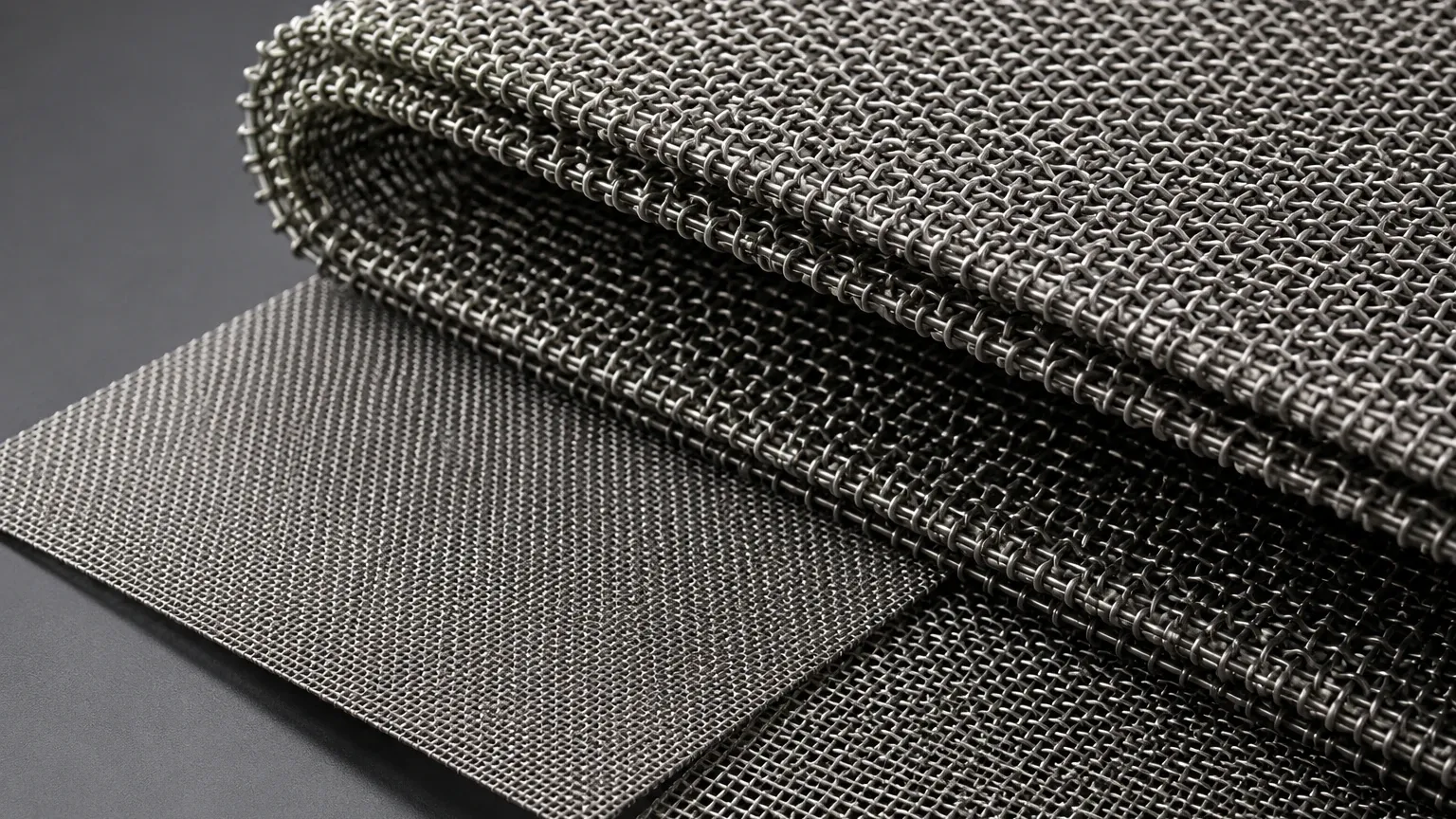
In industrial filtration and material processing, the structural integrity and surface characteristics of a filter medium directly impact operational efficiency. Flat top woven wire mesh is a specialized variant of industrial Woven Wire Mesh designed to provide a perfectly smooth top surface while maintaining high structural stability. Unlike standard weaves where the wire knuckles alternate on both sides, the flat top design concentrates all wire offsets on the underside.
For engineers and procurement professionals, understanding the mechanical advantages of flat top woven wire mesh is essential for optimizing flow rates, reducing wear on equipment, and ensuring long-term durability in demanding environments. This guide examines the technical construction, material selection, and critical evaluation criteria for this high-performance filtration component.
Understanding Flat Top Woven Wire Mesh Construction
The defining characteristic of flat top woven wire mesh is its unique crimping style. In traditional plain or twill weaves, the wires wrap over and under each other, creating a textured surface on both sides of the mesh. In contrast, flat top mesh utilizes a specific crimping process where the wires are pre-bent so that all the "knuckles" or intersections are forced to one side of the cloth.
This results in a smooth, flush surface on the top side, while the bottom side retains the structural crimps that lock the wires into place. This construction provides several mechanical benefits:
1. Reduced Friction: The smooth surface allows for the unimpeded flow of materials, whether they are liquids, slurries, or dry particulates.
2. Uniform Wear: Because the surface is flat, abrasive materials do not catch on protruding knuckles, which significantly extends the service life of the mesh in high-friction applications.
3. Structural Rigidity: The deep crimps on the underside provide a secure mechanical lock, preventing wire migration even under high pressure or heavy vibration.
When selecting a flat top woven wire mesh, it is important to distinguish it from other crimp styles like lock crimp or intermediate crimp. While lock crimp provides stability, it still results in surface protrusions. Only the flat top weave offers a completely level plane on the contact side.
Performance Benefits in Industrial Filtration
The transition to flat top woven wire mesh is often driven by the need for precision and efficiency in filtration and separation. In many industrial processes, the presence of knuckles in standard mesh can lead to "blinding" or clogging, as particles become trapped in the crevices of the weave.
Enhanced Flow Dynamics
By eliminating surface irregularities, flat top mesh minimizes turbulence at the interface of the filter. This leads to a more consistent pressure drop across the medium. For hydraulic and chemical processing applications, maintaining a low and predictable pressure drop is critical for pump efficiency and system longevity.
Improved Cleaning and Backwashing
In automated filtration systems, the ability to clean the filter media in situ is a major operational advantage. The smooth profile of flat top mesh makes it significantly easier to clean via backwashing or mechanical scraping. Without knuckles to harbor debris, the recovery of the filter's original flow capacity is faster and more complete, reducing downtime for maintenance cycles.
Material Handling Efficiency
Outside of liquid filtration, flat top mesh is widely used in vibrating screens and conveyor systems. The flat surface ensures that materials move across the screen with minimal resistance. This is particularly important in the food and beverage industry, where product degradation must be avoided, and in mining, where abrasive ores would otherwise wear down the knuckles of a standard weave prematurely.
Material Considerations: SS304 vs. SS316L
The performance of flat top woven wire mesh is heavily dependent on the alloy used in its construction. At Kaifil, we specialize in stainless steel solutions to ensure chemical compatibility and thermal resistance across various industrial sectors.
* Stainless Steel 304: This is the standard grade for most industrial applications. It offers excellent strength and basic corrosion resistance. It is suitable for food processing, architectural applications, and general industrial filtration where high-acid or high-chloride environments are not present.
* Stainless Steel 316L: For more demanding environments, such as marine applications, pharmaceutical manufacturing, or chemical processing, SS316L is the preferred choice. The addition of molybdenum provides superior resistance to pitting and crevice corrosion, particularly in chloride-rich environments. The "L" denotes low carbon content, which improves weldability and prevents intergranular corrosion in the heat-affected zones.
In high-temperature applications, engineers must also consider the thermal expansion coefficients of these alloys to ensure that the mesh maintains its tension and aperture accuracy when subjected to thermal cycling.
Key Evaluation Criteria for Procurement
When specifying flat top woven wire mesh for a project, engineers should look beyond the basic dimensions. To ensure the mesh performs as expected, the following technical parameters must be confirmed:
1. Mesh Count and Aperture Size
The mesh count refers to the number of openings per linear inch. However, the aperture (the clear opening between wires) is the more critical metric for filtration accuracy. Because flat top mesh often uses heavier wire diameters to maintain its shape, the open area percentage may be lower than in a plain weave of the same mesh count. Engineers must balance the need for structural strength with the required flow rate.
2. Wire Diameter and Tolerance
The thickness of the wire determines the mechanical strength and the weight-bearing capacity of the mesh. In flat top weaves, the wire diameter must be precisely controlled to ensure the crimping process results in a truly flush surface. Variations in wire diameter can lead to "high spots" that negate the benefits of the flat top design.
3. Edge Treatment and Framing
Depending on the installation method, the mesh may require specific edge treatments. Options include hook strips for vibrating screens, welded edges for filter cartridges, or framed panels for architectural use. Proper edge preparation prevents fraying and ensures a secure fit within the housing or machine frame.
Common Risks and Quality Indicators
Not all flat top mesh is manufactured to the same standard. Purchasing teams should be aware of common quality issues that can lead to premature failure or process contamination:
* Wire Displacement: If the crimping is not deep enough or the tension is inconsistent, wires can shift during operation. This changes the aperture size and compromises filtration accuracy. High-quality flat top mesh should have a "lock" that prevents any manual movement of the wires.
* Surface Burrs: During the weaving and cutting process, small metal burrs can form. In pharmaceutical or food-grade applications, these burrs can break off and contaminate the product. Precision manufacturing and post-weave finishing are required to ensure a burr-free surface.
* Inconsistent Flatness: The primary value of this mesh is its flat surface. If the manufacturing process is poorly controlled, the mesh may exhibit slight waves or bows. This can cause uneven wear on scraper blades or lead to bypass in filtration seals.
Maintenance and Service Life Optimization
To maximize the total cost of ownership (TCO), a proactive maintenance strategy is recommended. While flat top woven wire mesh is inherently more durable than many other weave styles, it is not immune to wear.
1. Regular Inspection: Check for signs of localized wear or wire thinning, especially in high-velocity flow areas.
2. Cleaning Protocols: Use compatible chemical cleaners or ultrasonic cleaning to remove sub-micron particles that may have lodged in the underside crimps.
3. Replacement Cycles: Establish a replacement schedule based on pressure drop thresholds rather than fixed time intervals. This ensures that the mesh is replaced before a failure occurs, preventing costly downstream damage to pumps or sensitive equipment.
Customization and OEM Solutions
Industrial filtration often requires bespoke solutions that standard off-the-shelf products cannot provide. Kaifil works closely with global customers to develop customized flat top mesh configurations. Whether you require a specific micron rating, a unique alloy for chemical resistance, or custom-fabricated components like framed panels or reinforced cartridges, technical collaboration is key.
When requesting a quote, engineers should provide the following information to ensure an accurate technical assessment:
* The specific medium being filtered (viscosity, temperature, pH level).
* The required flow rate and maximum allowable pressure drop.
* The particle size distribution of the solids to be removed.
* Mechanical requirements, such as vibration frequency or load-bearing needs.
By addressing these factors during the design phase, you can ensure that the selected flat top woven wire mesh provides the optimal balance of performance, durability, and cost-effectiveness. For detailed technical specifications or to discuss a custom project, Plain, twill and dutch woven wire mesh in SS304/316L — rolls, cut mesh and framed panels. Send mesh count or micron target for a technical quote. is available to assist with material selection and engineering support.
