


Cip Cop Cleaning
In the demanding landscape of industrial manufacturing, maintaining the hygiene and functional integrity of filtration systems is a critical operational requirement. For sectors such as pharmaceutical production, food and beverage processing, and chemical engineering, the accumulation of contaminants—ranging from organic biofilms to inorganic particulates—can compromise product quality and equipment longevity. To address these challenges, engineers and facility managers rely on two primary sanitation methodologies: Clean-In-Place (CIP) and Clean-Out-of-Place (COP). Understanding the technical nuances of cip cop cleaning is essential for optimizing the maintenance cycles of stainless steel filters and precision metal components.
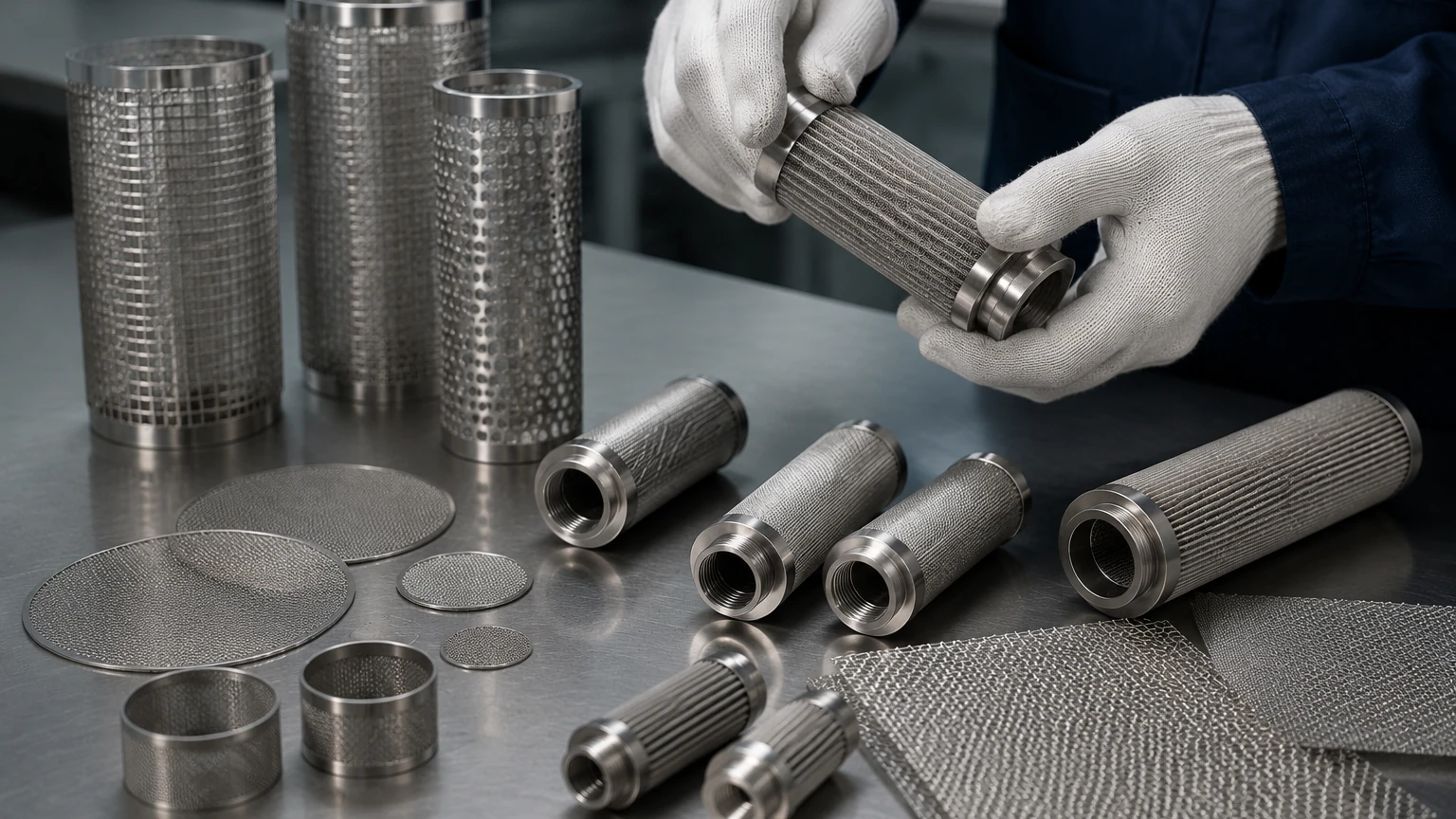
Industrial filtration components, particularly those manufactured from high-grade stainless steel wire mesh or sintered metal, are designed to withstand rigorous cleaning protocols. Choosing between CIP and COP depends on the system architecture, the nature of the foulants, and the required level of sterilization. This guide explores the engineering principles, material considerations, and operational strategies involved in effective cleaning processes for industrial filtration solutions.
Engineering Principles of Clean-In-Place (CIP)
Clean-In-Place (CIP) refers to a method of cleaning the interior surfaces of pipes, vessels, and filtration systems without the need for disassembly. In the context of industrial filtration, CIP is often the preferred method for large-scale, automated systems where frequent manual intervention would result in excessive downtime or risk of environmental contamination.
The efficacy of a CIP cycle is generally governed by four interdependent variables, often referred to as the Sinner’s Circle: Time, Action (mechanical force), Chemicals, and Temperature (TACT). For stainless steel filter cartridges and mesh systems, the "Action" component typically involves high-velocity fluid flow or backpulsing. Backpulsing reverses the flow of the filtrate through the filter medium, dislodging particles trapped on the surface of the mesh.
From an engineering perspective, the design of the filtration housing is as important as the filter itself. To facilitate effective CIP, the system must be free of "dead legs"—areas where fluid can stagnate and bypass the cleaning solution. Furthermore, the internal surfaces must be polished to a specific roughness average (Ra), usually less than 0.8 μm for sanitary applications, to prevent bacterial adhesion. When selecting components from a specialist manufacturer like Kaifil, engineers must ensure that the filter geometry allows for complete wetting and drainage during the CIP cycle.
The Role of Clean-Out-of-Place (COP) for Precision Components
While CIP offers automation and speed, Clean-Out-of-Place (COP) remains indispensable for certain types of filtration media and specific contamination profiles. COP involves the removal of the filter elements from their housing to be cleaned in a dedicated wash station, ultrasonic bath, or specialized cleaning tank.
Cip cop cleaning strategies often designate COP for components that require intensive mechanical scrubbing or specialized chemical soaking that cannot be safely contained within the main process line. For example, precision metal filter components with complex geometries or very fine pore sizes (sub-micron levels) may develop deep-seated fouling that high-velocity CIP flows cannot reach.
Ultrasonic cleaning is a cornerstone of COP for stainless steel wire mesh. By subjecting the filter to high-frequency sound waves in a cleaning solvent, microscopic cavitation bubbles are formed. When these bubbles collapse, they release energy that dislodges particulates from the innermost layers of the mesh weave. This level of precision is difficult to achieve with standard CIP protocols. Additionally, COP allows for a visual and integrity-based inspection of the filter medium, ensuring that no mechanical deformation or wire breakage has occurred during the production run.
Material Compatibility and Chemical Resistance
The success of both CIP and COP protocols hinges on the material properties of the filtration media. Stainless steel, specifically grades 304, 316, and 316L, is the industry standard due to its exceptional corrosion resistance and mechanical strength.
During cip cop cleaning, filters are frequently exposed to aggressive chemical agents. Common CIP chemicals include:
* Caustic Washes (Sodium Hydroxide): Used to dissolve organic fats, proteins, and oils.
* Acid Washes (Nitric or Phosphoric Acid): Used to remove inorganic scales and mineral deposits.
* Sanitizers (Peracetic Acid or Chlorine Dioxide): Used to eliminate microbial populations.
Stainless steel filters are uniquely suited for these environments because they do not degrade or leach chemicals into the process stream, unlike many polymer-based filters. However, engineers must be mindful of "pitting corrosion" if high concentrations of chlorides are used at elevated temperatures. Selecting the correct alloy—such as 316L for its lower carbon content and enhanced resistance to intergranular corrosion—is a critical decision during the procurement phase on the Main Page of a technical supplier's catalog.
Designing Filtration Systems for Cleaning Efficiency
To maximize the lifespan of a filter and reduce the total cost of ownership, the filtration system must be designed with cleaning in mind from the outset. This involves a collaborative effort between the end-user and the manufacturer to define the specific requirements of the application.
1. Filtration Accuracy vs. Cleanability: There is often a trade-off between the fineness of the filtration and the ease of cleaning. Sintered metal powders provide excellent depth filtration but may require more intensive COP cycles compared to surface-filtering wire mesh.
2. Structural Integrity: During CIP backpulsing, the filter element is subjected to reverse pressure. If the filter is not properly reinforced with a support core or outer shroud, the mesh can collapse or distort. Engineering specifications must account for the maximum allowable pressure drop (ΔP) during both the filtration and cleaning phases.
3. Gasket and Seal Selection: In cip cop cleaning, the seals are often the weakest link. EPDM, PTFE, and Viton are commonly used, but they must be compatible with the cleaning temperatures and chemicals. A failure in a seal during a CIP cycle can lead to bypass, where unfiltered fluid enters the clean side of the system.
By focusing on these design elements, manufacturers can provide customized filtration solutions that integrate seamlessly into existing CIP/COP infrastructures.
Comparative Analysis: When to Use CIP vs. COP
Deciding between CIP and COP is not always a binary choice; many facilities utilize a hybrid approach. The following table outlines the key evaluation criteria for selecting a cleaning strategy:
| Feature | Clean-In-Place (CIP) | Clean-Out-of-Place (COP) |
| :— | :— | :— |
| Automation | High – fully programmable | Low to Medium – manual handling required |
| Downtime | Minimal – system remains assembled | Significant – requires disassembly/reassembly |
| Cleaning Intensity | Moderate – relies on flow and TACT | High – allows for ultrasonic and scrubbing |
| Risk of Damage | Low – minimal handling | Moderate – risk of damage during transport |
| Chemical Usage | High – requires filling entire lines | Low – localized to cleaning tanks |
| Verification | Indirect – via conductivity/flow sensors | Direct – via visual inspection and testing |
For high-volume production lines where every hour of downtime equates to significant revenue loss, CIP is the standard. However, for critical filtration stages where zero-tolerance for contamination is the rule—such as in final-stage pharmaceutical fill-finish lines—periodic COP is often mandated by regulatory bodies to ensure absolute cleanliness.
Total Cost of Ownership and Maintenance Cycles
In the B2B procurement process, the initial purchase price of a stainless steel filter is only one component of the total cost of ownership (TCO). The ease and effectiveness of cip cop cleaning play a massive role in long-term profitability.
A filter that is difficult to clean will require more frequent replacement, leading to higher consumable costs and increased labor. Conversely, a high-quality, cleanable stainless steel filter can last for years if maintained correctly. Engineers should evaluate the "cleanability" of a component as a primary performance metric.
Maintenance cycles should be established based on differential pressure monitoring. As the filter pores become loaded with particulates, the pressure drop across the media increases. If the pressure exceeds a certain threshold, the filter must undergo a cleaning cycle. If a CIP cycle fails to return the pressure drop to near-baseline levels, it is an indication that a more intensive COP cycle or a chemical "recovery" wash is required.
Conclusion: Selecting the Right Filtration Partner
Effective cip cop cleaning is the backbone of sustainable industrial filtration. By choosing stainless steel components that are engineered for durability and chemical resistance, facilities can achieve a balance between high-performance filtration and operational efficiency.
When evaluating suppliers, it is vital to work with a manufacturer that understands the technical demands of your specific industry. From material selection and filtration accuracy to the structural design required for high-pressure CIP, the right partner provides more than just a product; they provide a solution that enhances the entire production lifecycle. For those seeking reliable, custom-engineered filtration components, reviewing the technical capabilities and product options available on the Main Page of an experienced manufacturer is the first step toward optimized system performance.
