


Reticulated Filter Foam
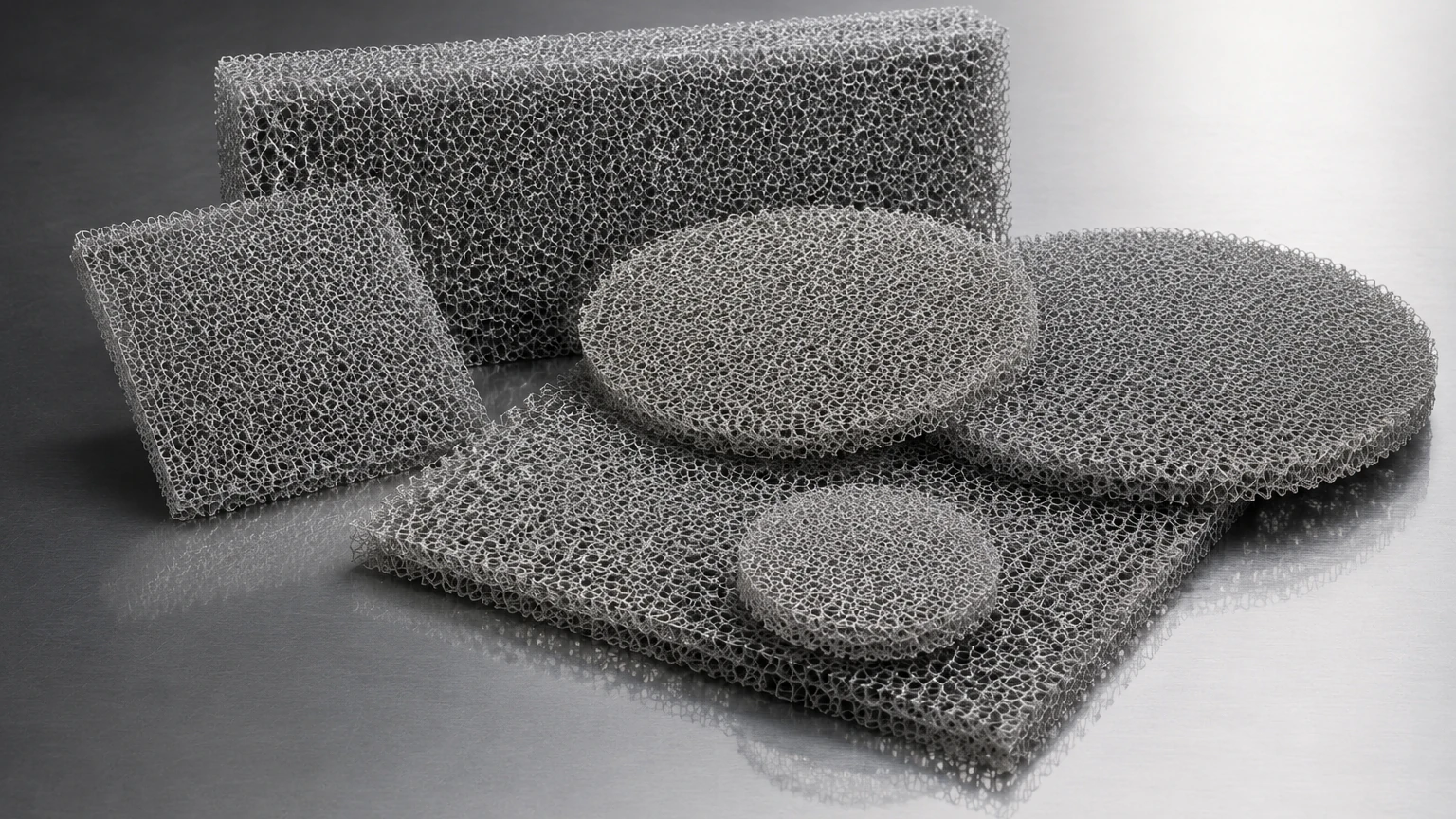
In the landscape of industrial filtration, reticulated filter foam stands as a versatile, open-cell material engineered for high-efficiency fluid and gas management. Unlike standard closed-cell foams used for insulation or packaging, reticulated foam undergoes a specific manufacturing process—often thermal or chemical—that removes the thin cell membranes (windows), leaving behind only a skeletal dodecahedron structure. This results in a material with high porosity, low resistance to airflow, and a significant surface area for particulate entrapment.
For engineers and procurement teams sourcing filtration components, understanding the nuances of reticulated filter foam is essential for optimizing system performance. Whether used as a standalone filter media or as a pre-filter for more complex stainless steel systems, the selection of foam grade, material base, and pore density directly impacts the longevity and efficiency of the industrial process. As a professional manufacturer, Kaifil provides technical insights into how these materials integrate into broader industrial filtration strategies, which can be explored further on our Main Page.
The Engineering of Reticulation: Structure and Porosity
The defining characteristic of reticulated filter foam is its "void volume," which typically ranges from 95% to 98%. This high degree of openness is achieved through the reticulation process. In thermal reticulation, a foam block is placed in a vacuum pressure vessel filled with an explosive gas mixture. Upon ignition, a controlled flash flame sears away the cell membranes without damaging the primary struts of the foam.
This process creates a repeatable, three-dimensional matrix. The most common metric for defining this structure is Pores Per Inch (PPI). Industrial applications typically utilize foam ranging from 10 PPI (very coarse, large pores) to 100 PPI (very fine, dense pores).
Pore Density and Its Impact
* 10–30 PPI: These grades are primarily used for pre-filtration, moisture separation, and large particle capture. They offer the lowest pressure drop and are often found in heavy machinery air intakes and outdoor HVAC systems.
* 45–75 PPI: This mid-range is suitable for general air filtration, small engine filters, and acoustic damping. It balances dust-holding capacity with manageable airflow resistance.
* 80–100 PPI: Fine pore foams are utilized in medical devices, high-precision electronic cooling, and specialized liquid filtration where fine particulate capture is required.
Material Bases: Polyurethane, Ceramic, and Metal
While the term "reticulated filter foam" most frequently refers to polyurethane-based materials, the industrial sector also utilizes ceramic and metal variants for extreme environments. Choosing the correct base material is a critical engineering decision based on chemical compatibility and thermal requirements.
Polyurethane (PU) Foam
Polyurethane foams are divided into two categories: Polyester and Polyether.
1. Polyester-based Foam: Known for high mechanical strength and excellent resistance to hydrocarbons, oils, and fuels. However, it is susceptible to hydrolysis (degradation in high-humidity or water-submerged environments).
2. Polyether-based Foam: Offers superior resistance to water, moisture, and microbial growth. It is the preferred choice for aquatic filtration, medical applications, and humid HVAC environments, though it lacks the chemical resistance of polyester variants regarding oils.
Ceramic and Metal Foams
In high-temperature applications—such as molten metal filtration in foundries or high-pressure chemical processing—polymer foams are insufficient. In these cases, reticulated ceramic or metal foams (often stainless steel or nickel alloys) are used. These materials mimic the open-cell structure of PU foam but provide the structural integrity required for temperatures exceeding 1,000°C. For organizations requiring high-durability metal filtration components, reviewing the technical capabilities on the Kaifil Main Page can provide insights into how precision metal mesh and sintered structures serve as robust alternatives to polymer foams.
Key Performance Metrics for Industrial Selection
When specifying reticulated filter foam for an OEM project, engineers must evaluate several performance indicators to ensure the component meets the system's operational lifecycle.
Pressure Drop (Delta P)
Pressure drop is the loss of pressure as a fluid or gas passes through the filter media. Because reticulated foam has such a high void volume, it offers exceptionally low initial pressure drop compared to felt or paper media. Engineers must calculate the Delta P at the system's maximum flow rate to ensure the foam does not restrict the process or cause pump/fan strain.
Dust Holding Capacity (DHC)
Unlike surface filters (such as thin membranes), reticulated foam is a depth filtration medium. Particulates are trapped throughout the thickness of the foam. A higher PPI increases the surface area for trapping but decreases the DHC before the pressure drop becomes critical. Balancing these factors is essential for determining maintenance intervals.
Tensile Strength and Elongation
In high-velocity airflow applications, the foam must resist "blow-through" or structural failure. Tensile strength (measured in PSI) and ultimate elongation percentages indicate how much stress the foam can withstand before the struts break. This is particularly important in automotive and aerospace applications where vibration and high-pressure pulses are common.
Industrial Applications of Reticulated Filter Foam
The versatility of reticulated foam allows it to serve multiple functions across diverse sectors. Its ability to be easily die-cut, CNC-profiled, or laminated to other substrates makes it a staple in industrial design.
1. HVAC and Air Handling
Reticulated foam is widely used as a permanent, washable filter media in air conditioning units and industrial air handlers. Its ability to be cleaned and reused provides a lower total cost of ownership compared to disposable fiberglass filters.
2. Automotive and Small Engines
In the automotive sector, reticulated foam serves as pre-cleaners for air intake systems. It protects the primary pleated filter from large debris and moisture. In small engines (lawnmowers, chainsaws), it often serves as the primary air filter due to its ability to be impregnated with oil to enhance fine dust capture.
3. Medical and Laboratory Equipment
Fine-pore reticulated foams are used in CPAP machines, oxygen concentrators, and diagnostic equipment. Here, the material must meet strict outgassing and biocompatibility standards to ensure patient safety.
4. Acoustic Damping
Beyond filtration, the open-cell structure is an effective sound absorber. It is used in microphone windscreens, speaker grilles, and industrial compressor housings to dissipate sound energy and reduce noise pollution.
Risks and Considerations in Foam Selection
While reticulated filter foam is a highly effective medium, it is not without risks. Procurement teams must be aware of the following factors to avoid premature system failure:
* UV Degradation: Standard polyurethane foams are sensitive to ultraviolet light. If the filter is exposed to direct sunlight, it can become brittle and crumble over time, potentially contaminating the downstream process. UV-stabilized additives are required for outdoor use.
* Chemical Incompatibility: Using polyester foam in an environment with strong acids or bases, or polyether foam in an environment with certain solvents, can lead to rapid swelling or total structural collapse.
* Compression Set: If the foam is compressed too tightly within a housing to prevent bypass, it may lose its ability to spring back to its original shape, reducing its effective filtration area and increasing pressure drop.
The Role of Customization in Filtration Solutions
For many industrial applications, a standard off-the-shelf foam block is insufficient. Customization is often required to integrate the foam into a larger assembly. This includes:
* Lamination: Bonding reticulated foam to stainless steel wire mesh or non-woven fabrics to combine depth filtration with structural rigidity.
* Impregnation: Adding carbon for odor removal or antimicrobial agents for medical and water treatment applications.
* Precision Shaping: Using water-jet cutting or CNC routing to create complex gaskets and seals that provide both filtration and vibration isolation.
At Kaifil, we understand that filtration is rarely a one-size-fits-all requirement. While reticulated foam is an excellent solution for many scenarios, demanding environments often require the transition to more durable materials like stainless steel filter cartridges or wire mesh components. Our expertise in manufacturing these high-precision metal solutions ensures that your filtration system remains reliable under high pressure, extreme temperatures, and corrosive conditions. For more information on our custom metal filtration capabilities, please visit our Main Page.
Conclusion: Making Informed Purchasing Decisions
Selecting the right reticulated filter foam requires a balance of PPI, material chemistry, and structural requirements. By focusing on the specific needs of the application—whether it is the moisture resistance of a polyether foam or the chemical resilience of a polyester variant—engineers can significantly extend the service life of their equipment.
Before finalizing a purchase, it is recommended to confirm the operating temperature, the specific chemicals the foam will encounter, and the required airflow velocity. Consulting with a professional filtration manufacturer can help bridge the gap between material specifications and real-world performance, ensuring that the chosen reticulated filter foam serves as a reliable component in the industrial value chain.
