


Nitrogen Gas Filters
In industrial environments, nitrogen is a critical utility used for blanketing, purging, cooling, and as a carrier gas. While nitrogen is often produced on-site via Pressure Swing Adsorption (PSA) or membrane systems, or delivered in bulk as a liquid, it is rarely pure enough for direct use in sensitive processes without secondary treatment. Nitrogen gas filters are the essential components designed to remove solid particulates, moisture droplets, and oil aerosols that can compromise the integrity of downstream equipment and the quality of the final product.
For engineers and procurement professionals, selecting the correct filtration media is not merely a matter of matching pipe sizes. It requires a deep understanding of gas dynamics, material compatibility, and the specific purity requirements of the application. High-performance stainless steel filtration solutions, such as those provided by Main Page, offer the durability and precision necessary to maintain system efficiency in demanding B2B sectors including chemical processing, electronics manufacturing, and food production.
The Role of Filtration in Nitrogen Systems
Nitrogen gas filters serve as the final line of defense against contaminants that originate from three primary sources: the generation process, the distribution piping, and the storage vessels.
1. Particulate Removal: In PSA systems, carbon molecular sieve (CMS) dust can bypass internal separators and enter the gas stream. In older piping networks, rust, scale, and metal shavings are common. Nitrogen gas filters must capture these solids to prevent abrasive wear on valves, regulators, and sensitive analytical instruments.
2. Coalescing of Liquids: Even in "dry" nitrogen systems, temperature fluctuations can lead to the condensation of residual water or oil vapors. Coalescing filters are designed to merge small liquid droplets into larger ones, which then drain away, preventing moisture from interfering with chemical reactions or causing corrosion in pneumatic tools.
3. Sterilization: In pharmaceutical and food applications, nitrogen is used to create inert atmospheres. Here, nitrogen gas filters must act as microbial barriers, ensuring that the gas does not introduce bacteria or spores into sterile environments.
Engineering Considerations for Material Selection
When specifying nitrogen gas filters, the choice of material is paramount. While polymer-based filters are common for low-pressure, ambient-temperature applications, industrial nitrogen systems often demand the robustness of stainless steel.
Stainless Steel Wire Mesh vs. Sintered Metal
Stainless steel is the preferred material for nitrogen filtration due to its high mechanical strength and thermal stability. Within this category, two primary structures are utilized:
* Woven Wire Mesh: This consists of precisely woven stainless steel wires. It is ideal for surface filtration where high flow rates and low pressure drops are required. It is easily cleaned and offers excellent resistance to fatigue.
* Sintered Metal Fiber/Powder: This material is created by bonding metal fibers or powders under high heat and pressure without melting them. This creates a porous, tortuous path that provides depth filtration. Sintered nitrogen gas filters are exceptional at capturing fine particulates and can withstand extreme differential pressures without media migration.
Chemical and Thermal Resistance
Industrial nitrogen may be used in cryogenic applications or high-temperature purging. Stainless steel (typically 304 or 316L) remains ductile at cryogenic temperatures and maintains its structural integrity at temperatures exceeding 400°C. Furthermore, in chemical plants where the exterior environment may be corrosive, stainless steel housings and elements prevent external degradation that could lead to system leaks.
Key Evaluation Criteria for Engineers
To ensure the selected nitrogen gas filters meet the operational requirements of a facility, technical teams should evaluate the following parameters:
Micron Rating: Absolute vs. Nominal
It is vital to distinguish between nominal and absolute micron ratings. A nominal rating refers to a filter's ability to retain a major percentage of particles of a certain size (e.g., 95% of 5-micron particles). An absolute rating, however, indicates the diameter of the largest hard spherical particle that will pass through the filter under specified test conditions. For critical nitrogen applications, such as semiconductor manufacturing or laser cutting, absolute-rated filters are generally required to ensure consistent gas purity.
Pressure Drop ($ΔP$)
Every filter introduces a restriction to the flow, resulting in a pressure drop. A high initial pressure drop forces the nitrogen generator or compressor to work harder, increasing energy consumption. Engineers must balance the need for fine filtration with the need for high flow efficiency. Pleated stainless steel designs are often used to increase the effective filtration area, thereby reducing the velocity of the gas through the media and minimizing the pressure drop.
Flow Velocity and Capacity
Gas is compressible, meaning its volume changes with pressure. Nitrogen gas filters must be sized based on the actual cubic feet per minute (ACFM) at the operating pressure, rather than standard cubic feet per minute (SCFM) alone. If the flow velocity is too high, it can cause "channeling" in the filter media or lead to the re-entrainment of captured liquids.
Common Risks of Inadequate Filtration
Failing to implement high-quality nitrogen gas filters can lead to significant operational setbacks and financial losses.
* Product Contamination: In the food and beverage industry, nitrogen is used for modified atmosphere packaging (MAP). Particulates or oil in the nitrogen can spoil the product's appearance, taste, and shelf life, leading to costly recalls.
* Equipment Downtime: Precision machinery, such as laser cutters, uses nitrogen as a shield gas. If the gas contains particulates, it can deflect the laser beam or damage the focusing lens, resulting in poor cut quality and expensive repairs.
* Sensor Failure: Many industrial processes rely on high-sensitivity gas analyzers. Contaminants can coat the sensors, leading to inaccurate readings and potential safety hazards if the inerting levels are not correctly monitored.
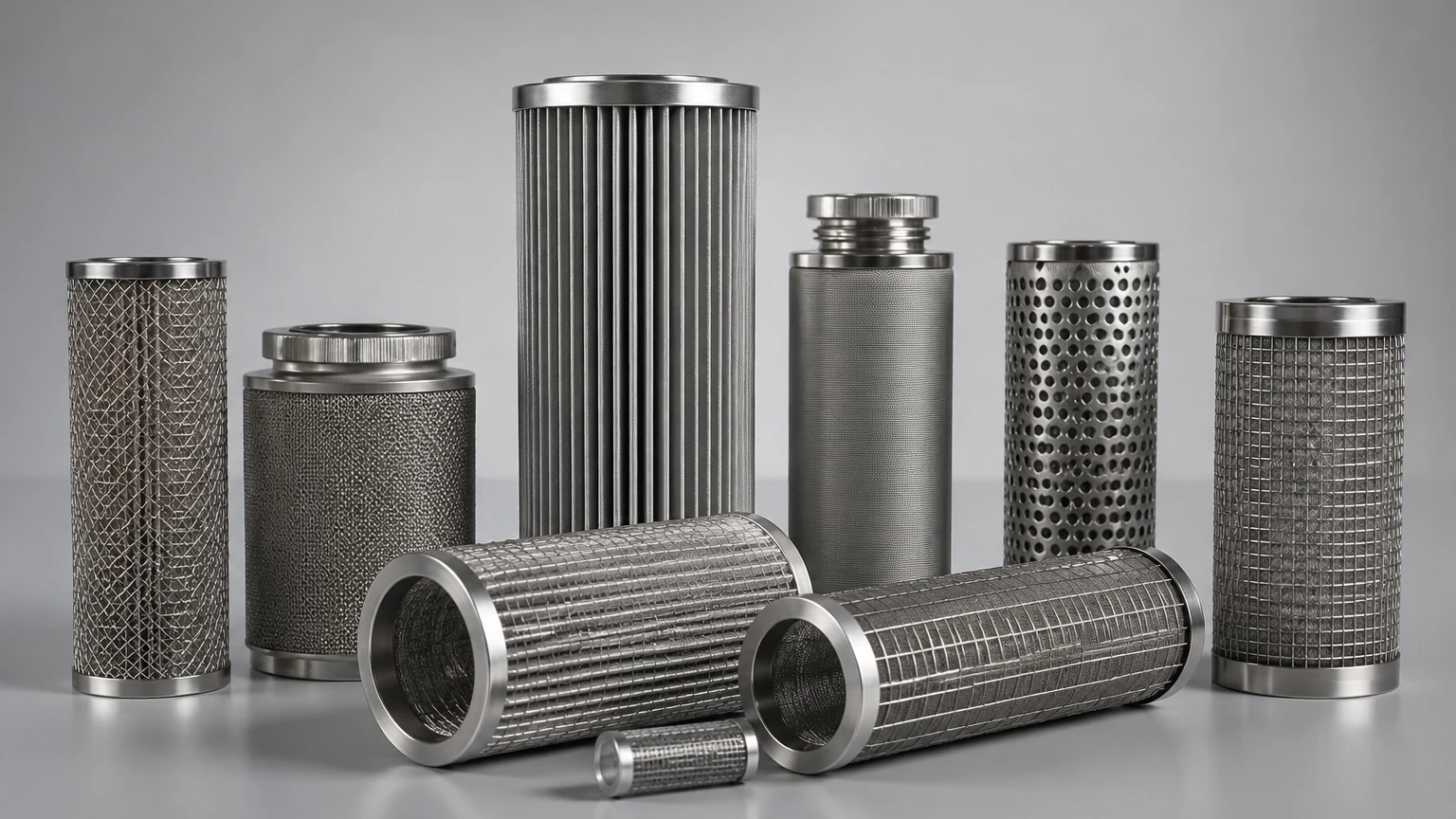
Customization and OEM Integration
Standard off-the-shelf filters do not always meet the spatial or performance constraints of specialized industrial machinery. This is where custom-engineered filtration solutions become necessary. Manufacturers like Kaifil specialize in developing bespoke nitrogen gas filters tailored to specific OEM requirements.
Customization options include:
* End Cap Configurations: Matching specific housing interfaces such as 222, 226, or threaded connections.
* Variable Layering: Combining different mesh counts to create a multi-stage filter within a single element.
* Reinforced Cores: Adding internal support to handle high-pressure surges or back-pulsing cleaning cycles.
By collaborating with a manufacturer that understands both the metallurgy and the fluid dynamics of gas filtration, engineers can optimize their systems for both performance and total cost of ownership.
Maintenance and Replacement Cycles
Unlike disposable synthetic filters, stainless steel nitrogen gas filters offer the advantage of cleanability. However, a structured maintenance program is essential to ensure longevity.
Monitoring Differential Pressure
Most industrial filtration housings should be equipped with differential pressure gauges. A steady increase in $ΔP$ indicates that the filter is successfully capturing contaminants. Once the pressure drop reaches a predetermined limit (typically 10-15 psi depending on the system), the filter element should be removed for cleaning or replacement.
Cleaning Methods
Stainless steel elements can often be restored through several methods:
* Ultrasonic Cleaning: Using high-frequency sound waves in a solvent bath to dislodge particles from deep within the pore structure.
* Backwashing: Reversing the flow of clean gas or liquid through the filter to push out trapped debris.
* Chemical Cleaning: Using compatible acids or alkalis to dissolve organic or mineral deposits.
It is important to note that while cleaning extends the life of the filter, the structural integrity should be inspected periodically. Any signs of mesh fraying or pleat collapse indicate that the element has reached the end of its functional life.
Conclusion
Nitrogen gas filters are indispensable components in the modern industrial landscape. They protect expensive downstream assets, ensure product consistency, and contribute to the overall safety of gas distribution systems. By prioritizing high-quality materials like stainless steel and focusing on technical metrics such as absolute micron ratings and pressure drop, engineers can build more resilient and efficient systems.
For organizations seeking reliable, custom-engineered filtration components, partnering with a specialist manufacturer ensures that the specific nuances of the application are addressed. To explore technical specifications and find the right filtration solution for your nitrogen system, Review product options and application support to ensure your operations maintain the highest standards of gas purity and system reliability.
