


Candle Filters for Water
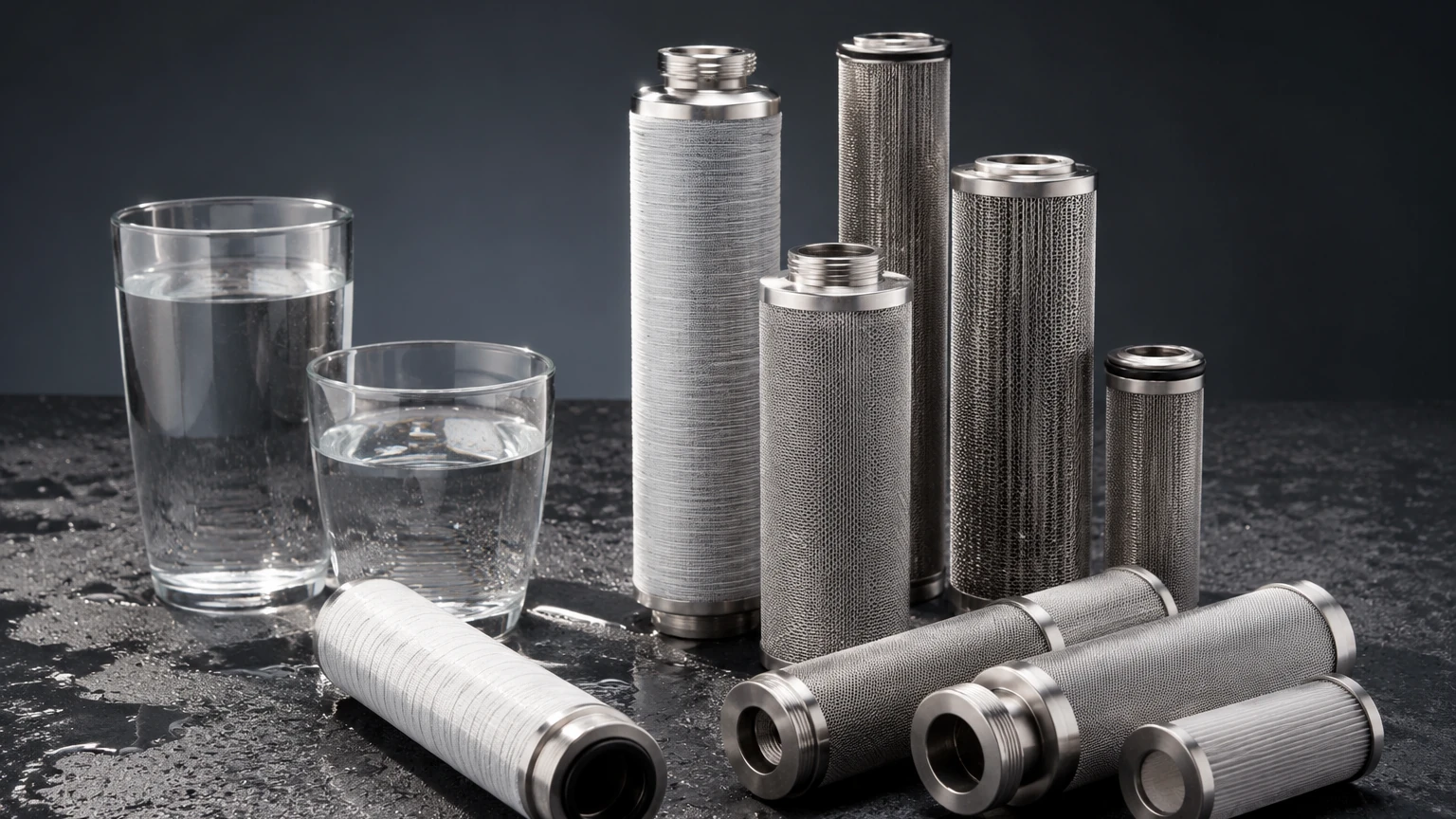
In the landscape of industrial liquid-solid separation, candle filters represent a critical technology for achieving high-clarity water and process fluids. Designed for batch or continuous operation, these cylindrical filter elements provide a robust solution for demanding environments where precision and durability are paramount. For engineers and procurement specialists, understanding the technical nuances of candle filters for water is essential to optimizing filtration efficiency and minimizing operational downtime.
Industrial filtration systems often face the challenge of removing fine particulates while maintaining consistent flow rates under varying pressure conditions. Stainless steel candle filters address these challenges by offering a rigid, heat-resistant, and chemically compatible structure that outperforms disposable synthetic alternatives. This guide examines the engineering principles, material considerations, and selection criteria for implementing candle filter technology in industrial water treatment.
Technical Design and Operating Principles
A candle filter consists of a cylindrical support structure—the "candle"—wrapped or layered with a filtration medium. These elements are typically installed vertically within a pressure vessel. The process fluid enters the vessel and is forced through the filter media from the outside in. The solids are retained on the outer surface of the candle, while the clarified filtrate flows through the center and out of the discharge manifold.
One of the defining characteristics of candle filters for water is their ability to handle high solids loading. As the cake builds up on the surface of the filter, it can actually assist in the filtration process, providing a secondary layer of fine-particulate capture. However, this also leads to an increase in differential pressure (ΔP). Once a predetermined pressure limit or cake thickness is reached, the system undergoes a cleaning cycle, often through backwashing or gas-assisted cake discharge.
In water applications, the focus is typically on removing suspended solids (TSS), protecting downstream equipment like reverse osmosis (RO) membranes, or clarifying process water for reuse. The structural integrity of the candle is vital here; it must withstand the mechanical stresses of both high-pressure filtration and the reverse flow during cleaning cycles.
Material Selection for Industrial Durability
The performance of a candle filter is largely dictated by its material composition. In industrial water treatment, stainless steel is the industry standard due to its mechanical strength and resistance to corrosion.
304 vs. 316L Stainless Steel
For most general water filtration tasks, 304 stainless steel provides adequate corrosion resistance and structural support. However, in applications involving brackish water, high-chloride environments, or chemical processing water, 316L stainless steel is preferred. The addition of molybdenum in 316L enhances its resistance to pitting and crevice corrosion, ensuring a longer service life in aggressive media.
Sintered Metal Mesh
Sintered metal mesh is a common choice for high-precision candle filters. This material is created by diffusion-bonding multiple layers of woven wire mesh together. The result is a porous metal sheet that combines the fine filtration accuracy of thin wire mesh with the mechanical strength of a thicker plate. Sintered candles are highly resistant to migration—meaning the pore size remains stable even under high pressure—making them ideal for critical water purification steps.
Wedge Wire Construction
For applications requiring high flow rates and easier cleaning, wedge wire (V-wire) candles are often utilized. These are constructed by winding a continuous triangular-shaped wire around longitudinal support rods. The V-shaped profile creates a slot that widens inwardly, which significantly reduces the risk of clogging and facilitates efficient backwashing. Wedge wire is particularly effective for primary water intake filtration and removing larger debris.
Key Engineering Considerations for Selection
When specifying candle filters for water, engineers must evaluate several variables to ensure the chosen component aligns with the system's operational requirements. For comprehensive technical specifications and custom design options, professionals can refer to the Main Page for detailed product data.
Micron Rating and Filtration Efficiency
The micron rating defines the size of the particles the filter is designed to intercept. It is important to distinguish between "nominal" and "absolute" ratings. A nominal rating indicates the filter will trap a large percentage of particles of a certain size, whereas an absolute rating guarantees the capture of virtually all particles at that size. In water treatment, absolute-rated sintered mesh is often required for protecting sensitive downstream components.
Flow Rate and Differential Pressure
The flow capacity of a candle filter is a function of its surface area and pore size. Sizing a system requires balancing the desired flow rate with the allowable initial pressure drop. An undersized filter will lead to frequent cleaning cycles and increased energy consumption, while an oversized system may result in unnecessary capital expenditure. Engineers must calculate the total filtration area based on the flux rate (gallons per minute per square foot) appropriate for the specific water quality being treated.
Chemical and Thermal Compatibility
While water itself is generally non-reactive, the presence of cleaning chemicals (such as caustic soda or acids for CIP cycles) or high process temperatures must be accounted for. Stainless steel candle filters are naturally suited for high-temperature water applications that would melt or deform polymer-based filters.
Applications in Industrial Water Treatment
Candle filters for water are employed across a broad spectrum of industries, each with unique purity requirements and environmental constraints.
1. Chemical Processing: In chemical plants, water is often used as a solvent or cooling medium. Candle filters remove contaminants that could interfere with chemical reactions or cause scaling in heat exchangers.
2. Food and Beverage: Water used in food production must be free of particulates and microorganisms. Stainless steel filters are preferred here because they can be easily sterilized via steam-in-place (SIP) or hot water sanitization.
3. Pharmaceuticals: High-purity water (HPW) systems utilize fine-mesh candle filters as a pre-filtration step to protect expensive ultrafiltration and deionization equipment.
4. Power Generation: Boiler feed water requires extreme clarity to prevent turbine blade erosion and boiler tube fouling. Candle filters provide the necessary reliability for continuous high-pressure operation.
5. Wastewater Recovery: As industrial facilities move toward "zero liquid discharge" (ZLD), candle filters are used to clarify treated wastewater for recycling back into the plant's utility systems.
Maintenance, Cleaning, and Life Cycle Management
The total cost of ownership (TCO) for a filtration system is heavily influenced by the longevity of the filter elements and the ease of maintenance. Unlike disposable cartridges, stainless steel candle filters are designed to be cleaned and reused multiple times.
Backwashing Mechanisms
Most modern candle filter systems are equipped with automated backwashing capabilities. When the differential pressure reaches a set point, a portion of the filtrate (or an external fluid/gas) is forced in the reverse direction through the candles. This action dislodges the accumulated solids from the surface. The efficiency of this process depends on the uniformity of the filter media and the structural strength of the candle, which must resist collapsing under the reverse pressure.
Ultrasonic and Chemical Cleaning
Over time, some particulates may become deeply embedded in the mesh or scale may form on the surface. In these cases, off-line cleaning may be necessary. Ultrasonic cleaning, which uses high-frequency sound waves to create cavitation bubbles, is highly effective at removing microscopic debris from sintered mesh. Chemical soaking in mild acids or bases can also restore the original flow characteristics of the filter.
Replacement Indicators
While durable, candle filters are not permanent. Physical damage, such as pleat deformation or mesh tearing, can compromise filtration integrity. Regular inspection of the filtrate quality and monitoring of the "clean" pressure drop (the ΔP immediately after a cleaning cycle) are essential. If the clean ΔP begins to rise steadily over time, it indicates that the media is becoming permanently blinded and the elements may require professional refurbishment or replacement.
Customization and OEM Integration
Every industrial water system has unique spatial and performance constraints. Standard off-the-shelf filters often fail to meet the specific needs of a custom-built skid or a legacy housing. This is where OEM (Original Equipment Manufacturer) capabilities become vital.
Customization options for candle filters include:
* End Cap Configurations: Threaded, flanged, or bayonet-style fittings to ensure a leak-proof seal within the housing.
* Reinforced Cores: For high-pressure applications where the differential pressure might exceed standard limits.
* Pleated Designs: To increase the available surface area within the same footprint, allowing for higher flow rates or longer intervals between cleanings.
* Variable Lengths: Tailoring the length of the candle to maximize the volume of the existing pressure vessel.
By working closely with a manufacturer that understands both the metallurgy and the fluid dynamics of filtration, engineering teams can develop solutions that are precisely tuned to their water treatment objectives.
Conclusion
Selecting the right candle filters for water involves a careful evaluation of material science, mechanical design, and operational requirements. Stainless steel elements offer the durability and precision necessary for modern industrial processes, providing a sustainable alternative to disposable media. By focusing on high-quality construction—whether through sintered mesh or wedge wire—and ensuring proper sizing and maintenance protocols, facilities can achieve reliable, long-term filtration performance that protects downstream assets and ensures process consistency. For those seeking to optimize their filtration systems, consulting with technical experts and reviewing detailed product specifications on the Main Page is the recommended next step in the procurement process.
