


Duplex Filters
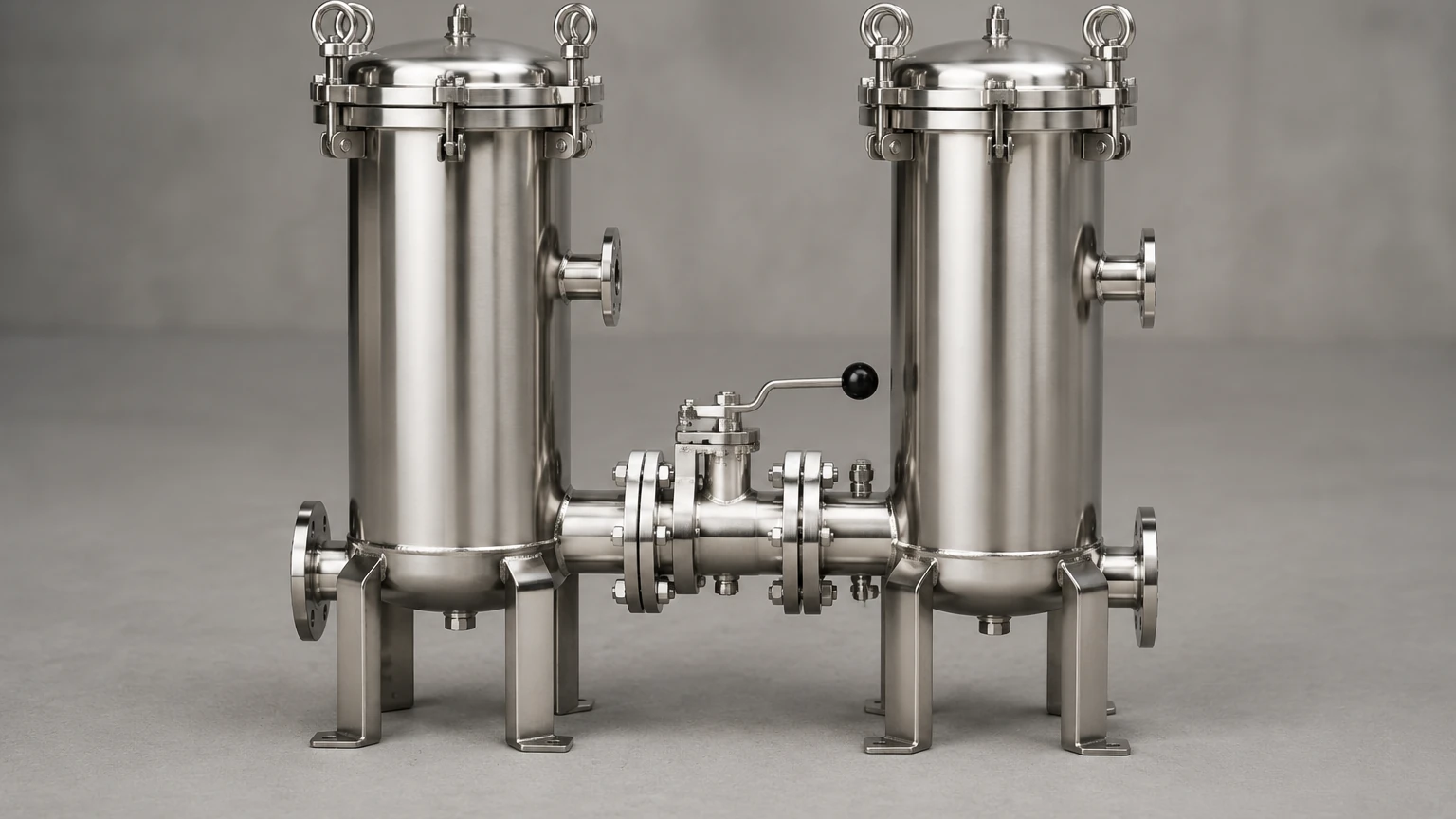
In industrial filtration, the requirement for continuous operation often dictates the choice of equipment. For processes where downtime is not an option—such as chemical refining, power generation, or large-scale water treatment—simplex filters are often insufficient because they require the system to shut down during element cleaning or replacement. Duplex filters, also known as dual basket strainers or twin filters, provide a solution by incorporating two separate filter housings connected by a common valve assembly. This design allows for the diversion of flow from one housing to the other without interrupting the process, ensuring 24/7 operational continuity.
Selecting the right duplex filtration system requires a deep understanding of fluid dynamics, material science, and the specific mechanical requirements of the application. As a professional manufacturer, Kaifil specializes in engineering these systems to meet the rigorous demands of modern industry. This guide examines the technical considerations, engineering principles, and selection criteria essential for implementing effective duplex filters in industrial environments.
Engineering Fundamentals of Duplex Filters
The core advantage of duplex filters lies in their redundant design. A standard system consists of two identical filter vessels, an inlet/outlet manifold, and a changeover valve mechanism. The valve is the critical component that dictates the reliability and ease of use of the entire system.
The Changeover Mechanism
There are several types of changeover valves used in duplex systems, each with specific engineering trade-offs:
* Plug Valves: These are common in many industrial duplex strainers. They offer a simple, robust design but can be difficult to turn under high pressure without a lifting mechanism.
* Ball Valves: Often used in high-pressure or smaller diameter piping, ball valves provide excellent sealing. In a duplex configuration, these are typically linked together so that a single handle movement switches the flow.
* Butterfly Valves: Preferred for large-diameter piping due to their compact size and lower weight. They are often actuated to ensure synchronized switching between the two housings.
* Sliding Gate or Transfer Valves: These are engineered for zero-leakage and are often found in critical oil and gas or hydraulic applications where even a minor bypass during the switch could damage downstream components.
Flow Dynamics and Internal Design
When flow is diverted, the internal geometry of the duplex filter must minimize turbulence and pressure drop. Engineers must consider the "equalization" process. Before switching flow to a clean, empty housing, it is standard practice to open an equalization line. This fills the standby housing with fluid and vents trapped air, preventing a sudden drop in system pressure or a "water hammer" effect when the main valve is turned.
Key Performance Metrics and Selection Criteria
When specifying duplex filters for a project, engineers must look beyond simple pipe size. The performance of the filter is defined by its ability to remove contaminants while maintaining system efficiency.
Micron Rating and Filtration Efficiency
The micron rating determines the size of particles the filter will capture. However, it is vital to distinguish between "nominal" and "absolute" ratings. A nominal rating refers to the filter's ability to retain the majority of particles of a certain size, whereas an absolute rating (often associated with high-precision stainless steel wire mesh) indicates that 99.9% of particles above that size are captured. For hydraulic systems or fine chemical processing, absolute ratings are typically required to protect sensitive components.
Differential Pressure ($ΔP$)
Differential pressure is the difference in pressure between the inlet and outlet of the filter. A high initial $ΔP$ indicates that the filter is undersized or that the media is too restrictive for the flow rate. In a duplex system, monitoring $ΔP$ is the primary method for determining when to switch to the standby housing. Most industrial systems include a differential pressure gauge or a digital transducer that triggers an alarm when the limit—typically between 10 to 15 psi (0.7 to 1.0 bar)—is reached.
Viscosity and Flow Rate
The viscosity of the fluid significantly impacts the pressure drop. High-viscosity fluids (such as heavy oils or resins) require larger filter surface areas to maintain the same flow rate as water-like fluids. If the viscosity varies with temperature, the duplex filter must be sized for the worst-case scenario (the highest viscosity at the lowest operating temperature) to ensure the system does not bypass or fail during startup.
Material Selection for Industrial Environments
The durability of a duplex filter is largely dependent on the materials used for the housing and the internal filter elements. Since these filters are often used in corrosive or high-temperature environments, material science is a primary engineering consideration.
Housing Materials
* Carbon Steel: Suitable for non-corrosive applications like lubricating oils and fuels. It is cost-effective but requires internal coatings if used with water or corrosive fluids.
* 304 Stainless Steel: The standard for most industrial applications, offering good corrosion resistance and structural integrity.
* 316/316L Stainless Steel: Preferred for pharmaceutical, food and beverage, and chemical processing. The addition of molybdenum in 316 stainless steel provides superior resistance to chlorides and pitting.
* Specialty Alloys: For highly aggressive environments, such as seawater filtration or concentrated acids, materials like Duplex 2205 or Super Duplex may be required.
Filter Element Media
Kaifil provides a variety of custom stainless steel filtration solutions, including:
* Woven Wire Mesh: Available in various weaves (plain, twill, dutch), providing precise surface filtration and easy cleaning.
* Perforated Metal: Used primarily as a support structure or for coarse straining of large debris.
* Sintered Metal Mesh: Multiple layers of wire mesh diffusion-bonded together to create a robust, high-strength filter element capable of withstanding high differential pressures without deformation.
* Wedge Wire: Ideal for applications involving sticky or fibrous materials, as the V-shaped profile reduces the risk of clogging.
For more detailed technical specifications on material compatibility and custom designs, engineers can Review product options and application support to ensure the selected components align with their specific environmental conditions.
Operational Advantages in Continuous Processing
The implementation of duplex filters offers several strategic advantages for industrial facilities, particularly concerning maintenance and total cost of ownership (TCO).
Zero Downtime Maintenance
In a simplex system, the process must stop to clean the filter. In a duplex system, the operator simply switches the valve to the clean side. The dirty housing is then isolated, vented, and drained. The filter element can be removed, cleaned, or replaced while the process continues to run at full capacity. This is essential for power plants, where a lubrication failure in a turbine can lead to millions of dollars in losses.
Safety and Risk Mitigation
Modern duplex filters are designed with safety interlocks. These prevent the operator from opening a pressurized housing. By ensuring that one side is always operational and the other is properly isolated, the risk of fluid spills or operator injury is significantly reduced. Furthermore, for hazardous chemicals, duplex systems can be equipped with automated changeover valves to minimize human exposure.
Extended Service Life
Because duplex filters allow for immediate cleaning once a pressure threshold is reached, the filter elements are less likely to suffer from permanent "blinding" or structural damage caused by excessive pressure. This regular maintenance cycle, facilitated by the duplex design, extends the overall life of the expensive stainless steel filter media.
Installation and Maintenance Best Practices
To achieve optimal performance from a duplex filtration system, proper installation and a disciplined maintenance schedule are required.
Installation Considerations
* Orientation: Most duplex filters are designed for vertical installation. Ensure there is sufficient overhead clearance to remove the filter elements from the housings.
* Venting and Draining: Every duplex filter should have vent valves at the highest point of the housings and drain valves at the lowest. This allows for the safe removal of air during startup and the removal of sludge during cleaning.
* Support Piping: Due to the weight of the dual housings and the fluid, the inlet and outlet piping must be properly supported to prevent stress on the filter flanges.
Maintenance Procedures
1. Monitor $ΔP$: Regularly check the differential pressure gauge. Do not wait for the maximum allowable pressure to switch sides.
2. Equalize Pressure: Before switching, use the equalization valve to fill the standby chamber. This prevents pressure shocks.
3. Thorough Cleaning: When a stainless steel wire mesh element is removed, it should be cleaned according to the manufacturer's instructions—often using ultrasonic baths or high-pressure spray—to ensure all trapped particles are removed from the mesh pores.
4. Seal Inspection: Every time a housing is opened, the O-rings or gaskets should be inspected for wear, hardening, or chemical degradation. Replacing a low-cost seal is far more economical than dealing with a high-pressure leak.
Customization and OEM Considerations
No two industrial processes are identical, and off-the-shelf filtration solutions often fall short of specific engineering requirements. Customization is where the expertise of a manufacturer like Kaifil becomes invaluable.
Engineers should consider the following when requesting a custom duplex filter design:
* Connection Types: Beyond standard ANSI or DIN flanges, systems may require NPT threads, tri-clamp fittings for sanitary applications, or custom manifold configurations to fit into existing tight spaces.
* Pressure Ratings: Standard housings may be rated for 150 psi, but hydraulic or high-pressure chemical lines may require ratings of 3000 psi or higher.
* Automation: For remote or unmanned stations, duplex filters can be equipped with pneumatic or electric actuators and PLC integration to switch housings automatically based on differential pressure sensors.
* Specialty Coatings: In addition to using stainless steel, certain applications may require PTFE lining or electropolishing to meet stringent purity standards in the pharmaceutical or semiconductor industries.
By working closely with a manufacturer that understands the nuances of metal fabrication and filtration science, purchasing teams can secure a system that is not only functional but optimized for the specific fluid chemistry and flow profile of their plant.
Conclusion
Duplex filters are a cornerstone of reliable industrial fluid management. By allowing for continuous operation, protecting downstream equipment, and providing a safe environment for maintenance, they represent a critical investment for any high-availability process. When selecting a system, engineers must prioritize the quality of the changeover valve, the appropriateness of the housing material, and the precision of the filter media.
Whether you are designing a new chemical processing line or upgrading a hydraulic power unit, understanding the technical boundaries of duplex filtration ensures long-term efficiency and reduced operational risk. For those seeking specialized guidance or high-performance stainless steel components, visiting the Main Page provides access to technical resources and manufacturing support tailored to complex industrial filtration challenges.
