


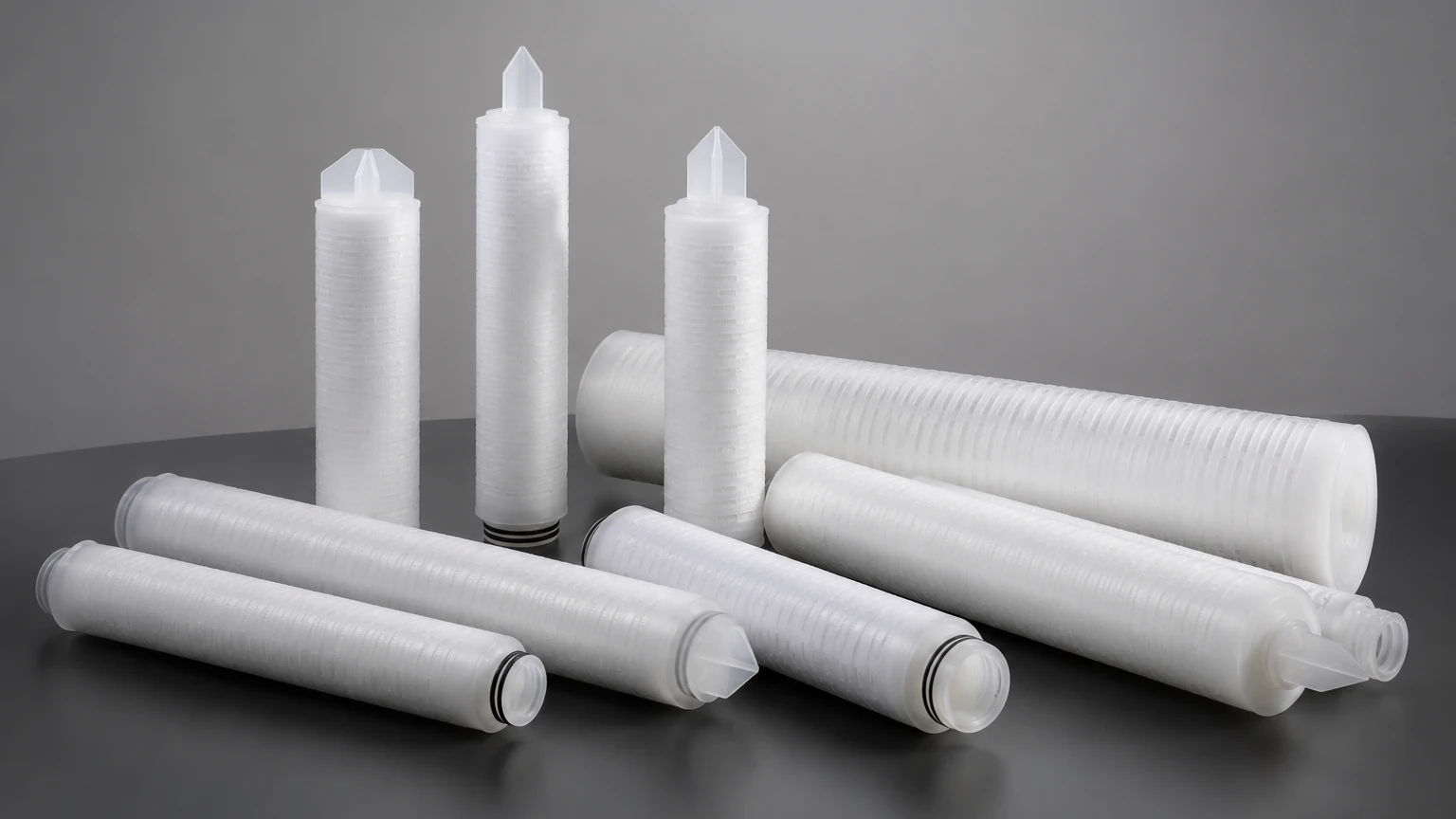
Pes Cartridge Filter
In the landscape of industrial liquid processing, the pes cartridge filter stands as a critical component for achieving high-purity results. Polyethersulfone (PES) is a high-performance polymer known for its unique membrane characteristics, making it a preferred choice in industries where flow rates, chemical stability, and biological safety are paramount. For engineers and procurement specialists, understanding the technical nuances of PES membranes is essential for optimizing filtration efficiency and ensuring system longevity.
At Kaifil, while we specialize in custom stainless steel filtration solutions, we recognize that comprehensive industrial filtration often involves a multi-stage approach. A pes cartridge filter is frequently utilized as a final or sub-micron filtration stage, supported by robust stainless steel pre-filters and housed within precision-engineered metal vessels. This guide explores the engineering considerations, performance metrics, and selection criteria for PES filtration technology.
Technical Properties of Polyethersulfone (PES) Membranes
The performance of a pes cartridge filter is fundamentally rooted in the morphology of the PES polymer. Unlike many other synthetic membranes, PES is naturally hydrophilic, meaning it has a high affinity for water and does not require the addition of wetting agents. This property is vital in pharmaceutical and food applications where the leaching of surfactants or chemicals could compromise product integrity.
Asymmetric Pore Structure
One of the most significant engineering advantages of PES is its asymmetric pore structure. In an asymmetric membrane, the pore size changes across the cross-section of the material, typically featuring larger pores on the upstream side and a dense, fine-pored "skin" on the downstream side. This design acts as a built-in pre-filter, allowing the membrane to capture larger particles within its depth before they reach the critical retention layer. The result is a significantly higher dirt-holding capacity compared to symmetric membranes, leading to longer service life and reduced pressure drop.
Chemical and Thermal Stability
PES membranes exhibit excellent resistance to a wide range of chemicals, particularly in the pH range of 1 to 14. They are compatible with many acids and bases, though caution is required with certain organic solvents like ketones or chlorinated hydrocarbons. Furthermore, PES can withstand high operating temperatures and repeated sterilization cycles, including steam-in-place (SIP) and autoclaving, without losing structural integrity or filtration accuracy.
Key Performance Advantages in Industrial Applications
When evaluating a pes cartridge filter for a specific process, engineers focus on three primary performance indicators: flow rate, protein binding, and extractables.
High Flow Rates and Throughput
Because of the high porosity and asymmetric nature of the membrane, PES filters offer some of the highest flow rates per unit of surface area among all membrane materials. For high-volume processes, such as bottled water production or large-batch chemical processing, this translates to smaller filter housings and lower initial capital expenditure. Increased throughput also means that filtration cycles can be completed faster, enhancing overall plant productivity.
Low Protein Binding
In the pharmaceutical and biotechnology sectors, the loss of expensive active ingredients due to adsorption onto the filter surface is a major concern. PES is characterized by extremely low non-specific protein binding. This ensures that biological products, such as vaccines, enzymes, and monoclonal antibodies, pass through the filter with minimal loss of yield. This characteristic makes the pes cartridge filter an industry standard for sterile filtration in life sciences.
Minimal Extractables
Industrial-grade PES filters are manufactured under stringent cleanroom conditions to minimize the presence of extractables—organic or inorganic chemicals that could migrate from the filter into the process fluid. For microelectronics and high-purity chemical applications, low extractable levels are critical to preventing contamination that could lead to product failure or process interference.
Critical Selection Criteria for Engineering and Procurement
Selecting the right pes cartridge filter requires a detailed analysis of the process requirements. Engineers must look beyond the micron rating to ensure the filter will perform reliably under actual operating conditions.
Absolute vs. Nominal Micron Ratings
For critical applications, such as sterilization or fine clarification, an absolute-rated PES filter is necessary. An absolute rating implies a retention efficiency of 99.9% or higher for a specific particle size, often validated through bacterial challenge tests (e.g., using *Brevundimonas diminuta* for 0.22-micron filters). Nominal ratings, while useful for general clarification, do not provide the same level of security for high-purity requirements.
Effective Filtration Area (EFA)
The EFA refers to the actual surface area of the membrane available for filtration within a single cartridge. Manufacturers achieve high EFA by pleating the membrane. A higher EFA generally leads to lower flux (flow per unit area), which reduces the rate of fouling and extends the time between filter changes. When comparing different brands of pes cartridge filters, engineers should calculate the cost per square meter of filtration area rather than just the cost per cartridge.
Differential Pressure and Temperature Limits
Every filter has a maximum allowable differential pressure (PSID) before the structural integrity of the membrane or the cartridge cage is compromised. It is essential to monitor the pressure drop across the filter. Typically, a pes cartridge filter should be replaced when the differential pressure reaches 2.0 to 2.5 bar (30-35 psi), even if the flow remains acceptable, to prevent the risk of particle bypass or membrane rupture.
Industry-Specific Use Cases for PES Cartridge Filters
The versatility of the pes cartridge filter allows it to be used across diverse sectors, each with its own set of regulatory and performance standards.
Pharmaceutical and Healthcare
In these industries, PES filters are used for the sterile filtration of parenteral drugs, ophthalmics, and growth media. The filters must meet USP Class VI plastics biological reactivity tests and often come with a validation guide to support regulatory filings with the FDA or EMA.
Food and Beverage
In the production of beer, wine, and bottled water, PES filters are used for final clarification and the removal of spoilage microorganisms (such as yeast and bacteria). The ability of PES to withstand hot water sanitization and chemical cleaning agents makes it ideal for the repetitive cycles required in food production environments.
Microelectronics and Ultrapure Water (UPW)
For semiconductor manufacturing, water must be free of even the smallest particulates and ions. PES filters with 0.1-micron or even smaller ratings are used in UPW systems to ensure the highest levels of cleanliness. The fast rinse-down times of PES membranes help systems reach the required resistivity levels quickly after a filter change.
Integrity Testing and Quality Assurance
For critical applications, the integrity of the pes cartridge filter must be verified before and after use. This ensures that the filter has not been damaged during installation or sterilization and that it meets the required retention specifications.
* Bubble Point Test: This test measures the minimum pressure required to force air through a liquid-wetted membrane. It is based on the principle that liquid is held in the pores by surface tension.
* Diffusion Flow / Pressure Decay Test: This involves measuring the rate of gas diffusion through a wetted membrane at a pressure below the bubble point. It is particularly useful for multi-cartridge systems where the bubble point may be difficult to discern.
* Water Intrusion Test (WIT): While primarily used for hydrophobic filters (like PTFE), specialized versions exist for hydrophilic membranes to ensure no bypass is occurring in the housing seals.
Regular integrity testing is a cornerstone of Quality Risk Management (QRM) and is often mandated by Good Manufacturing Practices (GMP).
Optimizing Filtration Systems: Pre-filtration and Housing Compatibility
A pes cartridge filter rarely operates in isolation. To protect these relatively expensive membrane filters, a robust pre-filtration strategy is required. This is where the integration of stainless steel filtration components becomes vital. Using high-quality stainless steel wire mesh or sintered metal filters as a primary stage can remove bulk contaminants, protecting the delicate PES membrane from premature clogging.
Furthermore, the housing that contains the PES cartridge must be engineered to high standards. Stainless steel housings, such as those discussed on our Main Page, provide the necessary pressure rating, corrosion resistance, and sanitary finishes (such as electropolishing) required for high-purity applications. Ensuring a perfect seal between the cartridge O-rings and the housing seat is critical to preventing bypass, which would render the high-efficiency PES membrane useless.
Evaluating Total Cost of Ownership (TCO)
When purchasing a pes cartridge filter, the initial price is only one part of the economic equation. A comprehensive TCO analysis should include:
1. Throughput per Filter: How many liters can be processed before the filter reaches its terminal pressure drop?
2. Downtime Costs: How much does it cost the facility to stop production for a filter change-out?
3. Sterilization Costs: How many SIP cycles can the filter withstand before it fails integrity testing?
4. Waste Disposal: The volume and cost of disposing of spent cartridges.
In many cases, a slightly more expensive PES cartridge with a higher EFA or better pleat geometry will yield a lower TCO by significantly extending the intervals between replacements.
Conclusion
The pes cartridge filter is an indispensable tool for modern industrial filtration, offering a combination of high flow, chemical resistance, and precise retention. By understanding the technical characteristics of PES—such as its asymmetric structure and hydrophilic nature—engineers can design more efficient and reliable systems. Whether you are filtering sensitive pharmaceuticals or high-volume beverages, the success of the process depends on selecting the right membrane and supporting it with high-quality pre-filtration and housing solutions. For more information on how custom stainless steel components can enhance your filtration process, Review product options and application support to see our full range of industrial solutions.
