


Full Flow Oil Filters
In the realm of industrial machinery and high-performance hydraulic systems, the integrity of the lubrication circuit is paramount. Full flow oil filters serve as the primary line of defense, ensuring that the entire volume of oil circulating through a system passes through a filtration medium before reaching critical components. Unlike bypass filtration systems, which only process a fraction of the oil at any given time, full flow systems are designed to capture contaminants in real-time, preventing abrasive particles from causing catastrophic wear or component failure. For engineers and maintenance professionals, understanding the technical nuances of these components is essential for optimizing equipment longevity and operational efficiency.
Understanding the Mechanics of Full Flow Oil Filtration
The fundamental principle of a full flow oil filter is its placement within the primary lubrication circuit. Every drop of oil discharged by the pump is directed through the filter media. This architecture ensures that no unfiltered oil reaches the bearings, gears, or hydraulic actuators during normal operation.
However, this design introduces specific engineering challenges, primarily related to pressure management. Because the filter must handle the total pump output, it must offer a balance between high filtration efficiency and low flow resistance. If the flow resistance (differential pressure) becomes too high—due to cold starts with high-viscosity oil or a heavily loaded filter—the system risks oil starvation. To mitigate this, most full flow filters incorporate an internal bypass valve. This valve is calibrated to open at a specific pressure differential, allowing unfiltered oil to reach the engine or machine to prevent immediate mechanical seizure, prioritizing lubrication over cleanliness in emergency conditions. For precision industrial applications, selecting a filter with a precisely calibrated bypass setting and high-strength media is critical to maintaining this balance.
Material Engineering: The Advantages of Stainless Steel Wire Mesh
While many commercial oil filters utilize cellulose or synthetic fiber media, industrial-grade full flow oil filters often transition to stainless steel wire mesh, particularly in demanding environments. As a specialized manufacturer, Kaifil emphasizes the use of stainless steel for several technical reasons:
1. Thermal Stability: Industrial processes often involve high-temperature lubricants that can degrade organic fibers. Stainless steel maintains its structural integrity and filtration accuracy at temperatures exceeding 250°C.
2. Chemical Compatibility: In chemical processing or specialized hydraulic systems, the oil may contain additives or contaminants that are corrosive to standard paper filters. Stainless steel (typically 304 or 316L grade) provides superior resistance to corrosion and chemical attack.
3. Mechanical Strength: Full flow systems are subject to pressure surges and mechanical vibrations. Stainless steel mesh, often supported by a perforated metal inner core and outer cage, resists pleat bunching and media migration, which are common failure modes in fiber-based filters.
4. Cleanability and Reusability: Unlike disposable cartridges, stainless steel wire mesh filters can often be cleaned using ultrasonic baths or backwashing techniques. This reduces the long-term environmental impact and the total cost of ownership in high-contaminant applications.
By utilizing advanced weaving techniques such as plain weave, twill weave, or Dutch weave, manufacturers can achieve precise micron ratings while maximizing the open area for flow, which is a critical requirement for full flow oil filters.
Critical Performance Metrics for Industrial Oil Filters
When evaluating full flow oil filters for industrial procurement, engineers must look beyond basic dimensions and focus on quantifiable performance data. The following metrics are essential for technical assessment:
Filtration Efficiency and Beta Ratio
The efficiency of a filter is often expressed through the Beta Ratio (β), derived from multi-pass testing (ISO 16889). A Beta ratio of βx = 75 indicates that for every 75 particles of size 'x' entering the filter, only one passes through (98.7% efficiency). For critical hydraulic systems, an absolute rating (β ≥ 75 or β ≥ 1000) is often required, whereas nominal ratings may suffice for general lubrication.
Dirt Holding Capacity (DHC)
DHC refers to the total mass of contaminants a filter can retain before reaching its terminal pressure drop. A higher DHC directly correlates to longer service intervals. In full flow systems, the pleat density and the geometry of the wire mesh play a significant role in maximizing the available surface area within a compact housing.
Clean Pressure Drop (ΔP)
The initial pressure drop across a clean filter must be minimized to ensure sufficient downstream pressure. This is particularly important in systems using high-viscosity oils or operating in low-ambient temperatures. Technical specifications should always include a ΔP curve relative to flow rate and fluid viscosity.
Addressing Common Failure Modes and Operational Risks
Failure in a full flow oil filter can lead to rapid equipment degradation. Engineers must be aware of the following risks during the selection and maintenance phases:
* Media Migration: In lower-quality filters, fragments of the filter media itself can break off and enter the downstream flow. Using precision-welded stainless steel components eliminates this risk, ensuring that the filter does not become a source of contamination.
* Channeling: This occurs when a hole or gap forms in the media, allowing unfiltered oil to pass through. This is often the result of excessive pressure or poor manufacturing quality. Robust support structures in custom-designed filters prevent the media from collapsing under stress.
* Gasket Failure: The seal between the filter and the housing is a common leak point. For industrial applications, selecting high-performance elastomers like Viton or EPDM that are compatible with the specific oil chemistry is vital.
* Premature Bypass: If the filter media is undersized for the flow rate, the bypass valve may stay open even when the filter is clean, effectively rendering the filtration system useless. Accurate calculation of the maximum flow rate is essential during the design phase.
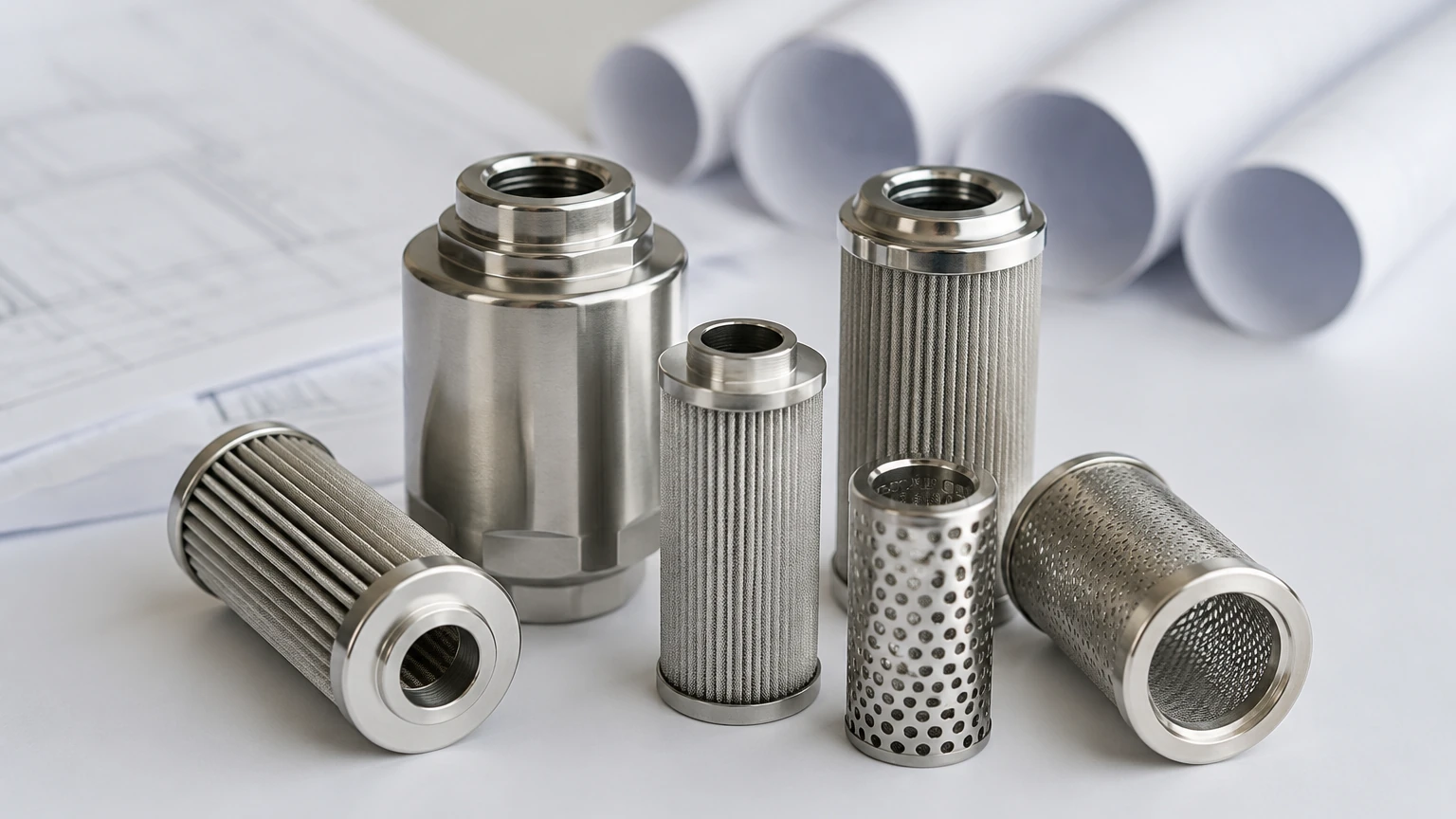
Customization and Integration in Hydraulic and Lubrication Systems
No two industrial systems are identical, and off-the-shelf filtration solutions often fall short of specific engineering requirements. Customization is a core strength of specialized manufacturers like Kaifil. When designing a custom full flow oil filter, several variables are tailored to the application:
* Micron Rating Adjustment: Depending on the sensitivity of the downstream components (e.g., servo valves vs. heavy-duty gears), the mesh size can be adjusted from 1 micron to several hundred microns.
* Housing and Connection Types: Custom filters can be designed with specific threading (NPT, BSPP, SAE) or flange connections to integrate seamlessly into existing machinery without the need for complex adapters.
* Structural Reinforcement: For high-pressure systems (exceeding 3000 PSI), the internal support tube and end caps are engineered to withstand extreme differential pressures without deformation.
* Integrated Sensors: Modern industrial filters can be equipped with differential pressure indicators or electronic sensors that provide real-time data to a central control system, allowing for predictive maintenance rather than reactive replacement.
For those seeking to optimize their systems with high-precision components, you can Review product options and application support to find solutions tailored to specific industrial demands.
Total Cost of Ownership and Maintenance Strategies
In a B2B context, the purchase price of a filter is only one component of the total cost of ownership (TCO). A comprehensive TCO analysis for full flow oil filters includes:
1. Replacement Frequency: Higher-quality filters with greater DHC reduce the labor costs and downtime associated with frequent filter changes.
2. Component Longevity: By maintaining a lower ISO cleanliness code, high-efficiency filters significantly extend the life of pumps, valves, and bearings, which are far more expensive than the filters themselves.
3. Oil Life Extension: Clean oil oxidizes more slowly and retains its additive package longer. Effective filtration can extend oil drain intervals, reducing fluid procurement and disposal costs.
4. Energy Efficiency: A filter with a lower stable pressure drop reduces the load on the pump, leading to measurable energy savings over thousands of operating hours.
Maintenance teams should implement a condition-based monitoring strategy. Instead of replacing filters on a fixed calendar schedule, using differential pressure gauges ensures that filters are replaced only when they have reached their capacity, maximizing the utility of each component while safeguarding the system.
Conclusion
Full flow oil filters are critical components that require careful engineering and selection. By moving beyond generic solutions and focusing on high-performance materials like stainless steel wire mesh, industrial operators can achieve superior protection for their machinery. Whether the application involves high-pressure hydraulics, chemical processing, or heavy-duty lubrication, the focus must remain on filtration efficiency, structural integrity, and long-term reliability. For specialized requirements and precision-engineered filtration components, consulting with a dedicated manufacturer ensures that the chosen solution meets the rigorous demands of modern industrial environments. To explore the full range of custom filtration capabilities, visit the Main Page for detailed technical specifications and engineering support.
