


Rotary Drum Filter
In the landscape of industrial liquid-solid separation, the rotary drum filter (RDF) stands as a cornerstone technology for continuous processing. Unlike batch filtration systems that require downtime for cake removal, the rotary drum filter operates on a cyclical basis, providing a steady output of filtrate and solids. For engineers and procurement professionals in industries such as chemical processing, pharmaceuticals, and large-scale food production, selecting the right filtration media and understanding the mechanical nuances of these systems is critical for optimizing throughput and minimizing the total cost of ownership.
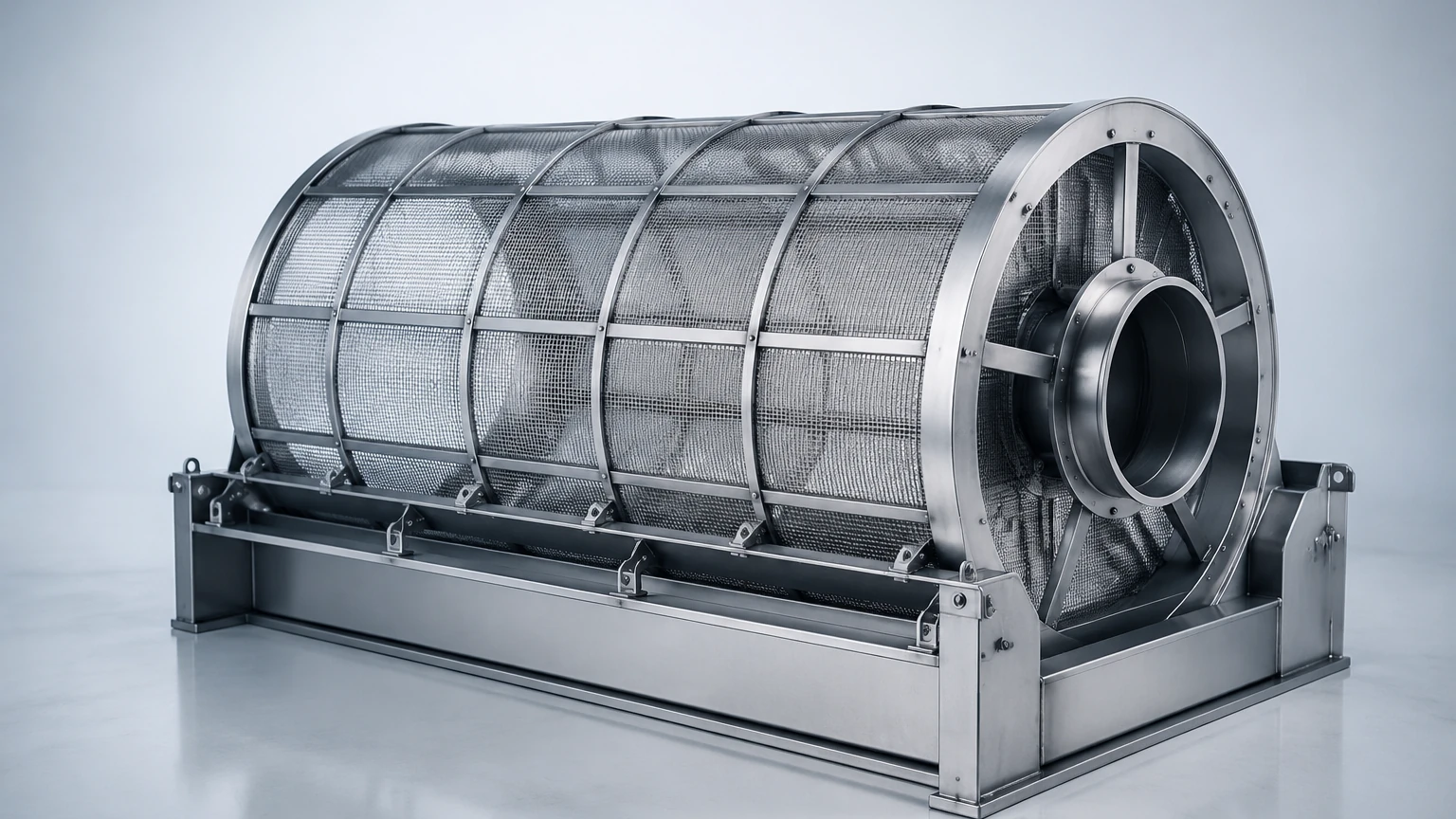
At its core, a rotary drum filter consists of a large horizontal drum covered with a filter medium. As the drum rotates through a trough containing the slurry, a pressure differential—typically created by a vacuum—draws the liquid through the medium while solids are captured on the surface. To ensure these systems perform reliably under high-stress industrial conditions, the choice of filter components, particularly the stainless steel wire mesh or sintered metal layers, becomes the deciding factor in operational longevity.
The Working Mechanism of Rotary Drum Filtration
The operation of a rotary drum filter is divided into distinct zones that occur simultaneously as the drum completes a 360-degree rotation. Understanding these stages is essential for troubleshooting performance issues and specifying custom filter components.
1. Cake Formation Zone
The drum is partially submerged in a slurry tank (the trough). As the vacuum is applied to the internal chambers of the drum, the liquid is pulled through the filter media. The suspended solids are trapped on the exterior of the drum, forming a "cake." The thickness of this cake is influenced by the drum's rotation speed, the concentration of the slurry, and the permeability of the filter mesh.
2. Washing and Drying Zone
As the drum emerges from the trough, the vacuum continues to pull air or wash liquid through the cake. In many chemical and food applications, a wash spray is applied to remove impurities from the solids. The subsequent drying phase uses the vacuum to pull air through the cake, reducing its moisture content before it reaches the discharge point.
3. Discharge Zone
Once the cake is sufficiently dry, it must be removed from the drum. Depending on the stickiness and consistency of the solids, manufacturers use different discharge methods, such as scraper blades, roller discharges, or string discharges. After the cake is removed, the filter medium may undergo a backwash or spray cleaning to clear any blinded pores before re-entering the slurry trough.
Engineering Considerations for Filter Media Selection
The filter medium is the most critical component of a rotary drum filter. While synthetic cloths were historically common, modern industrial applications increasingly demand stainless steel wire mesh and sintered metal components due to their superior mechanical strength and chemical resistance. When evaluating media for an RDF, engineers must consider several technical variables.
Material Compatibility
Industrial slurries often involve aggressive solvents, high temperatures, or extreme pH levels. Stainless steel 304 is a standard choice for general applications, but for environments involving chlorides or high acidity, 316L stainless steel is preferred due to its enhanced corrosion resistance. In highly specialized pharmaceutical or chemical environments, exotic alloys may be required to prevent metal leaching and ensure product purity.
Micron Rating and Filtration Efficiency
The micron rating defines the size of particles the filter can effectively capture. However, in a rotary drum filter, the "initial" filtration is performed by the mesh, while the "secondary" filtration is performed by the cake itself. A mesh that is too coarse may allow too many fines to pass into the filtrate during the start of the cycle, while a mesh that is too fine may blind (clog) rapidly, reducing the overall flow rate. Precision-engineered wire mesh allows for a controlled balance between flow capacity and particle retention.
Mechanical Durability and Tension
The filter media on a rotary drum is subject to constant tension and mechanical scraping. Synthetic fibers are prone to stretching, tearing, and thermal degradation. In contrast, stainless steel wire mesh provides the structural integrity needed to withstand the pressure differentials and the mechanical wear of the discharge scraper. This durability significantly extends the replacement cycle, reducing maintenance labor and downtime.
Types of Metal Filter Media for Rotary Drums
For high-performance rotary drum filters, the construction of the metal mesh is tailored to the specific rheology of the slurry. Common configurations include:
* Plain Weave Mesh: Offers a straightforward, high-open-area design suitable for high-flow applications with relatively large particle sizes.
* Dutch Weave Mesh: Utilizes a higher density of wires in one direction, creating a tortuous path for particles. This is ideal for fine filtration where high pressure is applied.
* Sintered Wire Mesh: This involves bonding multiple layers of wire mesh together through a heat-treatment process. Sintered mesh is exceptionally rigid and resistant to delamination, making it the preferred choice for heavy-duty industrial RDFs where the filter must maintain its shape under high vacuum loads.
Customization of these weaves allows for the optimization of the "cake release" characteristics. If the surface of the mesh is too rough, the scraper may not remove the cake cleanly; if it is too smooth, the cake may slip prematurely. Engineering the surface topography of the metal filter is a key service provided by specialized manufacturers like Kaifil.
Optimizing Performance: Flow Rates and Vacuum Levels
To achieve the highest efficiency in a rotary drum filter, engineers must calibrate the relationship between vacuum pressure and drum RPM.
* Vacuum Levels: A higher vacuum generally increases the filtration rate and results in a drier cake. However, excessive vacuum can cause the cake to become so compressed that it resists washing or becomes difficult to discharge. It can also lead to "blinding," where fine particles are forced deeply into the pores of the filter media.
* Drum Speed: Increasing the RPM of the drum results in a thinner cake. While a thinner cake is easier to dry, it may not provide the necessary depth to act as a secondary filter for fine particles. Conversely, a slower drum speed creates a thicker cake, which improves filtrate clarity but may increase the moisture content of the final solids.
By utilizing precision-manufactured stainless steel components, operators can maintain tighter tolerances on these variables. Metal media does not deform under vacuum as cloth does, ensuring that the flow characteristics remain consistent across the entire surface of the drum.
Maintenance, Cleaning, and Replacement Cycles
One of the primary advantages of utilizing stainless steel filtration solutions in rotary drum filters is the ease of cleaning. In many industries, Clean-in-Place (CIP) systems are used to maintain hygiene and performance. Stainless steel mesh can withstand high-pressure water jets, steam sterilization, and aggressive chemical cleaning agents that would destroy synthetic media.
Identifying the Need for Replacement
Engineers should monitor the following indicators to determine when the filter media requires replacement:
1. Increased Pressure Drop: If the vacuum required to maintain a specific flow rate increases significantly, it indicates permanent blinding of the media.
2. Filtrate Turbidity: A sudden increase in the number of solids in the filtrate suggests a breach or tear in the mesh.
3. Mechanical Deformation: Any sagging or bulging of the mesh can lead to uneven cake formation and potential damage to the scraper assembly.
Because the total cost of ownership includes not just the price of the part but also the cost of installation and lost production, investing in high-quality, custom-engineered metal filters often proves more economical over the lifecycle of the equipment.
Why Customization Matters for Industrial Filtration
No two industrial slurries are identical. Factors such as particle shape, fluid viscosity, and temperature vary widely between a wastewater treatment plant and a chemical refinery. Off-the-shelf filtration solutions often fail to address these specific nuances, leading to sub-optimal performance.
Customization allows for the selection of specific wire diameters, weave patterns, and support structures that match the exact requirements of the application. For instance, a rotary drum filter processing abrasive minerals requires a different mesh hardness and weave than one processing delicate pharmaceutical crystals. Working with a manufacturer that understands these engineering trade-offs is essential for achieving a reliable filtration process.
For technical professionals looking to optimize their filtration systems, it is important to consult with experts who can provide tailored advice on material selection and component design. To explore the full range of custom stainless steel filtration solutions and technical support available for industrial applications, you can visit the Main Page for detailed product specifications and engineering guidance.
Conclusion
The rotary drum filter remains a vital tool for continuous industrial separation, but its efficiency is fundamentally limited by the quality of its filter media. By moving toward stainless steel wire mesh and sintered metal components, industrial facilities can achieve greater durability, better chemical resistance, and more consistent filtration results. Whether you are designing a new system or looking to upgrade an existing RDF, focusing on the technical specifications of the filtration media—including material grade, weave type, and mechanical support—will ensure long-term operational success and reduced maintenance overhead.
