


Screening of Wastewater
In industrial and municipal treatment processes, the screening of wastewater serves as the critical first line of defense. This mechanical filtration process is designed to remove large solids, fibrous materials, and particulate matter that could otherwise damage downstream equipment, obstruct piping, or compromise the efficiency of biological and chemical treatment stages. For engineers and facility managers, selecting the appropriate screening technology is not merely a matter of compliance but a strategic decision that affects the entire lifecycle and operational cost of the treatment plant.
Effective screening of wastewater requires a deep understanding of the physical characteristics of the influent, the required filtration accuracy, and the structural integrity of the filter media. As industrial processes become more complex, particularly in the chemical, pharmaceutical, and food and beverage sectors, the demand for high-performance, durable filtration components like those found on the Main Page of specialized manufacturers has increased significantly.
The Role of Primary Screening in Industrial Wastewater Treatment
The primary objective of screening is the physical separation of solids from the liquid phase. In an industrial context, wastewater often contains a diverse array of contaminants, ranging from large debris to fine suspended solids. Without an efficient screening system, these materials can cause "ragging" in pumps, clog heat exchangers, and settle in aeration tanks, leading to expensive downtime and manual cleaning requirements.
Screening is typically categorized by the size of the openings in the filter media. Coarse screening generally targets particles larger than 6mm, while fine screening addresses particles between 0.5mm and 6mm. For specialized industrial applications requiring high precision, micro-screening can target particles as small as 10 to 100 microns. The choice between these stages depends on the sensitivity of the downstream processes. For example, membrane bioreactors (MBR) require exceptionally fine pre-screening to prevent membrane fouling and mechanical damage.
Technical Classification of Screening Equipment
Industrial screening equipment is classified based on its mechanical design and the method used to clean the filter surface. Understanding these classifications is essential for specifying the right component for a given flow rate and solids loading.
Bar Screens and Trash Racks
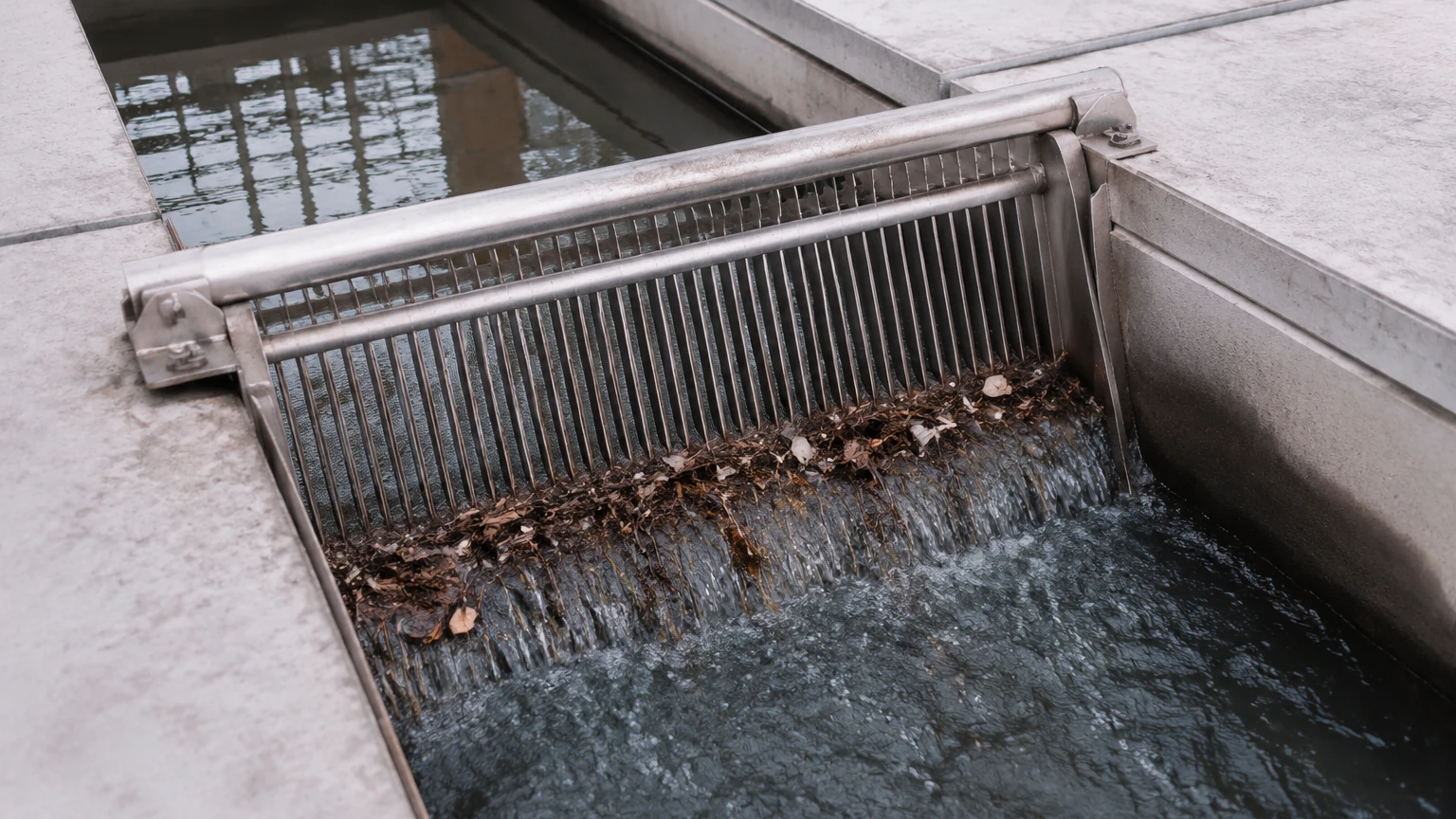
Used primarily for coarse screening, these consist of parallel bars spaced at specific intervals. They are effective for removing large debris but are insufficient for the fine particulate matter often found in process wastewater. They are usually the first stage in a multi-stage filtration system.
Wire Mesh and Perforated Plate Screens
For finer filtration, stainless steel wire mesh or perforated plates are employed. These media provide a precise aperture size, ensuring that all particles above a specific micron rating are captured. Stainless steel wire mesh is particularly valued for its high open area ratio, which allows for high flow rates with minimal initial pressure drop.
Rotary Drum Screens
In high-volume industrial applications, rotary drum screens provide continuous operation. As the drum rotates, the wastewater passes through the mesh, and the captured solids are conveyed to a discharge point. This design is highly effective for the screening of wastewater in food processing, where large volumes of organic solids must be removed quickly to prevent decomposition and odor issues.
Material Selection and Engineering Durability
The environment within a wastewater treatment system is often chemically aggressive and physically demanding. Therefore, the material used for the screening media is a primary factor in determining the system's longevity. Stainless steel is the industry standard for precision screening due to its mechanical strength and resistance to various forms of corrosion.
SS304 vs. SS316L
While SS304 is suitable for many general-purpose applications, SS316L is frequently specified for the screening of wastewater in environments containing high chloride levels or acidic/alkaline cleaning agents. The addition of molybdenum in SS316L provides superior resistance to pitting and crevice corrosion. In pharmaceutical and chemical processing, where the effluent may contain aggressive solvents or reagents, the use of high-grade stainless steel ensures that the filter media does not degrade or contaminate the process stream.
Mechanical Strength and Pressure Resistance
Unlike polymer-based filters, stainless steel filter cartridges and mesh screens can withstand significant differential pressures. This is crucial during peak flow events or when solids loading increases unexpectedly. A robust metal filter maintains its pore geometry under pressure, ensuring consistent filtration accuracy throughout its service life.
Optimizing Filtration Efficiency and Flow Dynamics
When designing a system for the screening of wastewater, engineers must balance filtration fineness with hydraulic capacity. A finer screen will capture more solids but will also result in a higher pressure drop (head loss) and require more frequent cleaning.
Calculating Head Loss
Head loss is the reduction in total head (pressure) of the fluid as it moves through the screen. It is a function of the screen's open area, the velocity of the fluid, and the degree of blinding (clogging). Engineers use the Bernoulli equation and specific discharge coefficients to predict head loss. Minimizing this loss is essential for reducing the energy consumption of pumps within the system.
Effective Surface Area
The effective surface area of a screen is the total area available for fluid passage. By utilizing pleated stainless steel filter elements or sophisticated weave patterns, manufacturers can significantly increase the surface area within a compact footprint. This allows for higher flow rates and longer intervals between cleaning cycles, directly impacting the total cost of ownership.
Industry-Specific Challenges in Wastewater Screening
Different industries present unique challenges that dictate the design of the screening system. A "one-size-fits-all" approach rarely succeeds in industrial wastewater management.
Food and Beverage Sector
Wastewater from food processing often contains high levels of fats, oils, and grease (FOG), along with organic solids like peels, seeds, and fibers. The screening of wastewater in this sector requires media that can be easily cleaned using Hot Water or Clean-in-Place (CIP) systems. Stainless steel mesh is ideal here because it can withstand high-temperature sterilization without losing structural integrity.
Chemical and Petrochemical Industry
In these environments, the primary concern is chemical compatibility. The screening media must resist a wide range of pH levels and temperatures. Precision metal filter components are often used to recover valuable catalysts or to remove hazardous particulates before the water is treated for reuse or discharge.
Pharmaceutical Manufacturing
Filtration in the pharmaceutical industry demands the highest levels of precision and hygiene. Screens must be free of any shedding fibers and must be capable of removing fine particulates that could interfere with sensitive downstream purification steps. The use of electropolished stainless steel surfaces can further reduce the risk of bacterial growth and facilitate easier cleaning.
Maintenance Protocols and Cleaning Methods
The longevity of a screening system depends heavily on the effectiveness of its cleaning mechanism. In the screening of wastewater, the accumulation of solids on the screen surface—known as a "filter cake"—will eventually lead to blinding if not managed.
Backwashing and Ultrasonic Cleaning
Stainless steel filters are particularly well-suited for backwashing, where the flow of fluid is reversed to dislodge captured particles. For stubborn contaminants or fine mesh screens, ultrasonic cleaning can be used to restore the filter to its original permeability. This ability to be cleaned and reused multiple times makes stainless steel a more sustainable and cost-effective choice than disposable synthetic filters.
Inspection and Replacement Cycles
Regular inspection of the screen media is necessary to check for signs of mechanical wear, such as wire displacement or fatigue cracks. In high-load industrial applications, establishing a proactive replacement cycle based on pressure drop trends can prevent catastrophic failure and ensure continuous operation. Reliable manufacturers provide technical data on the expected lifecycle of their components under specific operating conditions.
Selection Criteria for Purchasing Industrial Filters
When sourcing components for the screening of wastewater, purchasing teams and engineers should confirm several key parameters with their suppliers to ensure the product meets the application's demands:
1. Filtration Accuracy (Micron Rating): Define the absolute or nominal rating required to protect downstream equipment.
2. Flow Rate and Pressure Drop: Ensure the screen can handle the maximum expected flow without exceeding the system's pressure limits.
3. Chemical Compatibility: Verify that the alloy (e.g., SS304, SS316, or exotic alloys) is resistant to the specific chemicals in the wastewater.
4. Structural Design: Consider the need for reinforced cores or outer shrouds if the filter will be subjected to high differential pressures or mechanical stress.
5. Customization Options: In many industrial retrofits, standard sizes may not fit. Working with a manufacturer that offers custom designs for wire mesh filters and cartridges is often necessary to achieve optimal performance.
By focusing on these technical details, organizations can implement a wastewater screening strategy that minimizes maintenance, protects capital equipment, and ensures environmental compliance. High-quality filtration components are an investment in the reliability and efficiency of the entire water treatment infrastructure.
