


Top Industrial Dust Collector
In modern manufacturing, the implementation of a top industrial dust collector is a critical engineering requirement for maintaining air quality, ensuring regulatory compliance, and protecting sensitive machinery. Industrial dust collection is not merely an environmental consideration; it is a fundamental component of process engineering that impacts the efficiency of chemical processing, pharmaceutical production, and food manufacturing. For technical professionals tasked with selecting or designing these systems, understanding the interplay between filtration media, airflow dynamics, and material durability is essential to achieving long-term operational success.
Selecting a high-performance system requires a deep dive into the technical specifications that define a top industrial dust collector. This guide examines the engineering principles, material considerations, and evaluation criteria necessary for engineers and purchasing teams to make informed decisions regarding industrial filtration infrastructure.
Understanding the Engineering Behind Industrial Dust Collection
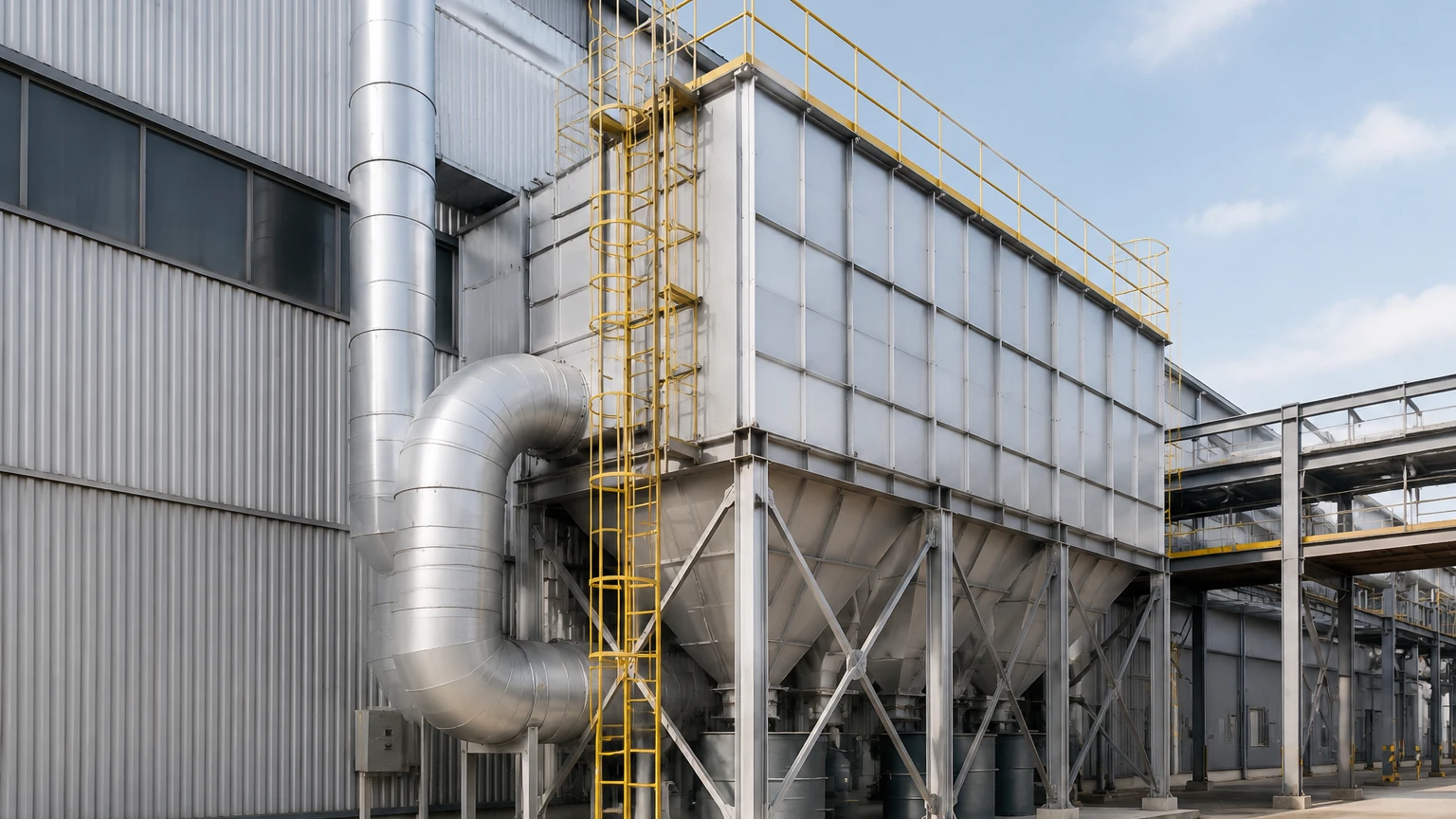
A dust collector is a complex system designed to handle high volumes of dust-laden air, separating particulate matter from the gas stream and discharging cleaned air. The performance of a top industrial dust collector is primarily determined by its ability to maintain a consistent pressure drop while achieving high filtration efficiency.
The Mechanics of Filtration
Industrial filters utilize several physical mechanisms to capture particles:
1. Inertial Impaction: Occurs when large particles, unable to follow the curving streamlines of the gas flow, collide with the filter fibers.
2. Interception: Happens when a particle follows a streamline but comes within one particle radius of a fiber, making contact and becoming attached.
3. Diffusion: Affects the smallest particles (typically under 0.1 microns), which move erratically due to Brownian motion, eventually hitting a filter fiber.
In high-demand environments, the choice of the primary filter element—often a cartridge or a bag—is the most significant factor in system performance. While synthetic fabrics are common, demanding industrial applications often require the structural integrity of metal filtration components. For those seeking technical specifications on these specialized components, the Main Page of leading manufacturers like Kaifil offers detailed insights into stainless steel filter designs.
Key Performance Indicators for High-Efficiency Systems
When evaluating a top industrial dust collector, engineers must look beyond the initial purchase price and focus on technical KPIs that dictate the system's effectiveness over its lifecycle.
Air-to-Cloth Ratio
The air-to-cloth (A/C) ratio, or filtration velocity, is the ratio of the air volume entering the collector (CFM) to the total square footage of the filter media. A lower A/C ratio generally leads to higher efficiency and longer filter life, as it reduces the velocity at which particles strike the media, preventing premature wear and deep-seated clogging.
Pressure Drop and Energy Consumption
The differential pressure across the filter media indicates how much energy is required to pull air through the system. A top industrial dust collector utilizes advanced cleaning mechanisms, such as pulse-jet cleaning, to keep the pressure drop within an optimal range. High pressure drop leads to increased energy costs and can signal that the filter media is blinded or reaching the end of its service life.
Micron Rating and Efficiency
Filtration efficiency is often measured by the Minimum Efficiency Reporting Value (MERV) or specific micron ratings. In industries like pharmaceuticals, capturing sub-micron particles is non-negotiable. Engineers must verify that the filter media is rated for the specific particle size distribution of their process dust.
Material Selection: Why Stainless Steel Components Matter
While many standard dust collectors use polyester or cellulose filters, "top" performance in extreme environments often necessitates stainless steel wire mesh or sintered metal cartridges. Kaifil specializes in these high-durability solutions, which are essential when the following conditions are present:
* High Temperatures: Synthetic filters often fail or degrade at temperatures exceeding 250°F (121°C). Stainless steel components can withstand significantly higher thermal loads without losing structural integrity.
* Corrosive Environments: In chemical processing, the presence of acidic or alkaline vapors can rapidly dissolve standard filter media. Using 304 or 316L stainless steel provides the necessary chemical resistance.
* Hygienic Requirements: In food and beverage or pharmaceutical applications, filters must be cleanable and resistant to bacterial growth. Stainless steel wire mesh filters are non-shedding and can be sterilized, making them a staple in high-purity systems.
Customized metal filtration components allow for precise control over pore size and permeability, ensuring that the dust collector operates at peak efficiency even under harsh conditions.
Evaluating Filtration Media and Structural Integrity
The heart of any top industrial dust collector is the filter element. Engineers must choose between various structures based on the nature of the dust and the cleaning method of the collector.
Pleated vs. Cylindrical Cartridges
Pleated cartridges offer a much larger surface area within a compact footprint, which is ideal for reducing the A/C ratio in space-constrained facilities. However, the pleat geometry must be carefully engineered; if pleats are too tight, dust can become bridged, rendering the cleaning system ineffective. Stainless steel pleated cartridges provide the benefit of high surface area combined with the rigidity required to withstand high-pressure pulse-jet cleaning.
Wire Mesh and Sintered Metal
For heavy-duty industrial applications, wire mesh filters offer exceptional durability. Sintered metal filters, created by bonding multiple layers of wire mesh or metal powder through heat and pressure, provide a porous structure that is incredibly strong and capable of surface filtration. This allows for easier cake release during the cleaning cycle compared to depth-loading synthetic media.
Common Risks in Industrial Dust Collector Selection
Failure to account for specific process variables can lead to the selection of a system that underperforms or poses safety risks. When searching for a top industrial dust collector, engineers should avoid these common pitfalls:
1. Underestimating Dust Characteristics: Is the dust hygroscopic (moisture-absorbing)? Is it abrasive? Is it explosive? Hygroscopic dust can turn into a "mud" on the filter surface if moisture is present, leading to total system failure. Abrasive dust requires heavy-duty housing and reinforced filter media.
2. Ignoring Combustible Dust Hazards: Many organic and metallic dusts are explosive. A top-tier system must include explosion venting, isolation valves, and grounding to meet NFPA or ATEX standards.
3. Inadequate Airflow Calculations: If the duct velocity is too low, dust will settle in the pipes, creating a fire hazard and reducing suction at the source. If it is too high, it causes excessive wear on the ducts and filters.
Total Cost of Ownership and Maintenance Cycles
The true cost of a top industrial dust collector is not the capital expenditure but the Total Cost of Ownership (TCO). This includes energy consumption, compressed air usage for cleaning, replacement filter costs, and downtime for maintenance.
The Advantage of Cleanable Metal Filters
One of the primary ways to reduce TCO is through the use of cleanable stainless steel filter cartridges. Unlike disposable synthetic filters that must be replaced and landfilled, metal filters can often be cleaned through ultrasonic baths or chemical cleaning and returned to service. This reduces waste and long-term procurement costs.
Monitoring and Predictive Maintenance
Modern industrial dust collectors are increasingly equipped with sensors to monitor differential pressure, airflow, and even particulate emissions in the exhaust stack. By tracking these metrics, maintenance teams can move from reactive to predictive maintenance, replacing or cleaning components only when necessary, thus optimizing the lifespan of the equipment.
Conclusion: Selecting the Right Filtration Partner
Identifying a top industrial dust collector requires a balance of mechanical engineering, material science, and operational strategy. Whether the application involves high-temperature gas filtration in a chemical plant or fine powder recovery in a pharmaceutical facility, the reliability of the system hinges on the quality of its filtration components.
Engineers should seek partners who offer customization and technical support rather than off-the-shelf solutions. By focusing on high-quality materials like stainless steel and ensuring that the system design matches the specific dust characteristics of the process, facilities can achieve superior air quality and operational longevity. For more information on custom filtration solutions and engineering support, visiting the Main Page is a recommended next step for procurement and engineering teams looking to optimize their industrial dust collection infrastructure.
