


Heavy Gauge Woven Wire Mesh: Engineering Specifications and Industrial Applications
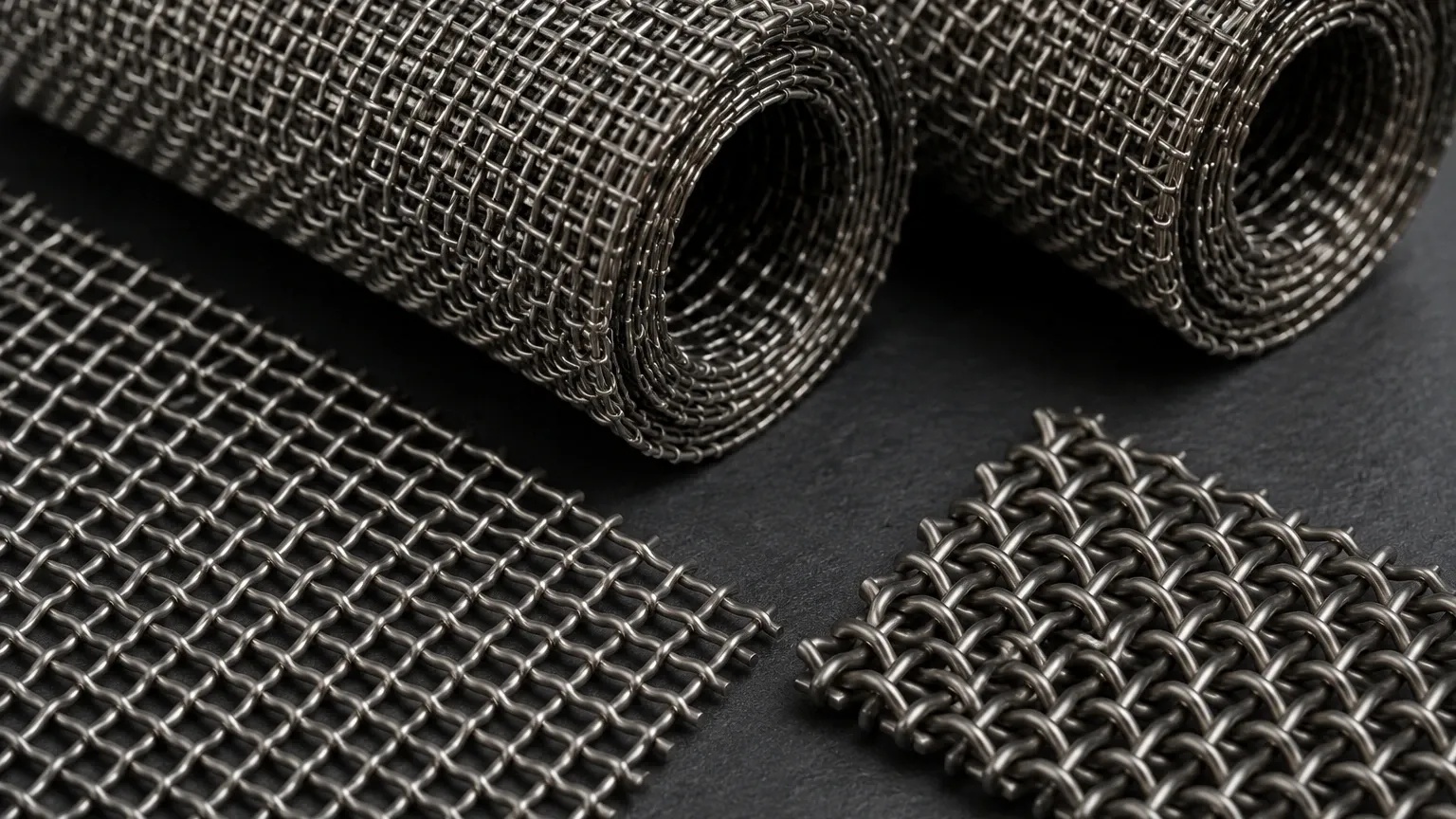
In industrial filtration and material separation, the structural integrity of the media is often as critical as the filtration accuracy itself. Heavy gauge woven wire mesh represents a specific category of industrial fabric where wire diameter is maximized relative to the aperture size to provide superior mechanical strength, impact resistance, and longevity. Unlike fine meshes used for delicate laboratory sieving, heavy gauge variants are engineered to withstand high-pressure differentials, abrasive materials, and harsh chemical environments.
For engineers and procurement specialists, selecting the correct heavy gauge woven wire mesh requires a balance between flow dynamics and structural durability. This guide examines the technical parameters, material considerations, and engineering criteria essential for integrating these components into industrial systems.
Technical Characteristics of Heavy Gauge Woven Wire Mesh
The term "heavy gauge" typically refers to woven wire mesh produced with wire diameters ranging from 0.5mm to over 2.0mm, though specific industrial standards vary by application. The primary distinction of this mesh type is its high mass-per-square-meter and its ability to maintain dimensional stability under significant loads.
Wire Diameter and Aperture Correlation
In standard Woven Wire Mesh, the relationship between wire diameter and the opening (aperture) determines the "Open Area" percentage. In heavy gauge configurations, the wire diameter is often significantly larger than that found in standard commercial grades. This results in a lower percentage of open area but a much higher resistance to mechanical deformation. For instance, a mesh with a 1.0mm wire diameter and a 2.0mm aperture provides a robust screening surface capable of handling heavy aggregate or high-viscosity fluids without the risk of wire displacement.
Weave Styles for Heavy Gauges
While various weave patterns exist, heavy gauge materials most commonly utilize the following:
* Plain Weave: The most straightforward construction where each warp wire crosses over and under each weft wire. In heavy gauges, this provides the most consistent aperture geometry.
* Intermediate Crimp: Often used when the aperture is large relative to the wire diameter. The wires are pre-crimped with extra corrugations between the intersection points to lock the wires in place, preventing shifting under vibration.
* Lock Crimp: A variation of the crimping process where the wires are notched at the intersections, providing a flat surface on one side and ensuring maximum stability for heavy-duty sifting.
Material Selection and Metallurgical Considerations
The performance of heavy gauge woven wire mesh is heavily dependent on the alloy selected. Because these meshes are often used in permanent or semi-permanent installations, corrosion resistance and thermal stability are paramount.
Stainless Steel 304 vs. 316L
Stainless steel is the industry standard for most heavy gauge applications due to its mechanical properties.
* Grade 304: Offers excellent strength and basic corrosion resistance. It is suitable for general industrial use, architectural applications, and food processing where high-chloride exposure is limited.
* Grade 316L: Contains molybdenum, which provides superior resistance to pitting and crevice corrosion in chloride-rich environments. For chemical processing, marine applications, or pharmaceutical filtration, 316L is the preferred choice to ensure the long-term integrity of the heavy gauge woven wire mesh.
High-Temperature Alloys
In applications such as heat treatment furnace trays or high-temperature gas filtration, specialized alloys like Inconel or Monel may be utilized. These materials maintain their tensile strength at temperatures where standard stainless steels would undergo creep or rapid oxidation.
Engineering Metrics: Open Area and Flow Dynamics
When specifying heavy gauge woven wire mesh for filtration or separation, engineers must calculate the impact of the mesh on system pressure. The "Percentage of Open Area" is the critical metric here, calculated by the formula:
Open Area % = (Aperture / (Aperture + Wire Diameter))² x 100
In heavy gauge applications, the open area is typically lower (often between 30% and 50%) than in fine mesh applications. This reduction in open area leads to a higher pressure drop across the media. Engineers must ensure that the pump or gravity-fed system can accommodate this resistance. However, the trade-off is a mesh that can support the weight of a filter cake or withstand the impact of falling particulate matter without sagging or tearing.
Industrial Applications of Heavy Gauge Woven Wire Mesh
Due to its robust nature, heavy gauge mesh is utilized in sectors where equipment downtime is costly and environmental conditions are demanding.
1. Chemical and Petrochemical Processing
In large-scale chemical reactors, heavy gauge mesh serves as a support grid for catalyst beds or finer filtration layers. It must resist the corrosive nature of the chemicals while supporting tons of catalyst material. The heavy gauge ensures that the mesh does not deform under the weight, which would otherwise lead to uneven flow distribution (channeling) through the reactor.
2. Food and Beverage Industry
In food processing, particularly in industrial fryers or large-scale washing systems, heavy gauge stainless steel mesh is used for conveyor belts and vibratory screens. The mesh must be easy to clean (CIP – Clean In Place) and resistant to the organic acids found in food products. The use of 304 or 316L stainless steel ensures compliance with hygienic standards while providing the durability needed for 24/7 production cycles.
3. Mining and Aggregate Separation
Heavy gauge woven wire mesh is the primary media for vibrating screens used to size rocks, minerals, and ores. The mesh is subjected to constant high-frequency vibration and the abrasive impact of heavy materials. In these scenarios, the lock-crimp or intermediate-crimp styles are essential to maintain aperture accuracy over months of continuous use.
4. Water Treatment and Intake Screens
For municipal and industrial water intake, heavy gauge screens are used to prevent debris, fish, and large particulates from entering the treatment system. These screens are often submerged for years and must withstand the force of water currents and potential impact from floating debris.
Customization and OEM Integration
Standard off-the-shelf mesh often fails to meet the specific requirements of complex industrial machinery. Customization is a core component of successful filtration integration. Kaifil specializes in providing tailored solutions that go beyond simple mesh rolls.
* Edge Treatments: For heavy gauge mesh, edge finishing is vital for safety and installation. Options include welded edges, U-binding, or custom-machined flanges to ensure the mesh fits securely within a housing.
* Forming and Welding: Heavy gauge mesh can be rolled into cylinders for use in basket strainers or pleated (though limited by wire thickness) for increased surface area. Precision TIG or plasma welding is required to ensure the seams are as strong as the mesh itself.
* Layered Composites: In some high-pressure applications, a heavy gauge mesh is sintered or mechanically bonded to a finer mesh. The heavy gauge layer acts as the "drainage" or "support" layer, providing the structural backbone while the fine mesh handles the actual filtration.
Maintenance, Cleaning, and Replacement Cycles
One of the primary advantages of heavy gauge woven wire mesh is its cleanability. Unlike synthetic media or thin wire mesh, heavy gauge stainless steel can withstand aggressive cleaning protocols.
* Mechanical Cleaning: Brushing or high-pressure water jetting can be used to remove surface blinding without damaging the wire structure.
* Chemical Cleaning: Because of the high-grade alloys used, the mesh can be soaked in caustic or acidic cleaning solutions to dissolve organic or mineral buildup.
* Ultrasonic Cleaning: For meshes used in precision applications, ultrasonic baths can remove microscopic particles trapped within the weave intersections.
Replacement Cycles: The lifecycle of a heavy gauge mesh is significantly longer than that of standard mesh. However, engineers should monitor for "wire thinning" caused by abrasion or "stress corrosion cracking" in specific chemical environments. A scheduled inspection of the mesh's structural integrity can prevent catastrophic failure and unplanned system shutdowns.
Selection Criteria: Confirming Requirements Before Purchase
Before initiating a procurement request for heavy gauge woven wire mesh, technical teams should confirm the following parameters to ensure the solution is fit for purpose:
1. Micron/Aperture Requirement: What is the specific particle size that must be retained?
2. Mechanical Load: What is the maximum pressure differential or weight the mesh must support?
3. Chemical Compatibility: Will the mesh be exposed to acids, chlorides, or high temperatures?
4. Dimensional Tolerances: Are there specific requirements for the flatness or outer diameter of the mesh panel or component?
5. Regulatory Compliance: Does the application require FDA, 3A, or other material certifications?
By addressing these factors, engineers can select a mesh that optimizes both performance and total cost of ownership. For detailed specifications on plain, twill, and dutch woven wire mesh in SS304/316L — including rolls, cut mesh, and framed panels — technical teams can review product options and application support to find the exact configuration for their industrial needs.
Conclusion
Heavy gauge woven wire mesh is an essential component in the industrial toolkit, providing the necessary strength for the most demanding filtration and separation tasks. By understanding the relationship between wire diameter, weave style, and material properties, engineers can design systems that are not only efficient but also exceptionally durable. Whether used as a support structure in a chemical reactor or a primary screen in a mining operation, the correct heavy gauge mesh is a foundational element of industrial reliability.
