


How Is Woven Wire Mesh Made: A Technical Guide to Industrial Manufacturing
In industrial filtration and separation, the reliability of a system often depends on the precision of the media used. Woven wire mesh is a fundamental component across the chemical processing, pharmaceutical, and food and beverage sectors. For engineers and procurement specialists, understanding the complexities of how woven wire mesh is made is essential for selecting the right material for demanding environments.
The manufacturing process is a balance of mechanical engineering, material science, and rigorous quality control. From the initial selection of raw wire to the final finishing processes, every step influences the mesh's filtration accuracy, structural integrity, and resistance to corrosion. This guide provides a detailed technical overview of the production lifecycle of high-quality industrial wire mesh.
1. Material Selection and Wire Preparation
The process begins long before the wire reaches the loom. The performance of the final mesh is dictated by the chemical composition and physical properties of the raw wire. In industrial applications, stainless steel is the gold standard due to its durability and resistance to oxidation.
Grade Selection
Most industrial woven wire mesh is manufactured using SS304 or SS316L. SS304 provides excellent value for general industrial use, while SS316L, containing molybdenum, offers superior resistance to chlorides and pitting, making it the preferred choice for marine environments or chemical processing. For specialized applications, manufacturers may also use exotic alloys like Monel, Inconel, or Hastelloy.
Wire Drawing and Annealing
Raw wire is drawn through a series of tungsten carbide or diamond dies to achieve the precise diameter required for the specific mesh count. During this process, the wire undergoes work hardening. To ensure the wire is flexible enough for weaving without breaking, it must undergo annealing—a heat treatment process that involves heating the wire to a specific temperature and cooling it slowly to relieve internal stresses. This ensures the wire has the necessary tensile strength and elongation properties to withstand the mechanical stresses of the weaving loom.
2. The Mechanics of the Weaving Process
At its core, the production of Woven Wire Mesh is similar to textile weaving, but it requires significantly higher precision and specialized industrial looms capable of handling metallic materials.
Understanding Warp and Weft
In weaving terminology, there are two sets of wires:
* Warp Wires: These are the wires that run lengthwise through the loom. They are held under constant tension.
* Weft (or Shute) Wires: These are the transverse wires that are woven across the warp wires.
The Industrial Loom
Modern industrial looms are computer-controlled to ensure extreme accuracy in wire spacing. The process involves several key mechanical actions:
1. Shedding: The loom lifts specific warp wires to create an opening (the shed) through which the weft wire will pass.
2. Picking: The weft wire is inserted through the shed. In modern high-speed looms, this is often done using a rapier or a projectile system.
3. Beating-up: A reed pushes the newly inserted weft wire against the previously woven mesh to ensure a tight, consistent structure.
Maintaining uniform tension on both the warp and weft wires is critical. If the tension is inconsistent, the mesh may suffer from "wire migration," where the openings vary in size, compromising the filtration accuracy of the final product.
3. Common Weave Patterns and Their Applications
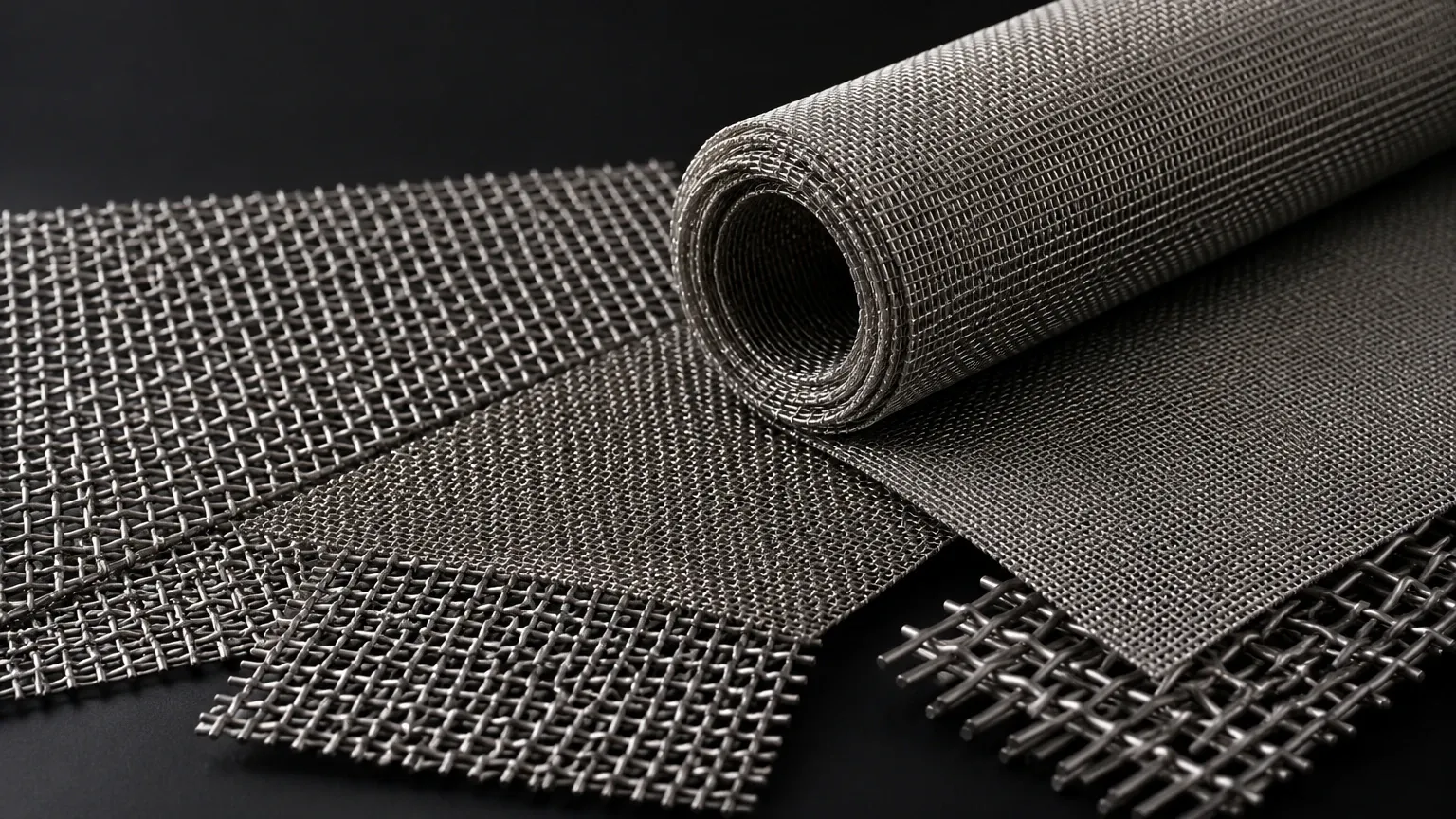
How is woven wire mesh made depends heavily on the intended weave pattern, which determines the mesh's pore size, strength, and flow characteristics. Engineers must choose a pattern based on the specific requirements of their filtration application.
Plain Weave
The most common and straightforward pattern, where each weft wire passes over one warp wire and under the next. This creates a square opening and is ideal for general-purpose filtration and screening where high flow rates are required.
Twill Weave
In a twill weave, each weft wire passes over and under two warp wires. This pattern allows for the use of heavier wires in a given mesh count, resulting in a stronger and more durable mesh. It is often used for fine filtration where the wire diameter would be too thick for a plain weave.
Dutch Weave (Plain and Twill)
Dutch weaves utilize different diameters for the warp and weft wires. The warp wires are typically heavier and spaced further apart, while the weft wires are thinner and woven tightly together. This creates a dense, robust mesh with no visible straight-through openings. Dutch weaves provide superior mechanical strength and are used for high-pressure filtration and precision micron ratings.
4. Post-Weaving Operations and Finishing
Once the weaving is complete, the mesh undergoes several secondary processes to enhance its performance and prepare it for industrial use.
Cleaning and Degreasing
Industrial weaving uses lubricants to reduce friction. These must be removed, especially for food-grade or pharmaceutical applications. Ultrasonic cleaning is frequently employed to ensure that all microscopic residues are removed from the intersections of the wires.
Calendering
Calendering involves passing the woven mesh through heavy, high-pressure rollers. This process flattens the knuckles (the points where wires cross), resulting in a smoother surface and a more consistent thickness. Calendering can also help lock the wires in place, reducing the risk of wire movement during high-pressure backwashing.
Heat Treatment and Sintering
For applications requiring extreme structural stability, the mesh may be sintered. Sintering involves heating the mesh in a vacuum furnace to a temperature just below the melting point, causing the wires to fuse at their contact points. This creates a rigid structure that cannot fray or migrate, which is essential for high-pressure hydraulic filters.
5. Quality Control and Technical Evaluation
For B2B buyers, the quality of the mesh is defined by its ability to meet specific technical tolerances. Manufacturers like Kaifil implement rigorous testing protocols to ensure every roll of mesh meets industrial standards.
Mesh Count and Aperture Verification
Using high-resolution digital microscopes, technicians verify the mesh count (the number of openings per linear inch) and the aperture size (the clear distance between wires). This ensures the mesh will perform exactly as specified in the filtration system.
Material Verification (PMI)
Positive Material Identification (PMI) testing using X-ray fluorescence (XRF) analyzers is performed to confirm the chemical composition of the stainless steel. This guarantees that the mesh supplied is indeed SS316L or the specified alloy, preventing premature failure due to corrosion.
Bubble Point Testing
For fine filtration mesh, bubble point testing is used to determine the largest pore size. By submerging the mesh in a liquid and measuring the pressure required for air to pass through, manufacturers can verify the micron rating of the filter media.
6. Engineering Considerations for Customization
Standard rolls of mesh are often just the starting point. Most industrial applications require some level of customization to fit specific machinery or process requirements.
Custom Fabrication
When sourcing mesh, engineers should consider whether the supplier can provide Plain, twill and dutch woven wire mesh in SS304/316L — rolls, cut mesh and framed panels. Send mesh count or micron target for a technical quote. Customization options often include:
* Slitting and Cutting: Precision cutting of mesh into specific widths or shapes (discs, rectangles).
* Framing and Edging: Adding U-shaped metal frames or spot-welded edges to provide structural support and prevent fraying.
* Multi-layer Lamination: Combining multiple layers of different mesh counts to create a composite filter media with both high flow and fine filtration capabilities.
Total Cost of Ownership (TCO)
While the initial price of the mesh is a factor, engineers should evaluate the total cost of ownership. High-quality manufacturing—characterized by consistent wire diameter and tight weaving tolerances—reduces the frequency of filter replacements and prevents downstream contamination, leading to significant long-term savings in maintenance and downtime.
Conclusion
The manufacturing of woven wire mesh is a sophisticated process that requires a deep understanding of metallurgy and mechanical precision. By understanding how is woven wire mesh made—from the selection of SS304/316L wire to the intricacies of Dutch weave patterns and post-weaving treatments—technical professionals can make more informed decisions when specifying filtration components.
Whether you are designing a new hydraulic system, upgrading a chemical processing plant, or maintaining food production equipment, the quality of the woven wire mesh is paramount. Partnering with a manufacturer that prioritizes material traceability, precision weaving, and rigorous quality control ensures that your filtration solutions will perform reliably in the most demanding industrial environments.
