


Getting Dairy Equipment with 3-a Sanitary Certification
In the dairy and food processing industries, hygiene is not merely a preference but a rigorous regulatory requirement. The complexity of dairy products—often containing fats, proteins, and sugars that can easily harbor microbial growth—demands equipment designed for total cleanability. When procurement teams and engineers look into getting dairy equipment with 3-a sanitary certification, they are seeking a guarantee that the machinery, including critical filtration components, meets the highest standards for public health and product safety.
3-A Sanitary Standards, Inc. (3-A SSI) is an independent, not-for-profit corporation dedicated to advancing hygienic equipment design. For manufacturers like Kaifil, adhering to these principles ensures that stainless steel filtration solutions can withstand the demanding cleaning cycles of a modern dairy plant while preventing contamination. This guide explores the technical nuances of 3-A certification, the engineering requirements for compliant equipment, and the factors that influence selection for dairy applications.
The Role of 3-A Sanitary Standards in Dairy Processing
3-A Sanitary Standards are recognized by regulatory agencies such as the FDA and USDA as the benchmark for hygienic design. These standards focus on the "cleanability" of equipment. In a dairy environment, bacteria can thrive in microscopic crevices, pits, or poorly finished welds. If a filter housing or a wire mesh element is not designed correctly, it can become a source of biofilm accumulation, leading to batch contamination and potential recalls.
Getting dairy equipment with 3-a sanitary certification provides a level of third-party verification that the equipment is designed to be easily cleaned and inspected. The certification covers everything from the materials used to the geometry of the components. For engineers, this simplifies the validation process during the installation of new processing lines, as the 3-A symbol indicates that the equipment has already undergone a rigorous design review by a Certified Conformance Evaluator (CCE).
Key Engineering Requirements for 3-A Compliant Filtration
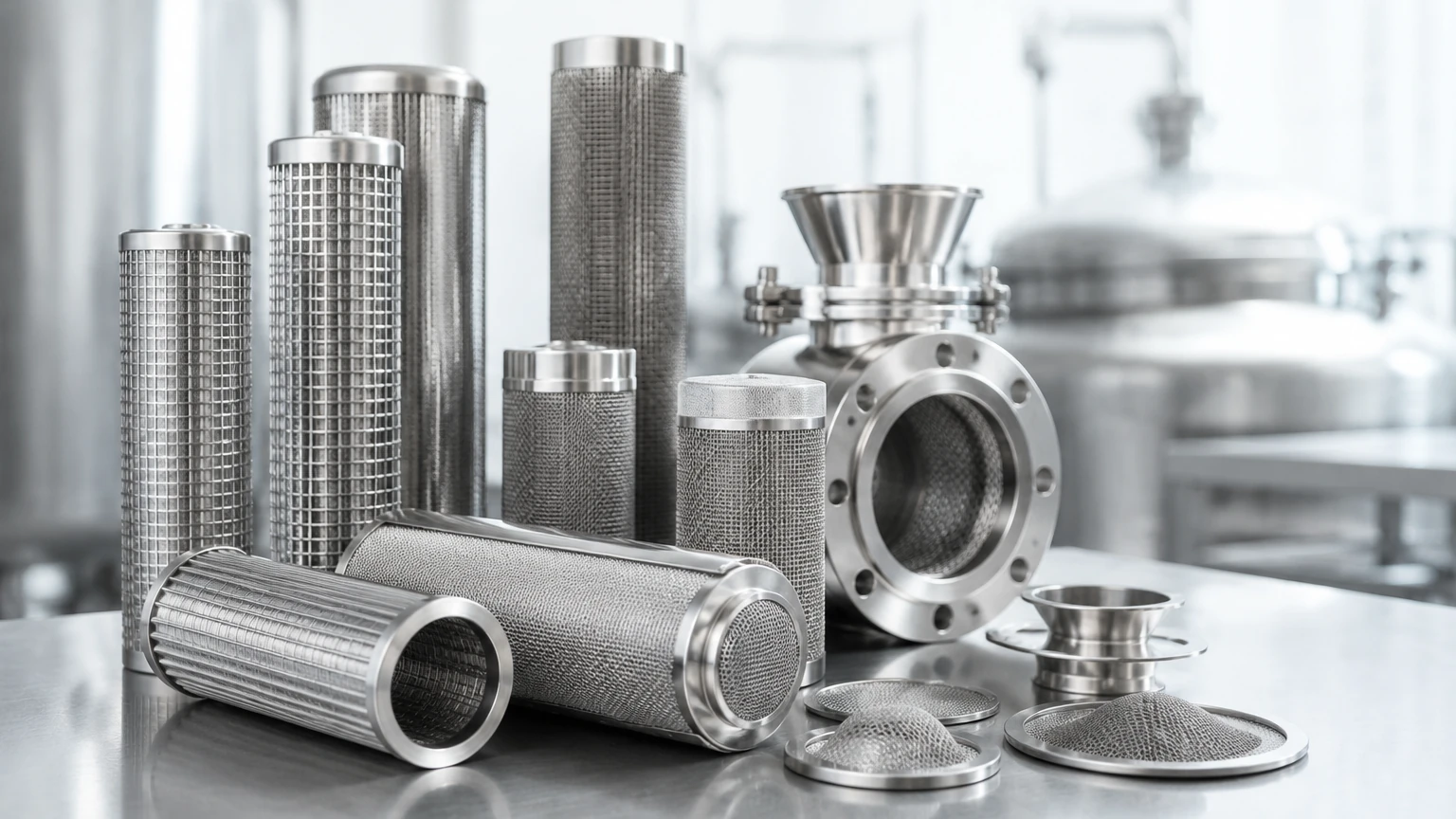
Filtration is a critical stage in dairy processing, used for everything from removing particulates in raw milk reception to fine polishing in whey processing. To meet 3-A standards, filtration components must adhere to specific engineering criteria:
1. Surface Finish and Roughness
One of the most critical aspects of 3-A compliance is the surface finish. For dairy applications, all product-contact surfaces must typically have a surface roughness (Ra) of 0.8 micrometers (32 micro-inches) or smoother. This is achieved through mechanical polishing or electropolishing. A smooth surface prevents milk solids from adhering to the metal and ensures that cleaning agents can reach every part of the surface during a Clean-in-Place (CIP) cycle.
2. Radius and Geometry
In 3-A design, sharp internal corners are strictly prohibited. All internal angles must have a minimum radius (usually 1/8 inch or 3.2 mm) to ensure that no "dead zones" exist where product can stagnate. For custom wire mesh filters and cartridges, this means the end caps and support structures must be designed with rounded transitions and smooth contours.
3. Self-Draining Capabilities
Equipment must be designed to be self-draining to prevent the pooling of product or cleaning solutions. In horizontal filter housings, this often requires specific outlet orientations or tilted mounting. If liquid remains in the system after a production run, it can lead to microbial growth or chemical contamination in the next batch.
Material Selection: Why 316L Stainless Steel is the Industry Standard
When getting dairy equipment with 3-a sanitary certification, material selection is non-negotiable. 3-A standards specify that product-contact surfaces must be made from AISI 300 series stainless steel or equivalent corrosion-resistant materials.
The Advantage of 316L
While 304 stainless steel is common in many industrial applications, 316L is the preferred choice for dairy filtration. The "L" stands for low carbon, which improves weldability and reduces the risk of intergranular corrosion at the weld sites. Furthermore, the addition of molybdenum in 316L provides superior resistance to chlorides, which are often found in the aggressive chemicals used for sanitation.
Non-Metal Components
It is important to remember that 3-A certification also applies to non-metal components such as gaskets, O-rings, and seals. These must be made from food-grade elastomers (like EPDM, FKM, or Silicone) that are resistant to the high temperatures and chemicals used in dairy processing without leaching harmful substances into the product.
Design for Cleanability: CIP and SIP Considerations
Modern dairy plants rely heavily on Clean-in-Place (CIP) and Sterilize-in-Place (SIP) systems. These processes allow equipment to be cleaned and sanitized without disassembly, significantly reducing downtime. However, for CIP to be effective, the equipment must be engineered to handle high-velocity fluid flow and thermal expansion.
CIP Effectiveness
In a CIP cycle, the filter must be able to withstand the pressure and flow of caustic and acid washes. If a filter cartridge has deep pleats or complex mesh layers, the engineering team must ensure that the flow patterns during CIP are sufficient to reach the innermost layers of the media. This is where Kaifil’s expertise in custom wire mesh design becomes vital, as we can optimize the mesh structure to balance filtration efficiency with cleanability.
SIP Durability
SIP involves the use of saturated steam at temperatures often exceeding 121°C (250°F). Filtration components must be robust enough to maintain their structural integrity and seal compression under these conditions. Getting dairy equipment with 3-a sanitary certification ensures that the mechanical design has been vetted for these extreme thermal cycles, preventing seal failure or bypass during production.
Verification and Documentation: Ensuring Compliance During Procurement
For purchasing managers, the process of getting dairy equipment with 3-a sanitary certification involves more than just checking a box. It requires a thorough review of the supplier’s documentation. A reputable manufacturer should be able to provide:
* Material Test Reports (MTRs): These documents prove the chemical composition of the stainless steel used in the filter’s construction.
* Surface Finish Certificates: Documentation confirming that the Ra values meet the 3-A requirement.
* Weld Maps and Procedures: For high-pressure applications, documentation of the welding process and the qualifications of the welders is essential.
* 3-A Symbol Authorization: A valid certificate from 3-A SSI showing that the specific equipment model is authorized to bear the 3-A symbol.
It is a common pitfall to assume that "sanitary-grade" or "food-grade" is synonymous with 3-A certified. While many products may use high-quality materials, they lack the third-party design verification that defines a 3-A compliant component. Engineers should always request the 3-A authorization number to verify the status on the 3-A SSI website.
Long-term Maintenance of Sanitary Filtration Systems
Even the best-designed 3-A certified equipment requires proper maintenance to remain compliant. Over time, the aggressive nature of dairy chemicals and the physical stress of pressure cycles can wear down components.
Inspection Cycles
Regular inspection of filter elements is necessary to check for signs of pitting, cracking, or mesh deformation. Any damage to the surface finish can create a harbor for bacteria. In dairy applications, it is often more cost-effective to replace filter cartridges on a scheduled basis rather than waiting for a failure that could lead to a contamination event.
Gasket Replacement
Elastomeric seals are the most common point of failure in sanitary systems. These should be replaced during routine maintenance intervals, as they can lose their elasticity and develop micro-cracks over time. Using the correct 3-A compliant replacement parts is essential to maintain the integrity of the entire system.
Conclusion: Making Informed Decisions in Dairy Filtration
Selecting the right filtration equipment is a balance between performance, durability, and hygiene. For those in the dairy industry, getting dairy equipment with 3-a sanitary certification is the most reliable way to ensure that these three factors are met. By focusing on 316L stainless steel, precision surface finishes, and designs that facilitate CIP/SIP, processors can protect their product quality and brand reputation.
As a specialist in custom stainless steel filtration, Kaifil provides the engineering expertise needed to develop filtration components that meet the most demanding industrial standards. Whether you are looking for custom wire mesh filters or precision-engineered cartridges, understanding the nuances of sanitary design is the first step toward an optimized processing line. For more information on our capabilities and to explore our full range of industrial filtration solutions, please visit our Main Page.
Download Getting Dairy Equipment with 3-a Sanitary Certification as a PDF
