


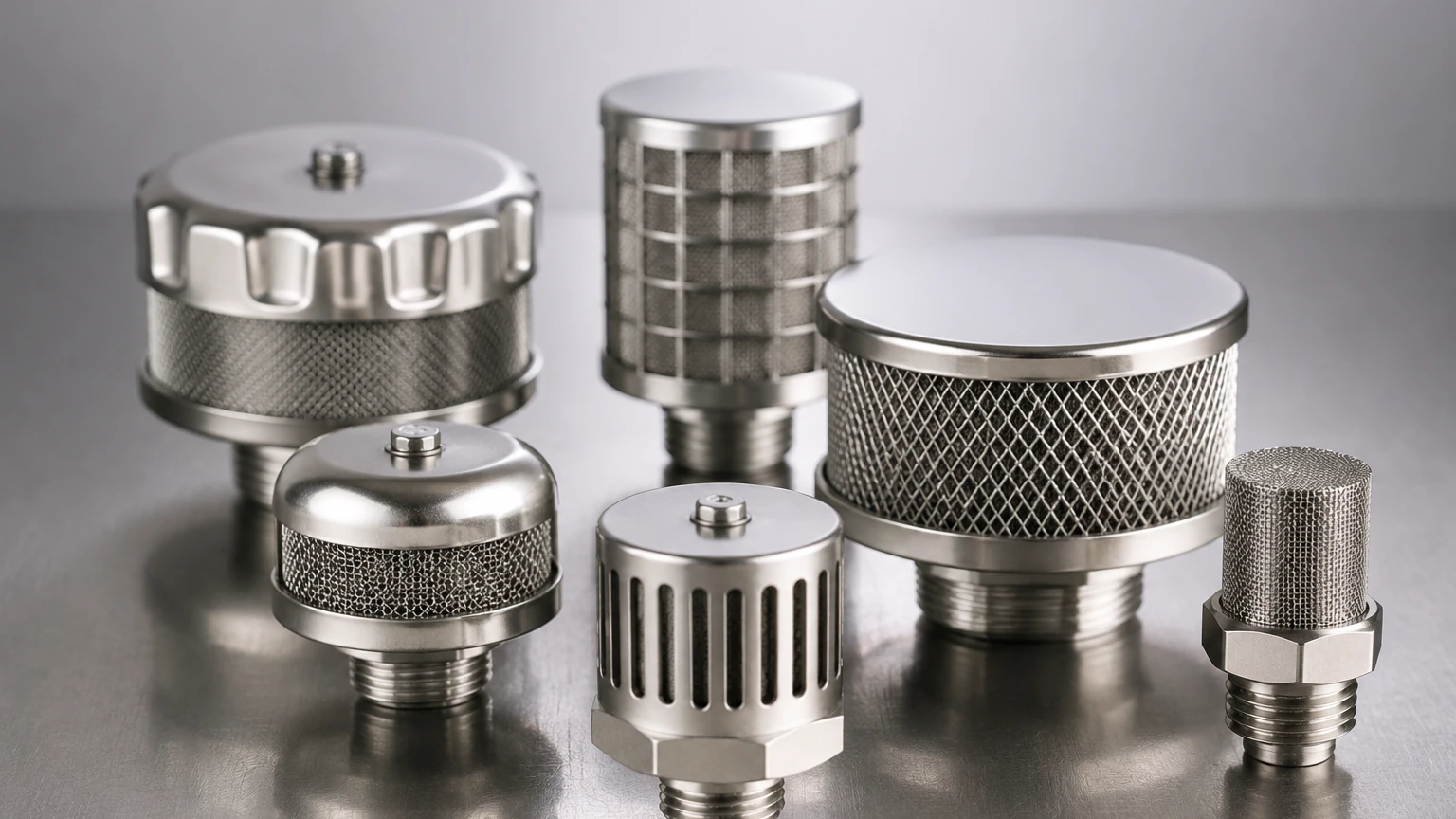
Breather Vent
In industrial fluid management and storage systems, the integrity of a closed system often depends on its ability to "breathe." A breather vent is a critical component designed to equalize pressure between the internal environment of a vessel—such as a hydraulic reservoir, gearbox, or chemical storage tank—and the surrounding atmosphere. While the primary function is pressure stabilization, the secondary, and perhaps more vital, function is the prevention of contamination ingress. For engineers and maintenance professionals, selecting the correct breather vent is not merely a matter of fitting a cap; it is a technical decision that impacts the longevity of equipment, the purity of fluids, and the safety of the entire operation.
At Kaifil, we specialize in the manufacturing of high-performance stainless steel filtration components, including precision-engineered breather vents designed for demanding industrial environments. Understanding the technical nuances of these components is essential for optimizing system performance and reducing the total cost of ownership.
The Functional Role of Breather Vents in Industrial Systems
Industrial systems are dynamic. As fluid levels rise and fall within a tank or reservoir, or as temperatures fluctuate, the volume of air above the fluid (the headspace) must change. Without a breather vent, these volume changes would create internal pressure or vacuum conditions. Excessive pressure can lead to seal failures, gasket leaks, and structural deformation of the tank. Conversely, a vacuum can cause tank implosion or cavitation in downstream pumps.
However, allowing air to move freely in and out of a system introduces the risk of contamination. Atmospheric air contains dust, moisture, and chemical vapors that can degrade hydraulic fluids, lubricants, and chemical products. A breather vent acts as a bidirectional filter. When the system "exhales," the vent allows air to escape safely. When the system "inhales," the vent filters out particulates and, in some specialized designs, moisture, before the air enters the headspace.
For systems operating in harsh environments—such as chemical processing plants, offshore platforms, or food production facilities—standard plastic or low-grade metal vents are often insufficient. This is where stainless steel breather vents provide the necessary durability and chemical resistance to maintain system integrity over long service cycles.
Engineering Specifications for Stainless Steel Breather Vents
The performance of a breather vent is determined by its material composition and the architecture of its internal filtration media. When specifying these components, engineers must consider several technical factors.
Material Selection: 304 vs. 316L Stainless Steel
Most industrial breather vents are constructed from either Grade 304 or Grade 316L stainless steel. While 304 provides excellent general corrosion resistance, 316L is preferred for environments involving chlorides or acidic vapors due to the addition of molybdenum. In pharmaceutical and food-grade applications, the non-reactive nature of stainless steel ensures that the vent itself does not become a source of contamination.
Filtration Media: Wire Mesh and Sintered Metal
The "heart" of the breather vent is the filter element. Kaifil utilizes advanced stainless steel wire mesh and sintered metal components to achieve precise filtration.
* Stainless Steel Wire Mesh: This media is ideal for high-flow applications where the primary goal is to stop larger particulates (typically 10 to 100 microns). It offers low pressure drop and is easily cleaned.
* Sintered Metal: For applications requiring finer filtration (down to 1 micron or less), sintered metal powder or fiber felt is used. These structures provide a tortuous path for contaminants, offering high efficiency and structural rigidity under pressure surges.
Micron Ratings and Efficiency
The micron rating of a breather vent must be balanced against the airflow requirements. A finer micron rating provides better protection but increases the resistance to airflow (pressure drop). Engineers must ensure that the vent can handle the maximum expected air exchange rate—often dictated by the maximum pump flow rate or rapid temperature shifts—without exceeding the tank's pressure limits.
Key Selection Criteria for Engineers
Selecting a breather vent requires a thorough analysis of the application's operating parameters. A mismatch between the vent's capabilities and the system's needs can lead to premature failure or inadequate protection.
1. Flow Capacity and Pressure Drop
The breather vent must be sized to accommodate the maximum displacement of air. If a pump removes fluid at 100 gallons per minute, the vent must allow 100 gallons per minute of air to enter the tank (approximately 13.37 cubic feet per minute) without creating a significant vacuum. Engineers should consult flow-versus-pressure-drop curves to ensure the vent is appropriately sized for both inhalation and exhalation cycles.
2. Environmental Compatibility
Consider the external environment. Is the vent exposed to salt spray, high humidity, or caustic wash-down chemicals? Stainless steel housings and elements are the standard for these conditions. Furthermore, if the system contains volatile organic compounds (VOCs) or hazardous chemicals, the breather vent may need to be integrated with a flame arrestor or a specialized vapor recovery system.
3. Connection Types and Installation
Breather vents are available with various mounting options, including NPT or BSP threaded connections, flanged mounts, or bayonet-style fittings. The connection must provide a leak-proof seal to ensure that all air exchange passes through the filter media rather than around it. In high-vibration environments, secure threaded connections are generally preferred over press-fit options.
4. Operating Temperature
Standard breather vents may use elastomeric seals (such as NBR or Viton) to ensure a tight fit. The operating temperature of the system and the ambient environment must fall within the temperature range of these seals. For extreme temperature applications, all-welded stainless steel designs eliminate the need for organic seals entirely.
Common Risks and Failure Modes
Even a well-engineered breather vent can fail if misapplied or neglected. Understanding common failure modes helps in developing robust maintenance protocols.
* Clogging and Blinding: In high-dust environments, the filter media can become saturated with particulates. This increases the pressure drop, potentially leading to tank deformation. Vents equipped with visual indicators or those integrated into a differential pressure monitoring system can mitigate this risk.
* Moisture Saturation: While stainless steel mesh vents stop particulates, they do not inherently stop water vapor unless treated or combined with desiccant media. In high-humidity areas, moisture ingress can lead to oil oxidation and microbial growth in the fluid.
* Chemical Incompatibility: While the stainless steel body is resilient, the internal filter media or seals may react with specific chemical vapors. For instance, certain concentrated acids can attack lower grades of stainless steel or specific polymers used in the assembly.
* Improper Sizing: Under-sizing a breather vent is a common error. If the vent cannot keep up with the air displacement, the resulting pressure or vacuum can cause catastrophic mechanical failure of the reservoir or tank seals.
Customization and OEM Solutions
Standard off-the-shelf breather vents do not always meet the specific requirements of specialized industrial equipment. Customization is often necessary to address unique spatial constraints, extreme flow rates, or specific filtration efficiencies.
Kaifil works closely with global customers to develop tailored filtration solutions. Whether you require a specific thread pattern, a unique housing geometry, or a specialized multi-layer sintered mesh element, our engineering team provides the technical support needed to ensure the component integrates seamlessly into your system. For more information on our manufacturing capabilities and to explore our full range of stainless steel filtration products, please visit our Main Page.
Custom OEM solutions allow for the integration of additional features, such as:
* Internal splash guards to prevent fluid from reaching the filter media during transport or high-agitation processes.
* Integrated check valves to control the direction of airflow or maintain a slight positive pressure within the tank.
* Specialized coatings or surface finishes for ultra-pure or highly corrosive applications.
Maintenance and Replacement Cycles
A breather vent is a consumable component, though stainless steel versions offer significantly longer service lives than plastic alternatives. Establishing a clear maintenance schedule is vital for system reliability.
Visual Inspection
Regular inspections should check for physical damage to the housing, signs of heavy particulate buildup on the mesh, and the integrity of the mounting connection. In food and beverage applications, inspections also focus on cleanliness and the absence of biological growth.
Cleaning vs. Replacement
One of the primary advantages of stainless steel wire mesh breather vents is that they are often cleanable. Depending on the contaminant, ultrasonic cleaning or backflushing with a compatible solvent can restore the filter media to near-original performance. However, sintered metal elements or those used in critical pharmaceutical applications are often treated as replaceable items to ensure absolute consistency in filtration efficiency.
Monitoring Pressure Drop
In large-scale industrial systems, installing a differential pressure gauge across the breather vent allows for condition-based maintenance. When the pressure drop reaches a pre-defined threshold, the vent can be serviced or replaced before it impacts system operation.
Conclusion
The humble breather vent plays a disproportionately large role in the health of industrial systems. By managing pressure and blocking contaminants, it protects expensive machinery and maintains product quality. For engineers, the transition to high-quality stainless steel vents represents a commitment to durability and precision. By focusing on flow capacity, material compatibility, and proper micron ratings, organizations can significantly reduce downtime and maintenance costs.
Kaifil remains dedicated to providing the engineering expertise and manufacturing precision required to solve complex filtration challenges. From standard components to fully customized OEM designs, our focus is on delivering reliability in every breath your system takes. To review our product options and application support, visit the Main Page and connect with our technical team today.
