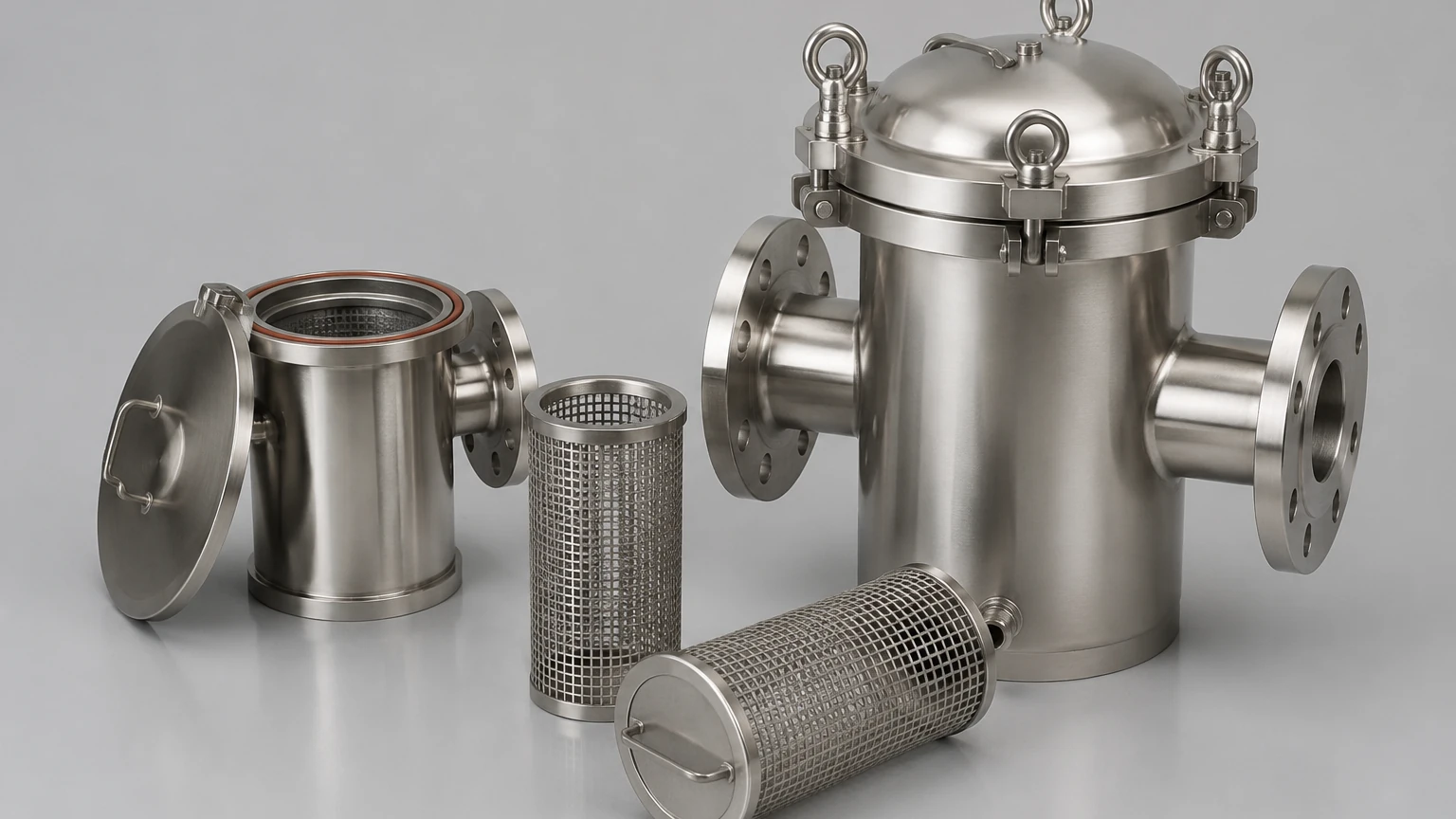
Inline Basket Strainer
In industrial fluid processing, the protection of downstream equipment such as pumps, valves, and heat exchangers is paramount. The inline basket strainer serves as a critical mechanical component designed to remove unwanted solids from liquid streams. Unlike simpler filtration methods, these strainers are engineered for high-capacity debris collection and ease of maintenance, making them indispensable in sectors ranging from chemical processing to food and beverage production. For engineers and procurement teams, selecting the right filtration hardware requires a deep understanding of flow dynamics, material compatibility, and the specific structural requirements of the application.
Understanding the Function of Inline Basket Strainers
An inline basket strainer is a closed vessel with a cleanable screen element, typically in the shape of a basket, that traps particles as fluid passes through the housing. The term "inline" refers to the strainer’s installation directly into the pipeline, where the inlet and outlet ports are often on the same horizontal plane. This configuration allows for straightforward integration into existing piping systems without requiring significant rerouting.
The primary advantage of a basket-style strainer over a Y-strainer is the larger surface area of the internal element. This increased area allows for a greater volume of debris to be collected before the pressure drop reaches a critical level, thereby extending the intervals between cleaning cycles. In high-flow industrial environments, this capacity directly translates to reduced downtime and lower operational costs. The internal basket is usually accessed through a removable top cover, which can be secured by bolts, clamps, or quick-opening knobs depending on the pressure rating and frequency of service required.
Engineering Considerations for Industrial Strainer Design
When specifying an inline basket strainer, engineering teams must evaluate several technical parameters to ensure the unit performs reliably under service conditions. The design of the housing and the internal basket must account for the maximum operating pressure, temperature fluctuations, and the physical properties of the fluid being filtered.
One of the most critical metrics is the "Open Area Ratio" (OAR). This is the ratio of the total open area of the strainer basket to the internal cross-sectional area of the inlet pipe. A high-quality industrial strainer typically aims for an OAR of at least 6:1 or 8:1. A higher ratio ensures that even as the basket begins to fill with contaminants, the system does not experience a sudden or catastrophic drop in pressure. If the OAR is too low, the velocity of the fluid through the remaining open holes increases, which can lead to particle bypass or structural deformation of the mesh.
Furthermore, the seal between the basket and the housing body is a vital engineering detail. Without a precision-machined seat or a high-performance O-ring seal, "fluid bypass" can occur, where contaminated liquid escapes around the edges of the basket rather than passing through the filtration media. For precision applications, such as those found in the pharmaceutical or fine chemical industries, ensuring a zero-bypass seal is a non-negotiable requirement.
Material Selection: The Role of Stainless Steel in Filtration
Material integrity is the cornerstone of industrial filtration. While cast iron or carbon steel might suffice for basic water applications, most industrial processes require the corrosion resistance and durability of stainless steel. Kaifil specializes in manufacturing high-performance stainless steel filtration components that withstand aggressive chemical environments and high-temperature sterilization processes.
1. Grade 304 Stainless Steel: This is the standard choice for general industrial use. It offers excellent resistance to atmospheric corrosion and many organic and inorganic chemicals. It is commonly used in food processing and general water treatment.
2. Grade 316/316L Stainless Steel: For environments involving chlorides, acids, or high-salinity fluids, 316 stainless steel is preferred due to the addition of molybdenum, which enhances pitting resistance. The "L" (low carbon) variant is essential for components that require welding, as it prevents carbide precipitation and maintains corrosion resistance at the weld joints.
3. Specialized Alloys: In extreme cases involving highly corrosive media or cryogenic temperatures, manufacturers may utilize duplex stainless steel or nickel-based alloys to ensure the longevity of the inline basket strainer housing and its internal elements.
Beyond the housing, the wire mesh used in the basket must be selected based on mechanical strength and filtration accuracy. Sintered wire mesh, for example, provides superior structural rigidity compared to standard woven wire, preventing the mesh from shifting or "zipping" under high-pressure surges.
Evaluating Filtration Performance and Accuracy
Filtration accuracy is defined by the size of the particles the inline basket strainer is intended to capture. This is usually expressed in terms of mesh count or micron rating. Engineers must strike a balance between fine filtration and the resulting pressure drop (ΔP).
* Coarse Filtration: Used for protecting large pumps from stones, scale, or welding slag. This typically involves perforated plate baskets with hole sizes ranging from 1/16" to 1/4".
* Fine Filtration: Achieved by lining the perforated basket with a fine stainless steel wire mesh. This can filter down to 20 microns or less. However, as the mesh becomes finer, the resistance to flow increases.
To optimize performance, it is necessary to calculate the clean pressure drop. This involves looking at the fluid viscosity, specific gravity, and flow rate. A common mistake in procurement is over-specifying the filtration fineness. If a system only requires the removal of 200-micron particles, installing a 50-micron mesh will only result in more frequent cleaning and unnecessary energy expenditure by the pumps to overcome the higher resistance. For more information on optimizing these parameters, professionals can consult the technical resources on the Main Page.
Customization Options for Specialized Industrial Applications
Standard off-the-shelf strainers often fail to meet the unique constraints of complex industrial layouts or specific process requirements. Customization is a core strength of manufacturers like Kaifil, where filtration solutions are tailored to the application's exact needs.
Custom Dimensions and Connections:
In many retrofit projects, the available space for an inline basket strainer is limited. Custom housing heights, offset inlet/outlet ports, and specialized flange standards (such as ANSI, DIN, or JIS) allow for seamless integration without expensive piping modifications. For sanitary applications, Tri-clamp or SMS connections are utilized to ensure there are no "dead zones" where bacteria can accumulate.
Enhanced Basket Designs:
Baskets can be engineered with pleated media to significantly increase the surface area within the same housing footprint. Additionally, magnetic inserts can be added to the center of the basket to capture fine ferrous particles that might otherwise pass through a standard mesh. This is particularly useful in hydraulic systems or metalworking fluid recovery.
Heating Jackets and Coatings:
For fluids that are highly viscous at room temperature (such as resins, chocolate, or heavy oils), steam or hot water jackets can be integrated into the strainer housing. This maintains the fluid's temperature, ensuring it remains at a pumpable viscosity as it passes through the filtration media.
Maintenance and Operational Best Practices
An inline basket strainer is only as effective as its maintenance regime. Because these are "static" filters, they will eventually clog. The key to successful operation is monitoring the differential pressure. Most industrial installations include pressure gauges on both the inlet and outlet sides of the strainer.
When the pressure differential reaches a predetermined limit (typically between 5 to 10 psi above the clean pressure drop), the basket must be removed and cleaned. Failing to do so can lead to several risks:
* Basket Collapse: Excessive pressure can cause the structural support of the basket to fail, sending the basket and the collected debris downstream into sensitive equipment.
* Flow Restriction: Reduced flow can cause pumps to cavitate, leading to mechanical failure and expensive repairs.
* Product Contamination: In some cases, high pressure can force soft contaminants through the mesh, compromising the purity of the end product.
To facilitate maintenance, many engineers opt for a "duplex" arrangement—two inline basket strainers connected by a diverter valve. This allows the flow to be switched from one housing to the other, enabling cleaning of the clogged basket without shutting down the entire production line. For single-basket units, quick-release covers are essential for minimizing the time the system is offline.
Industry Applications and Case Studies
The versatility of the inline basket strainer makes it a staple in numerous industries. In the chemical industry, these strainers protect expensive flow meters and control valves from corrosive particulates. Here, the choice of 316L stainless steel and specialized gasket materials like PTFE or Viton is critical for chemical compatibility.
In the food and beverage sector, hygiene is the priority. Strainers must be designed with polished internal surfaces (often Ra < 0.8 µm) to prevent organic buildup. They are used to filter everything from fruit juices to frying oils, ensuring that the final consumer product is free of physical contaminants while meeting strict FDA or EHEDG standards.
Water treatment facilities utilize large-scale inline basket strainers as a pre-filtration step to protect membranes in reverse osmosis (RO) systems. By removing larger suspended solids early in the process, the lifespan of the expensive RO membranes is significantly extended, reducing the total cost of ownership for the facility.
Conclusion
The inline basket strainer is a fundamental yet sophisticated tool in the industrial filtration landscape. Its ability to provide high-capacity, low-maintenance protection for downstream equipment makes it a primary choice for engineers worldwide. However, the effectiveness of the strainer is entirely dependent on the quality of its construction and the precision of its design.
By focusing on high-grade stainless steel materials, optimized open area ratios, and customized engineering, manufacturers like Kaifil provide the reliability required for demanding industrial environments. Whether you are dealing with high-viscosity fluids in a chemical plant or maintaining sanitary standards in a pharmaceutical facility, the right filtration component is essential for operational success. To explore the full range of custom stainless steel filtration solutions and technical specifications, visit the Kaifil Main Page.