


Reticulated Open Cell Foam
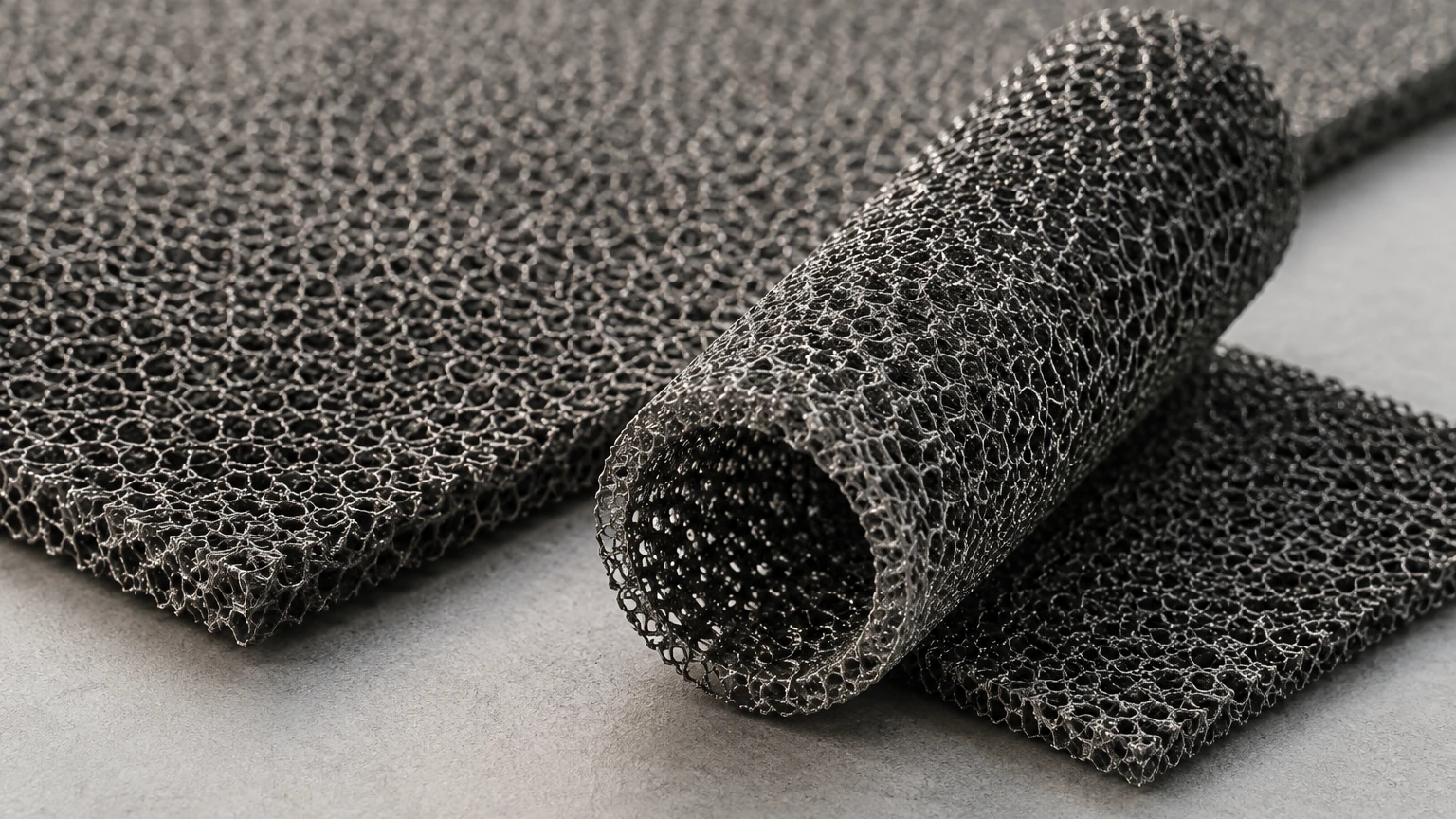
In the landscape of industrial filtration and fluid management, the geometry of the filter media determines the efficiency, longevity, and operational cost of the entire system. Reticulated open cell foam represents a specialized class of porous materials characterized by a highly interconnected, three-dimensional skeletal structure. Unlike traditional closed-cell foams used for insulation or buoyancy, reticulated foam undergoes a specific manufacturing process to remove the cell membranes (windows), leaving only a matrix of dodecahedral strands.
For engineers and procurement professionals sourcing components for chemical processing, hydraulic systems, or high-purity water treatment, understanding the technical nuances of reticulated structures is essential. This guide explores the engineering principles, material variations, and performance metrics of reticulated open cell foam, providing a technical foundation for selecting the optimal filtration media.
The Engineering of Reticulation: Structure and Porosity
The defining characteristic of reticulated open cell foam is its void volume. Most industrial-grade reticulated foams possess a void volume ranging from 90% to 98%. This extreme porosity is achieved through a process called "reticulation," which can be performed via chemical or thermal means.
In thermal reticulation, a foam block is placed in a vacuum chamber filled with a combustible gas mixture. Upon ignition, a controlled flash flame consumes the thin cell membranes without melting the thicker structural struts. The result is a completely open network that allows fluids (liquids or gases) to pass through with minimal resistance.
Pores Per Inch (PPI) and Surface Area
From an engineering perspective, the most critical metric for reticulated foam is the Pores Per Inch (PPI) rating. This value typically ranges from 10 PPI (large, coarse pores) to 110 PPI (very fine, dense pores).
* Low PPI (10–30): These structures offer the lowest pressure drop and are primarily used for coarse filtration, such as pre-filters in HVAC systems or as baffles in fuel tanks to prevent sloshing.
* Medium PPI (45–70): This range balances flow rate with particle retention, often used in biological filtration and specialized industrial scrubbers.
* High PPI (80–110): Fine-pore foams provide a massive internal surface area, making them ideal for high-efficiency depth filtration and coalescing applications.
The relationship between PPI and surface area is linear; as the PPI increases, the available surface area for particle impingement or chemical reaction increases, but so does the resistance to flow (pressure drop).
Material Selection: Polymer vs. Metal Reticulated Foams
While many engineers are familiar with polyurethane-based reticulated foams, industrial applications often demand the structural integrity and thermal resistance of metal. Reticulated metal foam—often produced in stainless steel, nickel, or copper—is created using the reticulated polymer foam as a sacrificial template.
Polyurethane Reticulated Foam
Polyurethane is the most common base material due to its flexibility and cost-effectiveness. It is available in two primary types: polyester and polyether.
* Polyester foams offer superior resistance to hydrocarbons and chemicals, making them suitable for oil filtration.
* Polyether foams are more resistant to hydrolytic degradation (moisture), making them the preferred choice for water-based applications.
Stainless Steel and Metal Foams
In high-temperature or corrosive environments where polymers would fail, stainless steel reticulated structures are utilized. These components offer the same open-cell geometry but with the mechanical properties of metal. They are widely used in catalyst supports, high-temperature gas filtration, and flame arrestors. For organizations seeking high-performance metal filtration components, reviewing the technical capabilities on the Main Page of a specialized manufacturer like Kaifil can provide insights into how these structures are integrated into industrial cartridges and housings.
Filtration Mechanics: Depth vs. Surface Filtration
Reticulated open cell foam functions primarily as a depth filtration medium. Unlike a wire mesh screen, which captures particles on a single two-dimensional plane (surface filtration), reticulated foam forces the fluid through a "tortuous path."
As the fluid moves through the interconnected matrix, particles are captured through several mechanisms:
1. Inertial Impaction: Larger particles, unable to follow the fluid's rapid changes in direction around the foam struts, collide with and adhere to the struts.
2. Interception: Particles following a streamline come within one particle radius of a strut and are captured.
3. Diffusion: Very small particles (sub-micron) exhibit Brownian motion, eventually bumping into the foam structure.
Because the filtration occurs throughout the thickness of the material, reticulated foam has a significantly higher dirt-holding capacity than surface-style filters. This reduces the frequency of maintenance cycles and extends the life of downstream components.
Key Performance Metrics for Industrial Evaluation
When specifying reticulated open cell foam for a B2B application, engineers must evaluate several performance variables to ensure system compatibility.
Pressure Drop (ΔP)
Pressure drop is the loss of fluid pressure as it passes through the filter media. In systems where pump energy consumption is a concern, minimizing ΔP is paramount. Reticulated foam’s high void volume ensures that the pressure drop remains lower than that of felted or woven media of similar efficiency. Engineers must calculate the clean pressure drop and estimate the terminal pressure drop (the point at which the filter is considered blinded).
Chemical and Thermal Compatibility
Before selection, the operating environment must be audited.
* Temperature: Standard polyurethane foams are typically limited to operating temperatures below 120°C (248°F). For applications exceeding this, such as steam filtration or exhaust gas treatment, metal reticulated structures are required.
* Chemical Exposure: Strong acids, bases, or specialized solvents can degrade polymer struts. Stainless steel (304 or 316L) provides the necessary inertness for pharmaceutical and chemical processing applications.
Mechanical Strength and Compression Set
In hydraulic or high-pressure liquid applications, the foam must resist deformation. If the foam compresses under flow, the pore geometry changes, leading to unpredictable filtration efficiency and increased pressure drop. Reticulated metal foams or reinforced polymer foams are often specified in these high-load scenarios.
Applications Across Industrial Sectors
The versatility of the reticulated open cell structure allows it to serve multiple functions beyond simple particle removal.
Chemical and Petrochemical Processing
In chemical reactors, reticulated foams serve as high-surface-area catalyst supports. The open structure ensures that the reactant fluid has maximum contact with the catalyst-coated struts while maintaining high flow rates. Additionally, their resistance to aggressive hydrocarbons makes them excellent for oil-water separation.
Food and Beverage Production
In the food industry, filtration media must be non-toxic and often capable of withstanding CIP (Clean-In-Place) cycles. While polymer foams are used in some packaging and pre-filtration roles, stainless steel filtration components are the standard for direct product contact, ensuring no fiber migration or chemical leaching occurs.
Hydraulic and Pneumatic Systems
Reticulated foam is frequently used as a breather filter in hydraulic reservoirs. It allows the tank to "breathe" as fluid levels fluctuate, capturing airborne contaminants before they enter the system. In pneumatic tools, the foam acts as a silencer, diffusing the exhaust air to reduce noise levels without creating excessive backpressure.
Customization and Procurement Considerations
For B2B purchasing teams, procuring reticulated foam involves more than selecting a PPI rating. Customization is often necessary to fit specific housing geometries or to meet stringent performance standards.
Shape and Form Factor
Reticulated foam can be die-cut, CNC machined, or water-jet cut into complex shapes. It can also be laminated to other materials, such as wire mesh or non-woven fabrics, to create multi-stage filtration cartridges. For manufacturers like Kaifil, the ability to integrate these porous structures into custom stainless steel housings is a core competency that ensures the final assembly meets the specific demands of the application.
Total Cost of Ownership (TCO)
While the initial cost of reticulated foam (especially polymer-based) is relatively low, the TCO should be evaluated based on:
* Replacement Frequency: How often does the media blind?
* Cleaning Capability: Can the media be backwashed or ultrasonically cleaned? (This is a primary advantage of metal reticulated structures).
* Energy Costs: Does the low pressure drop of the foam result in significant pump energy savings over time?
Conclusion: Selecting the Right Filtration Partner
Reticulated open cell foam is a highly engineered material that offers unique advantages in flow control, depth filtration, and surface area management. Whether used as a standalone filter or as part of a complex metal filtration assembly, its performance depends on precise manufacturing and correct material specification.
For engineers and technical professionals looking to optimize their industrial filtration processes, it is vital to work with manufacturers who understand the intersection of material science and fluid dynamics. By focusing on durability, filtration accuracy, and customized design, companies can achieve reliable performance in even the most demanding environments. To explore a wide range of custom stainless steel and precision filtration solutions, professionals are encouraged to visit the Main Page of Kaifil for detailed product specifications and engineering support. Understanding the nuances of reticulated structures is the first step toward more efficient, cost-effective industrial operations.
